

Inversion Table Benefits, Risks and How to Use One
Back pain can make ordinary activities such as sitting, sleeping, working, and exercising surprisingly difficult. Because of that, many people look beyond medication and conventional exercises for ways to reduce pressure on the spine. One option that often attracts attention is an inversion table, a device designed to tilt the body backward so the head sits lower than the feet. Supporters of inversion therapy believe this position temporarily reduces compression between the vertebrae and stretches structures around the spine. Some users report feeling less stiffness or pressure after a short session, particularly when dealing with lower back discomfort. However, inversion tables are not appropriate for everyone, and the benefits are often temporary rather than curative.
Understanding inversion table benefits means looking at both the potential relief and the limitations of the therapy. Research into inversion therapy remains relatively limited, so claims that it permanently corrects spinal problems or cures chronic back conditions should be viewed cautiously. Inversion may be more useful as one component of a broader back-care plan involving movement, strengthening, physical therapy, healthy body weight, and medical treatment when necessary. It can also create physiological changes involving blood pressure, eye pressure, heart workload, and circulation, which makes safety screening especially important. This guide explains how inversion tables work, what benefits people may experience, possible risks, who should avoid them, and how to use an inversion table more safely.
What Is an Inversion Table and How Does It Work?
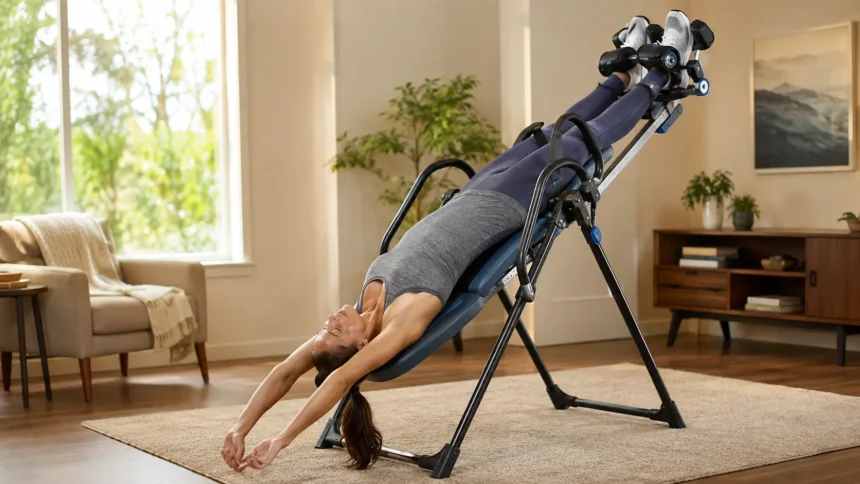
An inversion table is a padded platform mounted on a frame that allows your body to rotate backward while your ankles remain secured. Instead of hanging completely upside down, most beginners use a modest inversion angle so the head is only somewhat lower than the feet. The position changes the direction in which gravity acts on the spine, producing a gentle pulling force known as spinal traction. This traction may temporarily increase space between compressed structures and stretch muscles surrounding the back. The feeling is often described as a lengthening or unloading sensation through the lumbar spine. Inversion tables are commonly marketed for lower back pain, spinal stiffness, sciatica symptoms, and general spinal decompression.
The idea behind inversion therapy is not entirely new because forms of traction have been used in rehabilitation settings for many years. Conventional spinal traction generally uses mechanical or manual forces to gently pull sections of the spine apart. An inversion table attempts to achieve a similar effect by using the person’s body weight and gravity. As the angle of inversion increases, a larger proportion of body weight contributes to the traction force. Full inversion is usually unnecessary because substantial traction can occur at moderate angles. For this reason, people beginning inversion therapy are generally encouraged to use small angles rather than immediately hanging completely upside down.
During normal daily activities, the spine experiences compression from gravity, body weight, sitting, lifting, and movement. The discs between the vertebrae help absorb those forces and allow the spine to move smoothly. Inversion temporarily changes how these forces are distributed, which may make the spine feel less compressed. Muscles that have tightened in response to prolonged sitting or discomfort may also stretch during the position. Some people notice that their back feels looser immediately afterward. That effect does not necessarily mean that a disc, vertebra, or nerve has been permanently repositioned. Instead, the change is more likely related to temporary unloading, stretching, muscle relaxation, and altered pressure.
The degree of inversion can make a significant difference in how the body responds. A shallow angle may feel similar to lying on a gentle decline, while a steep angle produces a much stronger sensation of pressure toward the head. Greater inversion does not automatically produce greater therapeutic benefit. Cleveland Clinic guidance notes that studies have produced mixed results and emphasizes short sessions rather than prolonged inversion. Beginners generally tolerate gradual inversion better because the cardiovascular system and balance mechanisms have more time to adjust. Using controlled movements also reduces the likelihood of sudden dizziness when returning upright.
An inversion table should therefore be viewed as a positioning and traction device rather than a machine that repairs spinal damage. It cannot strengthen weak core muscles, correct poor lifting habits, reverse arthritis, or eliminate every cause of back pain. Back symptoms can develop from muscle strain, disc problems, nerve irritation, arthritis, joint changes, inactivity, injury, or several factors occurring together. A treatment that temporarily decreases pressure may help one cause while doing little for another. Understanding the source of persistent pain is therefore more valuable than relying exclusively on spinal decompression. When inversion is appropriate, it generally works best as one part of a larger treatment strategy.
Potential Inversion Table Benefits for Back Pain and Mobility
Temporary relief from lower back pain is probably the most common reason people try inversion therapy. By changing the direction of gravitational pressure, an inversion table may briefly reduce compressive forces affecting the lumbar region. Someone whose discomfort becomes worse after prolonged sitting or standing may find the unloading sensation particularly pleasant. The gentle traction may also stretch muscles and connective tissues surrounding the spine. For some users, this produces a feeling of increased mobility after they return upright. However, individual responses vary substantially, so an inversion table that feels soothing for one person may provide little benefit or even worsen symptoms for another.
Another potential benefit is temporary reduction in spinal stiffness. People who spend much of the day at a desk can develop tightness through the lower back, hips, and surrounding muscles. Controlled inversion changes the body’s position enough to provide a passive stretch without requiring complicated movements. This may make bending, standing, or walking feel easier immediately after a session. The effect can sometimes encourage people to move more comfortably afterward, which may indirectly support healthy activity levels. Still, inversion should not become a substitute for regular mobility exercises. Active movement generally develops strength, control, and functional capacity in ways that passive traction alone cannot provide.
Some people use inversion therapy when experiencing symptoms associated with nerve irritation, including pain that travels from the lower back toward the buttock or leg. The theory is that spinal traction might temporarily reduce mechanical pressure around irritated structures. This is why phrases such as inversion table for sciatica and spinal decompression therapy frequently appear in discussions of the device. Nevertheless, sciatica can arise from several underlying problems, and not every case will respond positively to traction. Severe or progressive leg weakness, numbness, or changes in bladder or bowel control require prompt medical evaluation rather than home experimentation. Inversion should never delay assessment of neurological warning signs.
Inversion may also provide a short period of relaxation for people whose back discomfort is associated with muscle guarding or tension. When pain develops, surrounding muscles sometimes tighten automatically in an attempt to protect the affected area. Remaining in a comfortably supported inverted position may allow some of that tension to decrease. Slow breathing during a session can further encourage relaxation without requiring strenuous exercise. Some users describe this as feeling stretched rather than treated, which is a more realistic way to think about the experience. The value of that relief depends on whether it translates into improved movement and daily function afterward.
The overall research picture is less dramatic than many product advertisements imply. A broad 2025 review of nonsurgical treatments for low back pain concluded that many available treatments have uncertain effectiveness, while established approaches such as exercise generally have stronger support than numerous passive interventions. Inversion therapy should therefore be considered a possible symptom-management tool rather than a universally effective treatment. It may provide temporary comfort that makes stretching, walking, strengthening, or physical therapy easier to perform. That can still be valuable when the technique is appropriate and safe. The key is maintaining realistic expectations about what inversion can and cannot accomplish.
Does an Inversion Table Really Work?
Whether an inversion table works depends largely on what a person expects it to accomplish. If the goal is temporary reduction in spinal pressure or a brief improvement in stiffness, some users may experience noticeable relief. If the expectation is permanent correction of a slipped disc, arthritis, scoliosis, or chronic spinal degeneration, the evidence does not support such a promise. Inversion creates mechanical traction only while the body remains tilted. Once normal upright activity resumes, gravity again loads the spinal structures. Therefore, improvement experienced after inversion should usually be interpreted as symptom relief rather than proof that the underlying condition has been repaired.
Research examining inversion therapy specifically is much smaller than the evidence base surrounding exercise, rehabilitation, and other established treatments for back pain. Existing studies have explored outcomes such as pain, disability, flexibility, disc-related symptoms, and the likelihood of needing surgery. Some have reported encouraging results, but study sizes and methods vary considerably. That makes it difficult to predict how well inversion will work for an individual patient. Clinical sources consequently tend to describe inversion as a complementary option instead of a primary treatment. Cleveland Clinic similarly advises that inversion should not be relied upon by itself for managing back pain.
One reason experiences vary is that the term back pain describes many different problems. A person with temporary muscular tightness after sitting all day may respond very differently from someone with advanced spinal stenosis or inflammatory arthritis. Disc irritation, facet-joint pain, sacroiliac problems, muscle strain, nerve compression, and hip conditions can all produce discomfort that people interpret as lower back pain. Inversion may temporarily ease certain mechanical sensations without addressing the actual source of pain. It may also aggravate symptoms when a particular position increases nerve irritation. Knowing the diagnosis therefore improves the chances of choosing an appropriate treatment instead of simply treating every form of back pain the same way.
Another reason inversion sometimes feels effective is that traction is only one part of what happens during a session. The body also experiences stretching, temporary unloading of joints, relaxation of certain muscles, and a change from habitual sitting or standing positions. These effects may make the spine feel more mobile even when actual structural changes are minimal. Pain perception itself can also fluctuate substantially throughout the day. A short period of relaxation and controlled breathing can alter how intense discomfort feels. None of this makes the experience imaginary, but it does show why immediate pain relief should not automatically be interpreted as evidence of permanent spinal decompression.
A useful way to judge whether inversion therapy works for you is to focus on meaningful function rather than dramatic sensations during the session. Ask whether using the table makes walking, sleeping, sitting, exercising, or completing daily tasks easier without creating new symptoms. Benefits should ideally remain noticeable long enough to support normal movement rather than disappearing seconds after standing upright. If several carefully performed sessions provide no improvement, increasing the inversion angle aggressively is unlikely to be the best solution. Persistent symptoms deserve proper assessment so the underlying cause can be identified. Effective back care often requires combining symptom relief with gradual strengthening, mobility work, activity modification, and appropriate medical guidance.
Inversion Table Risks and Possible Side Effects
The biggest misconception about inversion tables is that they are harmless simply because they do not involve medication or surgery. Turning the body upside down produces genuine physiological changes that affect more than the spine. Blood shifts toward the upper body and head, which can increase pressure inside blood vessels and the eyes. The heart must also respond to the unusual redistribution of blood. For healthy people using mild inversion briefly, these changes may be tolerated without serious problems. For people with certain cardiovascular, neurological, or eye conditions, however, the same changes may make inversion inappropriate or potentially dangerous. This is why medical screening should come before experimentation.
Dizziness is among the most common practical problems associated with inversion. A person may feel comfortable while tilted but become lightheaded when returning upright too quickly. The body’s blood-pressure regulation must adjust rapidly as gravity changes direction again. Rising slowly gives the cardiovascular system more time to adapt. Nausea or a sensation similar to motion sickness can also occur, particularly during the first few sessions. People who already struggle with balance disorders or vertigo may find the movement especially uncomfortable. Any session should be stopped immediately if severe dizziness, faintness, chest discomfort, unusual shortness of breath, or significant visual disturbance develops.
Eye pressure is another important consideration because inversion can increase pressure within the eyes. This matters particularly for people with glaucoma or other conditions in which elevated intraocular pressure could cause harm. Blood pressure may also change while inverted, creating additional concerns for people with hypertension, hypotension, cardiovascular disease, or certain circulation problems. Cleveland Clinic specifically highlights conditions including blood-pressure disorders, heart disease, glaucoma, previous stroke, brain injury, pregnancy, and several other health problems as reasons to seek medical advice before inversion. These precautions are important even when someone feels physically capable of operating the table. Fitness does not automatically eliminate cardiovascular or ocular risk.
Mechanical injuries can occur as well, particularly when a table is poorly adjusted or used aggressively. Ankles and feet carry much of the securing force, so badly positioned restraints may cause discomfort, bruising, or pressure. Trying to sit up or perform strenuous abdominal exercises while deeply inverted can place additional stress on the back and neck. A sudden return to the upright position may also provoke muscle spasms or dizziness. Falls are possible when entering or exiting a table without adequate stability. Following the manufacturer’s weight, height, locking, and adjustment instructions is therefore just as important as choosing an appropriate inversion angle.
Pain that becomes sharper during inversion should not be treated as evidence that the technique is “working.” Therapeutic stretching can feel unusual, but severe back pain, shooting leg pain, numbness, weakness, headache, chest pressure, or visual symptoms are reasons to stop. Continuing because you believe the spine needs to “release” can potentially aggravate an irritated structure. Symptoms should generally become easier or remain neutral rather than progressively worsening. If pain repeatedly increases after inversion sessions, the technique may not suit the underlying condition. A healthcare professional or physical therapist can help determine whether another approach to spinal mobility or pain management would be more appropriate.
Who Should Avoid Using an Inversion Table?
People with uncontrolled high blood pressure should generally avoid experimenting with inversion without medical clearance. Hanging with the head below the heart changes blood distribution and can increase pressure within vessels supplying the head. Even individuals whose blood pressure is controlled with medication should discuss inversion therapy with their clinician before beginning. Low blood pressure can also be problematic because returning upright may provoke dizziness or fainting. Anyone with a history of unexplained fainting deserves additional caution. The goal of inversion therapy is optional pain relief, so taking cardiovascular risks for an unproven benefit rarely makes sense when safer alternatives are available.
Heart and vascular conditions also require careful consideration. People with coronary artery disease, heart failure, abnormal heart rhythms, circulation disorders, or a previous stroke should obtain medical advice rather than assuming short sessions are harmless. Inversion changes venous return and cardiovascular workload, which may be poorly tolerated by someone with an underlying condition. Individuals taking medications that significantly affect blood pressure or circulation may experience stronger changes in symptoms as well. A clinician familiar with the person’s medical history can judge whether those risks are acceptable. Without that context, advice from a product advertisement or online testimonial cannot reliably determine whether inversion is safe.
People with glaucoma or certain other eye diseases are another group for whom inversion may be inappropriate. When the head moves below the heart, intraocular pressure can rise, potentially creating unnecessary stress on vulnerable eye structures. People who have undergone recent eye procedures should also obtain clearance from their ophthalmologist before considering inversion. Similar caution applies after recent brain, neck, spine, abdominal, or cardiovascular surgery. Healing tissues may not tolerate traction or major changes in body position well. Waiting until a surgeon or rehabilitation professional confirms that inversion is acceptable is safer than trying to accelerate recovery with aggressive spinal decompression.
Pregnancy is generally considered another situation in which home inversion should be avoided unless specifically cleared by a qualified healthcare professional. As pregnancy progresses, balance, circulation, blood pressure regulation, joint stability, and abdominal pressure all change. Entering and exiting an inversion table also becomes increasingly awkward, raising the possibility of falls. Back discomfort during pregnancy is common, but safer movement strategies and pregnancy-specific physical therapy are usually preferable. People with severe osteoporosis, unstable fractures, spinal instability, or recent traumatic injuries may also face excessive risk from traction. Bone strength and structural stability matter when deciding whether gravity-assisted stretching is appropriate.
Age alone does not automatically determine whether someone can use an inversion table, but overall health and mobility become increasingly important. An older adult who is physically active, medically stable, and able to enter the equipment safely may have fewer concerns than a younger person with uncontrolled glaucoma or heart disease. Joint replacements, severe arthritis, limited ankle mobility, balance problems, and difficulty transferring independently should all be considered. Anyone unsure about their suitability should bring the specific inversion-table idea to a healthcare provider rather than asking only whether stretching is allowed. The clinician can consider the person’s complete health picture and recommend safer alternatives when necessary.
How to Use an Inversion Table Safely
Before stepping onto an inversion table, read the manufacturer’s instructions and adjust the machine for your height and weight. Proper height adjustment affects the table’s balance and determines how easily it rotates. The ankle restraints should hold you securely without causing excessive pressure or numbness. Check that locking mechanisms are fully engaged before leaning backward. Place the table on a level, stable surface with enough surrounding space to move freely. During your first sessions, having another adult nearby can provide additional reassurance. Familiarity with the equipment should come before deeper inversion because equipment mistakes can create preventable injuries.
Begin with a shallow inversion angle instead of attempting to hang completely upside down. Tilting approximately 15 to 30 degrees may be enough for a beginner to become accustomed to the change in pressure. Remain relaxed and breathe normally rather than deliberately holding your breath. Give your body time to notice how the position affects your head, eyes, back, and balance. A strong pulling sensation is not required to gain a stretching effect. If the shallow position already provides comfortable relief, there is little reason to increase the angle rapidly. Greater intensity should never become the goal simply because the equipment is capable of producing it.
Early sessions should also remain short. One or two minutes may be sufficient while learning how your body reacts, and duration can be adjusted gradually if the technique remains comfortable. Some clinical guidance discusses short sessions lasting only several minutes rather than extended periods of full inversion. Longer sessions are not automatically more therapeutic and may increase dizziness, head pressure, or discomfort. Pay attention to symptoms throughout the session rather than watching the clock and trying to reach a target. If your face feels unusually pressured or you develop headache, nausea, visual disturbance, chest discomfort, or worsening pain, return upright slowly and stop.
Returning upright deserves as much attention as going backward. Move the table gradually until your body approaches a horizontal position and pause briefly before becoming fully upright. This transition allows circulation and balance to adjust more gradually. Once standing, remain beside the equipment for a moment before walking away, particularly during your first several sessions. Avoid jumping immediately into demanding exercise if you feel lightheaded or unusually stretched. Some people prefer using inversion before gentle mobility work because their back temporarily feels looser. Whatever routine you choose, controlled transitions are safer than fast movements.
Consistency does not mean using an inversion table despite worsening symptoms. Track whether the sessions actually improve pain, movement, sleep, sitting tolerance, or another meaningful outcome. If you repeatedly feel worse afterward, discontinue the technique rather than adding more minutes or using a steeper angle. People receiving physical therapy can ask their therapist whether inversion fits with their current rehabilitation plan. Your clinician may also recommend specific movements to perform after traction so that temporary relief supports more useful activity. The most effective routine is not necessarily the deepest or longest inversion routine; it is the one that provides benefit without unnecessary risk.
How to Get Better Results From Inversion Therapy
Think of inversion therapy as an opportunity to make movement easier rather than as the entire treatment. If your back feels more comfortable afterward, use that window to perform gentle walking or exercises already recommended for your condition. The temporary reduction in stiffness may make controlled movement feel less intimidating. Over time, regular activity can help restore strength and confidence that passive traction alone cannot provide. This approach also reduces the risk of becoming dependent on the inversion table every time discomfort appears. Long-term back health usually depends more on maintaining physical capacity than repeatedly searching for ways to avoid loading the spine.
Core and hip strengthening can complement inversion particularly well when weakness contributes to poor movement tolerance. The abdominal muscles, spinal stabilizers, gluteal muscles, and hips all help distribute forces during lifting, sitting, walking, and exercise. An inversion table does not train these muscles because the person remains largely passive. Gradual strengthening therefore addresses a limitation that traction cannot. Exercises should be selected according to the person’s condition rather than assuming that one universal routine works for every type of back pain. A physical therapist can adapt exercises when pain, nerve symptoms, arthritis, or mobility restrictions complicate normal training.
Daily habits also matter because several hours of poor movement patterns can easily outweigh a few minutes spent on an inversion table. Long periods of uninterrupted sitting may increase stiffness for many people, particularly when combined with low overall activity. Changing position regularly, walking during breaks, and adjusting the workstation can reduce continuous strain. Sleep quality, stress, physical activity, and smoking status can also influence musculoskeletal health and pain perception. Maintaining a healthy body weight may reduce mechanical load for some individuals, although weight is only one factor in back pain. Effective management usually involves several manageable changes rather than one dramatic treatment.
People with recurring back pain should also pay attention to the activities that repeatedly trigger symptoms. Heavy lifting with poor technique, abrupt increases in exercise, long drives, prolonged sitting, or inadequate recovery may contribute to recurring flare-ups. Inversion can sometimes ease symptoms afterward without changing the pattern that caused them. Keeping a simple record of activity, pain intensity, and response to treatment can reveal useful patterns. This information can also help a clinician or physical therapist determine whether symptoms are mechanical, activity related, or require further investigation. Treating the cause of repeated irritation is generally more useful than repeatedly decompressing the spine after every flare.
Finally, give any treatment a fair but realistic evaluation. If a few weeks of carefully performed inversion provides meaningful improvement without side effects, it may have a place in your personal back-care routine. If nothing changes, you do not need to force the technique simply because other people praise it. Chronic back pain is highly individual, and people respond differently to exercise, manual therapy, medication, heat, traction, and other interventions. Modern evidence increasingly supports combining appropriate movement with personalized treatment rather than searching for a single universal solution. An inversion table can be useful for selected people, but it should remain a tool rather than becoming the foundation of every back-pain decision.
Inversion Table Alternatives for Back Pain Relief
Gentle walking is one of the simplest alternatives for many people with uncomplicated lower back pain. Walking encourages movement through the hips and spine without requiring specialized equipment or aggressive stretching. It also helps prevent the stiffness that can develop when a person remains in bed or on a sofa because they are afraid of worsening pain. The appropriate amount varies, particularly during an acute flare, so shorter walks may be more comfortable initially. Gradually increasing activity can improve tolerance as symptoms settle. People with significant nerve symptoms or conditions affecting balance should follow individualized medical or rehabilitation advice before changing activity levels.
Physical therapy provides a more personalized approach because treatment can be matched to the specific source of symptoms. A physical therapist may assess strength, flexibility, posture, movement patterns, nerve mobility, and functional limitations before designing a rehabilitation program. Depending on the findings, treatment may involve strengthening, mobility exercises, education, manual therapy, or graded exposure to activities that have become difficult. Unlike passive inversion, rehabilitation aims to improve the body’s ability to tolerate real-life physical demands. That makes it particularly useful for recurring or persistent back problems. A therapist can also determine whether any form of traction is appropriate for the individual’s diagnosis.
Gentle stretching may help people whose discomfort is strongly associated with muscle stiffness, although stretches should not be forced into pain. Hip flexor, hamstring, gluteal, or trunk mobility exercises are sometimes useful depending on the person’s movement restrictions. The goal should be comfortable mobility rather than achieving extreme flexibility. Stretching alone also does not replace strengthening because flexible tissues still need adequate muscular control. When nerve irritation is present, certain aggressive stretches can worsen symptoms rather than help. This is another reason personalized guidance can be valuable when pain travels down the leg or includes numbness and tingling.
Heat may provide temporary comfort when muscle tension accompanies lower back pain. A warm shower, heating pad, or heat pack can help some people relax and move more comfortably. Cold therapy may feel better after certain acute strains, although personal preference often determines which option provides the most relief. These approaches are generally intended for symptom management rather than treating a structural cause. Over-the-counter pain medications may also be appropriate for some adults, but medical conditions, allergies, pregnancy, kidney disease, gastrointestinal problems, and medication interactions can change what is safe. A pharmacist or healthcare professional can provide individualized advice when medication choices are uncertain.
The best alternative ultimately depends on why the back hurts. Someone recovering from a simple muscle strain requires a different strategy from someone experiencing a herniated disc, osteoporosis, inflammatory disease, spinal stenosis, or another medical condition. Persistent pain does not necessarily mean something dangerous is happening, but it does deserve proper evaluation when improvement stalls. Inversion therapy is only one of many options and should not be viewed as a necessary part of recovery. People who cannot safely use an inversion table still have numerous effective ways to work on mobility and function. A personalized combination of movement, strengthening, education, symptom relief, and professional guidance is often the most practical approach.
When Back Pain Needs Medical Attention
Most episodes of uncomplicated back pain improve without emergency treatment, but certain symptoms deserve prompt medical attention. New loss of bladder or bowel control, numbness around the groin or saddle area, or rapidly worsening weakness in one or both legs may indicate serious nerve compression. These symptoms should not be managed by trying deeper inversion in an attempt to decompress the spine. Immediate evaluation can be important because some neurological conditions require urgent treatment. Severe back pain following a major accident or fall also deserves assessment, especially in older adults or people with osteoporosis. Home traction is not appropriate when a fracture or unstable injury is possible.
Back pain accompanied by fever, chills, or significant unexplained illness may suggest an infection or another condition unrelated to simple mechanical strain. Similarly, unexplained weight loss combined with persistent pain should be discussed with a healthcare professional. Night pain that is severe, progressive, and unaffected by changes in position may also warrant investigation. These signs do not automatically mean a dangerous disease is present, but they change the level of concern. An inversion table cannot diagnose or treat infections, tumors, inflammatory diseases, or systemic illness. Persistent unusual symptoms deserve a proper clinical assessment instead of repeated home treatment.
Seek medical advice when pain consistently travels down the leg and is accompanied by increasing numbness or weakness. Mild radiating discomfort can occur with temporary nerve irritation, but progressive neurological changes are more concerning. Difficulty lifting the front of the foot, frequent stumbling, or noticeable loss of muscle strength should not be ignored. A clinician may perform neurological tests and determine whether imaging or specialist evaluation is necessary. Inversion may occasionally reduce certain sciatica symptoms, but improvement is not guaranteed. Attempting aggressive traction when nerve symptoms are worsening can delay appropriate treatment and potentially make the experience more uncomfortable.
Pain that persists for several weeks without meaningful improvement also deserves evaluation, even when no emergency warning signs are present. Chronic back pain can involve physical, occupational, sleep-related, and psychological factors that interact with one another. An accurate assessment can identify problems that are more likely to respond to strengthening, activity modification, medication, physical therapy, or another approach. It can also reduce fear by ruling out conditions that require different treatment. The goal is not necessarily to order scans for every episode of discomfort. Instead, evaluation helps match treatment to the person’s symptoms, history, and functional limitations.
You should also seek advice if inversion itself repeatedly causes unusual symptoms. Severe headache, visual changes, chest discomfort, shortness of breath, faintness, or neurological symptoms should never be considered normal parts of spinal decompression. Stop using the device and discuss those reactions with an appropriate healthcare professional. Similarly, worsening back or leg pain after every session suggests inversion may not be suitable for you. A therapy does not need to hurt or create dramatic sensations in order to be effective. Safety should always take priority over achieving a deeper angle, longer session, or stronger stretching sensation.
Final Thoughts on Inversion Table Benefits and Safety
Inversion tables are appealing because they offer a simple way to change spinal loading without medication or invasive procedures. For some people, a few minutes of gentle inversion can temporarily reduce lower back pressure, stiffness, or muscular tension. That relief may make walking, stretching, or other daily activities feel more comfortable afterward. Those potential inversion table benefits explain why the devices remain popular among people managing recurring back discomfort. At the same time, temporary improvement should not be confused with permanent structural correction. Inversion does not rebuild damaged discs, reverse arthritis, or address every underlying cause of back pain.
The safest approach begins with realistic expectations and appropriate health screening. People with certain cardiovascular conditions, blood-pressure problems, glaucoma, previous stroke, pregnancy, or other relevant medical concerns should obtain professional advice before using an inversion table. Even healthy users should begin gradually rather than immediately attempting full inversion. Short sessions at modest angles give the body time to adapt. Returning upright slowly can also reduce dizziness. Following the equipment manufacturer’s instructions regarding height, weight, ankle restraints, and locking mechanisms further reduces preventable risks.
Pay close attention to how your body responds rather than assuming stronger traction produces better results. Comfortable stretching or mild pressure changes may be expected, but sharp pain, worsening nerve symptoms, headache, severe dizziness, visual changes, or chest discomfort are signals to stop. If inversion reliably improves comfort without creating problems, it may be reasonable to continue using it as part of a broader routine. If it provides no meaningful benefit, there is little reason to keep increasing the intensity. Back-pain treatments should improve function rather than simply create an impressive physical sensation.
Long-term management usually requires more than passive spinal decompression. Regular movement, progressive strengthening, healthy daily habits, appropriate lifting techniques, sufficient recovery, and professional rehabilitation when needed can address factors that an inversion table cannot. Someone who gains temporary relief from traction may find that using that relief to support exercise produces more meaningful results. Conversely, people who cannot safely invert still have numerous options for improving back health. Physical therapy, walking, individualized exercise, heat, activity modification, and appropriate medical treatment can all play useful roles depending on the underlying condition.
Ultimately, an inversion table is neither a miracle cure nor automatically a dangerous device. It is a specialized form of gravity-assisted traction that may provide short-term comfort for carefully selected users. The decision to use one should depend on your symptoms, medical history, physical ability, and response to the technique rather than marketing promises. Begin conservatively, avoid prolonged or extreme inversion, and involve a healthcare professional when health conditions or persistent symptoms create uncertainty. Most importantly, treat the table as one possible tool within a complete back-care strategy. Sustainable improvement comes from understanding your condition and choosing treatments that help you move and function more confidently.
Frequently Asked Questions
How long should you use an inversion table?
Beginners should usually start with very short sessions of about one or two minutes at a mild angle and increase gradually only if they remain comfortable. Longer or deeper inversion is not automatically more effective, so follow the manufacturer’s guidance and any recommendations from your healthcare professional.
Are inversion tables good for lower back pain?
Some people experience temporary relief from lower back pressure, stiffness, or muscle tension after inversion. Evidence is not strong enough to consider inversion tables a cure, so they are better viewed as an optional addition to exercise, rehabilitation, or other appropriate treatment.
Can an inversion table help sciatica?
Inversion may temporarily reduce pressure or discomfort for some people with symptoms associated with nerve irritation, but results vary depending on the cause of sciatica. Progressive weakness, numbness, saddle-area sensory changes, or bladder and bowel problems require medical attention rather than home inversion.
Is it safe to use an inversion table every day?
Daily use may be tolerated by some healthy people when sessions are short and symptoms remain comfortable. However, people with cardiovascular disease, blood-pressure problems, glaucoma, pregnancy, or other medical concerns should obtain professional advice before using inversion therapy regularly.
What angle is best for an inversion table?
There is no single ideal angle for everyone, and beginners generally do not need full inversion. Starting around 15 to 30 degrees allows you to assess your response before gradually considering a steeper position if it remains comfortable and appropriate.