

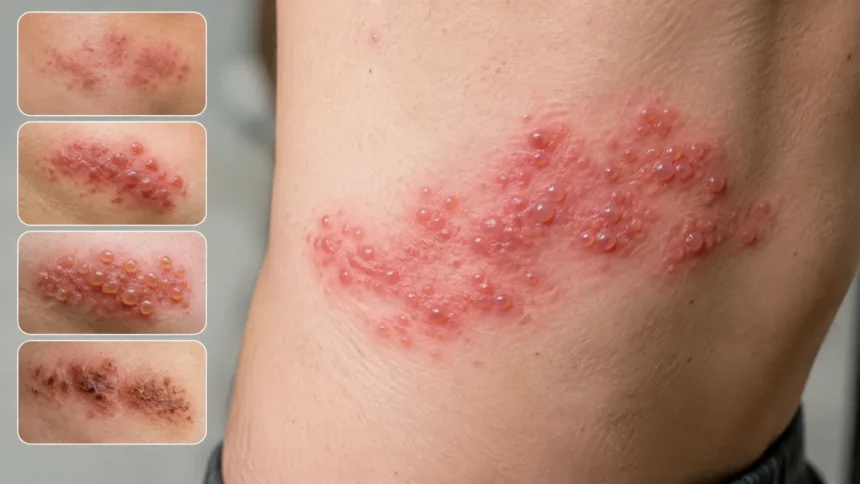
Pictures of Shingles: Symptoms, Stages & Appearance
Shingles is a painful viral infection that usually produces a distinctive rash on one side of the body or face. It happens when the varicella-zoster virus, the same virus that causes chickenpox, becomes active again later in life. Many people first search for pictures of shingles because the rash can resemble bug bites, contact dermatitis, eczema, heat rash, or other skin problems during its earliest stage. The appearance changes significantly over several days, beginning with redness or unusual skin sensations before developing into clusters of fluid-filled blisters. Understanding those stages can help people recognize when a suspicious rash deserves medical attention. Early treatment may reduce symptom severity and lower the risk of certain complications.
Shingles does not look exactly the same on everyone. Skin tone, age, immune status, the location of the outbreak, and the stage of the infection can all influence its appearance. On lighter skin, the surrounding rash may look pink or bright red, while on darker skin it may appear purple, deep red, brown, grayish, or less visibly inflamed. The blisters themselves may still look shiny, raised, or fluid-filled even when surrounding redness is subtle. Pain, burning, itching, tingling, or extreme sensitivity may appear before the rash becomes obvious. This combination of symptoms and a one-sided blistering pattern often provides stronger clues than color alone. Comparing appearance with the overall symptom pattern is therefore more useful than relying on a single photo.
This guide explains what shingles looks like, its symptoms, stages, blister patterns, healing process, common body locations, facial shingles, complications, and conditions that can resemble it. Related topics such as shingles rash pictures, herpes zoster symptoms, shingles blisters, early shingles signs, shingles stages, shingles on the face, shingles on the back, postherpetic neuralgia, and shingles healing are covered naturally throughout the article. Images found online can help people recognize general patterns, but they cannot confirm a diagnosis. A healthcare professional should evaluate a new painful blistering rash, particularly when it affects the face, eye area, ear, or a person with a weakened immune system. Shingles treatment is most useful when started early.
What Does Shingles Look Like?
Shingles usually appears as a band, stripe, or cluster of rash affecting one side of the body. The pattern follows a nerve pathway called a dermatome, which is why the eruption often forms a relatively narrow region rather than spreading evenly everywhere. Common areas include the chest, abdomen, back, waist, neck, and face. The rash may initially look like scattered reddish or darker patches before small raised bumps begin appearing. These bumps can quickly develop into groups of clear fluid-filled blisters. The one-sided distribution is one of the strongest visual clues because shingles commonly stops near the body’s midline. A rash wrapping around only one side of the torso is especially characteristic.
The blisters usually appear in clusters rather than as isolated bumps spread randomly across the body. They may resemble tiny drops of water sitting on inflamed skin, particularly during the first few days after blister formation. Some blisters remain small, while nearby ones may merge into larger irregular areas. The surrounding skin can become swollen, tender, warm, or intensely sensitive. Even light clothing may feel painful against the affected area. This level of pain sometimes seems disproportionate to what the rash looks like, especially early in the outbreak. A person may therefore feel severe burning or nerve pain before the visible skin changes become dramatic. That mismatch between pain and appearance can be an important clue.
Color varies considerably between people. On fair or light skin, shingles commonly appears bright pink or red around the blisters. Medium skin tones may show deeper red, reddish-brown, or purplish inflammation, while darker skin may develop purple, brown, gray, or darker patches around the eruption. The skin may also become shiny or swollen rather than obviously red. This variation is important because medical photographs have historically overrepresented lighter skin tones, potentially making shingles harder to recognize in people with darker complexions. Blisters and crusting remain valuable visual clues regardless of background skin tone. Pain, tingling, and the one-sided pattern should also be considered when redness is less noticeable.
Shingles may look somewhat different depending on the body area involved. A torso outbreak often forms a horizontal or diagonal band from the spine toward the chest or abdomen. Shingles on the neck or scalp may appear in smaller irregular clusters following nerve distribution. Facial shingles can involve the forehead, eyelid, cheek, nose, or ear and deserves especially prompt medical attention. Occasionally the rash appears in more than one nearby dermatome, particularly in people with weakened immune systems. Widespread shingles involving many body regions is less typical and can indicate a more serious infection. A scattered full-body rash should therefore not automatically be assumed to be ordinary localized shingles.
Not everyone develops textbook blisters. Some outbreaks remain relatively mild with only a few bumps, while others create dense clusters that become painful and crusted. In rare cases, a person may experience shingles-related nerve pain without an obvious rash, making visual diagnosis impossible. Other people may develop lesions that become scratched, infected, or covered with thick crust, obscuring their original appearance. This is why photographs alone are not enough to confirm the condition. The timeline, pain pattern, medical history, and distribution all matter. Anyone with a new one-sided painful rash should seek clinical advice rather than waiting for it to match a perfect internet image.
Early Signs of Shingles Before the Rash Appears
Shingles frequently begins with unusual skin sensations before visible blisters appear. Tingling, burning, itching, stabbing pain, or numbness may develop in a localized area several days before the rash becomes obvious. The skin can become unusually sensitive to touch, sometimes making ordinary clothing or bedsheets uncomfortable. People may describe the sensation as electric, prickling, hot, or similar to a sunburn even though the skin initially looks normal. Because there is no obvious rash at this stage, symptoms may be mistaken for a pulled muscle, pinched nerve, kidney problem, heart problem, or another internal condition depending on location. The later appearance of a one-sided rash often makes the earlier discomfort easier to understand.
Pain can range from mild irritation to severe nerve discomfort. Some people experience intermittent sharp jolts, while others develop a constant burning ache. The affected area usually corresponds with the nerve pathway where the rash will later emerge. For example, burning around one side of the ribs may be followed by blisters along the same side of the chest or back. Tingling on one side of the forehead may later develop into facial shingles. This predictable relationship between nerve symptoms and rash location is characteristic of herpes zoster. However, nerve pain alone cannot confirm shingles because many other conditions can produce similar sensations. Medical evaluation is important when pain is severe, unexplained, or associated with neurological symptoms.
Some people experience general symptoms before or during the early rash stage. Fatigue, headache, chills, sensitivity to light, or a low-grade fever may occur, although not everyone becomes systemically unwell. The illness may therefore initially feel like a mild viral infection combined with localized skin sensitivity. Swollen lymph nodes can develop near the affected region as the immune system responds. These symptoms are usually less dramatic than the characteristic blistering rash, but they can help explain why a person feels unusually tired before skin changes develop. Severe fever or significant systemic illness is less typical in otherwise healthy people and may require more urgent assessment. Immune status strongly influences how intense the infection becomes.
The earliest visible skin changes may look nonspecific. Small reddish, purple, or darker patches can develop before individual blisters are clearly recognizable. Tiny raised bumps may resemble insect bites, folliculitis, acne, or heat rash during the first few hours. Unlike many minor skin conditions, however, shingles often becomes increasingly painful and develops grouped blisters fairly quickly. The rash usually remains concentrated within a defined one-sided zone rather than spreading randomly. A person who knows they previously had chickenpox may become more suspicious when nerve-like pain and grouped bumps appear together. Still, chickenpox history is sometimes forgotten or unknown, particularly when infection occurred in early childhood.
Early medical attention matters because antiviral treatment is generally most useful when started soon after the rash begins. Waiting until every blister is fully developed can reduce the opportunity to limit viral activity. People older than 50, those with weakened immune systems, and anyone with facial or eye-area involvement should be particularly proactive. A healthcare professional may recognize shingles from symptoms even when the eruption is still developing. Photographing the rash as it changes can also be useful when discussing progression with a clinician. The goal is not to diagnose yourself from pictures but to notice a concerning pattern early enough to seek appropriate care.
Stage 1: Redness, Tingling and Raised Bumps
The first visible stage of shingles often consists of patches of irritated skin accompanied by pain or abnormal sensation. These patches may appear red, pink, purple, brown, or darker than the surrounding skin depending on skin tone. Small raised bumps can emerge within the irritated area, sometimes looking similar to heat rash or clusters of insect bites. At this point, the classic fluid-filled appearance may not yet be present. The rash commonly follows one side of the torso or face and may form a line or band rather than a round patch. Pain, burning, or extreme sensitivity usually provides an important clue that the problem is more than ordinary irritation.
The bumps may become more numerous over the next 12 to 24 hours. Some remain separated, while others cluster closely together. The affected skin may feel swollen or warm, and surrounding nerve pain may intensify even before the blisters fill with fluid. Clothing rubbing across the area can feel disproportionately uncomfortable. People sometimes scratch during this stage because itching may accompany pain, but scratching can damage the skin and increase the chance of bacterial infection later. Keeping the area clean and avoiding harsh topical products is usually more sensible than applying multiple unproven remedies. A clinician can recommend appropriate pain relief and treatment once shingles is suspected.
The early rash tends to remain within a particular dermatome. A dermatome is an area of skin supplied mainly by one spinal nerve. This explains the unusual one-sided pattern that distinguishes shingles from many allergic reactions and viral rashes. On the torso, the bumps may extend from the back toward the abdomen or chest without crossing clearly to the opposite side. On the face, they may affect one side of the forehead or cheek. While this pattern is highly suggestive, unusual presentations can occur. People with impaired immunity may develop more extensive lesions that cross typical boundaries. Widespread rash or lesions appearing in several distant body areas deserve urgent medical evaluation.
This first stage can be difficult to diagnose visually because many skin conditions produce redness and bumps. Contact dermatitis may follow exposure to an irritating plant or product, while insect bites may cluster near exposed skin. Folliculitis tends to form around hair follicles, and heat rash commonly develops in sweaty areas. Shingles becomes more likely when there is pronounced burning or nerve pain, a one-sided band, and a history of chickenpox or varicella vaccination. Over the next day or two, the emergence of grouped fluid-filled blisters often makes the diagnosis more obvious. Waiting for that change, however, is not always necessary before contacting a healthcare professional.
Taking a clear photograph when the rash first appears can help document how quickly it changes. Use normal lighting and avoid filters that alter color. Note when pain began, when the rash appeared, whether new areas are developing, and whether the lesions remain on one side. This information can help during telehealth or in-person assessment. Do not deliberately pop a bump to see whether fluid appears. Manipulating lesions increases irritation and may spread infectious fluid onto hands or surfaces. The progression of shingles happens naturally over the following days, and treatment decisions should be guided by symptoms and medical evaluation rather than home experimentation.
Stage 2: Fluid-Filled Shingles Blisters
The blister stage is the most recognizable phase of shingles. Small fluid-filled vesicles develop on top of the irritated skin, often forming tight clusters. These blisters can look clear, pearly, shiny, or slightly cloudy depending on their age. They may resemble miniature water droplets resting on the surface. Some remain separate, while others merge into larger irregular blistered patches. New blisters can continue appearing for several days, meaning one area may contain fresh clear vesicles while another has already started becoming cloudy. The surrounding skin usually remains tender and inflamed. This combination of grouped vesicles, pain, and one-sided distribution is strongly characteristic of herpes zoster.
The blister fluid contains active varicella-zoster virus. A person with shingles cannot directly give someone else shingles, but contact with blister fluid can transmit the virus to a susceptible person, potentially causing chickenpox. This is particularly important around pregnant people without immunity, newborns, and individuals with weakened immune systems. Covering the rash when possible, washing hands regularly, and avoiding touching or scratching the lesions can reduce transmission risk. The virus is generally less likely to spread once all lesions have crusted completely. Household precautions should continue until that stage. The rash does not need to be widespread for the blister fluid to be infectious.
Pain often peaks during or around the blister stage. Some people experience severe burning, stabbing, or electrical sensations beneath the skin, while others mainly report itching and tenderness. Nerve pain can continue even when the visible rash seems relatively small. This is because shingles affects nerve tissue as well as the skin. People sometimes assume that a few blisters cannot cause significant discomfort, but lesion count does not always predict pain severity. Pain can interfere with sleep, clothing, movement, and concentration. Medical treatment may therefore include antiviral medication alongside pain-management strategies. Older adults and people with severe pain may need closer follow-up because they have a greater risk of persistent nerve pain after the rash resolves.
Blisters can appear cloudy as immune cells and debris accumulate within them. This change does not automatically mean bacterial infection. However, thick yellow drainage, rapidly expanding redness, warmth, increasing swelling, foul odor, or worsening fever can indicate secondary infection. Scratching makes this more likely because broken skin provides an entry point for bacteria. Keep fingernails short and use loose, comfortable clothing to reduce friction. Cool compresses may provide temporary relief for some people. Avoid applying irritating household substances or popping the blisters intentionally. Opening lesions does not make shingles heal faster and can create additional pain, scarring, or infection risk.
Facial blisters require special attention because the affected nerve may also involve the eye or ear. Shingles on the forehead, eyelid, tip or side of the nose, or around one eye should be evaluated promptly because eye complications can threaten vision. Blisters inside or around the ear combined with facial weakness, hearing changes, dizziness, or severe ear pain may indicate a more complicated form of shingles. These situations are not appropriate for routine home monitoring. Treatment timing becomes especially important when cranial nerves are involved. A seemingly small cluster on the face can therefore be medically more urgent than a larger patch on the torso.
Stage 3: Clouding, Drying and Crusting
After several days, the shingles blisters usually begin changing from clear fluid-filled vesicles into cloudy or drying lesions. The fluid may become less transparent before the blister roof collapses. Some lesions flatten, while others break naturally and release a small amount of fluid. A crust then starts forming over the surface. The affected area can look darker, rougher, and less shiny than during the active blister stage. New blister formation generally slows during this phase, which is a sign that the acute eruption is moving toward healing. Pain and sensitivity may still remain significant, however. The skin can look better before the underlying nerve irritation has completely settled.
Crusting usually develops gradually rather than all at once. One section may already be covered with brown, yellowish, reddish, or dark crust while another still contains intact blisters. The exact crust color varies according to skin tone, minor bleeding, and how much fluid has dried. Normal crusting should become progressively drier. Thick pus, rapidly worsening redness, increasing swelling, or strong odor can suggest secondary infection rather than ordinary healing. Avoid picking scabs because this can reopen the skin and increase scarring. Allowing crusts to fall away naturally helps protect the healing tissue underneath. Gentle washing is generally preferable to aggressive scrubbing.
Once all lesions are fully crusted, the risk of transmitting varicella-zoster virus from direct contact decreases substantially. Until then, continue covering the rash when practical and avoid contact with people at higher risk from chickenpox exposure. Hand hygiene remains important, especially after touching dressings or applying recommended skin care. Towels, clothing, or bedding that directly contacts uncovered lesions should be handled sensibly and washed normally. The virus does not require extreme household disinfection, but avoiding direct contact with blister fluid matters. People should also avoid sharing personal items that may have touched active lesions. Precautions are particularly important when someone in the home has not had chickenpox or vaccination.
Itching may increase as the skin dries and heals. This can be frustrating because scratching crusted lesions may delay healing or create marks. Loose clothing, cool compresses, and recommended anti-itch measures may help. Some people also experience numbness or tingling as the rash improves. These sensations reflect ongoing nerve recovery and can continue after the visible lesions disappear. Severe or persistent pain should be discussed with a healthcare professional because postherpetic neuralgia may be developing. Older adults are particularly vulnerable to this complication. Skin healing and nerve healing do not always occur at the same speed.
The crusting stage often lasts around one to two weeks after blisters develop, though overall timing varies. People with weakened immunity may experience slower healing or ongoing new lesions. If blisters continue appearing for an unusually long period, spread widely, or fail to crust, medical reassessment is appropriate. A normal shingles outbreak should gradually move from new vesicles toward drying rather than becoming progressively more extensive. Photographing the rash every few days can help demonstrate whether it is improving. Improvement should involve fewer new lesions, more crusting, reduced inflammation, and eventual clearing, even if nerve discomfort remains.
Stage 4: Healing, Fading and Skin Discoloration
As the crusts loosen and fall away, newer skin becomes visible underneath. The area may remain pink, red, purple, brown, or darker than the surrounding skin for weeks or months. This post-inflammatory discoloration is common and does not necessarily mean the virus remains active. Darker skin tones may develop more noticeable hyperpigmentation after the rash heals, while some people develop lighter patches temporarily. The color often fades gradually as skin turnover continues. Sun exposure can make pigmentation differences more noticeable, so sensible sun protection may help once the skin surface has fully healed. The final appearance depends on inflammation severity, scratching, infection, and individual skin characteristics.
Most uncomplicated shingles lesions heal without deep scarring. However, scratching, severe blistering, secondary bacterial infection, or extensive inflammation can leave permanent marks. People who repeatedly remove scabs increase the risk because they disrupt new skin formation. Severe cases may cause pitted or irregular scars where deeper skin layers were affected. Facial scarring can be especially distressing, which provides another reason to seek treatment promptly. After complete healing, gentle skin care is usually preferable to aggressive bleaching or exfoliation products. Dermatologic advice may be useful when persistent pigmentation or scarring becomes a cosmetic concern. Healing continues long after the final crust disappears.
Pain may fade with the rash, but this does not happen for everyone. Some people develop persistent burning, stabbing, sensitivity, or aching in the same area after the skin looks completely normal. This condition is called postherpetic neuralgia and occurs because shingles can damage or irritate sensory nerves. Risk increases with age, severe initial pain, extensive rash, and certain medical conditions. Pain may last weeks, months, or occasionally longer. Touch, clothing, temperature changes, or light pressure can trigger discomfort. Persistent nerve pain should be treated as a medical problem rather than something that must simply be tolerated. Several treatment approaches are available depending on severity and health history.
Numbness or altered sensation can also remain temporarily. Some people notice that the healed area feels less sensitive than the surrounding skin, while others describe tingling or crawling sensations. These symptoms may gradually improve as nerve function stabilizes. Facial shingles can occasionally leave more complicated neurological effects depending on which nerves were involved. Hearing changes, facial weakness, or vision problems deserve specialist follow-up even after the skin clears. The visible rash is only one part of herpes zoster, and the underlying nerve involvement can be more important for long-term recovery. People should report ongoing neurological symptoms rather than assuming they are ordinary skin healing.
By the end of the healing stage, the rash should no longer contain fresh blisters, moisture, or active crusts. Residual color changes may remain but should not progressively spread or become more inflamed. New blister formation weeks later deserves reassessment because recurrent or persistent lesions may reflect another condition or an unusual shingles course. Repeat shingles episodes are possible, though they should still be medically evaluated. People who have recovered can discuss shingles vaccination with a healthcare professional according to their age and health status. Having had shingles does not guarantee permanent protection from another episode. Prevention remains relevant even after a successful recovery.
Pictures of Shingles on the Back and Torso
The torso is one of the most common locations for shingles. A typical outbreak forms a horizontal or slightly diagonal band beginning near the spine and extending around one side of the ribs, chest, abdomen, or waist. The rash may resemble a stripe of clustered blisters rather than a large uniform patch. It often stops near the center of the chest or abdomen instead of crossing to the opposite side. This one-sided pattern can make torso shingles easier to recognize than some facial or scalp outbreaks. Before blisters appear, people may feel burning or stabbing pain along the same band. The discomfort may initially be mistaken for a muscle strain or internal organ problem.
On the back, early shingles may look like several small red, purple, or dark patches separated by normal skin. Within a day or two, grouped blisters can fill those areas and create a more continuous band. The rash may extend toward the side of the body and onto the chest or abdomen. Because people cannot easily see their own back, pain may begin before they realize a rash is present. A family member or mirror may reveal the skin changes. Photographing the area can help track progression and may be useful during telehealth. Back pain without visible rash still has many possible causes, so appearance remains important.
Shingles around the rib cage can sometimes be confused with an allergic reaction from clothing or a sports injury. Unlike contact dermatitis, shingles commonly causes pronounced nerve pain and grouped fluid-filled blisters rather than diffuse itching alone. The affected area usually follows a narrow pathway rather than matching exactly where fabric touched the skin. Some people describe a sensation of being burned or cut underneath the skin even when lesions are relatively small. Pain may worsen with twisting or clothing contact, leading people to assume the ribs themselves are injured. The later blistering pattern typically makes the diagnosis more obvious. Medical treatment should ideally begin before the eruption has been present for many days.
Abdominal shingles can occasionally be mistaken for digestive or kidney problems because nerve pain may begin before skin changes. Burning or stabbing on one side of the abdomen may resemble gallbladder pain, kidney pain, or another internal condition depending on location. A clinician may need to consider both skin and internal causes when no rash is visible. Once grouped blisters appear in a one-sided band, herpes zoster becomes more likely. Severe abdominal pain should never automatically be blamed on shingles without evaluation, especially if there is vomiting, fever, fainting, or other concerning symptoms. More than one medical problem can occur at the same time.
Torso outbreaks usually heal following the same progression as shingles elsewhere. Redness and bumps become blisters, the blisters cloud and crust, and the crusts eventually fall away. Residual discoloration may remain after the active rash disappears. Pain often improves gradually, but older adults may experience lingering nerve sensitivity. Loose clothing can reduce irritation while the rash heals, particularly when the band lies beneath a waistband, bra strap, or tight shirt. Covering active lesions can also help protect them from friction and reduce direct exposure to blister fluid. The torso location is usually less medically urgent than eye involvement, but severe pain or extensive rash still deserves prompt care.
Pictures of Shingles on the Face and Eye Area
Facial shingles often appears on one side of the forehead, scalp, eyelid, nose, cheek, or jaw depending on which nerve branch is affected. The lesions may begin as reddish or dark patches before developing into grouped blisters similar to those on the torso. Because facial skin is highly visible, even a small rash can appear dramatic. Pain, tingling, headache, or sensitivity may occur before visible changes. The distribution often stops near the center of the face, producing a distinctly one-sided appearance. Any suspected shingles outbreak near the eye deserves prompt medical evaluation because the virus can involve deeper eye structures. Vision can be threatened even when the skin rash initially seems mild.
Blisters on the forehead and upper eyelid may indicate involvement of the ophthalmic branch of the trigeminal nerve. Eye symptoms can include redness, pain, light sensitivity, tearing, blurred vision, or a gritty sensation. A blister on the tip or side of the nose can sometimes accompany nerve involvement associated with higher risk of eye complications. These signs should not be managed only with skin creams or home remedies. An eye professional or appropriate medical clinician may need to evaluate the cornea and internal eye. Treatment timing becomes particularly important because inflammation can damage vision. Eye-area shingles is one of the strongest reasons to seek same-day care.
The scalp can also be affected, making lesions harder to see beneath hair. People may experience severe tenderness when brushing or touching the hair before discovering small blisters. Swollen lymph nodes around the neck or behind the ear may accompany the outbreak. Because scalp lesions can resemble folliculitis, insect bites, or irritation from hair products, the one-sided pattern and nerve pain are especially useful clues. Avoid scratching with fingernails or applying harsh chemical hair treatments while active lesions are present. Gentle washing may be recommended depending on the exact location. A clinician can help distinguish scalp shingles from bacterial or fungal conditions that need different treatment.
Facial shingles can also involve the ear. Blisters may appear inside the ear canal, around the outer ear, or nearby skin. Severe ear pain, hearing changes, dizziness, ringing, or facial weakness can indicate involvement of important cranial nerves. A person may notice difficulty smiling, closing one eye, or moving one side of the face normally. These symptoms require prompt medical assessment. Ear-related shingles can have more complicated neurological consequences than a typical torso outbreak. Do not place unprescribed drops or home remedies into an ear containing blisters or drainage. The eardrum and deeper structures may need examination before topical treatment is used.
Healing on the face follows the same basic stages but may create greater cosmetic concern. Crusting, redness, and temporary pigmentation can remain after the blisters disappear. Picking at facial scabs increases the chance of scarring. Sun protection becomes particularly useful once the skin has healed enough for exposure because post-inflammatory discoloration may darken with ultraviolet light. Persistent eye pain, reduced vision, facial weakness, hearing loss, or dizziness should be followed even after the skin eruption resolves. Shingles on the face is not merely a cosmetic skin problem. The underlying nerve involved determines how serious the episode may become.
Shingles on Darker Skin Tones
Shingles may be harder to recognize on darker skin because redness is not always the dominant visible feature. Instead of bright pink or red inflammation, the affected skin may look purple, violet, brown, gray, deep red, or simply darker than surrounding areas. Swelling and surface texture can therefore become more useful than color alone. The grouped fluid-filled blisters generally remain visible as shiny raised lesions even when the surrounding inflammation is subtle. Pain, burning, tingling, and a one-sided pattern provide additional clues. Anyone evaluating pictures of shingles should compare examples across several skin tones rather than assuming one classic red appearance applies to everyone.
Early-stage lesions may look like darker patches with tiny raised bumps. These can sometimes be mistaken for acne, insect bites, or eczema when redness is less obvious. The transition to grouped vesicles usually makes the diagnosis easier. Blister fluid may look clear, whitish, or slightly cloudy against darker skin. As lesions dry, crusts can appear dark brown, blackish, reddish-brown, or yellow-brown. The surrounding area may remain hyperpigmented after healing. This color difference can persist much longer than the active infection itself. Persistent darkening does not mean the virus is still active when the skin is otherwise fully healed.
Post-inflammatory hyperpigmentation is especially relevant for medium-to-dark skin. Inflammation triggers pigment-producing cells, causing an area to become darker after the rash resolves. The discoloration may fade slowly over several months. Scratching, picking, and secondary infection can make pigmentation more pronounced. Harsh bleaching products or aggressive exfoliation should not be applied to recently healed skin without guidance because irritation can worsen the problem. Gentle moisturization and sun protection may help the skin recover gradually. A dermatologist can advise on persistent pigmentation once the active shingles episode is completely resolved.
Scarring can also be more noticeable when inflammation is severe or lesions are repeatedly scratched. Some scars become darker than surrounding skin, while others may appear lighter. The best strategy is prevention during the active stage: avoid manipulating blisters, treat infection promptly, and allow crusts to fall naturally. Early antiviral treatment may also reduce the overall severity of the rash in appropriate patients. People sometimes focus heavily on color changes while overlooking persistent nerve pain. Postherpetic neuralgia can occur regardless of skin tone and deserves medical treatment even when the rash has faded beautifully.
Representation matters because people may delay care when their rash does not resemble the bright red examples they find online. Shingles should be recognized through pattern, symptoms, and progression rather than redness alone. A one-sided cluster of painful blisters deserves evaluation whether the background skin appears red, purple, brown, or only slightly changed. Clinicians should also assess skin under good lighting and consider the patient’s description of tenderness or burning. Photography can help document the outbreak, but image filters should be avoided because they may distort pigmentation. Accurate visual information across diverse skin tones improves the chance that people seek treatment at the right time.
Conditions That Can Look Like Shingles
Herpes simplex is one condition commonly confused with shingles because it also causes grouped painful blisters. Cold sores caused by herpes simplex usually recur around the lips or face, while genital herpes affects genital or nearby skin. Shingles tends to follow a broader nerve pathway and often produces more extensive one-sided pain. However, herpes simplex can occasionally appear in unusual locations, making visual diagnosis difficult. Laboratory testing may be needed when the pattern is unclear. Treatment strategies overlap in some ways because both conditions involve herpes-family viruses, but dosing and clinical considerations differ. A healthcare professional can distinguish them more reliably when the rash does not follow a typical pattern.
Contact dermatitis can also resemble early shingles. An allergic or irritant reaction may produce redness, bumps, itching, or even blisters after exposure to plants, adhesives, cosmetics, metals, or chemicals. Contact dermatitis usually follows the area of exposure and often causes more itching than severe nerve pain. It may also appear on both sides of the body if both areas touched the trigger. Shingles is more likely to form a one-sided dermatome and produce burning or stabbing discomfort. Poison ivy can create linear blistering patterns that look dramatic but are usually intensely itchy. Asking about recent exposures helps separate these conditions. When uncertainty remains, clinical examination is useful.
Insect bites may form clustered red or dark bumps, especially on exposed skin. Bedbug bites, mosquito bites, or flea bites can therefore resemble the earliest stage of shingles. Bites generally remain as individual itchy lesions and do not progress into a painful one-sided band of grouped vesicles. However, scratching can make them swollen and crusted, obscuring the difference. The timing of symptoms matters: shingles often produces burning or pain before the rash, while insect bites commonly become itchy after exposure. Household members may also develop bites when insects are involved. A single visual comparison is not always enough to tell them apart.
Folliculitis is inflammation or infection around hair follicles and can produce small red bumps or pustules. It commonly develops in sweaty areas, after shaving, or where clothing causes friction. Each bump tends to center around a hair follicle rather than forming clear vesicles along a nerve pathway. Folliculitis may be tender or itchy but usually lacks the intense nerve pain associated with shingles. Antibiotic or antifungal treatment may be required depending on the cause, so misidentifying it as shingles can lead to unnecessary delay. Conversely, treating shingles only with topical antibacterial products will not address the underlying viral infection. Pattern and symptom quality are therefore important diagnostic clues.
Eczema, impetigo, chickenpox, heat rash, cellulitis, and autoimmune blistering conditions can also mimic parts of the shingles appearance. Chickenpox typically produces widespread lesions at different stages across the body rather than one narrow unilateral band. Impetigo often develops honey-colored crusting and is particularly common in children. Cellulitis creates spreading warmth and redness without the classic grouped vesicles. Autoimmune blistering conditions may cause larger or more widespread blisters. Because several conditions overlap visually, photographs should be used only as general educational tools. A new painful blistering rash deserves clinical assessment when the diagnosis is uncertain.
When Shingles Becomes an Emergency
Shingles near the eye requires urgent attention because inflammation can damage the cornea, retina, optic structures, or other parts of the eye. Blisters around the eyelid, forehead, or nose combined with eye pain, redness, blurred vision, or sensitivity to light should not be monitored casually at home. Even if vision appears normal, a clinician may need to examine the eye more closely. Early antiviral therapy can reduce viral activity, while additional eye-specific treatment may be necessary depending on involvement. Waiting until vision deteriorates can allow preventable complications to develop. Eye-area shingles should therefore be treated as a time-sensitive medical problem.
Ear involvement can also become serious. Severe ear pain, blisters around or inside the ear, hearing loss, ringing, dizziness, or facial weakness may indicate cranial nerve involvement. Difficulty closing one eye or moving one side of the face requires prompt assessment. These symptoms can occur together in a complicated form of herpes zoster affecting facial and auditory nerves. Treatment may involve antiviral medication, pain control, and other therapies according to the exact presentation. Because hearing and facial movement can be affected, specialist follow-up may be necessary. Do not assume ear shingles is merely another painful skin rash.
Widespread shingles deserves urgent evaluation, especially in someone with a weakened immune system. Instead of remaining within one or two nearby dermatomes, lesions may appear across multiple body areas and resemble chickenpox. This can indicate disseminated infection and may involve internal organs. People undergoing chemotherapy, transplant recipients, those taking strong immune-suppressing medication, or individuals with certain immune disorders face greater risk. Hospital-level care may sometimes be required. A rapidly spreading rash accompanied by high fever, confusion, severe weakness, or breathing problems should be assessed urgently. Localized shingles and disseminated shingles are not equivalent illnesses.
Neurological symptoms also require immediate attention. Severe headache, confusion, neck stiffness, weakness, balance problems, loss of consciousness, or seizures can indicate complications involving the nervous system. These symptoms are uncommon but potentially serious. Shingles can affect nerves beyond the skin, particularly in vulnerable individuals. Do not attribute new neurological symptoms solely to pain medication, poor sleep, or stress without medical assessment. Emergency services may be appropriate depending on symptom severity. The skin rash may provide an important diagnostic clue, but neurological complications take priority over the appearance of the lesions.
People with severe uncontrolled pain should also seek medical advice rather than attempting to tolerate it indefinitely. Intense shingles pain can interfere with sleep, eating, movement, and daily functioning. Effective pain treatment may reduce suffering and support recovery. Older adults have an increased risk of persistent nerve pain, making early management particularly important. New fever, pus, rapidly spreading redness, or swelling around lesions may indicate secondary bacterial infection and also warrants assessment. Most shingles episodes are manageable, but recognizing the situations that require faster intervention helps prevent avoidable complications.
How Shingles Is Treated
Antiviral medication is the main treatment used to reduce varicella-zoster virus activity during shingles. These medicines work best when started early, ideally soon after the rash appears. A healthcare professional determines whether antiviral treatment is appropriate based on timing, age, rash severity, location, immune status, and other health factors. People with eye or facial involvement, older adults, and those with weakened immunity are particularly likely to need prompt treatment. Antivirals do not instantly erase the rash, but they may shorten the illness and reduce the severity of complications. Waiting until every lesion has crusted may reduce their potential benefit. Early recognition is therefore important.
Pain management is another major part of treatment because nerve pain can be substantial. Mild discomfort may respond to ordinary pain-relief approaches when medically appropriate, while severe nerve pain may require prescription treatment. Different medications target inflammation, nerve signaling, or sleep disruption depending on the situation. People should avoid taking multiple over-the-counter products with overlapping ingredients. A clinician or pharmacist can help identify safe combinations, particularly for older adults or people taking other medicines. Pain should be treated based on its severity rather than the visual size of the rash. A small eruption can still cause significant nerve irritation.
Skin care focuses on keeping lesions clean, reducing irritation, and preventing secondary infection. Cool compresses, loose clothing, and gentle bathing can provide comfort for some people. Blisters should not be deliberately popped. Covering lesions may reduce friction and direct contact with infectious fluid. Harsh antiseptics, strong essential oils, bleach solutions, or unproven topical remedies can irritate damaged skin and should be avoided. If the rash becomes increasingly warm, swollen, or pus-filled, medical review is appropriate. The skin should gradually move toward drying and crusting rather than becoming more inflamed.
Rest, hydration, and adequate nutrition support recovery, especially when the infection causes fatigue or reduced appetite. Stress and poor sleep may make pain feel harder to manage even though they do not directly cause the viral eruption. People should avoid close contact between uncovered active lesions and individuals at high risk from chickenpox exposure until the rash has crusted. Returning to work depends partly on rash location, whether lesions can be covered, symptoms, and workplace exposure risks. Healthcare workers, caregivers, and people working around vulnerable populations may need specific occupational guidance. Infection-control decisions should consider both the rash and the people around the patient.
Vaccination can reduce the future risk of shingles and its complications in eligible adults. People who have already experienced shingles may still benefit from vaccination later because recurrence is possible. Timing after an active episode should be discussed with a healthcare professional. Vaccination does not treat an outbreak that is already underway, so it should not replace antiviral care during acute illness. Prevention is especially valuable for older adults because complication risk rises with age. A shingles episode can therefore become an opportunity to discuss future protection once recovery is complete. Preventing another attack is often easier than treating persistent nerve pain after one occurs.
How Long Does a Shingles Rash Last?
The total shingles rash often lasts several weeks from the first symptoms through complete crusting and healing. Pain or tingling may begin a few days before visible skin changes. Raised bumps then develop into blisters, which can continue appearing for several days. These lesions gradually cloud, dry, and crust over. The crusts generally fall away during the following one to two weeks, though timing varies. Skin discoloration can remain much longer even after the contagious blister stage has ended. People with weakened immune systems may heal more slowly and develop lesions over a longer period.
During the first week, the rash can change quickly from hour to hour. A small group of bumps one morning may become obvious fluid-filled blisters by the following day. New clusters can appear nearby while older ones begin clouding. This changing appearance can make people feel the rash is spreading uncontrollably even when it remains within the same dermatome. Photographing the area once daily may help track whether new lesions are genuinely appearing. Avoid repeatedly touching or examining the rash closely because this can irritate the skin. Progression is expected during the early stage before healing begins.
By the second week, many lesions have started crusting, though significant variation exists. Pain may remain strong despite visible improvement. This is an important point because people sometimes expect discomfort to disappear as soon as the blisters dry. Nerve inflammation can persist after skin healing has begun. Sleep disruption and sensitivity to clothing may therefore continue. If pain is severe or worsening, discuss it with a healthcare professional. Proper pain management may reduce suffering and help maintain normal activity during recovery. The skin and nerves do not necessarily heal at identical speeds.
By weeks three to four, most uncomplicated outbreaks show substantial skin healing. Crusts may have fallen away, leaving pink, red, brown, purple, or darker patches. Itching can occur as the skin repairs itself. Persistent open sores, new blisters, spreading redness, or ongoing drainage are less typical and may require reassessment. Older people and those with severe initial disease may still experience significant pain. Post-inflammatory color changes can remain for months, especially after darker or more extensive inflammation. This cosmetic persistence should be distinguished from active infection.
Postherpetic neuralgia can continue well after the visible rash has disappeared. Some people experience burning, stabbing, numbness, or extreme skin sensitivity for months. Risk increases substantially with age and more severe initial symptoms. This complication is one reason shingles should not be judged only by how quickly the skin clears. A person may appear fully healed while still experiencing considerable nerve pain. Ongoing symptoms deserve medical management because several therapies can help. Recovery should be evaluated according to both skin healing and nerve function.
Frequently Asked Questions About Shingles Appearance
What does shingles look like at the beginning?
Early shingles may look like small red, purple, brown, or darker patches with raised bumps on one side of the body. Burning, tingling, itching, or nerve pain often appears before the bumps develop into fluid-filled blisters.
Does shingles always form blisters?
Most typical shingles outbreaks develop grouped fluid-filled blisters, but mild or unusual cases may have fewer obvious vesicles. Rarely, shingles-related nerve pain can occur without a visible rash, making professional diagnosis more important.
Does shingles cross the middle of the body?
Shingles usually follows a single nerve pathway and remains on one side of the body, often stopping near the midline. A widespread or unusual rash that crosses multiple regions can occur, particularly in people with weakened immune systems, and deserves prompt medical evaluation.
What color is shingles on dark skin?
On darker skin, shingles may appear purple, brown, gray, deep red, or darker than the surrounding skin instead of bright red. The grouped blisters, one-sided distribution, pain, and progression through crusting remain important diagnostic clues.
How do you know shingles is healing?
Healing shingles produces fewer new blisters, followed by clouding, drying, and crust formation. The crusts eventually fall away, although discoloration, itching, numbness, or nerve pain may continue after the visible rash has resolved.