

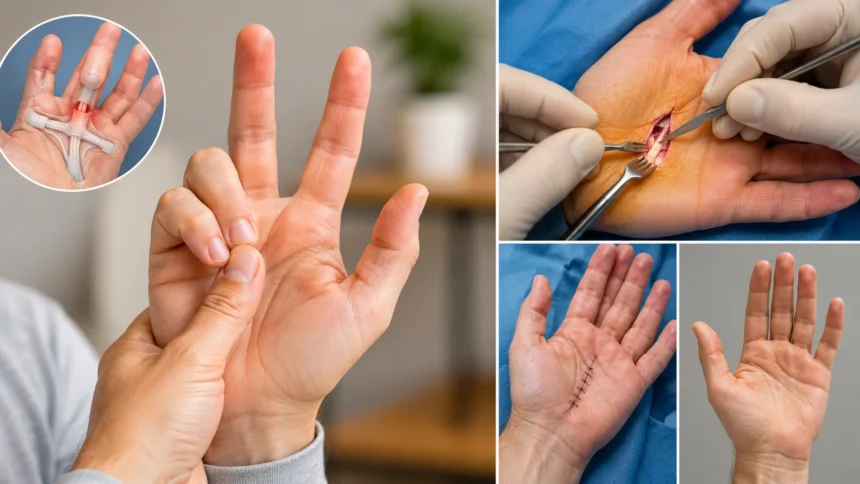
Trigger Finger Surgery: Procedure, Risks & Recovery
Trigger finger surgery is a common procedure used to treat a finger or thumb that catches, locks, clicks, or becomes difficult to straighten because the tendon can no longer glide smoothly through its surrounding sheath. The condition is medically known as stenosing tenosynovitis and most often affects the thumb, ring finger, or middle finger, although any digit can be involved. Many mild cases improve with rest, activity changes, splinting, anti-inflammatory treatment, or corticosteroid injections. Surgery is usually considered when symptoms persist, repeatedly return, or significantly interfere with hand function. The goal is to release the narrowed tissue so the tendon can move freely again.
For many patients, trigger finger release is performed as a relatively short outpatient procedure, meaning an overnight hospital stay is generally unnecessary. Depending on the surgical technique, the doctor may make a small incision in the palm or use a needle-like instrument through the skin to release the tight pulley. Local anesthesia is commonly used, although anesthesia choices vary according to the procedure and individual circumstances. Most patients can begin moving the treated finger soon after surgery. Full recovery, however, may take several weeks or sometimes longer because swelling, tenderness, stiffness, and scar sensitivity can continue after the incision has healed.
Understanding what happens before, during, and after trigger finger surgery can make the recovery process less confusing. Patients often want to know how painful the operation is, when they can return to work, whether the finger will move normally afterward, and what complications are possible. Recovery depends on factors such as the severity of the condition, the finger involved, the type of work performed, other medical conditions, and whether stiffness existed before surgery. Most people experience meaningful improvement, but surgery still carries risks like any medical procedure. This guide explains trigger finger surgery, surgical techniques, recovery time, aftercare, possible complications, and what to expect as hand function returns.
What Is Trigger Finger Surgery?
Trigger finger surgery is a procedure designed to create more space for the flexor tendon that bends the affected finger or thumb. Flexor tendons pass through structures called pulleys that hold the tendons close to the bones as the fingers move. In trigger finger, the A1 pulley near the base of the finger becomes thickened or narrowed, making it harder for the tendon to glide smoothly. The tendon itself may also develop swelling or a small nodule. As the tendon moves through the tight area, the finger may catch or suddenly release. Surgery relieves this restriction by opening the problematic pulley.
The operation is commonly called trigger finger release because the surgeon releases the A1 pulley rather than removing the tendon. Once the tight pulley has been divided, the tendon has more room to move during bending and straightening. Other pulley structures continue helping keep the tendon positioned correctly, so releasing the A1 pulley generally does not prevent normal finger function. During an open procedure, the surgeon can usually see the tendon and confirm that it moves freely before completing the operation. This direct visualization is one reason open trigger finger release remains widely used. The incision is then closed and covered with a dressing.
Trigger finger surgery is different from treatments intended to reduce inflammation without physically releasing the pulley. Corticosteroid injections, for example, may reduce swelling around the tendon and pulley and allow normal movement to return without an operation. Splinting may also reduce irritation by limiting repetitive movement for a period. Surgery physically increases the space available for tendon movement and is therefore often considered when conservative treatments fail. It may also be recommended earlier when the finger becomes severely locked. The exact treatment sequence depends on symptom severity, duration, medical history, and patient preferences.
The procedure can be performed on one affected digit or, when clinically appropriate, more than one trigger finger. Some people develop trigger finger in multiple fingers over time, particularly when underlying medical or mechanical factors are present. Having several affected digits does not necessarily mean all of them require surgery. Each finger is assessed according to pain, locking, movement, and response to previous treatment. A surgeon may also evaluate for other hand conditions that can mimic trigger finger symptoms. Accurate diagnosis is important because surgery should address the actual source of the catching or stiffness.
Trigger finger release usually has a relatively small surgical area, but that does not mean recovery should be ignored. The palm contains tendons, nerves, blood vessels, skin structures, and tissues that must heal after surgery. Patients may notice swelling, soreness, bruising, reduced grip strength, or scar tenderness even when the triggering stops immediately. Finger movement is encouraged in many cases because prolonged immobility can contribute to stiffness. Recovery therefore involves both wound healing and restoration of comfortable hand movement. Following postoperative instructions can help reduce complications and support a smoother return to normal activities.
When Is Trigger Finger Surgery Recommended?
Surgery is usually considered when trigger finger symptoms continue despite appropriate non-surgical treatment. Mild cases may first be managed with reduced repetitive gripping, splinting, stretching, pain relief, or corticosteroid injections. Some patients improve after one injection, while others experience only temporary relief or no meaningful improvement. When painful catching repeatedly returns, additional treatment options can be discussed. Surgery becomes more attractive when the condition interferes with work, sleep, dressing, driving, cooking, exercise, or other daily activities. The decision should reflect both symptom severity and the impact on quality of life.
A finger that becomes locked in a bent position may require more urgent evaluation. Some patients can straighten a triggered finger using the opposite hand, while others eventually lose the ability to fully extend it. Persistent locking can contribute to stiffness of the joints and surrounding tissues. In severe cases, the digit may remain flexed for long periods and become increasingly difficult to move normally. A surgeon may recommend release when mechanical restriction is advanced. Earlier treatment may help prevent prolonged stiffness, although recovery can still take time when the finger has been locked for an extended period.
Repeated corticosteroid injections may not always be the best long-term strategy for every patient. Although injections can be very effective, their success varies according to the individual and the severity of the trigger finger. A patient who experiences short-lived improvement followed by repeated recurrence may prefer a more definitive surgical option. Certain health conditions can also influence injection effectiveness or treatment planning. A hand specialist can explain whether another injection is reasonable or whether surgical release offers a better chance of lasting improvement. Treatment decisions should be individualized rather than based on a fixed number of injections for everyone.
Trigger finger can sometimes occur alongside conditions such as diabetes, rheumatoid arthritis, carpal tunnel syndrome, or other disorders affecting the hand and connective tissues. These conditions may influence symptoms, healing, recurrence risk, or treatment response. People with diabetes, for example, may experience trigger finger more frequently and may need careful blood glucose management around surgery. A surgeon may review medications and other medical conditions before recommending an operation. This assessment helps identify factors that could affect wound healing or infection risk. Medical optimization can therefore be an important part of preparation for trigger finger release.
Patient preference also matters because not everyone with persistent triggering experiences the condition in the same way. One person may tolerate occasional clicking without significant pain, while another may find similar symptoms extremely disruptive because their job requires constant hand use. Someone who works with tools may have different recovery priorities than a person who performs mostly desk-based work. Surgical decisions should therefore consider occupation, hobbies, dominant-hand involvement, caregiving responsibilities, and tolerance for symptoms. A discussion with the surgeon can clarify expected benefits and limitations. Surgery is generally recommended when its likely functional benefit outweighs its risks and recovery burden.
Types of Trigger Finger Surgery
Open trigger finger release is the traditional and most commonly recognized surgical technique. The surgeon makes a small incision in the palm near the base of the affected finger or thumb. Through this opening, the A1 pulley is identified and carefully divided so the flexor tendon can glide more freely. The surgeon may ask the patient to move the finger during some procedures performed under local anesthesia or may manually check tendon motion. Once adequate release is confirmed, the incision is closed. A dressing is applied, and the patient can usually return home the same day.
One advantage of open release is that the surgeon can directly visualize the structures around the tendon. This allows careful identification of the pulley and nearby nerves before the tissue is divided. Direct visualization can be particularly useful when anatomy is less straightforward or when the surgeon wants to inspect the tendon. The procedure has a long history of use and generally produces reliable improvement. Its main disadvantage is that an incision in the palm must heal. Some patients experience tenderness or sensitivity around the scar for several weeks or months after surgery.
Percutaneous trigger finger release is a less invasive technique in which the tight pulley is released through the skin using a needle or specialized instrument. A traditional open incision may not be required, although a very small puncture site is still created. The surgeon identifies the location of the A1 pulley and uses the instrument to divide the constricting tissue. This technique may allow a smaller wound and potentially faster early recovery in selected patients. However, the structures are not exposed in the same way as during open surgery. Patient selection and surgeon experience are therefore important.
Percutaneous release may not be suitable for every affected finger or every clinical situation. The anatomy of the thumb, for example, places important nerves close to the area being treated, and surgical preferences can vary. Previous surgery, unusual anatomy, severe contracture, or uncertainty about the diagnosis may also influence the chosen technique. Some surgeons strongly prefer open release because it provides direct visualization. Others use percutaneous methods routinely for appropriately selected patients. Neither technique should be chosen simply because it sounds newer or less invasive. Safety, anatomy, clinical evidence, and surgeon expertise are more important considerations.
In some settings, ultrasound guidance may be used during minimally invasive trigger finger release. Ultrasound allows the clinician to visualize tendons, pulley tissue, nerves, and blood vessels while performing the procedure through a small skin opening. This can improve anatomical guidance without requiring a traditional open incision. Availability varies because the technique requires specialized training and equipment. Long-term outcomes and individual suitability should still be discussed with an experienced clinician. Regardless of the technique used, the fundamental goal remains the same: release the tight A1 pulley so the tendon can move without painful catching or locking.
What Happens During Trigger Finger Surgery?
Preparation begins before the actual procedure, when the medical team reviews the affected finger, medical history, medications, allergies, and any conditions that could affect surgery. Patients may receive instructions about eating, drinking, blood-thinning medications, diabetes medicines, or transportation depending on the anesthesia plan. The surgical hand and finger are confirmed before the operation. Some procedures require only local anesthesia, while others may involve sedation or regional anesthesia. Patients should follow the specific preoperative instructions provided by their surgical team rather than relying on general advice. These steps help reduce avoidable surgical and anesthesia risks.
Once the hand is numb, the surgeon positions it so the base of the affected finger can be reached safely. During open trigger finger release, a small incision is made near the A1 pulley in the palm. Nearby tissues are carefully separated to expose the pulley while protecting nerves and other important structures. The surgeon then divides the narrowed pulley along an appropriate length. This creates additional space around the flexor tendon. The tendon can then glide through the released area without becoming trapped by the constricting tissue.
After the pulley has been released, the surgeon checks whether the tendon moves freely. In some operations performed while the patient is awake under local anesthesia, the patient may be asked to bend and straighten the finger. This allows immediate confirmation that the triggering has stopped. In other cases, the surgeon moves the finger passively and inspects the tendon. If significant adhesions or other abnormalities are found, they may be addressed as clinically appropriate. The goal is smooth tendon movement before the wound is closed. Triggering is often corrected immediately at the mechanical level.
The incision is usually closed with a small number of stitches and covered with a sterile dressing. A bulky cast is generally unnecessary for uncomplicated trigger finger release because early finger movement is usually desirable. The dressing protects the wound while allowing the patient to move the fingers according to postoperative instructions. Some swelling and bruising are expected around the surgical site. Pain medication recommendations vary, but many patients can manage discomfort with relatively simple pain-control measures. The hand may be elevated during the early postoperative period to help control swelling.
Trigger finger surgery itself is often relatively brief, but the total time spent at the medical facility is longer because preparation and postoperative monitoring are required. Once the patient is medically stable and discharge instructions have been reviewed, they can usually go home. Driving immediately after surgery may not be appropriate, particularly when sedation or medications affecting alertness have been used. The surgical team explains how to protect the wound, when to move the finger, and when follow-up is needed. Understanding these instructions before leaving helps prevent confusion during the first several days. Recovery begins immediately after the procedure ends.
Risks and Possible Complications of Trigger Finger Surgery
Pain, swelling, bruising, and tenderness are common after trigger finger surgery and are usually part of normal healing rather than true complications. The incision can feel sore when gripping objects because it sits in an area of the palm that receives frequent pressure. Scar sensitivity may continue after the skin has closed. Some people notice mild swelling in the finger for several weeks. These symptoms typically improve gradually rather than disappearing immediately. Persistent or worsening symptoms, however, should be discussed with the surgical team because they can occasionally indicate another problem.
Infection is an uncommon but important surgical risk. Signs may include increasing redness, warmth, swelling, worsening pain, pus-like drainage, or fever. Mild redness directly around a healing incision can occur normally, so the overall pattern and progression matter. Patients should follow instructions about keeping the wound clean and dry during the early healing period. Soaking the incision before it has adequately healed may increase infection risk. Any rapidly spreading redness or significant drainage should be reported promptly rather than watched for several days. Early treatment can prevent a minor wound problem from becoming more serious.
Nerve injury is another possible complication because small sensory nerves travel close to the surgical area. Damage or irritation can cause numbness, tingling, burning, or altered sensation in part of the finger. Permanent nerve injury is uncommon, particularly with careful surgical technique, but temporary sensory changes can occur. Blood vessels and tendons are also present in the area and can potentially be injured. Open surgery allows these structures to be visualized directly, while minimally invasive approaches rely on careful anatomical localization. Persistent numbness or weakness after surgery should be evaluated.
Finger stiffness may continue even when the mechanical triggering has been corrected. This is more likely when the finger was locked or limited for a long time before surgery. Swelling, pain avoidance, joint contracture, tendon adhesions, or scar tissue can all contribute to limited motion. Early movement exercises are often recommended to help prevent stiffness, although exact instructions vary. Some patients benefit from hand therapy if normal range of motion does not return as expected. The absence of triggering does not always mean the finger will feel completely normal immediately.
Less common problems include incomplete release, recurrent triggering, painful scar tissue, persistent swelling, or a condition known as complex regional pain syndrome. Incomplete release may leave the tendon partially restricted and can occasionally require further treatment. Recurrence after a successful release is generally uncommon but remains possible. Complex regional pain syndrome causes disproportionate pain and changes in sensation, swelling, or movement and requires early medical attention. Every surgery has potential complications even when the overall risk is low. Discussing risks beforehand allows patients to make an informed decision rather than assuming trigger finger surgery is completely risk-free.
Trigger Finger Surgery Recovery Timeline
The first few days after trigger finger surgery usually involve the most noticeable incision soreness and swelling. Patients are often encouraged to move the fingers gently rather than keeping the hand completely still. Elevating the hand may help reduce swelling, especially during the first day or two. The dressing should remain clean and protected according to the surgeon’s instructions. Heavy lifting, strong gripping, and pressure directly over the wound are usually limited during this period. Many people can perform basic light activities quickly, provided they do not place excessive stress on the healing incision.
Within the first one to two weeks, pain and swelling should generally begin improving. Stitches are often removed during this period if non-dissolving sutures were used, although exact timing varies. The incision may look healed externally while deeper tissues are still recovering. Light everyday tasks can often be increased gradually as comfort allows. Typing, writing, eating, and dressing may become easier relatively quickly for many patients. Activities that involve firm gripping, pushing, pulling, or repeated pressure on the palm may still be uncomfortable and should be resumed more cautiously.
During the following several weeks, hand strength and comfort usually continue to improve. The surgical scar may feel thick, firm, sensitive, or slightly raised as it matures. Gentle scar massage may sometimes be recommended once the incision has fully closed, but patients should confirm when it is safe to begin. Finger swelling can persist longer than expected even when the operation was successful. Some people notice morning stiffness or difficulty making a full fist during this stage. Regular movement and prescribed exercises can support gradual improvement without forcing the finger aggressively.
Many patients can return to normal daily activities within several weeks, although the exact recovery time depends heavily on what those activities require. Someone working at a computer may return sooner than a construction worker, mechanic, healthcare worker, or athlete who depends on strong gripping. Manual labor may require several weeks before heavy hand use feels comfortable. Returning too early to repetitive gripping can increase pain and swelling around the scar. The surgeon can provide more individualized work restrictions based on job demands. Recovery should be measured by comfortable function rather than the appearance of the incision alone.
Complete recovery can take several weeks to a few months, especially if the finger was very stiff before surgery. Scar tenderness and swelling are sometimes the last symptoms to disappear. People with diabetes, multiple affected fingers, longstanding contractures, or other hand conditions may recover more slowly. Most improvement happens progressively, with small changes from week to week rather than one sudden return to normal. If motion remains restricted or pain is not improving, further assessment or hand therapy may be recommended. Patience is important because tissue healing continues long after the stitches have been removed.
Aftercare and Exercises Following Surgery
Early finger movement is one of the most important parts of recovery after uncomplicated trigger finger surgery. Patients are commonly encouraged to gently bend and straighten the treated finger several times throughout the day. Movement helps maintain tendon gliding and reduces the likelihood of stiffness or adhesions. Exercises should be controlled rather than forceful, particularly while the incision is still tender. Mild tightness can be expected, but severe pain should not be ignored. The exact exercise plan should follow the instructions provided by the surgeon or hand therapist.
Swelling management can make finger movement more comfortable during the first stage of recovery. Keeping the hand elevated above heart level when practical can reduce fluid accumulation. Gentle movement also supports circulation and prevents the finger from remaining in one position for long periods. Ice may be recommended in some cases, but it should be used according to postoperative instructions and never placed directly against unprotected skin or a fresh incision. Rings should generally not be worn on a swelling hand unless specifically considered safe. Significant increasing swelling should be reported to the medical team.
Wound care is equally important because the palm is exposed to frequent movement and contact throughout the day. Patients should keep the dressing clean and avoid activities that contaminate or soak the incision. Showering instructions vary depending on the closure and dressing type. Once the wound is fully healed, scar care may begin if recommended. Gentle massage can sometimes help reduce sensitivity and improve tissue mobility. Scar treatment should never begin over an open, draining, or infected incision.
Hand therapy is not required for every patient, but it can be valuable when stiffness, swelling, weakness, or scar sensitivity persists. A certified hand therapist can teach exercises designed to improve tendon gliding, joint movement, grip function, and scar mobility. Therapy may be especially helpful when the finger had a longstanding contracture before surgery. The therapist can also modify activities to reduce unnecessary strain while strength returns. Patients should avoid creating their own aggressive stretching program when movement remains limited. Excessive force can increase inflammation rather than speeding recovery.
Daily activities should return progressively rather than all at once. Light use often begins early, but heavy gripping, weight training, racquet sports, gardening, tool use, and demanding manual work generally require more healing. Pain and swelling after an activity can indicate that the hand is not ready for that level of load. Gradual increases allow tissues to adapt while maintaining mobility. Follow-up appointments provide an opportunity to discuss when specific activities can safely resume. The best recovery strategy combines movement with protection rather than either complete rest or excessive use.
Returning to Work, Driving, and Normal Activities
Return-to-work timing depends strongly on occupation and which hand was treated. Someone who performs administrative or computer-based work may be able to resume duties relatively quickly if pain is manageable and the wound can be protected. Jobs involving heavy lifting, tools, repetitive gripping, food handling, or manual labor generally require more recovery. Workers must also consider whether workplace conditions could contaminate the incision. A surgeon may provide temporary restrictions or modified-duty recommendations. Returning to work should be based on functional demands rather than a universal number of days.
Driving requires enough hand strength and control to steer safely, operate controls, and respond quickly during an emergency. Patients should not drive while taking medications that impair alertness or reaction time. A bulky dressing, significant pain, or limited grip can also make driving unsafe. The treated hand matters because some vehicle controls may place different demands on the right or left hand. Before returning to driving, patients should be able to control the vehicle comfortably without protecting the surgical hand excessively. The surgeon can provide additional guidance when uncertainty remains.
Exercise and gym activities should also be resumed gradually. Lower-body exercise may be possible sooner if it does not require gripping weights or placing pressure through the hand. Activities such as push-ups, weightlifting, rowing, cycling with firm handlebar pressure, and racquet sports can stress the healing palm. Returning too early may increase swelling or scar pain even if the tendon release itself remains intact. Athletes should focus initially on maintaining general fitness without compromising the surgical area. Hand-intensive training can be increased after comfort, grip strength, and wound healing improve.
Household activities can create more hand stress than patients expect. Opening jars, carrying grocery bags, wringing towels, vacuuming, cooking with heavy pans, and using gardening tools all require strong gripping. These tasks should be reintroduced gradually during the first few weeks. Asking for help with demanding activities can prevent unnecessary soreness. Light tasks such as eating, using a phone, or handling small objects may return much sooner. Paying attention to how the hand feels later in the day helps determine whether activity levels are appropriate.
Most patients eventually return to their usual activities without permanent restrictions after successful trigger finger release. Recovery speed should not be compared too closely with another person’s experience because occupation, age, medical conditions, finger stiffness, and pain tolerance differ. A patient who feels substantially better within two weeks may still have healing tissues that are not ready for heavy use. Another person may need several additional weeks before grip strength feels normal. Gradual progress is more important than reaching a specific milestone by a fixed date. Persistent difficulty should prompt reassessment rather than repeated attempts to push through pain.
Expected Results and When to Call Your Surgeon
The main expected result of trigger finger surgery is relief from catching, clicking, or locking caused by the narrowed pulley. Many patients notice that the finger moves more freely immediately after the release. Pain caused by triggering may also improve quickly, although surgical soreness temporarily replaces some of the original discomfort. Stiffness can take longer to resolve, particularly when the condition existed for months or years. The final result should therefore be judged over time rather than during the first postoperative days. A successful release restores smoother tendon movement while healing gradually improves comfort.
Some patients continue to notice swelling or stiffness even though triggering has disappeared. This can be frustrating because the surgery may feel unsuccessful despite having corrected the mechanical problem. Joint stiffness and tendon tightness do not always disappear immediately when the pulley is released. Regular movement and, when necessary, hand therapy can help regain function. People with longstanding fixed contractures may not recover full motion as quickly as patients treated earlier. Discussing realistic expectations before surgery helps prevent disappointment during normal recovery.
Scar tenderness is another common issue that can temporarily affect satisfaction after surgery. The incision is placed in an area that contacts objects during gripping, pushing, and lifting. Even after the skin closes, pressure over the scar may remain uncomfortable. Over time, the scar generally softens and becomes less sensitive. Scar massage or other therapy techniques may be recommended once healing permits. Persistent severe scar pain, however, deserves evaluation to rule out a nerve-related problem or other complication.
Patients should contact their surgical team when symptoms worsen rather than gradually improve. Increasing redness, significant warmth, drainage, fever, severe swelling, or rapidly worsening pain may indicate infection or another postoperative problem. New persistent numbness, loss of finger movement, or severe color changes should also be reported. A finger that becomes increasingly stiff despite recommended exercises may need earlier assessment. Prompt communication allows potentially treatable problems to be addressed before they become more difficult.
Emergency evaluation may be necessary when symptoms are severe, rapidly progressive, or accompanied by signs of significant infection or circulation problems. Patients should follow the specific emergency instructions provided by their medical team. Most trigger finger surgeries heal without serious complications, and long-term results are generally favorable. Still, understanding warning signs is an important part of responsible recovery. The goal is not only to eliminate triggering but also to restore comfortable, useful hand function. Appropriate aftercare, gradual activity progression, and timely follow-up all contribute to achieving that goal.
FAQs About Trigger Finger Surgery
How long does trigger finger surgery take?
Trigger finger release itself is often a relatively short procedure and may be completed in less than an hour, although the total time at the facility is longer because of preparation and recovery. Exact timing depends on the surgical technique, number of fingers treated, and anesthesia used.
Is trigger finger surgery painful?
The hand is numbed during the operation, so patients should not normally feel sharp surgical pain during the procedure. Soreness, swelling, and tenderness around the incision are common afterward and usually improve gradually over the following days and weeks.
How long does recovery take after trigger finger surgery?
Many people return to light daily activities within days or a couple of weeks, but full comfort and strength can take several weeks to a few months. Recovery may be longer when the finger was severely stiff or locked before surgery.
Can trigger finger return after surgery?
Recurrence after a successful trigger finger release is uncommon, but it is possible. Persistent or returning catching should be evaluated because incomplete release, scar tissue, or another hand condition may occasionally contribute to symptoms.
When can I use my hand normally after trigger finger surgery?
Light hand use often begins soon after surgery, while heavy gripping and strenuous manual activity generally require more healing. Your surgeon can provide the safest timeline based on wound healing, pain, motion, strength, and the type of work or activities you perform.