
What Is Hip Flexor Strengthening?
Hip flexor strengthening involves exercises that improve the strength, stability, and function of the muscles at the front of your hips. These muscles help you lift your knees, walk, climb stairs, and perform various everyday movements. Strengthening them through controlled exercises can support comfortable movement, better muscle coordination, and improved physical function during daily activities.
Many people focus on stretching their hip flexors without considering whether these muscles also need strengthening. Although stretching can help improve flexibility, strengthening exercises help muscles handle physical demands more effectively. Combining comfortable mobility exercises with appropriate strength training can support hip function without placing unnecessary pressure on the surrounding muscles and joints.
Hip flexor strengthening does not require complicated equipment or intense workout sessions. Simple movements performed with proper technique can help beginners develop strength gradually and improve their understanding of how the hips function. The most important factors include maintaining good posture, using controlled movements, allowing sufficient recovery, and choosing exercises suitable for your current abilities.
Understanding the Hip Flexor Muscles
The hip flexors are a group of muscles located around the front of the hip joint. Their primary responsibility is hip flexion, which involves bringing the thigh closer to the upper body. These muscles work together whenever you walk, lift your legs, sit down, or perform movements that require coordination between your hips and legs.
The iliopsoas, which consists mainly of the iliacus and psoas major muscles, is one of the primary hip flexor muscle groups. These muscles connect parts of the pelvis and lower spine to the thigh bone. They play an important role in hip movement and contribute to stability during various physical activities and everyday movements.
Other muscles involved in hip flexion include the rectus femoris, sartorius, and tensor fasciae latae. Each muscle contributes to specific movements and works alongside surrounding muscles to support coordinated physical activity. Understanding their basic functions can help you perform strengthening exercises more effectively and recognize why maintaining balanced strength throughout the lower body is important.
Why Hip Flexor Strength Is Important
Strong hip flexors help support many movements that people perform throughout the day. Activities such as walking, stepping over obstacles, climbing stairs, and getting into a vehicle all involve hip flexion. When these muscles function effectively, they work alongside other muscle groups to support coordinated movement and help you manage everyday physical demands more comfortably.
Hip flexor strength also contributes to stability around the pelvis and lower body during physical activity. However, these muscles work as part of a larger system that includes the abdominal muscles, glutes, and lower back muscles. Strengthening these muscle groups together can support balanced movement patterns and help the body distribute physical demands more effectively.
People who participate in recreational sports may also benefit from appropriately strengthening their hip flexors. Activities involving running, cycling, jumping, and changing direction require coordination between several lower body muscles. Developing strength gradually while maintaining adequate flexibility and recovery can support athletic movement and help prepare the body for different types of physical activity.
Common Signs of Weak Hip Flexors
Difficulty lifting the knee during everyday activities may sometimes indicate reduced hip flexor strength. For example, a person might experience difficulty stepping onto a high surface or lifting their leg while seated. However, these challenges can also result from joint problems, injuries, or other conditions, so they do not automatically confirm hip flexor weakness.
Muscle fatigue during walking, stair climbing, or other activities involving repeated leg movements may also be associated with reduced strength or endurance. Some individuals notice that they rely more heavily on surrounding muscles to complete certain movements. A qualified healthcare professional can help determine whether these difficulties involve the hip flexors or another underlying issue.
Discomfort around the hips or lower back is sometimes associated with muscle imbalances, but pain alone cannot reliably identify weak hip flexors. Other factors, including mobility limitations and joint conditions, may contribute to similar symptoms. Persistent discomfort, unexplained weakness, or difficulty performing normal activities should be assessed before beginning a new strengthening routine.
How to Prepare for Hip Flexor Strengthening Exercises
Preparing your body before strengthening exercises can help you move more comfortably and confidently. Begin with gentle activities such as relaxed walking or comfortable joint movements to warm up the surrounding muscles. A suitable warm-up should gradually prepare your body for exercise without causing excessive fatigue, discomfort, or unnecessary pressure around the hip joints.
Choose a comfortable exercise environment with enough space to move freely and maintain your balance. A sturdy chair, supportive exercise mat, or stable countertop may provide additional assistance during certain movements. Wearing comfortable clothing and using appropriate support can help you concentrate on exercise technique rather than struggling to maintain an uncomfortable body position.
Pay attention to how your body feels before starting any strengthening activity. If you experience sharp hip pain, recent injuries, unusual weakness, or restricted movement, consult a healthcare professional before continuing. Selecting exercises that match your current physical abilities is more beneficial than attempting difficult movements before your muscles and joints are ready.
Seated Hip Flexion Exercises
Seated hip flexion is a simple exercise that allows you to practice activating the muscles at the front of your hips. Sit comfortably on a sturdy chair with both feet resting on the floor and your upper body upright. Keep your shoulders relaxed and maintain a comfortable position throughout the movement without forcing your posture.
Gently lift one knee toward your upper body while keeping the opposite foot on the floor. Raise your leg only as far as you can comfortably control without leaning backward or experiencing discomfort. Slowly return your foot to the floor before repeating the movement on the other side, allowing each leg to work independently.
This exercise can be particularly useful for beginners who want to practice hip flexion without challenging their standing balance. Focus on smooth movements rather than lifting your knee as high as possible or moving quickly. If the exercise becomes uncomfortable, reduce the movement range or stop and seek guidance from a qualified healthcare professional.
Standing Knee Raises
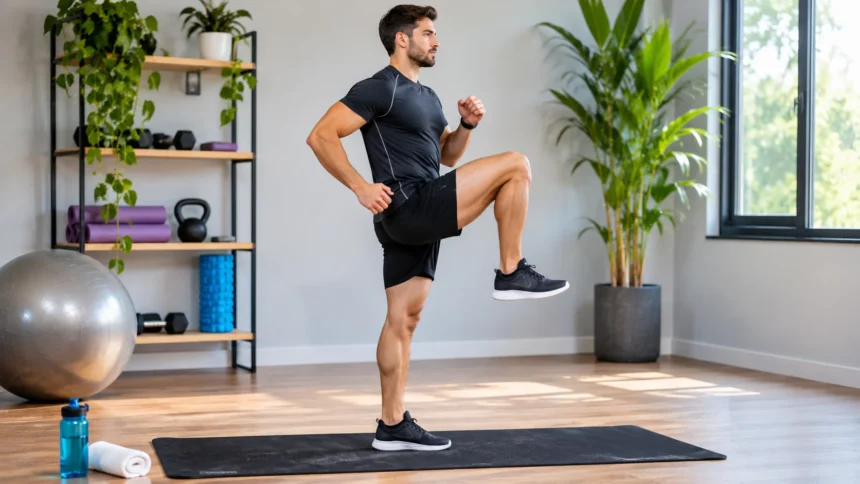
Standing knee raises involve lifting one leg while maintaining a stable and comfortable standing position. This movement activates the hip flexors while encouraging coordination between the muscles responsible for balance and lower body stability. Beginners can perform the exercise beside a sturdy countertop or chair to provide additional support and improve confidence during movement.
Stand upright with your feet comfortably positioned and gently raise one knee in front of your body. Avoid swinging the leg, leaning excessively backward, or forcing the knee beyond a comfortable height. Slowly lower your foot to the starting position and repeat the movement on the opposite side while maintaining steady breathing and control.
Standing knee raises can help develop movement patterns used during walking and stair climbing. However, maintaining balance and proper technique is more important than increasing the difficulty of the exercise. Using a stable support when necessary allows you to focus on hip movement without placing unnecessary demands on other parts of your body.
Supine Marching for Hip Flexor Strength
Supine marching is a floor-based exercise that involves controlled leg movements while lying on your back. It can help develop coordination between the hip flexors and surrounding muscles responsible for supporting the pelvis. This exercise provides a stable starting position, making it a practical option for people who find standing exercises more challenging.
Lie comfortably on your back with your knees bent and both feet resting on the floor. Gently lift one foot while bringing your knee slightly toward your upper body, keeping your pelvis relatively steady throughout the movement. Slowly return your foot to the floor before repeating the same comfortable movement with your opposite leg.
The purpose of supine marching is to practice controlled hip flexion rather than create an intense workout. Avoid holding your breath, excessively arching your lower back, or continuing through discomfort during the exercise. Keeping the movement small and manageable can help you develop better muscle coordination before progressing to more challenging strengthening activities.
Hip Flexor Strengthening With Resistance Bands
Resistance bands can provide additional challenges for hip flexor strengthening once basic movements become comfortable and well controlled. These flexible exercise tools create resistance that muscles must work against during movement. However, beginners should first develop confidence with ordinary bodyweight exercises before considering added resistance or more demanding hip strengthening techniques.
A common resistance band exercise involves performing controlled knee raises against light resistance using an appropriate exercise setup. The added resistance encourages the hip flexor muscles to work harder while maintaining smooth movement and proper alignment. A physical therapist or qualified exercise instructor can demonstrate a suitable setup based on individual abilities and movement requirements.
Choosing manageable resistance is important because excessive tension may cause compensatory movements or unnecessary discomfort. Inspect exercise bands for damage before use and follow the manufacturer’s safety instructions when setting them up. Gradual progression and appropriate supervision can help you use resistance bands safely while maintaining comfortable movement and balanced muscle development.
Common Mistakes During Hip Flexor Strengthening
One common mistake is performing exercises too quickly without maintaining control throughout the movement. Rushing through hip flexion exercises may encourage momentum rather than allowing the intended muscles to work effectively. Moving at a comfortable pace helps you concentrate on muscle coordination, maintain balance, and recognize when a particular movement becomes difficult or uncomfortable.
Another mistake involves excessively arching the lower back or leaning backward while lifting the knee. These compensatory movements may occur when an exercise is too challenging or when someone attempts to move beyond their comfortable range. Reducing the difficulty and focusing on a stable body position can help improve exercise technique and movement quality.
Continuing exercises despite sharp pain or increasing difficulty too quickly can also create unnecessary problems. Strength development takes time, and muscles need opportunities to recover between challenging activities. Choosing appropriate exercises, allowing adequate rest, and paying attention to physical warning signs can support a more sustainable approach to improving hip strength and mobility.
Hip Flexor Strengthening vs Stretching
Hip flexor strengthening and stretching serve different but complementary purposes within a balanced movement routine. Strengthening exercises improve the muscles’ ability to produce force and manage physical demands. Stretching exercises primarily focus on maintaining or improving flexibility and comfortable movement range, depending on individual needs and the specific characteristics of the muscles involved.
A sensation of tightness around the front of the hips does not necessarily mean that the muscles need more stretching. Muscle tension can result from several factors, including prolonged positions, fatigue, or movement limitations. Some individuals may benefit from strengthening, mobility exercises, or a combination of approaches based on their overall physical condition.
Combining comfortable strengthening and mobility exercises may help support balanced hip function when both activities are appropriate. However, forcing deep stretches or performing exercises through pain can be counterproductive. A qualified physical therapist can assess muscle strength, joint mobility, and movement patterns to recommend an approach that addresses specific difficulties and physical requirements.
How Often Should You Strengthen Your Hip Flexors?
The appropriate frequency of hip flexor strengthening depends on your physical abilities, general activity level, and individual health considerations. Many people can include gentle strengthening exercises within a balanced routine on nonconsecutive days. Providing opportunities for recovery helps muscles adapt to physical activity without creating unnecessary fatigue or discomfort from repeated demanding exercise sessions.
Beginners should prioritize learning correct movement techniques and developing confidence rather than completing large numbers of repetitions. Start with a manageable amount of activity that feels comfortable and does not interfere with normal daily movements. As strength and coordination improve, exercise difficulty can be adjusted gradually according to individual needs and professional guidance.
Recovery is an important part of maintaining healthy muscle function and supporting continued physical activity. Adequate sleep, regular meals, hydration, and rest all contribute to general physical well-being. If strengthening exercises cause persistent soreness, unusual fatigue, or worsening discomfort, reduce the activity and seek appropriate advice before attempting to increase exercise frequency.
When to Seek Professional Help
Although gentle hip flexor strengthening exercises may benefit many people, certain symptoms require professional assessment before continuing. Persistent hip pain, sudden muscle weakness, significant swelling, or difficulty walking may indicate an underlying condition that needs attention. Ignoring these symptoms and continuing exercise could delay appropriate treatment or contribute to additional physical discomfort.
People recovering from hip injuries, surgery, or medical conditions should follow exercise recommendations provided by their healthcare professionals. Recovery requirements vary considerably depending on the nature of the condition and the person’s overall health. Exercises that are suitable for healthy individuals may not be appropriate during certain stages of injury rehabilitation or surgical recovery.
A physical therapist can evaluate hip mobility, muscle strength, balance, and movement coordination to identify potential areas of concern. They can also recommend exercises that match individual abilities and explain how to perform them correctly. Seek urgent medical attention if severe hip pain follows an injury or you suddenly cannot bear weight on the affected leg.
Conclusion
Hip flexor strengthening is an important part of maintaining comfortable movement, muscle coordination, and functional lower body strength. These muscles contribute to everyday activities such as walking, climbing stairs, and lifting the legs. Gentle strengthening exercises performed with appropriate technique can help support hip function while reducing unnecessary demands on surrounding muscles and joints.
Exercises such as seated hip flexion, standing knee raises, and supine marching provide accessible ways to practice controlled hip movements. More challenging exercises may be introduced gradually when appropriate for your physical abilities. Maintaining proper technique, using suitable support, and allowing sufficient recovery are essential considerations throughout the strengthening process.
Building functional hip strength requires a balanced approach that includes comfortable movement, appropriate physical activity, and attention to individual health needs. Avoid forcing exercises or ignoring persistent pain while working toward improved muscle function. With suitable guidance and consistent, manageable practice, hip flexor strengthening can become a useful part of a healthy movement routine.
FAQs
What is the best exercise for hip flexor strengthening?
Seated hip flexion and supported standing knee raises are accessible exercises for beginners. The most suitable exercise depends on your current strength, mobility, comfort, and individual physical needs.
Can weak hip flexors cause lower back pain?
Weak hip flexors may contribute to certain movement difficulties associated with lower back discomfort. However, back pain has many possible causes and requires professional assessment when persistent or severe.
How long does it take to strengthen hip flexors?
Improvements in muscle strength and coordination may develop over several weeks of appropriate practice. Recovery, exercise technique, existing strength, and individual health conditions influence how quickly progress occurs.
Should you stretch or strengthen tight hip flexors?
Both approaches may be helpful depending on the cause of tightness. A physical therapist can assess muscle function and determine whether strengthening, stretching, or a combination is most appropriate.
Can you strengthen hip flexors without equipment?
Yes, exercises such as seated hip flexion, supported standing knee raises, and supine marching can be performed without specialized equipment. Focus on comfortable movements, proper technique, and adequate recovery.