
Imagine waking up with discomfort near your ankle or feeling pain in your shoulder while reaching for something. You might assume that your muscles are sore, but another important part of your body could be involved. That part is called a tendon.
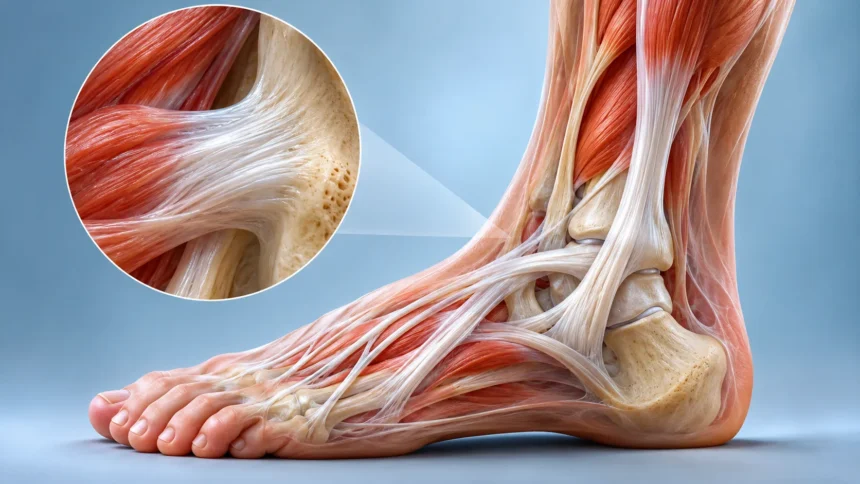
So, what are tendons, and why are they important? Tendons are strong bands of connective tissue that connect muscles to bones. They help you perform everyday movements, from walking upstairs to holding a cup of coffee.
Understanding tendons can help you appreciate how your body moves and recognize potential signs of injury. This guide explains tendon anatomy, functions, common conditions, and practical ways to support tendon health using simple examples.
What Are Tendons in the Human Body?
Tendons are strong, flexible structures made primarily of connective tissue. They attach muscles to bones and transfer the force produced when muscles contract. This process allows different parts of your body to move.
Think of a tendon as a strong cable connecting a motor to a moving object. The muscle acts as the motor, while the tendon transfers its pulling force. The bone moves in response to that force.
Your body contains thousands of tendons of different shapes and sizes. Some support large movements involving your legs and shoulders, while others control smaller movements in your fingers. Together, they contribute to everyday physical activities.
What Are Tendons Made Of?
You might wonder how tendons withstand repeated pulling forces without becoming damaged during normal movement. Their strength comes from their specialized internal structure. Unlike muscles, tendons consist mainly of tightly arranged collagen fibers.
Collagen is a structural protein that provides strength and support to connective tissues. In tendons, these fibers form organized bundles that help distribute mechanical forces. Tendons also contain water, specialized cells, and other structural proteins.
Imagine several thin threads woven together to create a strong rope. Individual threads may have limited strength, but their combined structure can withstand greater force. Tendons use a similar arrangement to support movement.
Understanding the Anatomy of a Tendon
Although tendons may appear to be simple bands of tissue, their internal structure is more complex. Different components work together to maintain strength, flexibility, and normal movement. Each component contributes to the overall function of the tendon.
The main components of tendon anatomy include:
- Collagen fibers: Provide strength and resistance to pulling forces.
- Fascicles: Organized bundles of collagen fibers.
- Tenocytes: Specialized cells that maintain tendon tissue.
- Endotenon: Connective tissue surrounding internal fiber bundles.
- Epitenon: A thin connective tissue layer surrounding the tendon.
- Enthesis: The area where a tendon attaches to a bone.
- Tendon sheath: A protective structure surrounding certain tendons.
These structures help tendons transfer force while moving within surrounding tissues. Some tendons have specialized coverings that reduce friction during repeated movements. This is particularly important in areas such as the hands and wrists.
What Is the Main Function of Tendons?
Muscles generate force, but they need a way to transfer that force to bones. Without this connection, muscle contractions would not produce normal skeletal movement. Tendons provide the essential link between these structures.
Supporting Body Movement
Tendons transfer force from contracting muscles to bones, allowing joints to move. When you bend your elbow, tendons connected to your arm muscles help produce that movement. Similar processes occur whenever you walk, write, or reach for an object.
Maintaining Joint Stability
Some tendons help maintain joint stability by transmitting muscle tension around joints. This provides dynamic support during physical activities. Tendons work alongside muscles, ligaments, and other structures to support controlled movement.
Storing and Releasing Energy
Certain tendons can temporarily store elastic energy during movement and release it afterward. The Achilles tendon is an important example of this ability. It contributes to efficient movement when you walk, run, or jump.
Supporting Precise Movements
Simple tasks such as typing, drawing, and fastening buttons require carefully controlled movements. Tendons in your hands and fingers transfer muscle forces to produce these actions. Their coordinated movement allows you to perform tasks requiring precision.
Where Are Tendons Located in the Body?
Many people only become aware of tendons when they experience discomfort near a joint. However, tendons are distributed throughout the musculoskeletal system. Their locations depend on the muscles they connect and the movements they support.
| Tendon | Location | Main Function |
|---|---|---|
| Achilles tendon | Back of the ankle | Supports pushing off the ground |
| Rotator cuff tendons | Shoulder | Support shoulder movement and stability |
| Biceps tendon | Upper arm and shoulder | Helps bend the elbow and rotate the forearm |
| Triceps tendon | Back of the elbow | Helps straighten the arm |
| Quadriceps tendon | Above the kneecap | Helps straighten the knee |
| Flexor tendons | Hands and fingers | Help bend the fingers |
| Extensor tendons | Back of the hands and fingers | Help straighten the fingers |
The size and structure of each tendon reflect its particular role. Tendons supporting larger forces may differ considerably from those responsible for delicate finger movements. Each contributes to the body’s overall movement system.
Common Types of Tendons and Their Functions
Understanding individual tendons becomes easier when you connect them with familiar activities. Different tendons support different movements, from walking to lifting objects. Some are particularly important because of their roles in everyday mobility.
Achilles Tendon
The Achilles tendon connects the calf muscles to the heel bone. It is the largest and strongest tendon in the human body. It helps you push off the ground when walking, climbing stairs, or standing on your toes.
Rotator Cuff Tendons
The rotator cuff consists of four muscles and their associated tendons around the shoulder. These structures help stabilize the shoulder joint and support arm movement. They are important when reaching overhead, getting dressed, or carrying objects.
Quadriceps Tendon
The quadriceps tendon connects the muscles at the front of your thigh to the kneecap. It forms part of the mechanism that allows your knee to straighten. This function supports walking, standing up, and climbing stairs.
Patellar Tendon
The patellar tendon connects the kneecap to the shinbone and is also called the patellar ligament. It transfers force from the quadriceps mechanism to help straighten the knee. It plays an important role in many lower-body movements.
Flexor and Extensor Tendons
Flexor tendons help bend your fingers, while extensor tendons help straighten them. These structures connect muscles to bones within the hands and fingers. They support everyday activities such as writing, gripping objects, and using a keyboard.
Tendons vs. Ligaments: What Is the Difference?
Tendons and ligaments are frequently confused because both consist largely of collagen-rich connective tissue. However, they connect different structures and perform different functions. Understanding this distinction can help you better understand joint movement and injuries.
Tendons generally connect muscles to bones and transfer muscular force. Ligaments usually connect bones to other bones and help stabilize joints. Both structures are essential for coordinated and controlled movement.
| Feature | Tendons | Ligaments |
|---|---|---|
| Connection | Generally muscle to bone | Generally bone to bone |
| Main function | Transfer muscular force | Stabilize joints |
| Main structural protein | Collagen | Collagen |
| Role in movement | Help produce movement | Guide and limit excessive movement |
| Common injury | Tendinopathy or tendon tear | Sprain or ligament tear |
| Example | Achilles tendon | Anterior cruciate ligament |
For example, when you straighten your knee, tendons help transfer muscular force to produce movement. Ligaments help maintain appropriate alignment and limit excessive joint motion. Both structures work together rather than independently.
What Causes Tendon Injuries?
Tendon discomfort can develop even when you do not remember experiencing a particular injury. Repeated physical stress, insufficient recovery, or sudden increases in activity may contribute to tendon problems. Other injuries develop after unexpected movements or accidents.
Common risk factors for tendon injuries include:
- Repetitive movements during work or exercise.
- Sudden increases in physical activity.
- Previous tendon injuries.
- Inadequate recovery between demanding activities.
- Age-related changes in connective tissues.
- Certain medical conditions and medications.
- Physical demands that exceed the tendon’s current capacity.
For example, someone who suddenly begins a demanding running routine may place unfamiliar stress on their Achilles tendons. Their tissues may need time to adapt to the increased activity. Gradual progression and adequate recovery can help reduce unnecessary strain.
Common Tendon Injuries and Conditions
Pain around a joint does not always indicate the same type of injury. Tendon conditions can develop for different reasons and may require different approaches to treatment. Understanding common terminology can make discussions with healthcare professionals easier.
Tendinitis
Tendinitis, also spelled tendonitis, refers to inflammation of a tendon. It may occur following an injury or repeated stress on the affected area. Common symptoms include localized discomfort, tenderness, and sometimes swelling.
Tendinopathy
Tendinopathy commonly describes persistent tendon pain and reduced function associated with physical loading. It can affect different tendons throughout the body. Appropriate assessment is important because ongoing tendon discomfort does not always result from inflammation alone.
Tendinosis
Tendinosis refers to degenerative changes within tendon tissue. These changes may develop over time and affect the organization of collagen fibers. A healthcare professional can determine whether these changes are associated with a person’s symptoms.
Tendon Rupture
A tendon rupture is a partial or complete tear of tendon tissue. It may occur during an injury or in a previously weakened tendon. Sudden pain, significant weakness, or loss of normal movement requires prompt medical assessment.
Tenosynovitis
Tenosynovitis involves inflammation of the protective sheath surrounding certain tendons. It commonly affects areas such as the hands, wrists, and feet. Symptoms may include discomfort, swelling, and difficulty performing particular movements.
What Are the Symptoms of Tendon Problems?
Recognizing tendon problems early can help prevent unnecessary stress on an affected area. However, tendon-related symptoms may resemble muscle, ligament, or joint problems. A professional assessment may be necessary to identify the underlying cause.
Common symptoms associated with tendon conditions include:
- Pain during particular movements.
- Tenderness near a tendon or joint.
- Stiffness after periods of inactivity.
- Discomfort during or after physical activity.
- Swelling around the affected area.
- Reduced strength or movement.
- Difficulty performing familiar physical tasks.
For example, Achilles tendon problems may cause discomfort near the back of the heel during walking. Shoulder tendon conditions may make reaching overhead uncomfortable. These symptoms provide useful clues but cannot confirm a diagnosis on their own.
How Are Tendon Injuries Diagnosed?
It can be difficult to determine whether discomfort comes from a tendon, muscle, or surrounding joint. Guessing the cause may delay appropriate treatment. Healthcare professionals use several methods to evaluate tendon-related symptoms.
A healthcare provider typically asks about your symptoms, daily activities, and previous injuries. They may examine the affected area and assess its movement, tenderness, and strength. This information helps them identify possible causes of discomfort.
When necessary, ultrasound or MRI scans may provide additional information about tendon structure. X-rays can help identify certain bone-related problems or calcium deposits. Not every tendon condition requires imaging, and the appropriate examination depends on the individual situation.
How Are Tendon Injuries Treated?
Dealing with persistent tendon discomfort can feel frustrating, particularly when it interferes with everyday activities. However, treatment depends on the type, location, and severity of the condition. A single recovery approach does not work for every tendon injury.
A healthcare professional may recommend adjusting activities that aggravate symptoms, temporary support, or physical therapy. Rehabilitation often involves gradually restoring strength and movement through an individualized program. Some serious injuries may require additional medical procedures or surgery.
Avoid assuming that complete rest or aggressive stretching will solve every tendon problem. Both approaches can be unsuitable in certain situations. Following professional guidance helps ensure that recovery activities match the condition and its stage of healing.
How Long Do Tendons Take to Heal?
One of the most frustrating aspects of tendon injuries is uncertainty about recovery time. Tendons have relatively limited blood supplies in certain regions and undergo gradual tissue repair. As a result, recovery can sometimes take longer than expected.
Tendon healing generally involves three overlapping stages:
- Inflammatory phase: The body begins responding to the injury.
- Repair phase: Specialized cells produce new tissue components.
- Remodeling phase: The healing tissue gradually reorganizes and develops its mechanical properties.
Recovery may take weeks or several months, depending on the condition and its severity. Age, general health, injury history, and rehabilitation can also influence healing. Returning to demanding activities should depend on recovery progress rather than a fixed deadline.
How to Keep Your Tendons Healthy
Many people think about tendon health only after experiencing discomfort. However, everyday habits can help support connective tissue function and reduce unnecessary physical stress. Consistency is often more valuable than making sudden changes.
Consider these practical habits:
- Increase physical activity gradually.
- Allow adequate recovery between demanding activities.
- Warm up before exercise.
- Wear suitable footwear for your activities.
- Use appropriate movement techniques.
- Maintain balanced nutrition and adequate hydration.
- Avoid forcing movements that cause pain.
- Seek medical advice for persistent symptoms.
Regular, appropriate physical activity helps maintain the body’s ability to handle everyday movement. However, recovery and rest are equally important parts of staying active. Listening to discomfort instead of ignoring it can help prevent unnecessary setbacks.
Key Facts About Tendons You Should Know
Tendons may receive less attention than muscles and bones, but their role is equally important. Learning a few essential facts can help you better understand these remarkable structures. Their strength and adaptability support countless daily movements.
Here are some interesting facts about tendons:
- Tendons consist primarily of type I collagen.
- The Achilles tendon is the body’s largest and strongest tendon.
- Tendons can adapt to appropriate mechanical loading.
- Some tendons store and release elastic energy.
- Tendons contain living cells, nerves, and blood vessels.
- Tendon healing can take several months.
- Tendons do not actively contract like muscles.
- Tendon strength depends partly on collagen organization.
These facts demonstrate that tendons are more than simple connections between muscles and bones. They are living tissues with specialized mechanical and biological properties. Their health contributes significantly to comfortable and functional movement.
When Should You See a Doctor for Tendon Pain?
It is natural to wonder whether tendon discomfort will improve without medical attention. While some mild problems improve with appropriate activity adjustments, persistent or severe symptoms should not be ignored. Early assessment can help identify conditions requiring treatment.
Seek urgent medical attention if you experience sudden severe pain, a popping sensation followed by weakness, or an inability to move or use the affected area normally. Redness and warmth accompanied by fever also require prompt medical attention.
If discomfort continues, repeatedly returns, or interferes with everyday activities, arrange an appointment with a healthcare professional. Identifying the cause can help you receive appropriate treatment. Avoid relying solely on online information to diagnose an injury.
Frequently Asked Questions
1. What are tendons in simple words?
Tendons are strong bands of connective tissue that generally connect muscles to bones. They transfer muscular force, allowing you to walk, lift objects, bend your joints, and perform everyday movements.
2. What is the strongest tendon in the human body?
The Achilles tendon is considered the largest and strongest tendon in the human body. It connects the calf muscles to the heel bone and supports walking, running, and other movements.
3. Are tendons and ligaments the same thing?
No. Tendons generally connect muscles to bones, while ligaments connect bones to other bones. Tendons help produce movement, whereas ligaments primarily support joint stability and control excessive movement.
4. Can damaged tendons heal naturally?
Some tendon injuries can improve through the body’s natural healing processes with appropriate care and rehabilitation. However, serious injuries may require specialized treatment or surgery. Recovery depends on the specific condition.
5. Why do tendons take so long to heal?
Tendons have relatively limited blood supplies in certain areas, and their organized collagen structure takes time to repair and remodel. Injury severity, general health, and rehabilitation also influence recovery time.
Conclusion
Understanding what tendons are helps you appreciate the complex system behind everyday movement. These strong connective tissues transfer muscular force, support joint stability, and contribute to activities ranging from walking to writing.
Supporting tendon health does not require complicated routines. Gradual activity progression, adequate recovery, balanced nutrition, and attention to persistent discomfort can help maintain healthy movement. Appropriate medical care is important whenever an injury is suspected.
Start by reviewing your daily movement habits and identifying activities that repeatedly cause discomfort. Make sensible adjustments and seek professional advice when symptoms persist. Taking care of your tendons today can support comfortable movement and everyday independence in the future.