
20 High-Potassium Foods to Add to Your Diet
Potassium rarely gets the same attention as protein, calcium, or iron, yet this essential mineral supports many of the processes your body performs every day. Your nerves need potassium to transmit signals, your muscles rely on it to contract properly, and your heart and kidneys depend on balanced potassium levels to function normally. It also works closely with sodium to regulate fluid balance and electrical activity throughout the body. Many people, however, do not consistently consume enough potassium-rich foods. The good news is that increasing dietary potassium does not require unusual supplements or complicated meal plans. Fruits, vegetables, beans, dairy products, fish, and other everyday foods can provide meaningful amounts naturally.
Bananas are often described as the classic high-potassium food, but they are only one option among dozens of nutritious choices. Potatoes, beans, leafy greens, avocado, yogurt, salmon, dried fruit, squash, and tomato products can contain as much or even more potassium per serving. Building a varied diet around these foods can also provide fiber, protein, vitamins, antioxidants, and healthy fats. That makes food-based potassium especially useful because you are improving the overall quality of your meals rather than focusing on a single nutrient. According to the National Institutes of Health, adult men generally need about 3,400 milligrams of potassium daily, while adult women generally need about 2,600 milligrams.
Getting enough potassium may be particularly valuable for cardiovascular health. Potassium helps counterbalance some of sodium’s effects on blood pressure by supporting fluid regulation and normal blood-vessel function. Diets rich in potassium-containing fruits and vegetables are commonly associated with healthier blood-pressure patterns, especially when sodium intake is kept moderate. Potassium also contributes to normal muscle contractions, which includes the continuous contractions performed by the heart. However, it is important to remember that individual foods are not medications. Eating more potassium works best as part of an overall dietary pattern that includes vegetables, fruits, whole grains, protein-rich foods, healthy fats, and sensible sodium intake.
More potassium is not automatically better for everyone. Healthy kidneys normally remove excess potassium from the bloodstream, but people with chronic kidney disease may have difficulty eliminating it effectively. Certain medications, including some ACE inhibitors and potassium-sparing diuretics, can also increase the risk of excessively high blood potassium. Hyperkalemia can affect heart rhythm and may become medically serious, which means people who have been advised to limit potassium should not intentionally increase high-potassium foods without professional guidance. Potassium-based salt substitutes deserve similar caution because they may contain concentrated amounts. The NIH specifically advises people at risk of high potassium to discuss appropriate intake with a healthcare professional.
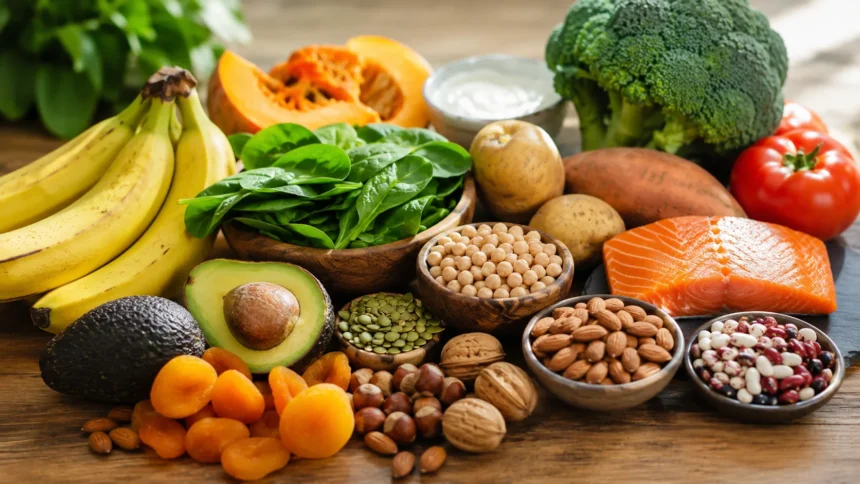
For most healthy adults, however, food is an excellent place to obtain potassium. The following guide highlights 20 high-potassium foods and explains practical ways to fit them into breakfast, lunch, dinner, and snacks. The foods include plant-based and animal-based choices so the list can work with many eating styles. Exact potassium content varies according to serving size, variety, preparation, and brand, so numbers should be treated as approximate rather than absolute. Instead of obsessing over a single serving, think about how several potassium-rich foods can accumulate throughout the day. A breakfast containing yogurt and fruit, a bean-based lunch, and potatoes or leafy greens at dinner can make reaching your daily needs considerably easier.
Why Potassium Is Important for Your Body
Potassium is an electrolyte, meaning it carries an electrical charge when dissolved in body fluids. That electrical activity plays an essential role in nerve transmission and muscle function. Every time your nervous system sends a signal telling a muscle to contract, carefully controlled movements of potassium and other electrolytes help make that process possible. This applies to voluntary muscles used for walking and lifting as well as muscles involved in digestion and heart function. Potassium also helps regulate fluid levels within cells, while sodium primarily influences fluid outside cells. Maintaining an appropriate balance between these minerals supports normal cellular activity throughout the body.
One of potassium’s most widely discussed roles involves blood-pressure regulation. Diets high in sodium can encourage the body to retain fluid, contributing to increased blood pressure in susceptible individuals. Adequate potassium helps the kidneys remove more sodium through urine and supports normal blood-vessel function. This does not mean adding potassium cancels out unlimited salty food, but a diet rich in fruits, vegetables, beans, and other potassium-containing foods can improve the overall sodium-to-potassium balance. The NIH reports that low potassium intake is associated with increased risk of high blood pressure, particularly among people whose diets are high in sodium.
Potassium is equally important for normal muscle function. People often associate electrolytes with athletes because prolonged exercise and heavy sweating can affect fluid and electrolyte balance. Yet potassium is continuously involved in muscular activity even when you are not exercising. Very low potassium levels, known as hypokalemia, can cause muscle weakness, tiredness, constipation, and other symptoms. Severe deficiency can interfere with breathing muscles and normal heart rhythm. Fortunately, dietary deficiency severe enough to create dangerous hypokalemia is uncommon in healthy people, although vomiting, prolonged diarrhea, certain diuretics, laxative misuse, and other medical situations can cause significant losses.
Kidneys also have an important relationship with potassium. Healthy kidneys continuously filter the blood and excrete unnecessary potassium through urine, helping keep levels within a narrow physiological range. This regulatory system is one reason potassium from food is generally considered safe for healthy individuals. When kidney function becomes significantly impaired, however, potassium can accumulate instead of being efficiently removed. High blood potassium may initially produce few obvious symptoms, which makes medical monitoring particularly important for people with kidney disease. Dietary recommendations for these individuals can differ dramatically from general nutrition advice, so a high-potassium diet should never override personalized renal guidance.
Potassium-containing foods may support health in additional ways because many of them are nutrient dense beyond their potassium content. Beans contribute plant protein and fiber, leafy vegetables provide folate and carotenoids, dairy products supply protein and calcium, while fish can provide omega-3 fats. Fruits and vegetables also contain numerous phytochemicals that cannot be replaced simply by taking a potassium supplement. This is why nutrition guidance generally emphasizes obtaining nutrients from food whenever possible. The NIH similarly notes that foods provide vitamins, minerals, dietary fiber, and other beneficial components alongside potassium. Choosing a varied diet therefore offers broader benefits than chasing a potassium number alone.
20 High-Potassium Foods Worth Eating More Often
1. Baked potatoes, 2. Sweet potatoes, 3. White beans, and 4. Lentils are among the strongest everyday options for increasing potassium intake. A medium baked potato with its skin can provide roughly 900 milligrams of potassium, making it considerably richer than the banana many people automatically associate with the mineral. USDA-derived nutrient tables have listed a medium baked potato at approximately 941 milligrams. Sweet potatoes provide potassium alongside beta-carotene, fiber, and complex carbohydrates. White beans and lentils combine potassium with plant protein and fiber, making them particularly useful in filling meals. Add beans to soups, salads, grain bowls, chili, or wraps for an easy nutritional upgrade.
5. Spinach, 6. beet greens, 7. acorn squash, and 8. tomatoes show how effectively vegetables can contribute to daily potassium intake. Cooked leafy greens become more concentrated because large quantities of fresh leaves shrink significantly during cooking. Beet greens are especially potassium dense, with older USDA nutrient tables reporting more than 600 milligrams in a half-cup cooked serving. Spinach can be stirred into eggs, soups, pasta sauces, curries, or lentil dishes without substantially changing the meal. Acorn squash provides potassium along with carotenoids and fiber. Tomatoes contribute less per fresh serving, but concentrated forms such as tomato puree and paste can deliver substantial amounts because much of the water has been removed.
9. Avocados, 10. bananas, 11. oranges, and 12. dried apricots make increasing potassium particularly convenient because they require little preparation. Bananas are popular for good reason: they are portable, inexpensive, easy to digest for many people, and useful in breakfast, smoothies, snacks, and desserts. Avocado provides potassium alongside monounsaturated fat, fiber, folate, and other nutrients. Oranges and orange juice contribute potassium while also supplying vitamin C, although whole fruit provides more fiber than juice. Dried apricots are more concentrated because removing water reduces volume while retaining much of the fruit’s mineral content. Portion awareness matters with dried fruit because calories and natural sugars are also concentrated.
13. Prunes, 14. plain yogurt, 15. milk, and 16. salmon broaden the list beyond fresh produce. Prunes and prune juice can provide considerable potassium and may also support bowel regularity because prunes contain fiber and sorbitol. Plain yogurt can be an excellent potassium source while also supplying protein, calcium, and beneficial cultures in varieties containing live microorganisms. One cup of plain nonfat yogurt has historically been listed at roughly 579 milligrams of potassium in USDA nutrient tables. Milk provides potassium alongside calcium, vitamin B12, and protein. Salmon contributes potassium as well as high-quality protein and omega-3 fatty acids, making it a useful nutrient-dense dinner option.
17. Edamame, 18. kidney beans, 19. raisins, and 20. broccoli complete the group with foods that can fit into a variety of dietary patterns. Edamame provides plant protein, potassium, fiber, iron, and folate and works well as a snack or addition to grain bowls and salads. Kidney beans offer similar advantages and pair easily with rice, soups, curries, and chili. Raisins provide concentrated potassium in a small serving and can be combined with oatmeal, yogurt, or nuts rather than eaten in large handfuls. Broccoli may not be the richest food on the list, but regular servings contribute toward daily potassium while providing vitamin C, vitamin K, fiber, and phytochemicals.
High-Potassium Fruits That Go Beyond Bananas
Bananas deserve their healthy reputation, but focusing only on them can make a potassium-rich diet unnecessarily repetitive. A medium banana generally contributes several hundred milligrams of potassium, making it a useful but not extraordinary source compared with potatoes, legumes, and certain concentrated foods. Its major advantage is convenience because no cooking or refrigeration is necessary before eating. Bananas pair naturally with oatmeal, peanut butter, yogurt, smoothies, and whole-grain toast. Slightly underripe bananas also contain more resistant starch than very ripe ones, which may influence digestion and blood-sugar response. Rather than relying on multiple bananas daily, use them as one element of a varied fruit intake.
Avocado is botanically a fruit and provides a useful combination of potassium, fiber, and unsaturated fats. It can be mashed onto whole-grain toast, sliced into salads, added to tacos, blended into sauces, or served alongside eggs and beans. The higher calorie density compared with watery fruits does not make avocado unhealthy, but portion size may matter for people managing total energy intake. Pairing avocado with vegetables and protein can create a satisfying meal. It also demonstrates an important point about high-potassium foods: they do not all taste sweet or function as snacks. Potassium can come from many different culinary categories throughout the day.
Oranges provide potassium along with vitamin C, folate, water, and beneficial plant compounds. Whole oranges are generally preferable to juice when your goal is satiety because the intact fruit retains more fiber and requires chewing. Orange juice can still contribute meaningful potassium, but it is easy to drink more fruit-equivalent calories than you would normally eat. Grapefruit, cantaloupe, kiwi, and other fruits can also add potassium even if they do not rank among the very highest sources per serving. Variety matters more than finding the mathematically richest fruit. Rotating different fruits throughout the week keeps meals interesting and expands the range of micronutrients you consume.
Dried apricots and raisins are particularly concentrated sources because dehydration removes much of the fruit’s water. That means a small handful contains nutrients that originally occupied a much larger volume of fresh fruit. Dried fruit can therefore be a convenient way to increase potassium when traveling, hiking, or assembling a quick breakfast. The same concentration also increases the amount of natural sugar and calories per bite, so modest portions usually make sense. Choose varieties without large amounts of added sugar when possible. Combining dried fruit with unsalted nuts or plain yogurt can slow the pace of eating and create a more balanced snack.
Prunes deserve attention for both their potassium content and digestive properties. Their natural fiber and sorbitol content can help promote bowel regularity in some people, although excessive amounts may produce bloating or loose stools. Prune juice provides potassium too, but it contains little of the intact fiber found in whole prunes. People who enjoy smoothies can combine prunes with yogurt, oats, berries, or banana for a nutrient-rich breakfast. The broader lesson is that you do not need a single “best fruit” for potassium. Alternating bananas, oranges, avocado, dried apricots, raisins, and prunes can help increase intake while providing a wider nutritional profile.
High-Potassium Vegetables, Beans and Plant Foods
Potatoes are one of the most underestimated potassium-rich foods. Their reputation often suffers because people associate potatoes primarily with fries, chips, butter, cheese, or other high-sodium preparations. A plain baked potato, however, naturally provides potassium, vitamin C, vitamin B6, carbohydrates, and some fiber, particularly when the skin is eaten. A medium baked potato has been listed at around 941 milligrams of potassium in USDA nutrient data. Baking, boiling, or roasting potatoes with modest amounts of oil allows the vegetable’s nutritional value to remain central. Pairing potatoes with beans, fish, yogurt-based toppings, or vegetables can create a balanced meal.
Sweet potatoes provide another nutrient-rich way to increase potassium while adding natural sweetness and beta-carotene. A medium baked sweet potato has historically provided more than 500 milligrams of potassium according to USDA-derived tables. They can be roasted in cubes, baked whole, mashed, added to soups, or combined with black beans in tacos and bowls. Leaving the skin on when practical can increase fiber. Sweet potatoes are sometimes portrayed as dramatically healthier than white potatoes, but both can be valuable foods. Rotating between them provides different flavors, colors, and micronutrient profiles while contributing meaningfully to potassium intake.
Beans and lentils deserve a prominent place in a potassium-rich diet because they offer several nutritional advantages at once. White beans, kidney beans, black beans, chickpeas, lentils, and soy foods provide potassium alongside protein, fiber, folate, magnesium, and iron. They are also inexpensive compared with many animal proteins and can be stored for long periods in dried or canned form. Rinsing canned beans under water can reduce some of their sodium, which is useful when blood-pressure management is a goal. Add legumes to soups, curries, salads, pasta dishes, wraps, or grain bowls. Even replacing part of the meat in a recipe with beans can increase fiber and potassium simultaneously.
Leafy greens such as spinach and beet greens become surprisingly concentrated sources after cooking. A large bowl of raw spinach cooks down to a relatively small portion, allowing you to consume much more plant material in each serving. Beet greens are especially rich and can be sautéed similarly to spinach or Swiss chard. Greens also provide vitamin K, folate, carotenoids, magnesium, and other nutrients. Cooking does not make every nutrient more abundant, but it can make leafy vegetables easier to eat in larger quantities. Combine greens with beans, eggs, potatoes, fish, or whole grains to create meals containing several complementary potassium sources rather than relying on a single ingredient.
Squash, tomatoes, broccoli, and other vegetables contribute additional potassium while increasing dietary diversity. Tomato paste and tomato puree can be especially concentrated, with older USDA data listing one-quarter cup of tomato paste at approximately 669 milligrams of potassium. That makes pasta sauces, soups, stews, and bean dishes easy opportunities to increase intake. Acorn squash works well roasted or added to grain bowls, while broccoli can be steamed, roasted, or stir-fried. The most practical strategy is not necessarily identifying one superfood. Filling meals with several different vegetables makes it easier to accumulate potassium alongside fiber and other micronutrients.
High-Potassium Protein and Dairy Foods
Salmon is often praised for its omega-3 fatty acids, but it also provides a substantial amount of potassium. Historical USDA nutrient data has listed a three-ounce serving of cooked wild Atlantic salmon at more than 500 milligrams. Salmon also supplies complete protein, vitamin B12, selenium, and beneficial long-chain omega-3 fats. It can be baked, grilled, poached, or added to salads and grain bowls. Choosing preparation methods that do not rely heavily on salty sauces can help maintain a favorable sodium-to-potassium balance. Other fish varieties also contain potassium, so seafood can contribute regularly even when salmon is not available.
Plain yogurt is another surprisingly strong potassium source. Depending on the type and serving size, a cup may contribute several hundred milligrams while also providing calcium and protein. USDA-derived tables have historically listed one cup of plain nonfat yogurt at about 579 milligrams of potassium. Yogurt works particularly well because it can be combined with other potassium-containing ingredients such as banana, dried apricots, raisins, or fruit. Choosing plain versions can help reduce added sugar, although flavored yogurt can still fit within an overall balanced diet. Greek yogurt may contain different potassium amounts depending on how it is processed, so labels are useful when precise intake matters.
Milk can contribute potassium across breakfast, snacks, and meals without requiring significant planning. Dairy milk supplies protein, calcium, vitamin B12, and potassium, while fortified alternatives vary substantially in nutrient composition. Some plant milks contain meaningful potassium, but amounts differ by brand and ingredients, so the nutrition label is the best guide. People who are lactose intolerant may tolerate lactose-free dairy milk, which retains much of the same nutritional profile. Yogurt and certain cheeses may also be easier for some individuals to digest. The goal is not necessarily to consume dairy but to recognize that it can be another useful source when it fits personal preferences.
Edamame offers a high-potassium protein option for vegetarian and plant-forward diets. These young soybeans contain complete plant protein, fiber, folate, iron, magnesium, and potassium. They can be steamed and eaten from the pod, purchased shelled for convenience, or added to salads, noodles, stir-fries, and rice bowls. Frozen edamame is particularly practical because it cooks quickly and can remain stored for months. Choosing lightly salted or unsalted versions can help people who are simultaneously trying to control sodium intake. Soy foods such as tofu and tempeh can also contribute potassium, although amounts vary depending on processing and portion size.
Protein foods do not need to supply all of your potassium, but they can make daily targets easier to reach when combined with vegetables and starches. A meal containing salmon, a baked potato, and spinach may contain several meaningful potassium sources at once. A vegetarian bowl with lentils, sweet potato, edamame, avocado, and greens accomplishes something similar. This meal-based approach is more practical than trying to calculate every milligram separately. It also encourages dietary variety and overall nutrient density. Instead of asking which one food has the most potassium, consider how your plate can include two or three potassium-containing ingredients at most meals.
How to Add More Potassium to Your Diet
Breakfast provides an easy opportunity to start accumulating potassium before the day becomes busy. Plain yogurt topped with banana, raisins, oats, and nuts creates a meal containing potassium alongside protein, fiber, and healthy fats. Another option is scrambled eggs served with sautéed spinach and roasted potatoes. Smoothies can combine milk or yogurt with banana, orange, avocado, spinach, or other fruit, although whole foods may be more filling than blended meals for some people. Oatmeal can also be topped with dried apricots or prunes. You do not need every ingredient to be exceptionally potassium rich because several moderate sources can add up significantly.
Lunch can incorporate legumes with very little additional effort. A lentil soup, bean salad, chickpea wrap, or burrito bowl can provide potassium alongside protein and fiber. Adding avocado, tomatoes, spinach, or roasted sweet potato increases the mineral content further. If you use canned beans, draining and rinsing them can help lower sodium while preserving much of their nutritional value. People who meal-prep can cook a large batch of lentils or beans once and distribute them across several meals. This approach is inexpensive, convenient, and adaptable to many cuisines. Seasoning with herbs, spices, garlic, citrus, or vinegar can add flavor without relying solely on salt.
Dinner is another opportunity to combine several potassium-rich foods naturally. Salmon served with a baked potato and broccoli is a simple example requiring no specialized recipe. A vegetarian alternative might pair white beans with tomato sauce, spinach, and whole-grain pasta. Sweet potato curry with lentils and leafy greens provides another combination. Rotating foods throughout the week prevents nutritional advice from feeling repetitive or restrictive. One evening might include fish, another beans, another a vegetable-heavy stew, and another a baked potato topped with yogurt and vegetables. Variety makes a high-potassium diet easier to sustain because meals still feel enjoyable rather than medically prescribed.
Snacks can contribute more than many people realize. A banana with peanut butter, yogurt with dried fruit, an orange with a handful of nuts, or a small serving of edamame can increase potassium without requiring a full meal. Dried fruit is especially convenient but should generally be portioned because its sugars and calories are concentrated. Smoothies are another option, although large fruit-heavy smoothies can contain much more energy than expected. Snacks should fit your appetite and total dietary needs rather than becoming mandatory simply to reach a nutrient target. If your meals already contain plenty of vegetables, beans, dairy, fruit, and potatoes, additional potassium-focused snacks may not be necessary.
Increasing potassium gradually can also make dietary changes more comfortable. Suddenly doubling beans, vegetables, and dried fruit may significantly increase fiber intake, potentially causing gas or bloating in people who are not accustomed to it. Introduce new foods progressively and drink sufficient fluids unless you have been medically advised to restrict them. The most sustainable approach is usually substitution rather than adding extra food on top of an already adequate diet. Replace a low-nutrient snack with fruit and yogurt, swap part of refined side dishes for beans or potatoes, or add vegetables to meals you already enjoy. Small repeated changes can produce a meaningful improvement over time.
How Much Potassium Do You Need Each Day?
Daily potassium needs vary according to age, sex, pregnancy, and breastfeeding status. The National Institutes of Health lists an adequate intake of approximately 3,400 milligrams per day for adult men and 2,600 milligrams for adult women. Pregnant adult women are generally listed at about 2,900 milligrams, while breastfeeding women are listed at around 2,800 milligrams. Children’s needs vary substantially according to age and sex. These numbers provide useful reference points rather than requirements that need to be hit with mathematical precision every single day. Dietary patterns over time generally matter more than one unusually low or high day.
Many people consume less potassium than recommended because common eating patterns contain relatively few fruits, vegetables, beans, and other minimally processed foods. Highly processed diets can also contain large amounts of sodium, creating an unfavorable balance between the two electrolytes. Increasing potassium-rich whole foods while moderating excess sodium may therefore provide broader cardiovascular benefits than focusing on potassium alone. The NIH notes that many people in the United States consume less potassium than recommended even when supplements are included. A food-first approach can improve several nutritional gaps simultaneously because potassium-rich foods tend to provide additional vitamins, minerals, fiber, or protein.
You do not necessarily need an app to track potassium if your diet consistently includes several strong sources. A day containing yogurt and banana at breakfast, lentils and avocado at lunch, and salmon with potato and spinach at dinner may already provide a substantial amount. Nutrition labels can be useful, particularly for packaged foods, but they should support rather than dominate food decisions. Whole foods also vary naturally in size and mineral concentration, so exact numbers are always approximate. Thinking in terms of dietary patterns is often easier. Aim to include fruits or vegetables at most meals, legumes regularly, and other potassium-rich foods according to your preferences.
Athletes sometimes assume they require large potassium supplements because they sweat heavily. Sweat does contain potassium, but sodium losses are generally more substantial during exercise. Individual electrolyte needs vary according to duration, environmental temperature, sweat rate, diet, and medical circumstances. Most recreational exercisers can obtain potassium through regular meals rather than high-dose supplementation. People participating in prolonged endurance events may benefit from individualized hydration and electrolyte planning. Taking potassium supplements without a clear reason can be risky because concentrated doses affect blood potassium differently from ordinary foods. Discuss substantial supplementation with a clinician or sports dietitian rather than treating potassium as a harmless performance enhancer.
Blood tests measure potassium circulating in the bloodstream, but dietary intake and blood potassium are not always directly interchangeable. The body tightly regulates blood levels because abnormal concentrations can affect electrical activity in the heart and muscles. Someone can consume less dietary potassium than recommended without immediately showing low blood potassium on a routine test. Conversely, a person with impaired kidney function may develop high blood potassium even while consuming an amount considered normal for the general population. This distinction explains why personalized medical advice matters when laboratory values are abnormal. General dietary recommendations are intended for healthy populations and should not replace treatment plans for diagnosed electrolyte disorders.
When High-Potassium Foods May Not Be Safe
People with chronic kidney disease need particular caution because impaired kidneys may not remove potassium efficiently. Depending on the stage of kidney disease, laboratory results, medications, and dialysis status, a clinician or renal dietitian may recommend limiting certain high-potassium foods. This does not mean everyone with kidney disease requires the same restriction. Some individuals may be able to consume moderate amounts while others require tighter control. Following a generic online list of potassium-rich foods can therefore be inappropriate when kidney function is reduced. Personalized guidance is especially important because both excessively high and excessively low potassium can create health problems.
Certain medications can increase potassium levels even in people who previously tolerated high-potassium diets without difficulty. Examples include potassium-sparing diuretics and some medicines used to treat high blood pressure or heart disease, such as ACE inhibitors. The NIH specifically notes that these medications can raise the risk of hyperkalemia. Medication effects depend on dosage, kidney function, other prescriptions, and individual health conditions. Never stop a prescribed medicine because you want to eat more potassium. Instead, ask your doctor or pharmacist whether dietary changes require monitoring or whether there are particular foods or supplements you should limit.
Potassium-containing salt substitutes require special attention because they may deliver concentrated potassium chloride in place of sodium chloride. For many healthy people, reducing sodium with an appropriate salt substitute may be useful, but these products are not universally safe. Someone with impaired kidney function or medications that increase potassium could unintentionally consume a significant dose. The NIH advises people with kidney disease or certain medication use to speak with a healthcare professional before using potassium-based salt substitutes. Read ingredient labels rather than assuming every “low-sodium” seasoning works the same way. Herbs, spices, vinegar, citrus, onion, and garlic provide alternative ways to add flavor.
Hyperkalemia means the potassium level in the blood is higher than normal. Mild cases may cause no noticeable symptoms, which is why laboratory monitoring matters for people considered at risk. More significant elevations can cause weakness, tingling, nausea, or abnormal heart rhythms, although symptoms are not reliable enough for self-diagnosis. Severe hyperkalemia can become medically dangerous. People who have been specifically told their potassium is elevated should follow their treatment plan rather than intentionally increasing potassium-rich foods. Likewise, someone with concerning symptoms and known kidney or heart disease should seek appropriate medical evaluation instead of trying to adjust electrolyte levels independently through diet.
Healthy people with normal kidney function generally do not need to fear naturally occurring potassium in ordinary foods. The kidneys normally excrete excess amounts, and food provides potassium gradually alongside water, fiber, carbohydrates, protein, and other nutrients. Supplements are different because they can deliver concentrated doses without the natural limits associated with meals. The NIH states that potassium from foods and beverages has not been shown to harm healthy people with normal kidney function. This distinction supports a food-first approach. Unless a healthcare professional recommends otherwise, build potassium intake through varied whole and minimally processed foods rather than assuming a high-dose supplement will produce greater benefits.
Final Thoughts on Eating More High-Potassium Foods
Increasing potassium intake does not have to mean eating bananas at every meal. Some of the richest high-potassium foods include potatoes, beans, lentils, leafy greens, tomato products, avocado, dried fruit, yogurt, milk, salmon, squash, and edamame. Combining several of these foods throughout the day makes reaching recommended intake considerably easier. It also improves overall dietary variety because different potassium sources contribute different nutrients. A potato brings vitamin C and carbohydrates, beans provide fiber and plant protein, while salmon provides protein and omega-3 fats. Thinking in terms of combinations rather than a single superfood creates a more balanced and enjoyable diet.
A potassium-rich eating pattern often overlaps naturally with the principles of nutritious eating. Vegetables, fruits, legumes, dairy foods, fish, and minimally processed plant foods feature heavily on the list. Increasing these foods can improve intake of fiber, magnesium, folate, calcium, antioxidants, and other nutrients alongside potassium. At the same time, reducing excessive amounts of highly salted processed foods may improve the balance between potassium and sodium. That combination can be especially relevant for cardiovascular health. You do not need perfection at every meal; consistently making potassium-rich choices across weeks and months matters more than reaching an exact target every day.
Start with changes that feel easy to maintain. Add a banana or orange to breakfast, use beans instead of part of the meat in a meal, bake potatoes rather than reaching for heavily salted fries, or include spinach in soups and eggs. Plain yogurt with dried fruit makes another convenient option. People who enjoy fish can regularly pair salmon with vegetables or potatoes. Each individual change may appear small, but dietary nutrients accumulate across meals. Sustainable nutrition usually comes from repeated everyday choices rather than dramatically restructuring everything you eat for a few days and then abandoning the plan.
Remember that nutritional recommendations always need context. Someone with healthy kidneys can usually enjoy a wide variety of potassium-rich foods, while a person with chronic kidney disease or certain medications may require individualized limits. Never assume that a food labeled healthy is automatically appropriate for every medical condition. This is particularly important with concentrated potassium supplements and potassium-based salt substitutes. If your clinician has mentioned abnormal potassium results, kidney impairment, or medication-related concerns, ask for personalized guidance before deliberately increasing intake. A registered dietitian can also help design meals that satisfy nutritional needs without conflicting with medical restrictions.
For most healthy people, the simplest strategy is to get potassium from ordinary foods and let variety do the work. Potatoes, sweet potatoes, beans, lentils, spinach, beet greens, squash, tomatoes, avocado, bananas, oranges, dried apricots, prunes, yogurt, milk, salmon, edamame, kidney beans, raisins, and broccoli offer plenty of possibilities. You do not need all 20 foods in your kitchen at once. Pick the ones you enjoy and rotate others into meals gradually. When potassium-rich foods become normal parts of breakfast, lunch, dinner, and snacks, meeting your nutritional needs becomes less about counting milligrams and more about eating a naturally nutrient-dense diet.
Frequently Asked Questions
What food has the most potassium?
Baked potatoes, certain beans, cooked leafy greens, tomato paste, dried fruits, yogurt, and some fish are among the richest commonly eaten sources. The amount depends on portion size and preparation, so there is no single food that is always the best choice.
Are bananas the best source of potassium?
Bananas are a convenient potassium source, but several foods contain considerably more per serving. Potatoes, white beans, beet greens, tomato paste, yogurt, and some fish can provide higher amounts.
How can I increase potassium naturally?
Eat more vegetables, fruits, beans, lentils, dairy foods, fish, potatoes, and other minimally processed potassium-rich foods. Including two or three sources across several meals is usually easier than trying to obtain most of your potassium from one food.
What are the symptoms of low potassium?
Low blood potassium can cause tiredness, muscle weakness, constipation, and a general feeling of being unwell. Severe hypokalemia can affect muscle function and heart rhythm and requires medical evaluation rather than dietary self-treatment.
Who should avoid high-potassium foods?
People with certain forms of kidney disease, high blood potassium, or medications that increase potassium may need to restrict their intake. Anyone who has been advised to follow a low-potassium diet should follow individualized guidance from a healthcare professional.