

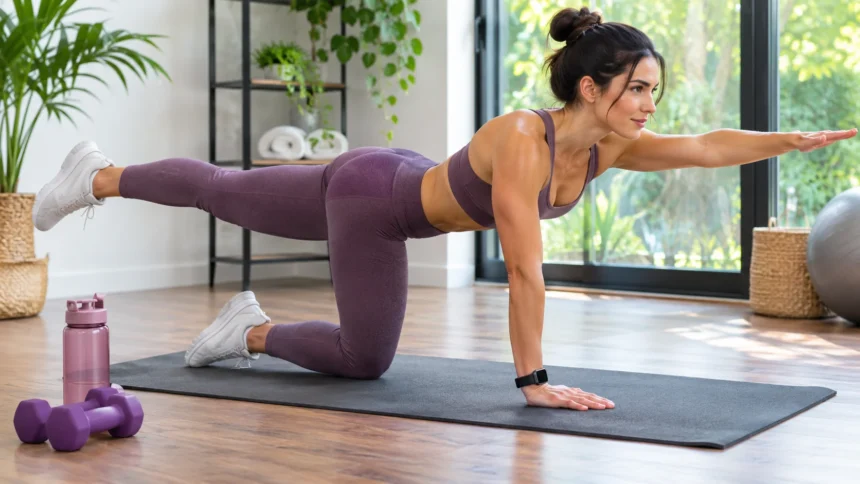
Building a stronger core does not always require heavy weights, complicated gym equipment, or intense workouts. Many people experience difficulty maintaining balance, controlling their movements, or keeping their body stable during everyday activities. Ignoring these basic movement skills can make exercises feel more challenging than necessary. The bird dog exercise is a simple, beginner-friendly movement that helps develop core stability, coordination, and controlled movement without requiring specialized equipment.
The bird dog involves extending one arm and the opposite leg while maintaining a stable position on your hands and knees. Although the movement looks straightforward, performing it correctly requires attention to balance, breathing, and body alignment. It is commonly included in core training, physical therapy programs, and general fitness routines. This guide explains proper bird dog form, potential benefits, useful variations, common mistakes, and safety considerations.
What Is the Bird Dog Exercise?
The bird dog is a bodyweight exercise performed from a hands-and-knees position. It involves extending one arm forward while simultaneously reaching the opposite leg backward. The goal is to maintain a steady torso while moving the limbs. This makes it a useful exercise for developing stability, balance, and coordination.
Unlike exercises that involve repeated bending or twisting, the bird dog emphasizes resisting unnecessary movement through the trunk. Your abdominal and back muscles work together to help maintain alignment. The shoulders and hips also contribute to supporting and controlling the position. These combined movements make it a practical full-body coordination exercise.
Bird dogs are commonly used in beginner fitness routines, Pilates-inspired workouts, and rehabilitation settings. They can be adjusted according to individual strength and movement abilities. However, not every variation is appropriate for every person. Starting with a comfortable version helps you learn the technique before attempting more challenging movements.
What Muscles Does the Bird Dog Work?
The bird dog engages several muscle groups that help stabilize your body. The abdominal muscles, including the transverse abdominis and obliques, contribute to controlling trunk movement. Muscles along the spine also support the position. Together, these muscles help maintain stability while the arms and legs move.
The gluteal muscles assist with extending and controlling the lifted leg. Shoulder muscles help support the weight-bearing arm and guide the reaching arm. Muscles around the hips and pelvis also contribute to balance. This coordination makes the exercise different from movements that focus primarily on one isolated muscle group.
Although bird dogs activate several muscles, they are not designed to replace every other strengthening exercise. They work particularly well as part of a broader routine that includes appropriate resistance training and mobility activities. Their main advantage is practicing controlled movement while maintaining trunk stability. This can support efficient movement during other exercises and daily tasks.
How to Do the Bird Dog Exercise Correctly
Begin on your hands and knees on a comfortable exercise mat. Position your hands approximately beneath your shoulders and your knees beneath your hips. Keep your neck relaxed and look toward the floor slightly ahead of your hands. Establish a comfortable starting position without excessively arching or rounding your back.
Slowly extend your right arm forward while reaching your left leg backward. Keep your hips facing the floor and avoid lifting your leg higher than necessary. Maintain a steady trunk and breathe normally throughout the movement. Hold the position briefly, then return your hand and knee to the floor with control.
Repeat the movement using your left arm and right leg. Focus on keeping your body stable rather than extending your limbs as far as possible. Start with a manageable number of repetitions on each side. If balancing feels difficult, practice moving only one arm or leg at a time before attempting the full exercise.
Why Proper Bird Dog Form Matters
Proper form allows the bird dog to train the intended movement skills without unnecessary strain. The exercise works best when your trunk remains relatively stable as your limbs move. Excessive rotation or arching can shift attention away from controlled stability. Maintaining comfortable alignment helps make each repetition more purposeful.
Your hips should remain reasonably level throughout the movement. When one leg lifts, avoid twisting your pelvis to gain extra height. Similarly, keep your shoulders relaxed and avoid reaching so far forward that your back changes position. Small, controlled movements can be more useful than exaggerated extensions.
Breathing is another important part of proper technique. Some beginners hold their breath while concentrating on balance. Instead, continue breathing naturally as you extend and return your limbs. Controlled breathing helps you maintain a comfortable exercise rhythm and avoid unnecessary tension during the movement.
Bird Dog Exercise Benefits for Core Stability
One of the primary benefits of bird dogs is improving the ability to control trunk movement. Your core muscles work together to support the spine while your arms and legs change position. This challenges stability without requiring heavy external resistance. Regular practice may improve control during similar movements.
Core stability is important for activities involving reaching, walking, lifting, and changing body positions. These tasks require coordination between the trunk and limbs. Bird dogs provide a controlled environment for practicing that coordination. However, improvements in exercise performance do not automatically eliminate back pain or prevent every type of injury.
Bird dogs can be included alongside other exercises that develop strength and endurance. Side planks, modified dead bugs, and suitable resistance exercises provide different training challenges. A balanced program is generally more useful than depending on one movement. The bird dog contributes by emphasizing stability and deliberate movement rather than maximum effort.
How Bird Dogs Support Balance and Coordination
Bird dogs challenge balance because part of your body weight must remain supported while opposite limbs move. This creates a controlled stability task that requires coordination between multiple muscle groups. Your nervous system helps organize these movements. Practicing the exercise may improve your ability to perform the specific balancing task more smoothly.
The opposite-arm-and-leg pattern encourages coordination across both sides of the body. Beginners may initially find it difficult to move the correct limbs together. Slowing down gives you time to organize the movement. With repetition, the pattern may become more familiar and easier to control.
Balance improvements depend on the exercises performed and the demands of everyday activities. Bird dogs are useful for trunk stability but do not replace standing balance training when that is a specific goal. You can combine them with appropriate walking and strength exercises. Choosing varied activities helps develop different aspects of physical coordination.
Bird Dog Benefits for Back Support
The bird dog is commonly included in exercise programs that focus on trunk control and back muscle endurance. It activates muscles that contribute to spinal stability during movement. Because the exercise does not require large spinal motions, some people find it manageable within an appropriate training program. However, comfort and suitability vary.
For individuals with certain types of back discomfort, a healthcare professional may recommend modified bird dogs as part of rehabilitation. The exercise can help practice controlled movement without adding heavy weights. Nevertheless, back pain has many possible causes. No single exercise is appropriate for every diagnosis or symptom pattern.
If you experience persistent back pain, seek guidance before relying on bird dogs for relief. Stop if the movement increases pain, causes symptoms traveling into a leg, or produces unusual weakness. A qualified clinician can help identify suitable modifications. Exercise should support recovery and functional movement rather than encourage you to push through worsening symptoms.
Bird Dog Exercise for Beginners
Beginners can start with a simplified bird dog to become familiar with the starting position. Place your hands beneath your shoulders and knees beneath your hips. Maintain a comfortable trunk position while gently extending one arm. Return it to the floor before repeating with the opposite arm.
Once single-arm movements feel manageable, practice extending one leg backward while keeping both hands grounded. Avoid lifting the leg excessively high or twisting your hips. Move slowly and concentrate on maintaining balance. This approach reduces the coordination demands of the full exercise.
After becoming comfortable with separate arm and leg movements, try the opposite-arm-and-leg combination. Begin with short holds and a small number of repetitions. Quality matters more than speed or exercise duration. Progress gradually according to your ability to maintain control without discomfort.
How Long Should You Hold a Bird Dog?
The ideal bird dog hold depends on your current strength, coordination, and exercise goals. Beginners may find a brief hold of approximately three to five seconds manageable. Longer holds can increase the stability challenge. However, extending the duration is useful only when you can maintain good technique.
Start with a short pause at the fully extended position while breathing normally. Return to the starting position before your trunk begins to twist or your back feels strained. Repeat on the opposite side. You can gradually increase the hold when the exercise becomes easier.
There is no universal requirement to maintain every repetition for a specific duration. Some routines emphasize controlled repetitions, while others use longer holds to build endurance. Both approaches can be useful in appropriate programs. Choose a duration that supports steady movement and comfortable breathing.
How Many Bird Dog Repetitions Should You Do?
The appropriate number of bird dog repetitions varies according to experience and physical ability. Beginners might start with five controlled repetitions on each side. This provides an opportunity to practice movement quality without unnecessary fatigue. More repetitions are not automatically better if technique begins to deteriorate.
Focus on returning each hand and knee to the starting position slowly. Avoid rushing through repetitions simply to complete a target number. You should be able to maintain comfortable alignment and normal breathing. If you notice repeated loss of balance, reduce the number of repetitions or use an easier variation.
As coordination improves, you can gradually add repetitions or another short set. The bird dog can be included in a warm-up, core routine, or supervised rehabilitation program. Its frequency should fit your overall activity schedule. Consistent, comfortable practice is more important than performing a large number of repetitions.
Common Bird Dog Exercise Mistakes to Avoid
One common mistake is lifting the extended leg too high. This can cause excessive arching through the lower back and make it harder to maintain stable hips. The goal is not to reach maximum height. Instead, extend the leg backward only as far as you can comfortably control.
Another mistake is allowing the torso to rotate when lifting an arm or leg. This often happens when beginners concentrate more on reaching than on stability. Try keeping your hips and shoulders facing the floor. If rotation continues, practice moving one limb at a time until control improves.
Rushing, holding your breath, and forcing uncomfortable positions can also reduce exercise quality. Bird dogs are intended to be controlled movements rather than fast repetitions. Take time to establish your starting position before each extension. Stop or modify the exercise if discomfort develops.
Modified Bird Dog Exercise for Limited Mobility
Some people find the traditional hands-and-knees position uncomfortable because of wrist, knee, or shoulder sensitivity. A modified version can reduce pressure on these areas. For example, you may perform a supported variation using a stable counter. The goal remains controlled movement without unnecessary strain.
Stand facing a sturdy counter and place your hands on it for support. Step backward slightly until you can maintain a comfortable position. Slowly extend one leg behind you while keeping your trunk steady. Return the foot to the floor and repeat on the opposite side.
Another option involves performing the exercise on hands and knees while moving only one limb. A folded towel beneath the knees may also improve comfort. Choose modifications that match your physical needs. Persistent joint pain should be evaluated rather than managed by repeatedly forcing uncomfortable positions.
Bird Dog With Elbow-to-Knee Movement
The elbow-to-knee bird dog adds movement after the initial arm and leg extension. It is often used as a progression for people who can perform the standard exercise comfortably. This variation challenges coordination while requiring continued trunk control. However, it is not necessary for developing basic bird dog skills.
Begin in the standard bird dog position with one arm extended forward and the opposite leg reaching backward. Slowly bring your elbow and knee toward each other beneath your torso. Return to the extended position without forcing your spine into excessive movement. Complete a few controlled repetitions before switching sides.
Keep the movement comfortable and avoid rushing through the reaching and returning phases. Your trunk may move slightly, but excessive twisting should be avoided. If balance becomes difficult, return to the basic variation. Progression should depend on control and comfort rather than the desire to perform a more complicated exercise.
Bird Dog vs. Plank: What’s the Difference?
Bird dogs and planks both challenge the muscles involved in trunk stability. However, they use different body positions and movement patterns. A traditional plank involves maintaining a supported position with relatively little limb movement. Bird dogs require coordinated arm and leg extensions while the torso remains stable.
Planks can provide a useful endurance challenge for abdominal and shoulder muscles. Bird dogs emphasize stability during movement and coordination between opposite limbs. Neither exercise is automatically better for everyone. Their usefulness depends on exercise goals, current abilities, and individual comfort.
A balanced core routine may include both movements when appropriate. Beginners can use modified versions to build familiarity before progressing. People with wrist, shoulder, or back problems may require alternative exercises. Choosing movements that are comfortable and manageable supports more consistent training.
How to Add Bird Dogs to Your Workout Routine
Bird dogs can be performed as part of a gentle warm-up or a dedicated core stability session. Their controlled movement pattern makes them useful before certain strength exercises. You can also include them alongside mobility work and other bodyweight exercises. The exercise requires minimal space and no specialized equipment.
For a simple routine, begin with comfortable mobility exercises before performing a short set of bird dogs. Follow with other suitable strength or stability movements according to your goals. Rest whenever necessary and maintain normal breathing. Avoid treating the bird dog as a test of how long you can tolerate discomfort.
You can adjust the exercise by changing repetitions, hold duration, or movement complexity. Progress only when the current version feels manageable. Include enough variety in your broader activity routine to support different muscle groups and movement abilities. The bird dog works best as one useful component of balanced physical activity.
Bird Dog Exercise Safety Tips
Safety begins with selecting a comfortable surface and checking your starting position. An exercise mat may reduce pressure on your knees, while a stable floor helps prevent unwanted movement. Keep your hands and knees positioned so you feel supported. Avoid exercising on slippery or unstable surfaces.
Move slowly and stop if you experience sharp pain, dizziness, numbness, or unusual weakness. A mild muscular effort is normal, but pain is not something you need to push through. Shorten the reach or choose a modified variation when necessary. Proper technique is more important than reaching a specific repetition target.
People recovering from injuries, surgery, or certain medical conditions may need individualized exercise guidance. A physical therapist or qualified healthcare professional can recommend suitable movements. Not every exercise is appropriate during every stage of recovery. Listening to your body’s response helps keep your routine comfortable and sustainable.
When Should You Avoid the Bird Dog Exercise?
The bird dog may be unsuitable when the hands-and-knees position causes significant wrist, knee, shoulder, or back discomfort. Recent injuries or surgery can also affect whether the exercise is appropriate. Forcing movement during painful conditions may worsen symptoms. A modified exercise or professional assessment may be more suitable.
People experiencing unexplained weakness, numbness, or pain radiating into the arms or legs should seek medical advice before continuing. These symptoms may require evaluation rather than routine stretching or strengthening. Similarly, persistent back pain should not automatically be treated with bird dogs. The underlying cause determines which exercises may help.
Temporary discomfort does not always mean that every form of movement must stop. However, exercise selection should match individual circumstances and medical recommendations. A professional can help identify safer alternatives when necessary. The priority is maintaining comfortable activity without ignoring symptoms that deserve attention.
Conclusion
The bird dog exercise is a simple bodyweight movement that helps develop core stability, coordination, and controlled movement. It activates muscles around the abdomen, back, hips, and shoulders while challenging balance. The exercise can be adapted for different experience levels. Its practical design makes it useful in many general fitness and supervised rehabilitation routines.
Proper bird dog form involves keeping the torso stable while extending opposite arms and legs. Moving slowly, breathing naturally, and avoiding excessive spinal arching can improve exercise quality. Beginners should start with manageable repetitions and shorter holds. More advanced variations are optional and should be attempted only when the basic movement feels comfortable.
Adding bird dogs to a balanced exercise routine may help improve trunk control and movement awareness. However, the exercise does not replace comprehensive strength training or professional treatment for ongoing pain. Choose suitable variations and adjust the difficulty according to your abilities. Consistent, controlled practice can make the bird dog a valuable part of everyday fitness.
Frequently Asked Questions (FAQs)
What is the bird dog exercise good for?
The bird dog helps train core stability, balance, and coordination. It engages abdominal, back, hip, and shoulder muscles while encouraging controlled movement. It can be included in general fitness or appropriate rehabilitation programs.
How many bird dogs should beginners do?
Beginners can try approximately five controlled repetitions on each side and adjust according to comfort. Focus on proper alignment and breathing rather than completing a large number of repetitions.
Does the bird dog exercise help with back pain?
Bird dogs may be included in supervised exercise programs for certain types of back discomfort. However, they are not suitable for every condition, and persistent or worsening pain requires professional evaluation.
Is the bird dog better than a plank?
Neither exercise is universally better. Bird dogs emphasize coordination and stability during limb movement, while planks challenge sustained trunk stability. Both can contribute to a balanced core exercise routine.
Can you do the bird dog exercise every day?
Gentle bird dog exercises may be performed regularly when they remain comfortable and do not cause pain. Frequency depends on your fitness level, recovery needs, and overall activity routine.