

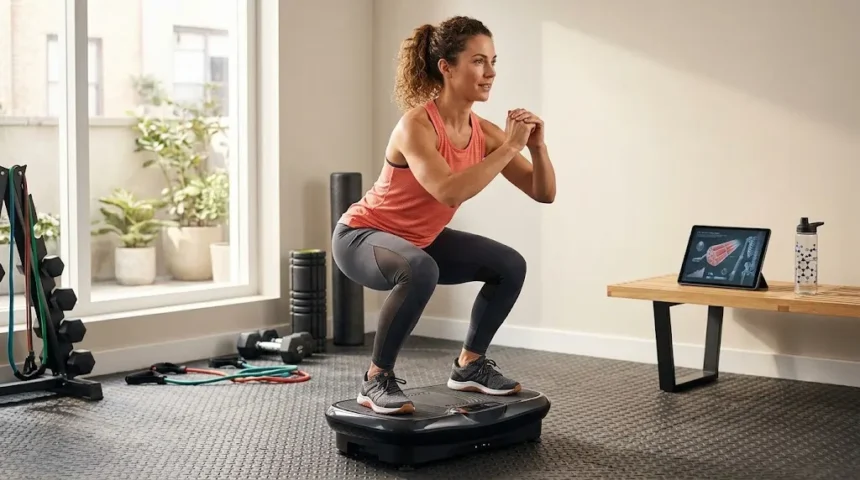
Benefits of a Vibration Plate: What Science Says
Vibration plates have moved from rehabilitation clinics and athletic training facilities into commercial gyms and home workout spaces. These machines create rapid mechanical vibrations while you stand, sit, or perform exercises on the platform, causing muscles to contract repeatedly as the body responds to the movement. Manufacturers often claim that whole-body vibration can strengthen muscles, improve circulation, enhance balance, support bone health, accelerate recovery, and even promote weight loss. Some of these potential benefits have scientific support, while others remain uncertain or are frequently exaggerated in marketing. Understanding what the research actually shows can help you decide whether vibration training deserves a place in your exercise routine. It can also help you avoid expecting a relatively passive device to replace conventional physical activity.
Research into whole-body vibration has expanded considerably, particularly among older adults, people undergoing rehabilitation, and individuals who have difficulty performing traditional exercise. Recent reviews suggest that vibration training may improve lower-body strength, balance, mobility, and selected measures of physical function in some populations. However, protocols vary widely in vibration frequency, amplitude, session duration, body position, and whether exercises are performed simultaneously. That makes it difficult to identify one perfect vibration-plate routine that produces the same results for everyone. Evidence for substantial fat loss, major muscle growth, or replacing conventional exercise remains considerably weaker. The most realistic way to view a vibration plate is as a potentially useful training tool that can complement, rather than replace, walking, resistance exercise, cardiovascular activity, and appropriate rehabilitation.
What Is a Vibration Plate and How Does It Work?
A vibration plate is an exercise platform that produces rapid mechanical oscillations that travel upward through the body. Depending on the machine, the platform may move vertically, from side to side, or through a combination of movement patterns. When you stand on the vibrating surface, your muscles automatically respond by contracting and relaxing repeatedly to maintain posture and stability. This process is commonly referred to as whole-body vibration training or WBV. The muscular response happens much faster than ordinary voluntary movement, although this does not mean each contraction produces the same training effect as lifting weights. The intensity depends on factors including vibration frequency, amplitude, posture, body position, and session duration.
Vibration frequency is commonly measured in hertz, which represents the number of vibration cycles occurring each second. A platform operating at 30 hertz, for example, completes approximately 30 vibration cycles every second. Amplitude describes how far the platform moves during each vibration and influences how strong the mechanical stimulus feels. Different research studies use very different combinations of frequency and amplitude, which makes direct comparison difficult. A high setting is not automatically better because stronger vibration may increase discomfort or unnecessary mechanical loading. Beginners generally benefit from becoming familiar with lower settings before progressing. Appropriate settings can also depend on age, fitness level, health conditions, and the exercises being performed.
Whole-body vibration influences muscles primarily through reflexive responses to rapid changes in muscle length and joint position. Your nervous system continually receives information from sensory receptors in muscles and tendons and then adjusts muscular activity to maintain stability. When a vibrating platform repeatedly disrupts your position, muscles throughout the legs and trunk may increase their activity to keep you balanced. Performing a squat or calf raise while standing on the platform can therefore feel different from doing the same movement on stable ground. The vibration adds a neuromuscular challenge rather than simply shaking calories away. This mechanism helps explain why researchers have investigated vibration training for strength, balance, mobility, and rehabilitation.
There are several types of vibration platforms, and they should not automatically be treated as equivalent. Some machines use vertical vibration, where both sides of the platform rise and fall simultaneously. Others use side-alternating vibration, creating a movement similar to a seesaw around a central point. Consumer devices may also use multidirectional or oscillating patterns marketed under different names. The mechanical characteristics influence how vibrations are transferred through the feet, knees, hips, and spine. Because research protocols use specific machines and settings, results from one type cannot always be applied directly to every vibration plate sold for home use. This is one reason dramatic product claims deserve careful scrutiny.
Mayo Clinic notes that whole-body vibration may offer certain fitness and health benefits, but it remains unclear whether it provides the same range of benefits as active exercise such as walking, cycling, or swimming. That distinction is important because vibration plates are sometimes marketed as effortless substitutes for traditional workouts. The device can stimulate muscular activity, but it does not automatically provide the cardiovascular, coordination, endurance, and energy-expenditure benefits of an appropriately designed exercise program. Using the plate while performing controlled exercises generally creates a more active training stimulus than simply standing still. The most useful question is therefore not whether vibration replaces exercise, but whether it can enhance or provide an alternative form of training for a particular person.
What Are the Main Benefits of a Vibration Plate?
One of the better-supported potential benefits of vibration training involves lower-body muscle strength, particularly among older adults. A systematic review and meta-analysis involving 34 studies found improvements in strength of several lower-limb muscle groups when whole-body vibration was compared with inactive controls. Importantly, vibration was not consistently superior to other forms of exercise. This suggests that the platform can provide a useful muscular stimulus, but conventional resistance training remains highly valuable. For someone who struggles with traditional exercise because of mobility limitations, however, even modest improvements may have practical importance. Stronger legs can make activities such as standing from a chair, climbing stairs, and walking easier.
Balance and physical function represent another promising area. A meta-analysis of 18 randomized controlled trials in older adults found that whole-body vibration training improved knee strength, sit-to-stand performance, walking speed, walking endurance, and certain balance-related measures. These benefits are particularly relevant because declining strength and balance can contribute to loss of independence with age. Vibration training may challenge the neuromuscular system without requiring complex exercise techniques. Nevertheless, evidence does not indicate that every person will respond equally or that vibration is superior to well-designed balance and strength training. It is better considered one possible way to introduce or supplement functional exercise.
Mobility may also improve in selected populations. Research involving very old nursing-home residents has reported improvements in lower-limb strength, gait, balance, mobility, and physical performance after whole-body vibration interventions. These findings are encouraging because people over age 80 may have limited tolerance for demanding exercise programs. A short supervised vibration session combined with simple movements could provide another way to stimulate the muscles and nervous system. However, older adults also have greater rates of osteoporosis, cardiovascular disease, joint replacements, balance problems, and medication use. Programs should therefore be adapted carefully rather than copied directly from routines designed for younger gym users.
Vibration plates may also increase muscular activation during exercises such as squats, calf raises, or static holds. The unstable mechanical environment requires the body to continually make small adjustments, which can increase activity in muscles responsible for maintaining posture. This does not automatically translate into dramatically greater muscle growth, but it may provide a useful training variation. Someone performing bodyweight squats on a vibration plate, for example, is still receiving much of the benefit from the squat itself. The vibration acts as an additional stimulus rather than doing all the work. Progressive resistance remains necessary when substantial increases in muscular size and maximal strength are the primary goals.
Another potential benefit is accessibility. People who dislike conventional gym equipment or cannot tolerate certain high-impact activities may find vibration training easier to incorporate into a routine. Sessions can be relatively short, and many movements require little space or complicated equipment. That convenience may increase exercise adherence for some users, which is valuable because consistent activity usually matters more than finding a theoretically perfect workout. At the same time, convenience should not encourage the belief that standing passively on a machine for a few minutes provides everything the body needs. Cardiovascular exercise, resistance training, mobility work, and normal daily movement continue to offer benefits that vibration alone cannot fully reproduce.
Can a Vibration Plate Build Muscle and Strength?
Whole-body vibration can increase muscular activity, but its effect on strength depends greatly on who is using it and how training is performed. Research tends to show clearer improvements when vibration training is compared with doing little or no exercise. The benefit becomes less impressive when vibration is compared with conventional strength training. A 2023 systematic review found that whole-body vibration improved several measures of lower-limb strength in older adults compared with control groups but did not consistently outperform other forms of exercise. This finding supports vibration as a useful option rather than a superior replacement for resistance training. People capable of lifting weights should generally continue strength training if muscle and strength development are priorities.
The muscular stimulus also changes according to body position. Standing with slightly bent knees requires more active stabilization than standing rigidly upright. Performing squats, lunges, calf raises, or other controlled movements can further increase muscular demand. Static positions such as a partial squat may also increase muscle activation while the platform vibrates. These exercises should still be performed with appropriate technique because vibration does not protect against poor alignment. Beginners can start with basic positions before introducing more difficult movements. Increasing exercise difficulty gradually is usually safer and more productive than immediately turning the vibration frequency to its highest setting.
For older adults, even modest strength improvements can have meaningful functional consequences. Stronger quadriceps, hamstrings, calves, and hip muscles support standing, walking, stair climbing, and recovery from small losses of balance. A 2026 network meta-analysis involving 27 randomized trials and 1,608 older adults found that vibration frequencies influenced balance and gait outcomes, although traditional training ranked best for muscle strength. That comparison is useful because it highlights the role of vibration without overselling it. Whole-body vibration may help people strengthen their legs, but progressive conventional training remains extremely effective. Combining the two may be more useful than choosing one exclusively.
Muscle growth, or hypertrophy, requires sufficient mechanical tension, adequate nutrition, and repeated progressive overload. A vibration plate may increase muscle activation, but standing on one does not necessarily create enough resistance to maximize hypertrophy. Someone seeking larger legs or significant strength gains will probably need exercises that become progressively more challenging through additional weight, repetitions, or movement difficulty. Vibration could be added to selected exercises for variety or supplemental stimulation. Protein intake, total calorie availability, recovery, and sleep also influence muscle development. No vibration frequency can compensate for an exercise program that lacks progressive resistance or adequate recovery.
People with limited mobility may view the issue differently. If traditional weight training is temporarily too difficult because of frailty, rehabilitation needs, or certain physical limitations, vibration-assisted exercises may provide a lower-barrier way to stimulate muscles. This is one reason much of the research focuses on older or clinical populations rather than experienced bodybuilders. The goal may be preserving functional strength rather than maximizing muscle size. A physical therapist can determine whether vibration is appropriate and select exercises suited to the individual’s ability. In this context, the device may be valuable precisely because it offers a manageable stimulus rather than because it produces extreme strength gains.
Can Vibration Plates Improve Balance and Mobility?
Balance requires constant communication between the eyes, inner ear, nervous system, muscles, and joints. A vibration plate repeatedly challenges this system because the body must make rapid adjustments to remain stable as the surface moves. Over time, these repeated adjustments may improve neuromuscular coordination in certain users. Researchers have therefore investigated whole-body vibration in older populations where declining balance can increase fall risk. A 2024 systematic review of randomized trials reported positive effects on muscle responses and measures associated with fall risk among older adults. Although the findings are encouraging, the number of studies remains relatively small and training methods vary.
Improvements in leg strength can indirectly support better balance as well. When someone begins to lose balance, strong muscles around the ankles, knees, and hips help generate rapid corrective movements. Weakness can make those corrections slower or insufficient. Whole-body vibration may provide both muscular and sensory stimulation, potentially addressing more than one component of balance simultaneously. This may explain why some studies show improvements in timed mobility tests. However, real-world fall prevention also depends on vision, medications, footwear, home hazards, cognitive function, and medical conditions. A vibration plate cannot address every factor contributing to falls.
Walking ability is another area where vibration training has shown possible benefits. The 2023 meta-analysis of older adults reported improvements in walking speed and walking endurance following whole-body vibration training. A separate 2024 analysis of nursing-home residents older than 80 also found improvements in gait and mobility. These results suggest vibration may be particularly useful when incorporated into structured programs for people with reduced physical function. Still, walking itself remains one of the most direct ways to improve walking tolerance when it can be performed safely. Vibration should complement functional movement rather than remove it entirely.
The settings used on the vibration plate may influence balance outcomes. The 2026 network meta-analysis found that different frequency ranges appeared to perform differently for static balance, dynamic balance, and gait in older adults. Medium-frequency vibration ranked highly for static balance, while higher-frequency protocols ranked favorably for dynamic balance and gait in that analysis. These findings should not be interpreted as universal prescriptions for home devices because machines differ in amplitude and movement pattern. Individual tolerance also matters. Someone with balance impairment should not experiment with challenging settings without stable support or appropriate supervision.
Practical safety is especially important when people use vibration training specifically because their balance is poor. A platform that moves rapidly can itself create a fall hazard if the user cannot step on, stand securely, or exit safely. Handrails or nearby support may be useful, depending on the machine and person’s ability. Older adults should avoid complicated exercises simply because they see them demonstrated online. Basic supported positions can provide meaningful stimulation without unnecessary risk. When fall prevention is the goal, vibration works best as one component of a broader plan involving strength training, balance practice, safe walking, vision care, medication review, and environmental modifications.
Do Vibration Plates Help Bone Density?
Bone responds to mechanical loading, which is why researchers have investigated vibration plates for osteoporosis and age-related bone loss. When mechanical vibrations travel through the skeleton, they create small repeated loads that may theoretically stimulate bone-forming processes. This concept is appealing for people who cannot perform high-impact or heavy resistance exercise. However, the biological rationale does not automatically mean clinically meaningful increases in bone mineral density will occur. Bone adaptation depends on intensity, duration, location, hormonal status, age, nutrition, and many other variables. Different vibration studies use very different protocols, making conclusions difficult.
Evidence in postmenopausal women remains particularly uncertain. A 2024 overview examining 15 systematic reviews concluded that existing evidence could not establish a definitive advantage of whole-body vibration for improving bone mineral density in postmenopausal women. The authors noted substantial methodological limitations in many of the reviews and did not recommend relying on whole-body vibration specifically to improve bone density. They suggested that vibration might have potential for maintaining bone mineral density, but stronger research is needed. This is a much more cautious conclusion than advertisements claiming vibration plates can “rebuild bone.” Consumers should recognize that promising biological mechanisms and proven clinical outcomes are not the same thing.
Traditional bone-health strategies therefore remain important. Weight-bearing activity, resistance training, adequate protein, sufficient calcium and vitamin D, avoidance of smoking, and appropriate medical treatment can all contribute to maintaining skeletal health. People with osteoporosis may require medications specifically shown to reduce fracture risk, depending on their individual assessment. A vibration plate should not be used as a substitute for prescribed osteoporosis treatment. Bone density measurements and fracture risk are influenced by factors that cannot be determined simply by how strong someone feels. Medical evaluation is particularly important for people with previous fragility fractures or substantial bone loss.
There is also an important safety issue when someone already has fragile bones. Certain high-intensity movements, falls, or inappropriate exercise positions may increase fracture risk in people with severe osteoporosis. Although some vibration protocols have been studied in populations with reduced bone density, that does not mean every consumer machine or setting is appropriate. Frequency, amplitude, posture, and duration matter. A healthcare professional or physical therapist familiar with the person’s bone health can help determine whether a vibration plate is reasonable. Starting conservatively is preferable to assuming stronger vibrations create stronger bones.
The most balanced conclusion is that bone health remains an interesting but unproven major benefit of vibration plates. Some research suggests potential maintenance or small site-specific changes, while broader reviews remain uncertain about meaningful improvements in bone mineral density. If someone enjoys vibration training and can use it safely, it may still contribute indirectly by improving lower-body strength and balance. Those improvements could potentially support physical function and reduce certain fall-related risks even without substantially changing bone density. Preventing fractures depends on both bone strength and avoiding falls. Vibration’s more established functional benefits may therefore be more relevant than claims of directly rebuilding skeletal tissue.
Do Vibration Plates Help With Weight Loss and Fat Burning?
Weight-loss claims are among the most exaggerated aspects of vibration-plate marketing. Standing on a vibrating platform does cause muscles to contract, so energy expenditure may rise somewhat compared with simply sitting or standing on a stable floor. That does not mean the machine burns enough calories to produce substantial weight loss on its own. Mayo Clinic notes that whole-body vibration may offer some health benefits but that comprehensive research is limited and it remains unclear whether vibration provides the same benefits as active exercise. Claims that a few minutes of passive vibration replace running, cycling, swimming, or resistance training should therefore be viewed skeptically.
Body-fat reduction ultimately depends heavily on sustained energy balance over time. If someone regularly consumes more energy than they expend, short vibration sessions are unlikely to overcome that surplus. Vibration training may contribute to an active lifestyle, especially when exercises are performed on the platform, but it should not be treated as a shortcut around nutrition and movement. A person performing repeated squats, lunges, or other exercises on a vibration plate burns energy partly because they are exercising. The vibration itself is only one component of the activity. Sustainable fat loss generally requires nutrition habits and physical activity that can be maintained for months rather than relying on one device.
Some research has investigated whether vibration training combined with diet or exercise produces changes in body composition. Results vary considerably, partly because participant characteristics and protocols differ. Even when reductions in body weight or fat mass are reported, it can be difficult to determine how much of the effect came from vibration versus associated exercise or dietary intervention. Short-term changes should also not be confused with large, permanent fat loss. Marketing descriptions often transform modest research outcomes into promises of rapid transformation. A more realistic expectation is that vibration may provide a small supplemental activity stimulus rather than functioning as a primary weight-management treatment.
Vibration plates may indirectly support weight-management efforts if they make exercise more accessible. Someone who is sedentary, older, or returning to activity might tolerate short vibration-assisted sessions better than a demanding gym workout. If that experience improves confidence and encourages additional movement, the device could have practical value. Similarly, improved leg strength and mobility may make walking and other activities easier. Those indirect benefits could increase total physical activity over time. However, people who are already capable of conventional exercise should not reduce their walking or resistance training simply because they purchased a vibration machine.
Be particularly cautious with advertisements claiming vibration breaks apart fat cells, melts abdominal fat, or targets cellulite in a permanent way. Body fat cannot be reliably removed from a chosen location simply by vibrating that area. Temporary changes in blood flow, tissue appearance, or fluid distribution may make skin look different for a short period, but that is not the same as substantial fat loss. If weight management is your goal, prioritize nutrition, adequate sleep, daily movement, resistance training, and cardiovascular activity. A vibration plate can be included if you enjoy it, but its role should remain proportionate to the evidence.
What About Circulation, Flexibility and Exercise Recovery?
Vibration can temporarily influence blood flow because rapid muscular contractions and mechanical movement affect local circulation. This is one reason users sometimes describe their legs as feeling warm or stimulated after a session. Increased blood flow during or shortly after vibration does not necessarily translate into long-term cardiovascular improvement, however. The circulatory adaptations produced by aerobic exercise involve the heart, lungs, blood vessels, and metabolic systems in ways that vibration alone may not reproduce. Someone seeking better cardiovascular fitness should therefore continue activities such as walking, cycling, swimming, or other appropriate aerobic exercise. Vibration may complement circulation-promoting movement but should not replace it.
Flexibility is another commonly advertised benefit. The mechanical movement may temporarily reduce feelings of stiffness or alter tolerance to stretching, particularly when gentle mobility exercises are performed during or immediately after vibration. Some people report that muscles feel looser following a session. Temporary improvement in range of motion can be useful, especially before certain activities, but long-term flexibility still depends on repeated movement and stretching appropriate to the individual’s needs. Extremely deep stretches should not be forced simply because vibration makes tissues feel warmer. Comfortable movement is a safer goal than trying to achieve dramatic flexibility quickly.
Researchers have also explored vibration for post-exercise muscle soreness. The theory is that increased circulation, sensory stimulation, and repeated muscular contractions may influence how soreness is perceived after strenuous exercise. Some studies report improvements in delayed-onset muscle soreness or selected recovery measures, but protocols and findings are inconsistent. Even if vibration makes muscles feel better, it does not necessarily accelerate every aspect of biological recovery. Sleep, nutrition, hydration, appropriate training volume, and sufficient time remain central to recovery. Athletes should avoid using reduced soreness as permission to train damaged or excessively fatigued muscles harder than they are ready for.
Massage-like sensations are another reason people enjoy vibration plates. The rhythmic stimulus can feel relaxing, especially after prolonged sitting or a demanding workout. Enjoyment has practical value because people are more likely to continue routines they find pleasant. However, feeling relaxed should be separated from claims that the machine removes toxins or dramatically improves lymphatic detoxification. The body already relies on the liver, kidneys, lungs, digestive system, and lymphatic system to process and eliminate metabolic waste. No vibration setting is required to “detox” a healthy body. Marketing language around detoxification often goes far beyond established physiology.
The best way to interpret circulation and recovery claims is therefore to distinguish short-term sensations from proven long-term outcomes. Feeling warmer, looser, or less sore after vibration may be genuinely useful to the individual. These experiences can make mobility work or exercise more comfortable. They simply should not be converted into unsupported claims about curing circulation disorders, removing toxins, or replacing cardiovascular training. People with diagnosed vascular disease or significant swelling should also avoid self-treating with vibration without appropriate medical advice. Symptoms involving circulation can have medical causes that require diagnosis rather than a consumer fitness device.
How to Use a Vibration Plate Safely
Begin by reading the manufacturer’s instructions because vibration plates differ in movement pattern, frequency range, maximum weight, and intended use. Place the device on a stable surface where it cannot shift during operation. Wear secure footwear if recommended by the manufacturer, although some platforms are designed for barefoot use under specific conditions. Step onto the machine while it is turned off or set at its lowest level so you can establish your position first. Keep access to a stable support if your balance is uncertain. Familiarity with the machine should come before increasing intensity or attempting complicated exercises.
Beginners generally do not need the strongest vibration setting. Start with a low or moderate intensity for a short session and assess how your body responds. Slightly bending the knees can help prevent excessive vibration from traveling rigidly upward through the body. Avoid locking the knees while standing on the platform because this can make the vibration feel harsher through the joints and upper body. Maintain a stable posture with controlled breathing. If you develop dizziness, headache, nausea, unusual pain, numbness, or other concerning symptoms, stop rather than trying to “push through” the sensation.
Simple exercises are usually a better starting point than advanced movements. A shallow squat, supported calf raise, or controlled static stance can allow the legs to work while maintaining stability. As confidence improves, other bodyweight movements may be added when appropriate. There is little benefit in performing technically difficult exercises on an unstable vibrating surface simply because they look impressive. Exercise quality should remain more important than complexity. Someone who cannot perform a movement safely on stable ground should generally master the basic exercise before adding vibration.
Session length should also be progressive. Mayo Clinic notes that many advertised programs involve relatively short sessions, but the evidence does not establish one universal duration or frequency for all goals. Research protocols vary from brief exposures to structured sessions involving multiple sets and exercises. More vibration is not automatically more effective, particularly when stronger settings create discomfort or fatigue. Beginners can start with several brief bouts rather than prolonged continuous exposure. People using vibration as part of rehabilitation should follow the parameters recommended by their healthcare or rehabilitation professional.
Finally, combine vibration with conventional activity rather than allowing it to replace everything else. Resistance exercises develop strength through progressive loading, while aerobic activity trains cardiovascular endurance and weight-bearing movement supports functional capacity. Balance exercises improve skills needed for real-life instability, and mobility work maintains useful ranges of motion. A vibration plate can add another stimulus to this foundation. Someone who enjoys ten minutes of vibration after strength training may have a perfectly reasonable routine. The problem arises when marketing leads people to believe those ten minutes provide every benefit of a complete exercise program.
Who Should Be Cautious With Vibration Plates?
People with significant medical conditions should obtain individualized advice before beginning whole-body vibration. Pregnancy is commonly treated as a reason for caution because evidence regarding consumer vibration-plate use during pregnancy is limited and mechanical loading may be inappropriate. People with implanted medical devices, significant cardiovascular disease, recent surgery, or serious neurological conditions may also need professional guidance. The specific risk depends on the condition and type of vibration exposure rather than on a simple universal rule. When health circumstances are complicated, asking a clinician who understands the medical history is safer than relying on a product manual or social-media video.
People with severe osteoporosis or a recent fracture deserve particular caution. Although vibration has been researched as a possible bone-health intervention, evidence does not establish a clear bone-density benefit in postmenopausal women, and strong mechanical stimulation may not be appropriate for every fragile skeleton. Someone with vertebral compression fractures, recent orthopedic injuries, or significant skeletal instability should not independently experiment with high-intensity vibration. Rehabilitation professionals can determine whether a particular protocol is suitable. Bone-health treatment should continue according to medical guidance even if vibration is added.
Joint and spine conditions also require an individualized approach. Some people with osteoarthritis or chronic back discomfort may tolerate gentle vibration comfortably, while others may notice increased symptoms. Joint replacements, acute disc problems, unstable injuries, or recent orthopedic surgery can alter what positions and vibration settings are appropriate. Pain is not proof that a stronger stimulus is creating better results. Sharp, radiating, or progressively worsening pain is a reason to stop and seek advice. People using vibration during rehabilitation should ensure that the program matches the stage of tissue healing and their clinician’s restrictions.
Balance problems create another practical risk because stepping onto or off a moving platform can lead to falls. Older adults and people with neurological conditions may need a handrail, another person nearby, or professional supervision. Turning the machine off before stepping away can reduce unnecessary instability. Home users should also keep the surrounding floor clear and avoid placing the machine where furniture creates obstacles. Vibration training may ultimately improve balance in certain older populations, but the training environment itself still needs to be safe. Benefit and risk can exist at the same time.
Stop using the machine and obtain medical advice if vibration causes persistent dizziness, chest discomfort, faintness, unusual shortness of breath, severe headache, neurological symptoms, or significant worsening of pain. Temporary muscle fatigue may occur after exercise, but systemic or severe symptoms should not be normalized. People taking multiple medications or living with complex medical conditions may also benefit from discussing whole-body vibration with their healthcare provider before starting. Fitness devices are not automatically harmless because they are sold without a prescription. Responsible use means considering both the scientific evidence and your individual health circumstances.
How to Decide Whether a Vibration Plate Is Worth It
Start by identifying what you actually want the machine to accomplish. If your primary goal is improving balance, lower-body function, or adding variety to a rehabilitation or fitness program, the evidence is reasonably encouraging in selected populations. Studies in older adults have repeatedly found improvements in strength and certain measures of mobility and balance. If your expectation is effortless weight loss or dramatic muscle gain while standing passively, the scientific case is much weaker. Matching expectations with evidence can prevent disappointment and unnecessary spending.
Consider whether you already have access to simpler ways of achieving the same goal. Squats, walking, resistance bands, weights, balance exercises, and stair climbing can improve physical function without requiring specialized vibration equipment. A vibration plate becomes more attractive when it makes exercise easier to tolerate, increases enjoyment, or provides a stimulus that fits specific rehabilitation needs. Convenience can also matter for people who prefer home workouts. However, purchasing equipment only makes sense if it will actually be used consistently. An inexpensive walking routine performed regularly may provide greater overall health benefits than an expensive machine that becomes unused furniture.
If you do purchase a vibration plate, prioritize stability and adjustability rather than assuming the most powerful model is best. Useful machines should provide clearly defined settings, adequate platform space, appropriate weight capacity, and understandable safety instructions. Handrails or support options may be valuable for older users or people with balance limitations. Be cautious of products making claims that sound more medical than fitness related, particularly promises to cure diseases, reverse osteoporosis, eliminate cellulite, or produce large amounts of weight loss without exercise. Scientific evidence does not support such broad guarantees. A realistic manufacturer should describe the device as an exercise or training tool rather than a miracle treatment.
Think about how the device will fit into a complete routine. You might use a vibration plate for several exercises after warming up, incorporate it into lower-body strength work, or use short sessions alongside balance training. People in rehabilitation may follow a program designed by a physical therapist. Someone focused on general fitness should still include aerobic activity and conventional resistance exercise during the week. This combination makes it less important whether vibration alone produces every advertised benefit. The plate becomes one training option among several rather than the foundation of your entire health strategy.
The evidence is ultimately most favorable when whole-body vibration is viewed with moderate expectations. Research supports possible improvements in lower-body strength, mobility, gait, balance, and physical performance, particularly among older adults and some clinical populations. Evidence for improving bone density remains uncertain, and claims of effortless fat loss or replacing conventional exercise are not well established. If the machine encourages safe, consistent movement and complements a broader fitness program, it can be useful. If it is being purchased as a shortcut around exercise, expectations should be adjusted.
Final Thoughts on the Benefits of a Vibration Plate
Vibration plates create a genuine physiological stimulus rather than simply producing an unusual sensation. Rapid mechanical vibrations challenge muscles and the nervous system to maintain stability, which can increase muscular activity during standing and exercise. Research has found meaningful improvements in lower-body strength and selected functional outcomes among certain groups, particularly older adults. This makes whole-body vibration more than a fitness gimmick. At the same time, the size and consistency of the benefits vary, and study protocols differ substantially. The evidence therefore supports cautious usefulness rather than extraordinary claims.
Balance and mobility are among the more promising applications. Studies involving older adults, including nursing-home residents, suggest vibration training may improve balance, gait, mobility, and functional performance. These outcomes can matter greatly for people trying to preserve independence as they age. However, vibration is not the only way to achieve them, and conventional strength and balance training remain important. The best program may combine multiple approaches according to individual ability. Someone with significant fall risk should use vibration under conditions that minimize the chance of falling from the machine itself.
Claims involving bone density should be interpreted more cautiously. Although mechanical loading provides a plausible reason to investigate vibration for bone health, a 2024 overview of systematic reviews did not find sufficient evidence to recommend whole-body vibration for improving bone mineral density in postmenopausal women. People with osteoporosis should therefore continue evidence-based bone-health strategies and prescribed treatment rather than relying on a vibration platform. Vibration may still provide functional benefits such as stronger legs or improved balance. Those effects can be useful even when significant increases in bone density do not occur.
Weight-loss marketing deserves similar skepticism. Vibration can increase muscular activity, but a few passive minutes on a platform should not be considered equivalent to a full cardiovascular or resistance-training session. Mayo Clinic specifically notes that comprehensive research is limited and it is unclear whether whole-body vibration provides the same range of health benefits as active exercise. People seeking fat loss should prioritize sustainable nutrition, overall physical activity, resistance training, cardiovascular exercise, and adequate sleep. Vibration may provide an additional activity option, but it should not become the centerpiece of a weight-loss plan.
Overall, the best-supported benefits of a vibration plate involve selected improvements in muscle function, balance, mobility, and physical performance rather than dramatic transformation. Used correctly, the device may be particularly valuable for older adults, rehabilitation settings, or people who need an accessible way to add muscular stimulation. Healthy adults may also enjoy it as a supplement to conventional workouts. Begin gradually, follow equipment instructions, and seek professional guidance when medical conditions affect safety. Most importantly, judge a vibration plate by measurable improvements in how you move and function rather than by exaggerated promises. Science suggests it can be a useful tool, but it works best as part of a broader approach to exercise and health.
Frequently Asked Questions
Do vibration plates actually work?
Vibration plates can produce measurable muscular and neuromuscular effects, and research suggests they may improve lower-body strength, balance, mobility, and certain functional outcomes. Their benefits appear strongest as a supplement or alternative for selected users rather than as a complete replacement for conventional exercise.
Can a vibration plate help you lose weight?
A vibration plate may slightly increase muscular activity and energy expenditure, particularly when exercises are performed on it, but evidence does not support effortless or major weight loss from passive vibration alone. Sustainable fat loss still depends primarily on overall nutrition, activity, and long-term energy balance.
How long should you stand on a vibration plate?
There is no universal ideal duration because research protocols and machines vary considerably. Beginners should generally use short sessions at comfortable settings and gradually increase exposure according to tolerance and manufacturer or professional guidance.
Do vibration plates help build muscle?
Whole-body vibration may improve lower-body strength and muscular activation, particularly among older or less active adults. Significant muscle growth usually requires progressive resistance training, sufficient protein, adequate energy intake, and recovery rather than vibration alone.
Is it safe to use a vibration plate every day?
Some healthy people may tolerate frequent short sessions, but daily use is not necessary for everyone and stronger or longer sessions are not automatically better. People with pregnancy, severe osteoporosis, recent surgery, major cardiovascular conditions, significant balance problems, or other medical concerns should obtain individualized advice before using one regularly.