

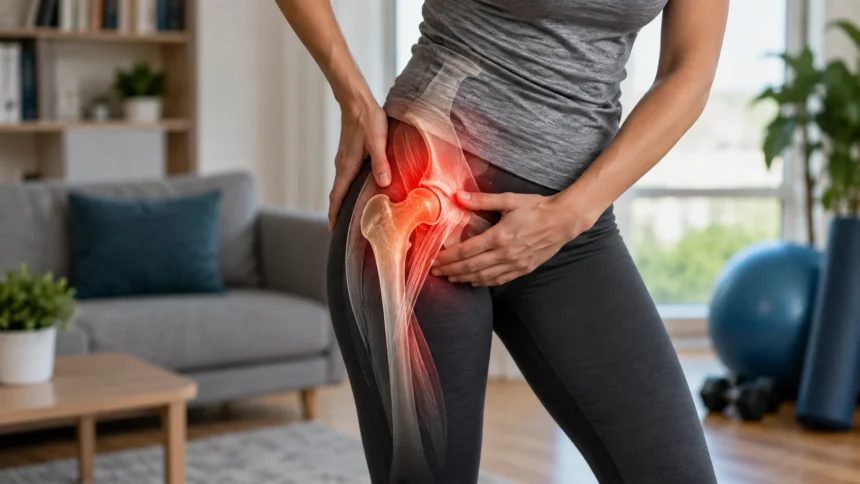
Hip flexor tendonitis is a painful overuse condition that affects the tendons connecting muscles at the front of the hip to nearby bones. It often develops after repeated running, kicking, cycling, climbing, or other movements that require frequent hip flexion. The discomfort may begin gradually and become more noticeable during exercise, walking uphill, or lifting the knee.
Although hip flexor pain is common among athletes, it can also affect people who suddenly increase their activity level or spend long periods sitting. Early management usually focuses on reducing irritation while maintaining comfortable movement. Understanding the causes, symptoms, treatment options, and recovery process can help you respond appropriately before a minor tendon problem becomes persistent.
What Is Hip Flexor Tendonitis?
Hip flexor tendonitis refers to irritation or overload of one or more tendons associated with the muscles that lift the thigh toward the body. The iliopsoas is commonly involved because it is one of the major hip flexors. Tendons transfer force from muscles to bones, making them important whenever you walk, run, climb stairs, or raise your leg.
Repeated loading can sometimes exceed the tendon’s ability to recover between activities. Instead of adapting normally, the tissue may become increasingly sensitive and painful during movement. Although the term tendonitis traditionally suggests inflammation, ongoing tendon problems may involve a combination of irritation, changes within the tendon, and reduced tolerance to physical load.
The condition can range from mild discomfort after exercise to persistent pain that affects everyday activities. Some people notice symptoms mainly during sports, while others feel discomfort getting out of a chair or lifting the leg into a car. Identifying the problem early allows activity levels and rehabilitation exercises to be adjusted before symptoms become more difficult to manage.
Common Causes of Hip Flexor Tendonitis
Overuse is one of the most common causes of hip flexor tendon problems. Repeated sprinting, running, kicking, cycling, or uphill training requires the hip flexors to work frequently and forcefully. When training volume or intensity rises faster than the tissues can adapt, the tendons may become irritated and painful.
Sudden changes in exercise habits can also trigger symptoms. Someone who begins running every day, adds several intense leg workouts, or dramatically increases cycling distance may place unfamiliar stress on the front of the hip. Even activities that are normally safe can create problems when the body is not given enough time to recover and adapt.
Poor movement control may contribute as well, particularly when the hips repeatedly compensate for weakness elsewhere. Limited hip extension, reduced glute strength, or poor trunk control can change how forces move through the pelvis during exercise. These factors do not automatically cause tendonitis, but they may increase stress around the hip flexors when combined with high training loads.
Risk Factors That Can Increase Hip Flexor Irritation
Athletes involved in running, football, martial arts, dance, and other sports requiring repeated knee lifting may be more likely to develop hip flexor symptoms. These activities demand frequent shortening and lengthening of the muscles at the front of the hip. Training several days in a row without enough recovery can further increase accumulated stress.
Long periods of sitting may also affect how the hip region feels, especially in people who transition directly from desk work into intense exercise. Sitting keeps the hips flexed for extended periods, which can contribute to stiffness or discomfort when standing and moving. However, sitting alone does not necessarily mean the hip flexors have become physically shortened or injured.
Previous hip or lower-limb injuries may influence movement patterns and increase strain during activity. Rapid training changes, insufficient recovery, inadequate strength, and returning to sport too quickly can also increase risk. Rather than focusing on one cause, it is often more useful to consider the combination of workload, movement capacity, strength, and recovery habits.
Symptoms of Hip Flexor Tendonitis
Pain at the front of the hip or deep within the groin is one of the most common symptoms. The discomfort may feel like an ache, pulling sensation, or sharper pain when lifting the knee. Running, climbing stairs, kicking, or getting up from a low chair may make symptoms more noticeable.
Some people experience stiffness after resting for a long period, particularly after sitting. The first few steps after standing may feel uncomfortable before the hip loosens slightly with movement. Tenderness may also occur around the front of the hip, although the iliopsoas tendon sits relatively deep and may not always be easy to locate.
Symptoms usually worsen when the tendon is repeatedly loaded beyond its current tolerance. Pain may initially appear only after intense exercise before gradually occurring during normal activities. Persistent limping, severe weakness, major swelling, or sudden intense pain is less typical of straightforward overuse and should be assessed to rule out other injuries.
How Hip Flexor Tendonitis Is Diagnosed
Diagnosis usually begins with a discussion about when the pain started and which activities make it better or worse. A healthcare professional may ask about recent changes in training volume, previous injuries, occupation, and exercise habits. Understanding whether symptoms developed gradually or appeared suddenly can help narrow down the possible causes.
A physical examination may assess hip movement, strength, tenderness, walking patterns, and pain with resisted hip flexion. The clinician may also examine the lower back, pelvis, and surrounding muscles because pain in this area can come from several different structures. No single movement test can always confirm the diagnosis on its own.
Imaging is not required for every case of suspected hip flexor tendonitis. However, ultrasound, X-rays, or other imaging may occasionally be recommended when symptoms are persistent, severe, or unclear. The aim is often to exclude other causes such as joint problems, stress injuries, significant muscle tears, or conditions that require a different treatment approach.
Conditions That Can Feel Like Hip Flexor Tendonitis
Not all pain at the front of the hip comes from the hip flexor tendons. Muscle strains, hip joint irritation, labral problems, hernias, or referred pain from the lower back can create symptoms in similar locations. This overlap is why self-diagnosing persistent groin or hip pain can sometimes be misleading.
A hip flexor strain usually involves injury to muscle fibers and may develop suddenly during sprinting, kicking, or rapid changes in direction. Tendon-related discomfort more commonly builds gradually with repeated loading, although the patterns can overlap. Significant bruising, sudden weakness, or a noticeable popping sensation may suggest a more acute muscular injury.
Bone stress injuries can also produce deep hip or groin pain, particularly in runners and people who rapidly increase high-impact exercise. Pain that becomes progressively worse during weight-bearing deserves careful evaluation. An accurate diagnosis matters because treatments that are appropriate for tendon overload may not be suitable for fractures or serious joint-related conditions.
Treatment for Hip Flexor Tendonitis
Treatment typically begins by reducing activities that strongly aggravate the tendon without eliminating movement completely. Temporarily cutting back on sprinting, hills, kicking, or repetitive knee lifting may allow symptoms to settle. Complete bed rest is rarely necessary for uncomplicated cases, and comfortable everyday movement can often continue within reasonable pain limits.
As symptoms improve, rehabilitation usually shifts toward gradually restoring strength and load tolerance. Controlled exercises can train the hip flexors and surrounding muscles to handle increasing resistance again. The goal is not simply to make the pain disappear for a few days but to improve the tendon’s capacity for the activities that previously triggered symptoms.
Physical therapy may be helpful when pain persists, repeatedly returns, or interferes with normal activity. A therapist can assess strength, movement patterns, training load, and exercise technique before creating an individualized progression. Medication or other treatments may occasionally be considered by a healthcare professional, but rehabilitation and appropriate load management usually remain important components of recovery.
Managing Hip Flexor Pain at Home
Reducing the specific movements that repeatedly trigger pain can be a useful first step. This may mean replacing hard running with easier walking, swimming, or another comfortable activity for a short period. The aim is to decrease irritating load while keeping the body active rather than completely stopping all movement.
Cold or heat may provide temporary comfort depending on personal preference. Some people prefer a cold pack after activity, while others find gentle warmth helpful when the hip feels stiff. These approaches may reduce symptoms temporarily, but they do not replace the gradual strengthening and activity adjustments needed to rebuild tolerance.
Avoid repeatedly stretching deeply into pain because an irritated tendon may not respond well to aggressive stretching. Gentle mobility can be useful when it feels comfortable, but forcing the hip far behind the body may aggravate symptoms in some cases. Let pain response guide intensity and stop exercises that cause sharp or progressively worsening discomfort.
Exercises for Hip Flexor Tendonitis Recovery
Strengthening usually begins with movements that load the hip flexors without causing a major increase in symptoms. Isometric exercises, where muscles contract without significant joint movement, may be used early in rehabilitation. As tolerance improves, controlled knee lifts, resistance-band exercises, and other progressive movements can gradually challenge the tissues more directly.
Strengthening the glutes, thighs, and trunk can also support better movement around the hip. Squats, bridges, step-ups, and similar exercises may be included when they can be performed comfortably. Understanding the muscles squats work can help explain why this movement is often useful for developing coordinated lower-body strength rather than isolating only the painful area.
Progression should be gradual because tendons need time to adapt to increasing load. Adding too much resistance, speed, or volume at once can cause symptoms to flare again. A rehabilitation program should eventually prepare you for the exact demands of your activity, whether that involves running, kicking, climbing, lifting, or returning to competitive sport.
How Long Does Hip Flexor Tendonitis Take to Heal?
Recovery time varies considerably depending on how long symptoms have been present and how severely activity is affected. A mild, recently developed problem may improve relatively quickly when aggravating activities are adjusted. More persistent tendon pain may take several weeks or longer because rebuilding strength and load tolerance is usually a gradual process.
Feeling less pain does not always mean the tendon is immediately ready for full training. Returning straight to maximum running speed or heavy exercise can overload tissues that have not regained sufficient capacity. A gradual return allows the body to adapt while revealing whether certain movements still need additional strengthening or modification.
Recovery may take longer when people repeatedly cycle between complete rest and sudden intense activity. Consistent rehabilitation usually works better than stopping until pain disappears and then immediately returning to the previous workload. Progress can be judged through improved strength, comfortable daily activity, increasing exercise tolerance, and the ability to perform sport-specific movements without significant symptom flare-ups.
How to Prevent Hip Flexor Tendonitis
Gradual training progression is one of the most practical prevention strategies. Increasing running distance, sprint volume, cycling intensity, or leg workouts slowly gives muscles and tendons time to adapt. Large increases in activity over a short period are more likely to overwhelm tissues than consistent, manageable progression.
Regular strength training can improve the capacity of the hips and legs to tolerate repeated physical stress. Exercises for the glutes, hip flexors, quadriceps, hamstrings, and trunk can contribute to balanced lower-body strength. Mobility work may also be useful when specific movement restrictions interfere with exercise technique or comfortable athletic performance.
Recovery habits matter alongside training. Adequate sleep, nutrition, rest days, and variation in exercise intensity can reduce accumulated fatigue. If the front of the hip begins feeling progressively sore, temporarily adjusting the workload may be more effective than continuing until pain becomes severe enough to stop activity completely.
When Should You See a Doctor?
Medical evaluation is worth considering when hip or groin pain continues despite reducing aggravating activities and following reasonable self-care. Pain that repeatedly returns whenever exercise resumes may indicate that the underlying problem has not been properly identified or rehabilitated. A clinician can help determine whether the hip flexor tendon is actually responsible.
Seek more immediate medical attention for severe pain after a fall or sudden injury, inability to put weight through the leg, major swelling, significant bruising, or obvious deformity. These symptoms may suggest a more serious injury. Fever, unexplained illness, or pain that is severe at rest also deserves professional assessment.
Athletes should also be cautious with deep groin pain that becomes progressively worse during running or jumping. Continuing high-impact training through worsening symptoms may aggravate certain bone or joint problems. When symptoms do not fit the pattern of a straightforward overuse injury, getting an accurate diagnosis is safer than repeatedly stretching or massaging the painful area.
Conclusion
Hip flexor tendonitis is commonly associated with repeated loading of the muscles and tendons at the front of the hip. Running, kicking, cycling, sudden increases in training, and insufficient recovery can all contribute to symptoms. Pain usually develops around the front of the hip or groin and may worsen when lifting the knee or performing demanding exercise.
Treatment generally involves reducing irritating activities followed by gradually rebuilding strength and movement tolerance. Complete rest is rarely the only answer because tendons ultimately need progressive loading to prepare for normal activity again. Strengthening the hip flexors, glutes, legs, and trunk can help create a more resilient lower body during recovery.
Persistent or severe hip pain should not automatically be assumed to be tendonitis. Muscle strains, joint problems, stress injuries, and other conditions can produce similar symptoms. Seeking professional assessment when pain worsens, lasts for an extended period, or significantly affects walking and exercise can help you receive the right treatment and return to activity more safely.
FAQs
Can hip flexor tendonitis heal on its own?
Mild symptoms may improve when irritating activities are reduced, but recovery often benefits from gradual strengthening. Persistent pain usually requires better load management rather than simply waiting without addressing the movements that trigger symptoms.
Is walking good for hip flexor tendonitis?
Walking is often acceptable when it does not significantly increase pain during or afterward. If walking causes worsening symptoms or limping, temporarily reducing distance and seeking professional guidance may be appropriate.
Should you stretch hip flexor tendonitis?
Gentle stretching may feel comfortable for some people, but aggressive stretching can irritate a sensitive tendon. Strengthening and gradual loading are often more important than repeatedly forcing the hip into deeper ranges.
Can squats help hip flexor tendonitis?
Squats can strengthen the glutes, thighs, and surrounding lower-body muscles when performed comfortably. They may support rehabilitation, but they should be introduced gradually and modified if they reproduce significant front-of-hip pain.
How do I know if hip flexor pain is serious?
Seek medical evaluation for severe or worsening pain, inability to bear weight, major swelling, persistent limping, significant weakness, or pain following a traumatic injury. Ongoing deep groin pain during weight-bearing should also be assessed.