
What Are the Adductor Muscles?
The adductors are a group of muscles located along the inner thigh that help move the leg toward the center of the body. They play an important role in walking, running, squatting, changing direction, and maintaining balance. Because these muscles contribute to many everyday and athletic movements, keeping them strong can support better lower-body control and stability.
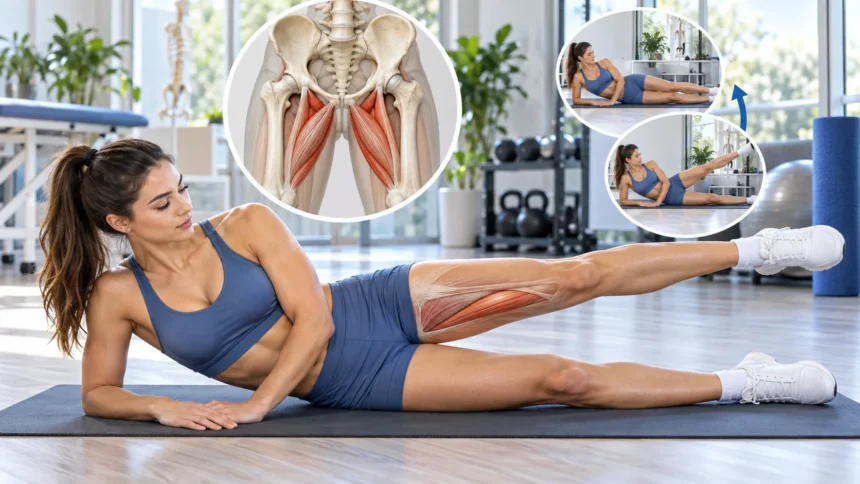
The main adductor muscles include the adductor longus, adductor brevis, adductor magnus, gracilis, and pectineus. These muscles connect parts of the pelvis to the thigh bone or lower leg. Although hip adduction is their primary function, some also assist with hip flexion, extension, and rotation depending on the position of the joint.
Adductor exercises strengthen these muscles through controlled resistance rather than relying only on stretching. They can be useful for athletes, active adults, and people who want more balanced lower-body strength. The right exercise depends on your current ability, mobility, training experience, and whether you have any existing groin or hip symptoms.
Benefits of Adductor Exercises
Strong adductors can help improve pelvic stability and control during movement. They support the legs when you walk, run, climb stairs, or shift weight from side to side. Better strength in the inner thighs can also make movements feel more controlled when you are changing direction or moving through wider stances.
Athletes often place high demands on the adductors during sprinting, kicking, cutting, and lateral movement. Sports such as soccer, basketball, hockey, and tennis all involve repeated side-to-side forces. Progressive adductor strengthening may improve the muscles’ ability to tolerate these demands when combined with overall conditioning and sport-specific training.
Adductor exercises can also create a more balanced lower-body routine. Many programs focus heavily on the quadriceps, glutes, and hip abductors while giving the inner thighs less attention. Training both inward and outward hip movement can help build more complete hip strength without assuming one muscle group should dominate every task.
How to Do Side-Lying Adductor Raises
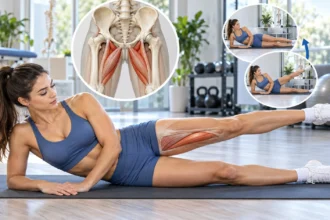
Lie on your side with the leg you want to train positioned underneath. Bend the top knee and place that foot in front of the lower leg for support. Keep your torso relaxed and your lower leg straight, then gently engage the inner thigh before lifting the bottom leg a few inches from the floor.
Raise the leg slowly and avoid rolling your pelvis backward. Pause briefly at the top while keeping the movement controlled, then lower the leg with the same level of control. The range does not need to be large because the goal is to create tension through the inner thigh rather than lift as high as possible.
Beginners can start with bodyweight and a small number of repetitions. If the movement becomes easy, you can add a light ankle weight or resistance band. Stop if you feel sharp groin pain, and reduce the range if the exercise causes discomfort instead of normal muscular effort.
Standing Adduction With a Resistance Band
Standing banded adduction trains the inner thigh while also challenging balance and trunk control. Attach a resistance band to a stable low anchor and loop the other end around the ankle closest to the anchor. Stand tall and use a wall or chair for support if needed, then move the working leg across your body.
Keep the movement slow rather than swinging the leg with momentum. Your pelvis should stay relatively level while the adductors pull the leg inward against resistance. Return to the starting position gradually so the muscles continue working as the band pulls the leg back outward.
Choose a light resistance at first so you can maintain good posture and control. As balance and strength improve, you can increase resistance or reduce hand support. This exercise is especially useful because it trains the adductors in a standing position that resembles many everyday and athletic movements.
Copenhagen Plank for Stronger Adductors
The Copenhagen plank is one of the more demanding adductor exercises because it places significant load through the inner thigh. Lie on your side next to a sturdy bench and place your upper leg on top of it. Support your upper body on your forearm, then lift your hips so your body forms a controlled line.
Beginners can make the exercise easier by supporting the upper knee instead of the ankle on the bench. This shortens the lever and reduces the amount of force required from the adductors. Hold the position briefly while breathing normally, then lower your body with control before repeating.
The full Copenhagen plank should be introduced gradually because it can create significant soreness when the adductors are not used to heavy loading. Start with short holds and low volume. Progress only when you can maintain good alignment without shaking excessively, holding your breath, or developing sharp groin discomfort.
Lateral Lunges for Adductor Strength
Lateral lunges train the hips through side-to-side movement and challenge the adductors in a lengthened position. Stand with your feet together, then step to one side while bending the stepping knee. Push your hips backward and keep the opposite leg relatively straight as you lower into a comfortable range.
You may feel the inner thigh of the straight leg lengthen while the bent leg supports most of your body weight. Push through the working foot to return toward the starting position. Keep the movement smooth and avoid dropping suddenly into a deep range before your hips are prepared for it.
Start with shallow bodyweight lunges and gradually increase depth as mobility and strength improve. Dumbbells can be added later when bodyweight becomes easy. Lateral lunges are valuable because they train movement in a direction that many standard squats and forward lunges do not emphasize as strongly.
Sumo Squats and Inner-Thigh Strength
Sumo squats use a wider stance than traditional squats and can increase involvement of the adductors. Stand with your feet wider than shoulder width and turn your toes outward to a comfortable degree. Brace gently through your trunk, then lower your hips while allowing your knees to track in the same direction as your toes.
Descend only as far as you can maintain good control and comfort. Push through your feet to return to standing while keeping the knees from collapsing inward. The glutes, quadriceps, and adductors all contribute, making the sumo squat a compound lower-body exercise rather than a pure isolation movement.
Begin with bodyweight before adding external resistance. A dumbbell or kettlebell can increase the challenge once your technique feels stable. Avoid forcing an extremely wide stance because hip structure differs between individuals, and the most effective position is one that allows you to move comfortably and consistently.
Adductor Squeeze Exercises for Beginners
An adductor squeeze is a simple way to train the inner thighs without large joint movement. Sit or lie down and place a soft ball, cushion, or rolled towel between your knees. Gently squeeze inward, hold the contraction briefly, and then release the pressure slowly while continuing to breathe normally.
This exercise creates an isometric contraction, meaning the muscles produce force without the joint moving through a large range. Isometric adductor work can be useful for beginners who are learning how to engage the inner thighs. It may also be easier to control than more demanding movements such as lunges or Copenhagen planks.
The squeeze should feel firm but not maximal. Start with short holds and moderate effort, then increase duration gradually if the exercise remains comfortable. If you experience groin pain, reduce the intensity rather than assuming more pressure will create faster results.
Adductors, Hip Stability, and the Lower Back
The adductors contribute to pelvic control, which means they work with the glutes, abdominal muscles, and other hip muscles during movement. When the pelvis is stable, force can transfer more efficiently between the trunk and legs. This coordination matters during walking, squatting, lifting, and many athletic movements.
Hip strength and lower-back comfort are also connected through overall movement patterns, although adductor weakness is not automatically the cause of back pain. If you experience lower back pain from sleeping, factors such as sleep position, mattress support, stiffness, and other musculoskeletal issues may also influence symptoms.
A balanced strength program can still support overall lower-body function. Training the adductors alongside the glutes, hamstrings, quadriceps, and core provides a broader foundation than focusing on one muscle group alone. If back pain is persistent or severe, it should be evaluated separately rather than treated only with inner-thigh exercises.
Common Adductor Exercise Mistakes
Using too much resistance is one of the most common mistakes with adductor exercises. Heavy bands or weights can cause the pelvis to rotate, the trunk to lean, or momentum to take over. Starting with lighter resistance makes it easier to feel the correct muscles working and maintain control through the entire movement.
Another mistake is forcing a range that your hips cannot comfortably manage. Wider stances and deep lateral lunges are not automatically better if they create pinching or sharp groin pain. Use a range you can control and gradually increase it as your mobility, confidence, and strength improve.
Some people also perform only stretching because their inner thighs feel tight. Tightness does not always mean the muscles are too short, and undertrained muscles can also feel stiff or fatigued. Combining mobility with progressive strength work often creates a more useful approach than repeatedly stretching without building capacity.
How Often Should You Train the Adductors?
The adductors can be trained as part of a normal lower-body program rather than requiring a separate workout every day. Many people can include one or two targeted exercises a few times per week. The ideal frequency depends on exercise difficulty, sports participation, overall training volume, and how quickly you recover.
Harder movements such as Copenhagen planks or loaded lateral lunges may require more recovery than light adductor squeezes. If your inner thighs remain very sore, reduce volume or allow additional time between sessions. The goal is to build strength gradually rather than creating repeated soreness that interferes with walking, running, or other training.
Progress can come from increasing resistance, repetitions, range of motion, or exercise difficulty over time. You do not need to increase all of these variables at once. Small, consistent progressions usually provide a more sustainable way to strengthen the adductors while maintaining good technique.
Mobility and Stretching for the Adductors
Gentle adductor mobility can be useful when the inner thighs feel restricted during squats, lunges, or other wide-stance movements. Butterfly stretches, wide-stance rocking, and controlled side-to-side movements may help you explore a comfortable range. Stretching should create mild tension without sharp pain or a strong pulling sensation in the groin.
Mobility needs are different for everyone because anatomy, training history, activity levels, and previous injuries all affect hip range. You do not need extreme flexibility to have healthy adductors. The goal is to move comfortably through the ranges required for your daily activities and training.
Strengthening through a larger range can also improve usable mobility. Exercises such as lateral lunges allow the adductors to produce force while lengthened, which can build control as well as flexibility. Combining gentle mobility with resistance training can therefore be more practical than relying only on passive stretching.
When to Modify or Avoid Adductor Exercises
Modify adductor exercises if you are recovering from a recent groin strain, hip injury, or surgery. Early rehabilitation may require lower resistance, shorter ranges, or different exercises than a general fitness routine. A physical therapist or other qualified professional can help determine the appropriate progression when an injury is involved.
Stop if you experience sharp groin pain, sudden weakness, significant swelling, or symptoms that worsen consistently after every session. These signs are different from normal muscular fatigue. Several structures around the hip and groin can cause pain, so continuing to load the area aggressively without understanding the cause may delay recovery.
Return to demanding movements gradually once everyday activities feel comfortable. Athletes may need to rebuild tolerance for sprinting, kicking, and rapid direction changes in addition to basic strength. A complete return-to-sport plan should prepare the adductors for the actual demands they will face rather than relying only on one or two isolated exercises.
Conclusion
Adductor exercises strengthen the inner-thigh muscles that support hip movement, pelvic control, balance, and athletic performance. Side-lying raises, banded adduction, Copenhagen planks, lateral lunges, sumo squats, and adductor squeezes all challenge these muscles in different ways. The best option depends on your current strength, mobility, and experience.
Good technique matters more than using heavy resistance. Keep your pelvis controlled, avoid unnecessary momentum, and work through a comfortable range. Gradually increasing resistance and exercise difficulty can help the adductors become stronger without creating excessive soreness or irritation.
Adductor training works best as part of a balanced lower-body program that also includes the glutes, hamstrings, quadriceps, and core. Add mobility work when useful and pay attention to symptom response. Consistent, progressive training can improve inner-thigh capacity and support better control during both everyday movement and sport.
FAQs
What is the best exercise for adductors?
There is no single best exercise for everyone. Side-lying adduction, resistance-band adduction, lateral lunges, sumo squats, and Copenhagen planks can all strengthen the adductors at different levels of difficulty.
How often should I train my adductors?
Many people can train the adductors two or three times per week within a broader lower-body routine. The exact frequency depends on exercise intensity, soreness, sports participation, and recovery.
Do squats strengthen the adductors?
Yes. The adductors contribute during squats, especially in deeper or wider-stance variations. However, targeted exercises such as banded adduction or Copenhagen planks can provide a more direct challenge.
Can weak adductors cause groin pain?
Weak or undertrained adductors may contribute to some groin problems, but pain can have several causes. Persistent or severe groin pain should be assessed rather than automatically blamed on muscle weakness.
Should I stretch my adductors every day?
Daily aggressive stretching is usually unnecessary. Gentle mobility can be used regularly if it feels comfortable, while progressive strength training can also improve usable range and overall hip control.