
The quadratus lumborum muscle is an important part of the deep lower back that helps stabilize the spine and pelvis during everyday movement. Although it is not as well known as the abdominal muscles or glutes, it plays a major role in standing, walking, bending sideways, lifting, and maintaining balance. Irritation in this area can sometimes contribute to lower back discomfort.
The quadratus lumborum, often shortened to QL, sits on both sides of the lumbar spine between the pelvis and the lowest rib. It works closely with the core, hip muscles, spinal stabilizers, and breathing structures. Because of these connections, the muscle participates in both movement and stability rather than performing only one isolated action.
Understanding quadratus lumborum anatomy and function can make it easier to see why this muscle becomes tense, tired, or painful during certain activities. This guide explains where the QL is located, what it does, how it contributes to posture and movement, why symptoms may develop, and which exercises may help support healthy function.
Where Is the Quadratus Lumborum Muscle Located?
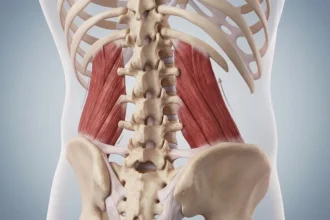
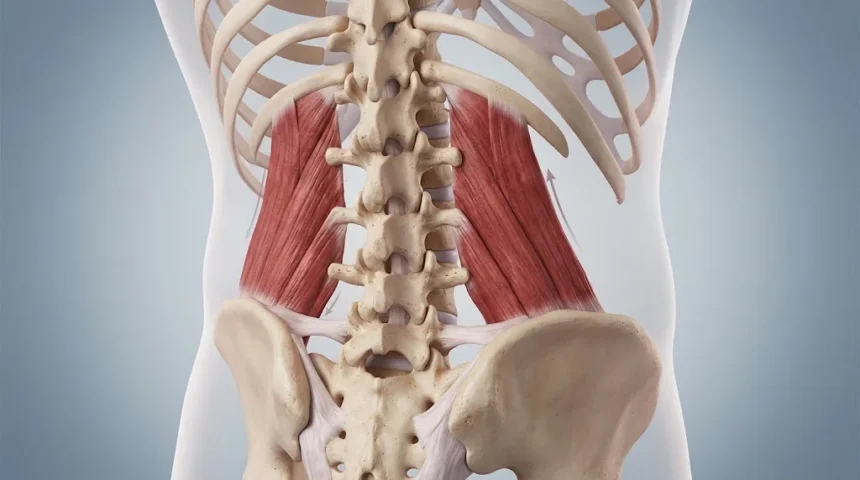
The quadratus lumborum is a deep muscle located in the posterior abdominal wall on each side of the lower spine. It extends from the top of the pelvis toward the twelfth rib and lumbar vertebrae. Because it sits underneath several larger muscles, it cannot always be felt as easily as more superficial back muscles.
Its lower attachment connects with the iliac crest, which is the upper border of the pelvis. Higher portions attach to the twelfth rib and transverse processes of several lumbar vertebrae. These attachments allow the muscle to influence movement between the pelvis, spine, and lower rib cage during both static positions and active movement.
There is one quadratus lumborum muscle on each side of the body. The right and left QL muscles can work together or individually depending on the movement being performed. This arrangement helps explain why symptoms can sometimes appear on only one side of the lower back rather than across the entire lumbar region.
What Does the Quadratus Lumborum Muscle Do?
One of the main functions of the quadratus lumborum is lateral flexion of the trunk. This means the muscle helps bend the torso toward one side when the QL on that side contracts. Movements such as reaching down the side of the leg or carrying an uneven load can increase demand on this action.
When both QL muscles contract together, they can contribute to stabilization and extension of the lumbar spine. They help maintain control while standing, carrying, lifting, or transitioning between positions. Their stabilizing role becomes especially important when the body must resist unwanted movement instead of deliberately bending.
The QL also helps control the pelvis during walking and standing on one leg. When one foot leaves the ground, the muscle contributes to pelvic stability so the opposite side does not drop excessively. This makes the quadratus lumborum relevant to gait, balance, and coordinated movement throughout the lower body.
How the QL Supports the Spine and Pelvis
The lumbar spine must remain stable while still allowing enough mobility for daily activities. The quadratus lumborum contributes to this balance by providing muscular support between the pelvis and lower ribs. It helps manage forces created during lifting, walking, reaching, and other movements involving the trunk.
Pelvic position also affects how forces travel through the lower back. If the body shifts repeatedly toward one side, the QL may need to work harder to maintain balance. This does not automatically mean the muscle is injured, but repeated asymmetrical loading can contribute to fatigue or discomfort in some people.
The quadratus lumborum also works with abdominal muscles, spinal extensors, glutes, and hip stabilizers. No single muscle controls the entire lower back by itself. Healthy movement depends on several muscle groups sharing the workload efficiently rather than expecting one structure to compensate constantly for weakness or poor control elsewhere.
The Quadratus Lumborum and Breathing
The quadratus lumborum has an anatomical connection with the twelfth rib, which gives it a role in stabilizing the lower rib cage. During breathing, the rib cage moves as the diaphragm changes position. The QL can help provide a stable attachment point during certain phases of respiration.
This does not mean the QL is primarily a breathing muscle. Its contribution is more supportive, particularly during forceful breathing or activities where the trunk must remain stable. Athletes, singers, lifters, and people performing demanding physical tasks may create higher coordination demands between breathing and trunk stabilization.
Breathing patterns can also influence how tense the muscles around the lower back feel. Holding the breath excessively during movement may increase unnecessary trunk tension, while controlled breathing can help coordinate abdominal and spinal muscles. Learning to breathe while maintaining trunk stability is often useful during exercise and rehabilitation.
Why the Quadratus Lumborum Can Become Tight or Painful
The QL may become uncomfortable after prolonged sitting, repeated lifting, sudden twisting, or activities involving uneven loading. Carrying a heavy bag on one side, standing with weight shifted consistently toward one leg, or performing unfamiliar exercise can increase demand on the muscle. Symptoms may feel like aching, tightness, tenderness, or a deeper lower back discomfort.
Muscle fatigue can also contribute. If the hips, glutes, or other trunk muscles are not sharing the workload effectively, the quadratus lumborum may work harder during everyday movement. Repeated compensation can create a sense of tightness even when there is no significant structural injury.
Pain around the QL area does not always mean the QL itself is the source. Joints, discs, nerves, kidneys, hip structures, and other tissues can produce discomfort in nearby regions. Persistent, severe, or unusual lower back pain should therefore be evaluated rather than automatically treated as a tight quadratus lumborum.
How QL Problems May Affect Movement
A sensitive quadratus lumborum may make side bending, walking, rolling in bed, or rising from a chair uncomfortable. Some people notice pain when standing on one leg or carrying something heavy. Others feel more discomfort after remaining in one position for an extended period.
Changes in the lower back can also influence movement elsewhere because the body works as an interconnected system. Hip, pelvic, and leg movement all affect how forces travel during walking and exercise. Similar to how lower-leg pain can change gait mechanics, discomfort around the QL may cause people to alter movement without realizing it.
Compensation can sometimes create additional tightness in the hips, glutes, or opposite side of the lower back. This is why simply stretching the painful area may not always solve the problem. Looking at movement patterns, strength, activity levels, and symptom triggers often provides more useful information.
Quadratus Lumborum Stretching and Mobility
Gentle side-bending stretches can create a mild lengthening sensation through the quadratus lumborum area. For example, reaching one arm overhead while leaning slightly toward the opposite side may stretch tissues along the side of the trunk. The movement should feel controlled rather than sharp or aggressive.
Child’s pose variations and supported side stretches may also be comfortable for some people. Small changes in hip position can alter where the stretch is felt. Because lower back symptoms have many possible causes, stretching should be stopped if it creates radiating pain, numbness, tingling, or a significant increase in discomfort.
Stretching can provide temporary relief from stiffness, but it should not be the only strategy used for recurring symptoms. Strength, movement variety, walking, and better load management may be equally important. If the QL feels constantly tight, it may sometimes need improved strength and endurance rather than increasingly forceful stretching.
Exercises That Strengthen the Quadratus Lumborum
Side planks are commonly used to strengthen muscles along the side of the trunk, including the QL. Beginners can perform the exercise with knees bent or use a raised surface before progressing to a full side plank. The goal is to maintain a controlled body position without allowing the hips to collapse.
Suitcase carries are another practical exercise. Holding a weight on one side while walking requires the trunk muscles to resist sideways bending. This trains the QL and other core muscles in a way that resembles real-life tasks involving uneven loads.
Hip hikes can also target pelvic control. Standing on a step with one leg unsupported, you can gently raise and lower one side of the pelvis while maintaining balance. The movement should remain small and controlled, and beginners may benefit from holding a stable surface while learning proper technique.
How the QL Works With the Core and Hips
The quadratus lumborum is part of a larger system rather than an isolated muscle. Abdominal muscles help control trunk position, while the glutes and hip muscles manage forces through the pelvis. When these areas work together, the lower back is better able to handle everyday loads and exercise.
Weakness does not always exist in one specific muscle. A person may have adequate QL strength but poor coordination between the hips, abdomen, and spine. Training multiple movement patterns can therefore be more useful than trying to isolate the quadratus lumborum with dozens of targeted exercises.
Squats, carries, bridges, dead bug variations, side planks, and controlled hinging exercises can all support broader trunk and hip function when performed appropriately. A balanced program builds general capacity so no single muscle has to compensate excessively during lifting, walking, or other demanding activities.
When Quadratus Lumborum Pain Needs Medical Attention
Most mild muscular discomfort improves with time, activity modification, and gradual movement. However, severe lower back pain should not automatically be assumed to involve the QL. Sudden intense pain after major trauma, significant weakness, or inability to move normally should be professionally evaluated.
Seek urgent medical attention when back pain occurs with new loss of bladder or bowel control, numbness around the groin, progressive leg weakness, fever with significant illness, or severe unexplained abdominal symptoms. These warning signs can indicate problems that require faster assessment rather than home stretching.
Pain that persists for several weeks, repeatedly returns, or significantly interferes with sleep, work, walking, or exercise also deserves evaluation. A healthcare professional or physical therapist can assess movement, strength, neurological symptoms, and other structures to determine whether the QL is actually contributing to the problem.
Conclusion
The quadratus lumborum muscle is a deep lower back muscle connecting the pelvis, lumbar spine, and twelfth rib. It helps with side bending, spinal stabilization, pelvic control, and certain aspects of breathing. Because it works during many everyday movements, the QL can become fatigued when physical demands exceed its current capacity.
Healthy QL function depends on more than stretching one muscle. Strengthening the trunk, hips, and surrounding stabilizers while maintaining regular movement can help the body distribute loads more effectively. Exercises such as side planks, suitcase carries, and controlled hip hikes can be useful when they are appropriate for the individual.
Lower back discomfort should not automatically be blamed on the quadratus lumborum because many nearby structures can produce similar symptoms. Persistent, worsening, or neurologically associated pain requires professional evaluation. Understanding QL anatomy and function can still provide a useful foundation for building stronger, more coordinated movement patterns.
FAQs About the Quadratus Lumborum Muscle
Where is the quadratus lumborum muscle located?
The quadratus lumborum is located deep in the lower back on both sides of the lumbar spine. It connects the pelvis with the twelfth rib and several lumbar vertebrae.
What does the quadratus lumborum muscle do?
The QL helps bend the trunk sideways, stabilize the lumbar spine, control pelvic position during walking, and support the lower rib during certain breathing movements.
What does quadratus lumborum pain feel like?
QL-related discomfort may feel like a deep ache, tightness, or tenderness on one side of the lower back. Symptoms can increase with side bending, prolonged standing, walking, or uneven loading.
What exercises strengthen the quadratus lumborum?
Side planks, suitcase carries, and controlled hip hikes can strengthen the QL and surrounding trunk muscles. Exercise difficulty should increase gradually while maintaining comfortable, controlled movement.
Is a tight quadratus lumborum always the cause of lower back pain?
No. Lower back pain can involve muscles, joints, discs, nerves, kidneys, hips, and other structures. Persistent or severe pain should be evaluated rather than automatically attributed to a tight QL.