
Knee extension exercises are commonly used to improve leg strength, support knee movement, and develop better muscle control. These exercises primarily target the quadriceps, a group of muscles located at the front of the thigh. Whether you want to improve everyday mobility, support your fitness routine, or understand rehabilitation exercises, learning proper technique is important.
Understanding knee extension exercises and how to do them right can help you perform movements with greater control and confidence. Different variations include seated knee extensions, straight leg raises, and resistance-based exercises. Each approach challenges the muscles differently, making it important to choose movements that match your physical abilities and individual needs.
Knee extension exercises are not suitable for every injury or medical condition, particularly during certain stages of recovery. Correct technique, appropriate resistance, and comfortable movement are essential for reducing unnecessary strain. This guide explains the benefits, proper form, common mistakes, and practical safety considerations associated with knee extension training.
What Are Knee Extension Exercises?
Knee extension exercises involve straightening the knee joint through controlled muscle activity. The movement primarily uses the quadriceps muscles, which help extend the lower leg and support activities such as walking, standing, and climbing stairs. Knee extension can be practiced with body weight, resistance bands, or specialized exercise equipment.
Some knee extension exercises involve movement through a comfortable range, while others focus on contracting the muscles without noticeable joint movement. These approaches are often called dynamic and isometric exercises. The appropriate variation depends on individual goals, mobility, symptoms, and whether a healthcare professional has recommended specific rehabilitation activities.
Although knee extensions appear relatively simple, technique and exercise selection influence how the knee responds. Excessive resistance, unsuitable joint angles, or movement through pain may increase discomfort. Learning the basic mechanics helps people understand why controlled movement and individualized progression matter more than lifting heavier weights.
Understanding the Muscles Used in Knee Extensions
The quadriceps are the primary muscles responsible for extending the knee. This muscle group includes the rectus femoris, vastus lateralis, vastus medialis, and vastus intermedius. Together, these muscles generate the force needed to straighten the leg and contribute to important everyday movements.
The quadriceps connect to the knee through the quadriceps tendon, kneecap, and patellar tendon system. When the muscles contract, they help move the lower leg into extension. Surrounding muscles, including the hamstrings and hip stabilizers, also contribute to coordinated lower-body movement and joint control.
Strong muscles can support comfortable movement, but joint health depends on more than strength alone. Mobility, balance, tissue tolerance, and overall movement patterns also influence knee function. A balanced exercise program considers these factors rather than relying exclusively on isolated quadriceps exercises.
Benefits of Knee Extension Exercises
One important benefit of knee extension exercises is improving quadriceps strength when the movement is appropriate for the individual. These muscles help support activities such as getting out of a chair, walking, and climbing stairs. Developing strength can make these movements feel more manageable over time.
Knee extension exercises may also improve awareness and control of the muscles around the knee. Controlled contractions can help people practice activating their quadriceps during rehabilitation or general strengthening. This may be particularly useful when reduced activity has affected confidence or muscle function.
Another potential benefit is supporting rehabilitation after certain knee conditions or procedures. Physical therapists may include knee extension variations within individualized recovery programs to improve movement and strength. However, the appropriate exercise, resistance, and range of motion depend on the diagnosis and stage of healing.
How to Do Seated Knee Extension Exercises
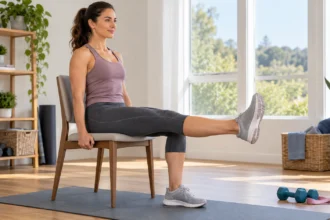
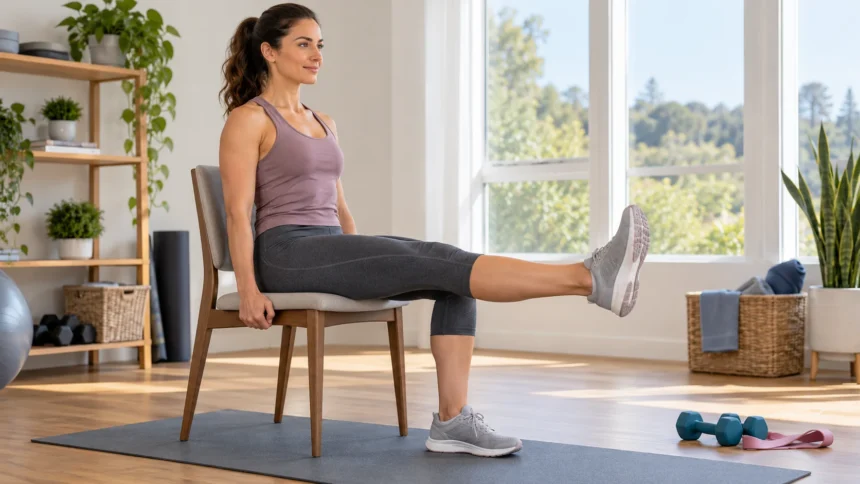
Begin by sitting comfortably on a stable chair with your back supported and feet resting on the floor. Keep your hips level and allow your shoulders to relax. This starting position provides support while helping you focus on controlled movement of the knee.
Slowly straighten one knee by lifting the lower leg forward within a comfortable range. Avoid forcing the joint into a locked position or leaning backward to complete the movement. Keep your thigh supported on the chair while allowing the quadriceps to guide the motion.
Lower your foot back toward the floor in a smooth and controlled manner. The movement should remain comfortable rather than causing sharp pain, catching, or instability. If you have a knee injury, recent surgery, or movement restrictions, follow the exercise range and technique prescribed by your healthcare professional.
How to Perform Straight Leg Raises Correctly
Straight leg raises are commonly included in quadriceps strengthening and rehabilitation programs. Although the main visible movement occurs at the hip, the quadriceps work to keep the knee straight. This makes the exercise different from a traditional seated knee extension, where the knee itself moves through a range.
Lie comfortably on your back with one knee bent and the other leg resting straight. Gently activate the quadriceps of the straight leg while keeping your breathing relaxed. Lift the straight leg a short distance from the surface using a controlled movement, provided this position is comfortable and appropriate.
Lower the leg slowly without allowing it to drop suddenly. Avoid arching your lower back or forcing the movement when the knee cannot remain comfortably straight. People recovering from surgery or experiencing significant knee pain should receive individualized instructions before performing this exercise.
Isometric Knee Extension Exercises for Beginners
Isometric exercises involve contracting muscles without producing significant movement at the joint. A common quadriceps isometric exercise is called a quad set. It allows the thigh muscles to activate while the leg remains supported, making it useful in some rehabilitation programs.
To understand the movement, sit or lie with your leg supported in a comfortable position. Gently tighten the muscles at the front of your thigh as though preparing to straighten the knee. Avoid forcing the joint downward or creating uncomfortable pressure around the kneecap.
Release the contraction completely and allow the muscles to relax before repeating. The contraction should feel controlled and should not require breath-holding or excessive effort. A physical therapist can recommend suitable contraction duration and frequency when isometric exercises are part of a recovery plan.
Resistance Band Knee Extension Exercises
Resistance bands provide an alternative way to challenge the quadriceps without using a traditional exercise machine. They can offer adjustable resistance depending on band tension and positioning. However, a securely anchored band and appropriate exercise setup are important for maintaining control.
One variation involves seated knee extensions performed with resistance under professional guidance or an established exercise program. The band provides resistance as the lower leg moves into extension. Resistance should remain manageable throughout the movement, without requiring swinging, twisting, or forceful joint straightening.
People with previous knee injuries should avoid assuming that resistance bands are automatically safer than exercise machines. Joint loading depends on the resistance, movement range, and individual condition. Starting with an appropriate challenge and progressing gradually can help maintain comfortable movement and reduce unnecessary strain.
How to Use a Knee Extension Machine Safely
A knee extension machine allows users to train the quadriceps through a seated movement against external resistance. The machine typically includes a padded seat, adjustable backrest, and resistance pad positioned near the lower leg. Correct adjustment helps the equipment accommodate different body sizes and movement requirements.
Before beginning, the machine should be adjusted according to its instructions and your comfortable joint range. Your knee should align appropriately with the machine’s movement axis, and the resistance pad should rest in its intended position. Avoid choosing resistance that requires forceful movements or causes you to lift away from the seat.
Move slowly through an appropriate range and return the resistance under control. Do not lock the knee forcefully or push through sharp discomfort. Anyone with knee instability, ligament injuries, recent surgery, or persistent symptoms should seek professional guidance before using loaded knee extension equipment.
Knee Extension Exercises for Physical Therapy
Physical therapists may recommend knee extension exercises when patients need to improve quadriceps activation, strength, or movement control. These exercises can be included in rehabilitation for certain injuries, joint conditions, or postoperative recovery plans. However, their suitability depends on the condition being treated and individual movement restrictions.
A rehabilitation program may begin with supported quadriceps contractions before progressing to more active movement. In other situations, a therapist may introduce controlled strengthening through selected ranges of motion. The progression depends on healing, symptoms, muscle control, and the person’s response to previous exercises.
Physical therapy also addresses factors beyond isolated knee strength. Balance, hip strength, walking mechanics, and functional movement may be included when appropriate. This broader approach helps ensure that knee extension exercises support practical recovery goals rather than becoming the only focus of treatment.
Knee Extension Exercises After Knee Surgery
Knee extension exercises may play an important role after certain surgical procedures, but postoperative guidance varies considerably. Rehabilitation following knee replacement is different from recovery after ligament reconstruction or meniscus repair. Each procedure may involve specific restrictions, precautions, and timelines that should guide exercise selection.
Some postoperative programs include gentle quadriceps activation and supported knee movements during early recovery. Other procedures require limitations on active extension, external resistance, or particular movement ranges. Following a generic exercise plan without considering surgical instructions may place unnecessary stress on healing tissues.
Patients should follow the rehabilitation program provided by their surgeon or physical therapist. Increasing resistance or changing exercises without approval can interfere with recovery when restrictions remain in place. New swelling, increasing pain, unexpected weakness, or difficulty moving the knee should be discussed with the treating healthcare team.
Common Knee Extension Exercise Mistakes
One common mistake is using more resistance than the quadriceps can control comfortably. Excessive loading may cause people to swing their legs, lean backward, or rush through repetitions. These compensations can reduce movement quality and increase unwanted stress on surrounding structures.
Another mistake involves forcing the knee beyond a comfortable range of motion. Some individuals attempt to achieve a completely straight position despite pain, stiffness, or medical restrictions. Knee mobility varies depending on injury history and joint condition, making individualized exercise limits important.
Poor equipment adjustment and inadequate muscle control can also affect exercise performance. A machine that does not fit correctly may alter how forces are applied during movement. Taking time to understand the setup and choosing manageable resistance helps support better technique and a more comfortable exercise experience.
How to Choose the Right Knee Extension Exercise
Choosing the right exercise begins with identifying your goals and current physical condition. Someone interested in general leg strengthening may have different needs from a person recovering from knee surgery. Pain, swelling, mobility, previous injuries, and available equipment should all influence the decision.
Bodyweight movements and gentle isometric contractions may be suitable starting points in some circumstances. However, simpler exercises are not automatically appropriate for every condition. Individuals with particular injuries may need to avoid certain movements even when those exercises appear easy.
A healthcare professional or qualified exercise specialist can help identify suitable options when symptoms or medical concerns are present. The goal is to find exercises that support comfortable progress without unnecessary joint irritation. An effective program should reflect individual abilities rather than follow a rigid approach.
How Knee Extension Exercises Fit Into a Balanced Routine
Knee extension exercises primarily challenge the quadriceps, but healthy lower-body movement involves several muscle groups. The hamstrings, glutes, calves, and hip muscles also contribute to walking, standing, and balance. A balanced routine considers these muscles alongside joint mobility and comfortable functional movement.
Other exercises may include sit-to-stand movements, supported step-ups, or appropriate hip-strengthening activities. The specific choices should match individual needs and abilities. Combining different movements can help develop overall lower-body function without relying exclusively on one isolated exercise.
Recovery and rest are also important parts of strengthening programs. Muscles and joints need time to adapt to changes in activity. Exercise sessions should remain manageable, with adjustments when fatigue, discomfort, or other symptoms indicate that the current challenge may be unsuitable.
When to Stop Knee Extension Exercises
Knee extension exercises should not cause sharp pain, sudden instability, or worsening joint symptoms. Mild muscular effort is normal during strengthening, but significant discomfort should not be ignored. Stopping an aggravating movement allows you to reassess the exercise rather than continuing through potentially harmful symptoms.
New swelling, repeated catching, locking, or a feeling that the knee may give way deserves medical attention. These symptoms can occur with different knee conditions and should not be attributed automatically to ordinary muscle fatigue. A healthcare professional can evaluate the problem and recommend appropriate next steps.
People with recent injuries or surgery should be especially careful about changes in symptoms. Persistent pain, reduced movement, or increasing difficulty bearing weight may require reassessment of the rehabilitation plan. Exercise adjustments should be guided by the underlying condition and individual recovery needs.
How to Support Knee Health Beyond Extension Exercises
Knee health depends on a combination of muscle function, mobility, activity tolerance, and appropriate recovery. Regular movement can help maintain physical function, while varied activities challenge the lower body in different ways. Walking, cycling, and other suitable activities may complement strengthening when they are comfortable and medically appropriate.
Gradual changes in activity are generally easier for muscles and joints to accommodate than sudden increases in intensity. Allowing time for rest and paying attention to discomfort can support a sustainable routine. Comfortable footwear and suitable exercise environments may also improve confidence during everyday movement.
Persistent knee symptoms should be assessed rather than managed through strengthening alone. Pain can arise from several structures, including ligaments, tendons, cartilage, and surrounding tissues. Understanding the cause helps determine which exercises and other treatments are most appropriate for maintaining mobility and joint function.
Conclusion
Knee extension exercises can help improve quadriceps strength, muscle awareness, and lower-body function when performed appropriately. Different variations, including seated extensions, isometric contractions, and resistance-based movements, provide different training challenges. Choosing the right technique depends on individual abilities, exercise goals, and any existing knee conditions.
Proper form involves controlled movement, comfortable positioning, and suitable resistance. Avoiding excessive loading, forceful joint straightening, and painful repetitions helps reduce unnecessary strain. People recovering from injuries or surgery should follow individualized rehabilitation guidance rather than relying on general exercise recommendations.
Learning how to do knee extension exercises correctly is an important step toward safer and more effective movement. Focus on technique, comfort, and appropriate progression instead of trying to increase difficulty quickly. With suitable guidance and a balanced approach, knee extension training can support everyday mobility and functional strength.
Frequently Asked Questions (FAQs)
What are knee extension exercises good for?
Knee extension exercises primarily strengthen the quadriceps muscles at the front of the thigh. They may support walking, standing, climbing stairs, and rehabilitation when included in an appropriate exercise program.
How do you perform knee extensions correctly?
Sit comfortably with your back supported, then slowly straighten one knee through a pain-free range. Return the leg under control while avoiding forceful locking, breath-holding, or unnecessary body movement.
Are knee extension exercises safe for bad knees?
Knee extension exercises may be suitable for some knee conditions, but not all. Safety depends on the diagnosis, resistance, movement range, and symptoms. A healthcare professional can recommend appropriate modifications.
Can knee extensions help strengthen the quadriceps?
Yes, knee extensions directly activate the quadriceps muscles responsible for straightening the knee. Suitable resistance and controlled movement can improve strength over time when exercises are appropriate for the individual.
Should knee extensions hurt when performing them?
Knee extensions should not cause sharp pain or worsening joint discomfort. Mild muscle effort is expected, but increasing pain, swelling, or instability indicates that the movement should be stopped and reassessed.