
The lower trapezius is an important muscle that supports shoulder movement, upper back stability, and healthy posture. Although it is often overlooked compared to larger back muscles, it plays a major role in controlling the shoulder blades during everyday activities. Understanding the lower trapezius function, location, and common issues can help you recognize muscle weakness, improve movement patterns, and manage discomfort safely.
This muscle works alongside other shoulder stabilizers to support reaching, lifting, and overhead movements. When the lower trapezius becomes weak, fatigued, or poorly coordinated, it may contribute to shoulder instability and upper back discomfort. Learning how this muscle works and how to strengthen it appropriately can support better shoulder function and long-term musculoskeletal health.
What Is the Lower Trapezius Muscle?
The lower trapezius is the bottom portion of the trapezius, a large superficial muscle extending across the upper back and neck. The trapezius has three functional regions: upper, middle, and lower fibers. Each region contributes differently to shoulder blade movement, making the lower trapezius particularly important for coordinated shoulder mechanics and scapular stability.
Unlike the upper trapezius, which helps elevate the shoulder blades, the lower trapezius contributes to their downward movement and upward rotation. This distinction is important because the muscle supports controlled arm movements rather than simply pulling the shoulders downward. Its fibers work with other muscles to maintain efficient positioning of the shoulder blades during physical activities.
The lower trapezius is active during many everyday movements, including reaching overhead, carrying objects, and performing certain exercises. Proper muscle coordination allows the shoulder joint to move efficiently without placing unnecessary stress on surrounding tissues. Understanding its anatomy and purpose can help explain why lower trapezius weakness sometimes contributes to shoulder discomfort or altered movement patterns.
Where Is the Lower Trapezius Located?
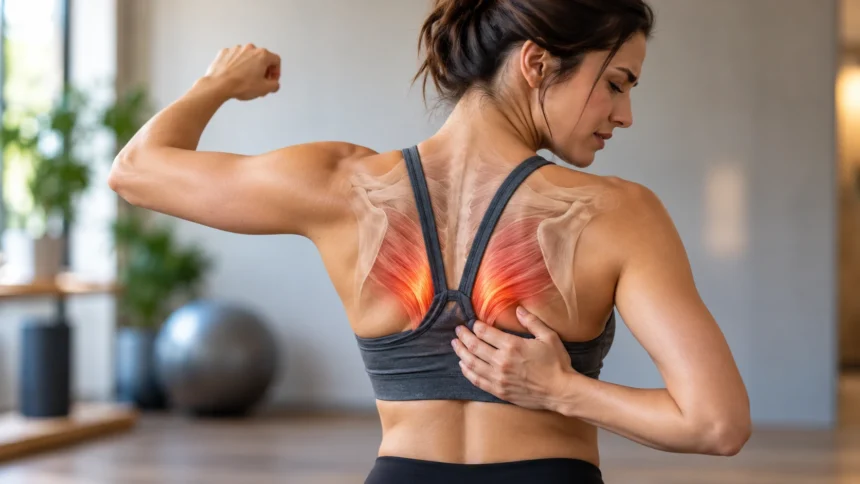
The lower trapezius location is in the lower portion of the upper back, extending from the middle thoracic spine toward the shoulder blades. Its fibers generally arise from the spinous processes of approximately the sixth through twelfth thoracic vertebrae, although anatomical descriptions vary slightly. They travel upward and outward toward the scapula.
The lower trapezius fibers attach near the medial end of the spine of the scapula, a prominent ridge along the back of the shoulder blade. This arrangement allows the muscle to influence scapular movement during arm elevation. Its diagonal fiber direction contributes to the balance of forces needed for smooth and controlled shoulder motion.
You cannot always identify the lower trapezius by touch because nearby muscles and connective tissues overlap the region. However, its general location can be understood by imagining a broad triangular area between the lower shoulder blades and middle back. Discomfort in this region may involve the lower trapezius, although location alone cannot establish a diagnosis.
Lower Trapezius Anatomy and Muscle Structure
The trapezius is a broad muscle divided into three regions according to fiber direction and function. The upper fibers extend downward from the neck, the middle fibers run more horizontally, and the lower fibers travel upward toward the shoulder. These different orientations allow the trapezius to coordinate multiple shoulder blade movements efficiently.
The lower trapezius receives motor innervation primarily from the spinal accessory nerve, also called cranial nerve eleven. Sensory and proprioceptive contributions are associated with cervical spinal nerves. This nerve supply helps coordinate muscle activation and provides information about movement, allowing the trapezius to respond appropriately during physical activities.
Blood supply to the trapezius comes from branches of vessels in the neck and upper back, including contributions from the transverse cervical arterial system. Like other skeletal muscles, its fibers contract in response to nerve signals. Healthy muscle function depends on adequate circulation, coordinated nervous system activity, and appropriate physical loading over time.
What Is the Main Function of the Lower Trapezius?
The primary lower trapezius function involves stabilizing the scapula and assisting with upward rotation during arm elevation. As the arm rises, the shoulder blade must rotate and adjust its position to support comfortable movement. The lower trapezius works with the upper trapezius and serratus anterior to coordinate this important action.
Another function of the lower trapezius is contributing to scapular depression, which means helping move the shoulder blade downward. It can also assist with posterior tilting and controlled positioning of the scapula. These movements are particularly important when reaching overhead or performing activities that require stability around the shoulder joint.
The lower trapezius does not work independently during most activities. Instead, it coordinates with surrounding muscles to distribute forces across the shoulder girdle. When this coordination is disrupted, other muscles may compensate, potentially increasing fatigue or discomfort. Effective shoulder function therefore depends on balanced muscle activity rather than isolated lower trapezius strength alone.
Why Is the Lower Trapezius Important for Shoulder Stability?
Shoulder stability depends on the coordinated interaction of muscles controlling the shoulder joint and shoulder blade. The lower trapezius helps maintain scapular positioning while the arm moves through different ranges. This stability provides a supportive foundation for activities involving reaching, pushing, pulling, and lifting objects overhead.
During overhead movements, the scapula must rotate upward and tilt appropriately to accommodate the moving arm. The lower trapezius contributes to these adjustments alongside the serratus anterior and upper trapezius. Without effective coordination, shoulder movements may become less efficient, and certain tissues may experience increased mechanical stress.
Strong shoulder stabilizers can support comfortable movement, but muscle strength alone does not guarantee freedom from shoulder pain. Joint mobility, movement habits, previous injuries, and overall activity levels also influence shoulder function. Training the lower trapezius as part of a balanced shoulder strengthening program can help improve muscular control and movement confidence.
Common Causes of Lower Trapezius Weakness
Lower trapezius weakness may develop because of limited muscle use, prolonged inactivity, injury, or reduced neuromuscular coordination. People who spend long periods sitting may experience changes in shoulder muscle endurance and movement habits. However, sitting posture alone does not necessarily cause lower trapezius weakness or indicate an underlying problem.
Shoulder injuries can sometimes affect how effectively the lower trapezius activates during movement. Pain may alter normal muscle recruitment patterns, making certain stabilizers less active or changing the timing of contraction. These adaptations can persist if movement becomes restricted, although the relationship between muscle activation and discomfort differs between individuals.
Neurological conditions affecting the spinal accessory nerve can also contribute to trapezius weakness. In these situations, symptoms may include shoulder drooping, reduced strength, or difficulty raising the arm. Because multiple conditions can produce similar symptoms, persistent weakness should be assessed rather than automatically attributed to poor posture or inactivity.
Signs and Symptoms of a Weak Lower Trapezius
A weak lower trapezius may contribute to difficulty controlling the shoulder blade during overhead movements. Some people notice early fatigue when lifting their arms, performing pulling exercises, or maintaining certain positions. However, these symptoms are not specific to the lower trapezius and may involve several muscles or shoulder structures.
Altered scapular movement, sometimes described as scapular dyskinesis, may also occur alongside lower trapezius weakness. The shoulder blade might move unevenly or appear less controlled during repeated arm elevation. Such movement differences do not always indicate injury, but they may become relevant when accompanied by pain, weakness, or functional limitations.
Discomfort around the shoulder blades, upper back, or neck may coexist with reduced lower trapezius function. Nevertheless, pain location and movement patterns cannot reliably confirm weakness without appropriate assessment. A physical therapist or qualified healthcare professional can evaluate muscle strength, shoulder mobility, and coordination to identify contributing factors.
Lower Trapezius Pain: Common Causes and Symptoms
Lower trapezius pain may involve muscle strain, overuse, or discomfort originating from nearby musculoskeletal structures. Repetitive lifting, sudden changes in activity, or unfamiliar exercises can sometimes irritate muscles around the shoulder blades. The resulting discomfort may feel like localized aching, stiffness, or tenderness in the middle-to-upper back.
Muscle tension can also develop when the shoulder stabilizers are repeatedly challenged without adequate recovery. Activities involving prolonged arm elevation or sustained positions may contribute to fatigue in susceptible individuals. However, the lower trapezius is not necessarily the source of every painful sensation between the shoulder blades.
Persistent pain may sometimes originate from the cervical spine, thoracic joints, ribs, or other nearby tissues. Sudden severe back or shoulder pain accompanied by chest discomfort, breathing difficulties, or faintness requires urgent medical attention. For less urgent but recurring symptoms, professional evaluation can help determine the cause and appropriate treatment.
Lower Trapezius and Poor Posture: What Is the Connection?
The lower trapezius contributes to shoulder blade control, which influences how the upper body moves during different activities. Its function is sometimes discussed in relation to rounded shoulders and forward head posture. However, posture varies naturally between individuals, and no single sitting or standing position automatically indicates weakness or dysfunction.
Prolonged static positions may contribute to temporary stiffness or discomfort, especially when movement opportunities are limited. Changing positions regularly can help reduce sustained muscle loading and improve comfort. Lower trapezius strengthening may support shoulder control, but it should not be presented as a guaranteed correction for every postural difference.
A balanced approach to posture focuses on movement variety, physical comfort, and sufficient muscular endurance. Gentle strengthening, mobility exercises, and suitable workstation adjustments may be helpful when symptoms occur during prolonged desk work. The goal is not to maintain a rigidly upright position throughout the day but to support comfortable and adaptable movement.
Best Exercises to Strengthen the Lower Trapezius
Prone Y raises are commonly used to target the lower trapezius because they encourage coordinated scapular movement. Lie facedown with your arms extended diagonally into a Y shape and thumbs pointing upward. Gently lift your arms a comfortable distance while avoiding excessive lower back arching, then lower them slowly.
Wall slides can also help develop shoulder blade control during upward arm movement. Stand facing a wall with your forearms supported and gradually slide your arms upward within a comfortable range. Focus on smooth movement rather than forcefully squeezing your shoulder blades together. Stop if the exercise produces sharp pain or uncomfortable pinching.
Other lower trapezius strengthening exercises include modified prone raises and carefully controlled overhead reaching movements. Begin with low resistance and prioritize comfortable technique before increasing difficulty. Exercises should be adjusted to personal ability, especially when shoulder pain or previous injury is present. A physical therapist can recommend suitable progressions when necessary.
How to Activate the Lower Trapezius Correctly
Lower trapezius activation involves learning to coordinate shoulder blade movement without excessive tension in surrounding muscles. During an appropriate exercise, focus on controlled arm movement and comfortable scapular positioning. Avoid aggressively pulling the shoulders downward, because upward rotation is also an essential component of normal lower trapezius function.
Gentle prone Y raises can provide an opportunity to practice this coordination. Begin with a small movement range and keep the neck relaxed while lifting the arms. You do not need to force a strong muscle contraction or create a burning sensation to make the exercise effective.
Breathing naturally and maintaining comfortable spinal alignment may also improve movement quality. If the upper shoulders feel excessively tense, reduce resistance or modify the exercise rather than forcing repeated contractions. Gradual practice can help develop muscular coordination, although individual activation patterns may differ depending on strength, mobility, and previous injuries.
Lower Trapezius vs. Upper Trapezius: Key Differences
The upper and lower trapezius belong to the same muscle but contribute differently to shoulder blade movement. Upper trapezius fibers assist with scapular elevation and upward rotation, while lower fibers contribute to scapular depression and upward rotation. Both regions help maintain efficient shoulder mechanics during reaching and overhead activities.
The upper trapezius is located closer to the neck and top of the shoulders, whereas the lower trapezius extends along the middle portion of the back. These locations reflect their different fiber orientations and mechanical roles. Although their functions differ, both portions are essential components of coordinated scapular movement.
It is common to hear that an overactive upper trapezius automatically means the lower trapezius is weak. However, muscle function is more complex than this simple explanation suggests. Pain, mobility, training history, and movement demands can all influence activation patterns, making individualized assessment more useful than assuming a universal muscular imbalance.
Lower Trapezius Strain: Causes, Recovery, and Care
A lower trapezius strain occurs when muscle fibers are overloaded beyond their current tolerance. Sudden pulling movements, unfamiliar physical activity, or rapid increases in exercise intensity may contribute to muscle irritation. Symptoms can include localized soreness, tenderness, and discomfort during movements that activate the affected region.
Initial care generally involves reducing activities that clearly worsen symptoms while maintaining comfortable everyday movement. Gentle mobility and gradual activity restoration may be useful as discomfort improves. Ice or heat may offer temporary relief depending on personal preference, but neither replaces appropriate assessment when symptoms are significant or persistent.
Recovery time depends on the severity of the injury and individual healing factors. Mild muscle strains may improve relatively quickly, whereas more substantial injuries can require longer rehabilitation. Returning to demanding exercises should be gradual, guided by improving comfort and function rather than simply waiting for a predetermined number of days.
How to Improve Lower Trapezius Strength and Endurance
Improving lower trapezius strength usually requires consistent, progressive exercise rather than occasional high-intensity workouts. Begin with movements that allow comfortable shoulder blade control and manageable resistance. As coordination and strength improve, gradually increase repetitions, resistance, or exercise complexity while monitoring how your shoulders respond.
Endurance is particularly relevant because shoulder stabilizers frequently work during repeated movements and sustained activities. Light-resistance exercises performed with controlled technique may help develop this capacity. However, the ideal training volume depends on individual goals, physical condition, and existing symptoms rather than a universal exercise prescription.
Balanced upper-body training should also include exercises for the serratus anterior, rotator cuff, and other surrounding muscles. Working several muscle groups supports coordinated shoulder function more effectively than focusing entirely on one region. Sufficient recovery, varied movement, and gradual progression can help maintain long-term muscular capacity without unnecessary overloading.
When Should You See a Doctor for Lower Trapezius Problems?
Occasional muscle soreness following unfamiliar activity is common, but persistent pain or unexplained weakness deserves medical attention. Arrange an evaluation if discomfort repeatedly interferes with work, sleep, exercise, or everyday movements. Symptoms that worsen despite activity adjustments may indicate a condition requiring more specific treatment.
Sudden shoulder weakness, significant trauma, or noticeable difficulty controlling the shoulder blade should receive prompt assessment. Seek urgent medical care when upper back pain occurs with chest pain, shortness of breath, fainting, or other concerning symptoms. These problems should not be assumed to originate from a simple trapezius strain.
A healthcare professional may assess shoulder strength, neck movement, scapular coordination, and neurological function. Depending on the findings, additional investigations or referral to a physical therapist may be appropriate. An accurate diagnosis helps distinguish muscular fatigue from nerve-related problems, joint disorders, and other conditions affecting shoulder function.
Conclusion
The lower trapezius is an essential part of the trapezius muscle that supports shoulder blade movement, overhead reaching, and upper back stability. Its fibers connect the thoracic spine to the scapula, helping coordinate important movements with surrounding shoulder stabilizers. Understanding its anatomy explains why this muscle matters for everyday activities and physical performance.
Lower trapezius weakness, pain, or reduced coordination can occur for several reasons, including inactivity, muscle strain, injury, and certain neurological conditions. Gentle strengthening exercises such as prone Y raises and wall slides may improve shoulder control when performed appropriately. However, discomfort should never be attributed to one muscle without considering other possible causes.
Maintaining lower trapezius health involves balanced strengthening, regular movement, appropriate recovery, and attention to persistent symptoms. There is no need to force perfect posture or perform demanding exercises to support shoulder function. When pain, weakness, or movement difficulties continue, professional assessment can help identify the safest and most effective approach.
Frequently Asked Questions (FAQs)
Where exactly is the lower trapezius located?
The lower trapezius is located in the middle-to-lower portion of the upper back. Its fibers extend from the thoracic spine toward the shoulder blade, contributing to scapular stability and movement.
What is the main function of the lower trapezius?
The lower trapezius helps stabilize, depress, and upwardly rotate the shoulder blade. It works with the upper trapezius and serratus anterior to support efficient overhead arm movement and shoulder control.
What causes lower trapezius weakness?
Lower trapezius weakness may result from inactivity, injury, reduced muscular coordination, or certain nerve-related conditions. Persistent weakness should be evaluated because symptoms can also involve other shoulder muscles and structures.
Which exercise is best for strengthening the lower trapezius?
Prone Y raises are commonly recommended because they encourage lower trapezius activation during controlled arm elevation. Wall slides are another useful option, especially when performed comfortably with appropriate technique and gradual progression.
Can a weak lower trapezius cause neck and shoulder pain?
Reduced lower trapezius function may contribute to altered shoulder blade mechanics and coexist with neck or shoulder discomfort. However, weakness alone does not establish the cause, and persistent pain deserves professional assessment.