
Cupping Therapy: Benefits, Types, Risks & How It Works
Cupping therapy is a traditional practice that uses suction created inside cups placed on the skin. It has been used for centuries in several regions of the world and is now commonly offered by massage therapists, acupuncturists, rehabilitation professionals, and some other healthcare practitioners. People often try cupping therapy for muscle soreness, back pain, neck pain, sports recovery, stiffness, and general relaxation. The suction temporarily raises the skin and affects small blood vessels beneath the surface, producing the familiar circular marks associated with treatment. Although some studies suggest short-term pain benefits, research quality varies considerably. Cupping should therefore be considered a complementary therapy rather than a proven cure for medical conditions.
There are several forms of cupping, including dry cupping, moving or sliding cupping, fire cupping, and wet cupping. Dry cupping creates suction without breaking the skin, whereas wet cupping involves superficial skin punctures followed by suction that draws out a small amount of blood. These procedures carry different levels of risk, particularly regarding bleeding, burns, and infection. Modern research has focused mainly on musculoskeletal pain, including neck and lower-back problems, but evidence for many broader claims remains limited. Claims that cupping “removes toxins” or treats numerous internal diseases have not been established by strong clinical evidence. Understanding how cupping works, what it may realistically help, and how to minimize risks can make treatment decisions more informed.
What Is Cupping Therapy?
Cupping therapy involves placing specialized cups against the skin and creating negative pressure inside them. This pressure pulls the skin upward into the cup rather than pressing downward like conventional massage. Cups can be made from glass, plastic, silicone, ceramic, bamboo, or other materials depending on the technique being used. Practitioners commonly apply them to the back, shoulders, neck, thighs, or other muscular areas. The cups may remain stationary for several minutes or be moved across lubricated skin. Cupping is generally categorized as a complementary or traditional therapy rather than a primary medical treatment for disease.
The practice has a long history in traditional medicine systems found in China, the Middle East, and other regions. Although traditional explanations vary, modern practitioners commonly describe cupping in terms of suction, local circulation, muscle relaxation, and sensory stimulation. Interest has expanded significantly through sports medicine and popular culture because professional athletes sometimes display circular cupping marks. This visibility has encouraged people to try the therapy for post-exercise soreness and muscular discomfort. Historical use, however, does not by itself establish medical effectiveness. Traditional practices still need appropriately designed clinical trials before specific health benefits can be considered well supported by modern scientific standards.
Cupping is not the same as massage even though the two treatments may be offered together. Massage generally uses pressure, stretching, kneading, or movement to manipulate soft tissues from the outside. Cupping creates lifting force by producing a partial vacuum over the skin. This difference can create a distinct sensation that users often describe as pulling, tightness, or pressure rather than compression. Moving cupping combines some features of both techniques because lubricated cups are slid over muscles while maintaining suction. The choice between cupping, massage, exercise therapy, or another intervention should depend on the person’s goals, medical condition, comfort, and the evidence supporting treatment for the specific problem.
The round discolorations left after treatment are probably the most recognizable feature of cupping. Suction causes small blood vessels beneath the skin to expand or rupture, producing red, purple, or darker circular marks. These areas may resemble bruises, although their appearance results specifically from the suction applied during treatment. Marks commonly fade gradually over several days and may remain visible for a week or longer in some people. Their darkness does not provide a reliable measurement of how many “toxins” are present or how unhealthy a particular muscle is. Interpreting darker marks as evidence that more toxins were removed is not supported by established medical science.
Cupping is most realistically viewed as a physical treatment that may temporarily change sensations, local tissue responses, and pain perception. Some people find it relaxing and report that tight muscles feel more comfortable afterward. Others experience little noticeable change or find the pulling sensation unpleasant. Individual response cannot determine whether the treatment modifies the underlying cause of a medical problem. Someone with back pain from a muscle strain, for example, has a very different condition from someone experiencing pain due to infection, fracture, nerve compression, or another serious problem. Proper diagnosis remains important when pain is persistent, severe, unexplained, or accompanied by warning symptoms.
How Does Cupping Therapy Work?
During dry cupping, a practitioner creates lower air pressure inside a cup so the surrounding atmospheric pressure pushes the skin upward into it. Modern plastic cups often use hand-operated pumps that allow the practitioner to control the strength of suction more predictably. Silicone cups can be compressed before application to create a vacuum as they expand. Traditional fire cupping creates suction by briefly heating the air inside a glass cup before placing the cup against the skin. The flame does not normally remain inside the cup while it is attached. Improper fire technique can cause burns, making practitioner training particularly important when this method is used.
The suction causes visible mechanical changes in the treated area. Skin rises inside the cup, superficial blood vessels expand, and temporary localized discoloration commonly develops. Blood flow and fluid movement near the skin may also change during treatment. These physiological responses are real, but they should not automatically be interpreted as evidence that damaged tissue is being repaired faster. Researchers continue to investigate whether mechanical stimulation influences local inflammatory signals, nervous-system activity, circulation, or pain-processing pathways. Several mechanisms could operate simultaneously, and psychological expectations may influence symptom perception as well. Scientific understanding of exactly how cupping produces pain relief remains incomplete.
One proposed explanation involves the nervous system and how the brain processes painful sensations. Strong sensory input from suction may temporarily compete with, modify, or distract from pain signals originating from muscles or joints. Similar principles are discussed with massage, heat, cold, and some electrical stimulation therapies. Relaxation during treatment may also reduce muscle guarding and make an uncomfortable area feel easier to move afterward. These effects could help explain short-term improvements without requiring the therapy to structurally repair damaged tissues. A reduction in pain can still be useful, particularly when it allows comfortable participation in rehabilitation. However, symptom relief should not be mistaken automatically for healing of the underlying injury.
Another hypothesis focuses on local circulation. Suction draws blood toward superficial tissues and creates temporary changes in microcirculation around the treated area. This is sometimes simplified in marketing materials into claims that cupping dramatically “increases blood flow” and therefore speeds healing. Biological healing is more complicated because tissues require appropriate blood supply, nutrition, cellular signaling, mechanical loading, and time. Increasing superficial redness does not prove that a tendon, ligament, spinal disc, or joint has regenerated. Circulation changes may contribute to the sensations people experience, but stronger research is needed to determine how important these changes are for specific clinical outcomes. Mechanistic explanations should therefore remain separate from proven benefits.
Cupping is also frequently described as a method for “detoxification,” particularly in discussions of wet cupping. This concept is poorly defined scientifically because toxins are not routinely measured before and after ordinary cupping sessions. The liver, kidneys, lungs, gastrointestinal system, skin, and other physiological processes already handle waste products and numerous potentially harmful substances. Drawing a small amount of blood through superficial skin punctures does not establish that harmful substances have been selectively removed. The National Center for Complementary and Integrative Health notes that evidence supporting cupping for conditions beyond pain is insufficient. People should therefore be cautious about practitioners promising detoxification, immune cleansing, or treatment of major diseases through suction alone.
Types of Cupping Therapy
Dry cupping is the most straightforward type and does not intentionally break the skin. The practitioner places one or more cups over selected areas and creates suction using heat, a mechanical pump, or flexible cup compression. Cups usually remain attached for several minutes before being removed by releasing the vacuum. Dry cupping commonly produces circular marks but generally has less infection and blood-loss risk than techniques involving skin puncture. People often choose it for muscle tightness, back discomfort, neck pain, or relaxation. The strength of suction should remain tolerable throughout the session. Excessively aggressive suction can increase tenderness, blistering, and skin damage without evidence that stronger treatment necessarily produces better results.
Moving cupping, sometimes called sliding or running cupping, involves applying oil or lotion before attaching the cup. The practitioner then moves the cup slowly across the skin while maintaining enough suction for the cup to remain partially attached. This creates a pulling and gliding sensation across a broader muscle area rather than concentrating suction in one fixed spot. It is frequently used over large muscles of the back, shoulders, or legs. Moving cupping can leave streak-like redness rather than perfectly round marks. Because friction is involved, lubrication and controlled pressure are important for comfort. People with irritated, injured, infected, or highly sensitive skin may not be suitable candidates for this technique.
Fire cupping is a traditional method most commonly performed with glass cups. A practitioner briefly introduces a flame or burning material into the cup to warm the air, removes the flame, and quickly places the cup against the skin. Cooling air creates the partial vacuum responsible for suction. When performed correctly, the flame should not touch the person’s skin, yet burns remain a recognized possible complication. Fire cupping requires specific training because excessive heating or poor technique can cause injury. Mechanical suction cups offer an alternative that does not require open flame and may allow more predictable pressure control. Neither method has been established as universally superior for pain or other outcomes.
Wet cupping involves controlled superficial skin punctures or small incisions in addition to suction. Depending on the method, suction may first be applied, followed by superficial skin opening and another period of cupping that draws a small quantity of blood into the cup. This practice is sometimes known as bloodletting cupping and includes traditions such as hijama. Because the protective skin barrier is intentionally disrupted, wet cupping has more significant infection-control considerations than dry cupping. Sterile single-use instruments, gloves, proper skin preparation, sharps disposal, and appropriate management of blood-contaminated equipment are essential. Repeated or excessive wet cupping can potentially contribute to blood loss and anemia.
Other variations include flash cupping, in which cups are applied and removed rapidly, and specialized facial or silicone cupping performed with relatively gentle suction. Cosmetic cupping may be marketed for cellulite, skin tone, lymphatic drainage, or facial rejuvenation. Evidence for dramatic cosmetic changes remains limited, and aggressive suction can produce bruising or broken capillaries in visible areas. Some practitioners also combine cupping with acupuncture, massage, stretching, or physical rehabilitation. When several treatments are given together, improvement cannot easily be attributed to cupping alone. Patients considering any variation should ask what technique will be used, whether skin will be punctured, what evidence supports the goal, and what side effects should be expected.
Potential Benefits of Cupping Therapy
Pain relief is the most extensively studied potential benefit of cupping therapy. Trials have evaluated cupping for lower-back pain, neck pain, knee discomfort, shoulder pain, and other musculoskeletal problems. An updated systematic review involving 72 trials and 5,720 participants found many reports of pain improvement, but every included trial was assessed as having a high risk of bias. The researchers therefore characterized the overall evidence as low in strength despite apparently favorable results. This distinction is important because numerous positive studies do not necessarily create strong evidence when trial design is weak. Cupping may help certain people feel better, but the size and reliability of the benefit remain uncertain.
Research on lower-back pain illustrates why conclusions need nuance. A 2024 meta-analysis of eleven trials involving 921 participants found improvement in pain around the end of treatment, particularly within a two-to-eight-week timeframe. However, benefits were not clearly maintained at later follow-up periods such as one month or three to six months in several analyses. Findings also differed according to cupping technique and the type of lower-back pain being studied. Short-term symptom improvement may still be valuable, especially when it helps someone participate in exercise or physical therapy. Cupping should nevertheless not be portrayed as a proven long-term correction for structural or chronic spinal problems.
Neck pain is another area where more recent evidence has shown encouraging results. A 2026 systematic review of nine randomized trials involving 401 adults with chronic neck pain reported improvements in pain and functional disability, with stronger consistency for functional outcomes. The authors described cupping as a potentially useful adjunct within multidisciplinary management while noting methodological limitations in parts of the evidence base. “Adjunct” is an important word because the treatment can be considered alongside movement, strengthening, ergonomic changes, medication when appropriate, and other established approaches. Cupping should not prevent investigation of neurological symptoms such as arm weakness or significant numbness. Serious or progressive neck symptoms deserve medical assessment regardless of whether temporary relief occurs after treatment.
Athletes often use cupping in the hope of reducing muscle soreness and improving recovery after demanding exercise. The sensation of reduced tightness may make the treatment appealing after training, and the ritual itself can promote relaxation. However, evidence supporting meaningful improvements in performance, muscle regeneration, injury prevention, or return-to-sport time is less convincing than social media visibility might suggest. Delayed-onset muscle soreness naturally changes over several days, which makes uncontrolled personal experiences difficult to interpret. Athletes should not use temporary pain relief as permission to continue training through suspected fractures, tendon injuries, concussions, or other significant problems. Recovery still depends heavily on sleep, nutrition, graded loading, rehabilitation, and adequate time.
Relaxation and a feeling of loosened muscles are among the most commonly reported subjective benefits of cupping. These outcomes can matter even when the exact physiological mechanism is uncertain. A treatment that helps someone feel comfortable enough to move or exercise may have practical value as part of a broader rehabilitation plan. Nevertheless, evidence for claims involving asthma, hypertension, digestive disorders, immune enhancement, fertility, diabetes, cancer, or cardiovascular disease is not strong enough to recommend cupping as a primary treatment. NCCIH specifically notes that research outside pain-related uses is insufficient for firm conclusions. People with medical conditions should continue appropriate conventional care rather than replacing proven treatments with cupping sessions.
What to Expect During and After Cupping
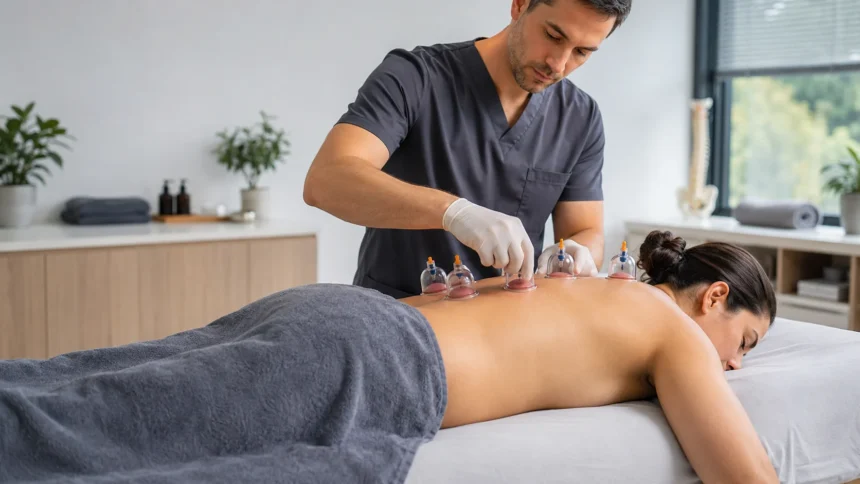
A typical cupping session begins with a brief discussion of symptoms, medical history, medications, skin condition, and treatment goals. A responsible practitioner should explain the technique and clarify whether dry, moving, fire, or wet cupping will be used. The treatment area is then exposed and positioned comfortably, often with the person lying face down when the back or shoulders are being treated. Cups are placed over selected areas, and suction is gradually created. The number of cups varies depending on the practitioner and treatment area. Patients should communicate immediately if suction feels excessively painful, burning, numb, or otherwise uncomfortable rather than assuming severe discomfort is necessary for the therapy to work.
During dry cupping, the skin usually rises visibly into the cup and becomes red or darker as superficial circulation changes. People commonly describe tightness, pulling, warmth, or pressure. The sensation should usually remain tolerable rather than sharply painful. Cups may remain in place for several minutes, although treatment times vary between practitioners and techniques. With moving cupping, the provider may repeatedly slide cups across lubricated skin. Wet cupping involves additional skin preparation, superficial puncturing, and collection of a small amount of blood, which creates different aftercare needs. Sterile technique becomes especially important whenever the skin barrier is intentionally opened.
After the cups are removed, circular red or purple marks are common and may be immediately visible. The treated area can feel mildly tender, warm, or sensitive for a short period. Cleveland Clinic notes that the characteristic marks commonly fade over approximately one to two weeks, although individual recovery differs. Marking alone does not mean the treatment caused deep muscle injury, but blistering, severe pain, or significant skin damage is not an expected therapeutic goal. People planning formal events, photo sessions, swimming, or activities where the marks matter cosmetically should consider their visibility beforehand. Practitioners should explain this consequence before treatment rather than allowing patients to discover it afterward.
Normal activities can often be resumed after uncomplicated dry cupping, although the underlying injury or health condition may still require restrictions. Someone undergoing cupping for a strained muscle should not assume that feeling temporarily better means the tissue can immediately tolerate intense exercise. Similarly, cupping performed during physical rehabilitation should fit within the loading and movement plan recommended for the actual condition. People may prefer to avoid additional irritation over freshly treated areas until tenderness decreases. Wet cupping requires more careful attention to skin cleanliness and wound care because small skin openings are present. Practitioners should provide clear aftercare instructions tailored to the method used.
Results should be judged by meaningful outcomes rather than the appearance of the marks. Someone using cupping for back pain could monitor pain during daily activities, sleep quality, walking tolerance, movement, and ability to perform prescribed exercises. If repeated sessions create no measurable improvement, continuing simply because darker marks appear is difficult to justify. Likewise, immediate relaxation after treatment does not necessarily predict long-term benefit. A defined trial period can help people decide whether cupping is worth the expense and inconvenience. Complementary therapies are most useful when they support clear goals and are discontinued or reconsidered when they provide little practical value.
Cupping Therapy Risks and Side Effects
Temporary skin discoloration is the most predictable side effect of cupping therapy. Circular marks occur because suction affects small blood vessels beneath the skin, and their appearance can vary from light red to dark purple. Mild soreness, tenderness, itching, or skin tightness can also occur. Some people experience fatigue, headache, nausea, or dizziness after treatment, although these reactions are not universal. People who are prone to fainting around needles or blood may experience a vasovagal episode during wet cupping. Most mild effects resolve without major intervention, but severe pain or progressively worsening symptoms should not be treated as a normal sign that the therapy is “working.”
Burns are a recognized risk when heated or fire-based cupping techniques are performed incorrectly. Glass may become too hot, flame can accidentally contact skin, or overheated material may cause thermal injury. Burn severity can range from superficial redness to blistering and deeper tissue damage. Modern pump-based cups eliminate the need for flame and may therefore avoid this particular hazard, although they still can create excessive suction. People considering fire cupping should ask about the practitioner’s training and safety procedures. Any burn involving significant blistering, spreading redness, severe pain, or signs of infection deserves appropriate medical care rather than herbal creams or repeated cupping over the injured skin.
Infection becomes a greater concern when the skin is punctured during wet cupping. Blood-contaminated cups or instruments can theoretically transmit bloodborne infections if equipment is reused without appropriate sterilization. NCCIH specifically warns that contaminated cupping equipment can spread diseases such as hepatitis B and hepatitis C. Local bacterial infections and abscesses can also occur when organisms enter through damaged skin. Wet cupping providers should use infection-control practices comparable with other procedures involving blood exposure. Patients should be cautious if a practitioner reuses disposable equipment, handles blood without gloves, or cannot clearly explain sterilization procedures. Fever, increasing warmth, pus, or spreading redness after treatment requires medical evaluation.
Repeated wet cupping can also lead to excessive blood loss in unusual circumstances. NCCIH notes that anemia has been reported after repeated wet cupping. People who already have iron-deficiency anemia, another form of anemia, a bleeding disorder, or medication-related bleeding risk may face greater concern. Removing small amounts of blood is not medically harmless simply because the procedure is traditional. Frequency, total blood loss, nutritional status, and underlying health all matter. Someone experiencing unusual fatigue, shortness of breath, dizziness, rapid heartbeat, or persistent weakness after repeated wet cupping should seek medical assessment. Blood removal should never be promoted as a universal method of cleansing the body.
Certain skin problems can also worsen after cupping. Strong suction may aggravate eczema, psoriasis, active dermatitis, fragile skin, wounds, or infections. The procedure can potentially produce blistering, persistent discoloration, scarring, or other local reactions in susceptible people. NCCIH also describes rare serious complications, including severe adverse events associated with particular cupping practices. These unusual reports do not mean routine dry cupping is inherently dangerous, but they reinforce the importance of appropriate technique and patient selection. People should stop treatment and obtain medical advice if skin reactions become progressively painful, swollen, hot, or infected. Complementary treatments should leave the patient safer and more functional, not create new injuries that require additional care.
Who Should Avoid or Be Careful With Cupping?
People with significant bleeding disorders should generally avoid techniques that puncture the skin unless a relevant healthcare professional specifically determines that treatment is appropriate. Conditions such as hemophilia can increase the risk of prolonged bleeding after wet cupping. Blood-thinning medications can create similar concerns, although the degree of risk depends on the medication, dose, procedure, and individual medical history. Patients should not stop prescribed anticoagulants simply so that they can undergo cupping. Doing so could increase the risk of stroke, blood clots, or other serious complications. The safer approach is to discuss planned treatment with the healthcare professional managing the medication and disclose all blood-thinning drugs to the cupping practitioner.
People with anemia should be particularly cautious about wet cupping because the technique deliberately removes blood. Someone with low hemoglobin or depleted iron stores does not benefit from unnecessary additional blood loss. Frequent sessions could potentially worsen fatigue, dizziness, or other anemia symptoms. Dry cupping does not intentionally remove blood, but individuals with complicated medical conditions should still discuss therapy with their clinician. Cupping should also not be used as an alternative to investigating unexplained anemia. Blood loss, nutritional deficiency, gastrointestinal disease, and other causes require proper diagnosis. Complementary treatment is safest after significant medical problems have been identified rather than before essential testing has occurred.
Pregnancy is another circumstance where conservative decision-making is appropriate because high-quality safety research is limited. Some professional health sources advise avoiding cupping during pregnancy, particularly without guidance from the prenatal care team. Pregnancy also creates changes in blood volume, circulation, skin sensitivity, and risk profiles that can make generalized advice inappropriate. A pregnant person interested in cupping for back discomfort should first discuss safer evidence-based options with the clinician overseeing the pregnancy. Direct treatment over the abdomen or other sensitive areas should not be improvised. A therapy being drug-free does not automatically mean it has been proven safe during pregnancy, especially when it involves strong suction, blood removal, or heat.
Cupping should not be applied directly over broken skin, active infections, fresh wounds, burns, or areas with significant inflammation. People with eczema or psoriasis may experience worsening when suction traumatizes already sensitive skin. Skin affected by unexplained rashes, tumors, or recent surgery should also be medically evaluated before treatment. Practitioners should examine the proposed treatment area rather than placing cups automatically wherever pain is reported. Pain can sometimes originate from structures beneath skin that looks completely normal, and serious conditions may require imaging or other assessment. Good practitioners recognize when not to treat and refer patients appropriately instead of presenting cupping as suitable for every form of discomfort.
People with severe cardiovascular disease, histories of blood clots, significant neurological problems, or other complex conditions should seek individualized medical advice before cupping. Cleveland Clinic also identifies several conditions in which additional caution or avoidance may be appropriate, including clotting problems and certain cardiovascular disorders. The presence of a pacemaker or other implanted device should always be disclosed even if treatment is planned elsewhere on the body. Medical history matters because complementary therapies do not occur independently of existing disease. People should also seek diagnosis before using cupping for unexplained chest pain, severe headache, neurological weakness, fever, major trauma, or rapidly worsening symptoms. Those presentations can indicate emergencies for which cupping is inappropriate.
How to Use Cupping Therapy More Safely
Choosing an appropriately trained practitioner is one of the most important ways to reduce cupping risks. Training requirements vary substantially between countries and professional backgrounds, so consumers should not assume every person offering cupping has equivalent healthcare education. Ask about qualifications, experience with the specific technique, infection-control procedures, and how the provider screens patients for contraindications. A responsible practitioner should be comfortable discussing limitations as well as potential benefits. They should not promise cures for cancer, diabetes, infertility, cardiovascular disease, or other serious conditions. Claims that one therapy treats almost every health problem are a warning sign regardless of how professional the clinic appears.
Wet cupping requires particularly strict attention to hygiene because blood exposure changes the safety profile. Needles, lancets, or blades intended for single use should never be reused between patients. Practitioners should wear appropriate gloves, clean the skin properly, dispose of sharps safely, and prevent contaminated equipment from contacting other patients. Cups exposed to blood must be managed according to appropriate infection-control procedures. Patients are entitled to ask how instruments are sterilized and whether disposable items are opened specifically for them. If a provider becomes defensive about basic hygiene questions, leaving without treatment is reasonable. Preventing bloodborne infection is more important than completing a scheduled session.
Suction strength should be adjusted to comfort rather than maximized. Stronger suction may produce darker marks but has not been established as automatically more therapeutic. Excessive negative pressure can increase pain, blistering, capillary damage, and skin irritation. People receiving treatment should speak up when suction feels intolerable instead of believing discomfort proves that toxins are leaving the body. Practitioners should also be cautious with thin, fragile, or highly sensitive skin. The objective of a complementary pain treatment is to improve function and comfort without creating unnecessary injury. Gentle treatment may be entirely adequate depending on the person and technique being used.
Cupping should ideally complement rather than replace evidence-based treatment for an identified health problem. Someone with nonspecific muscular back discomfort may choose cupping alongside movement and strengthening, while another person with a herniated disc or inflammatory arthritis may require a more structured medical plan. Physical therapy, appropriate medications, exercise, sleep, nutrition, stress management, or surgery may be important depending on the diagnosis. Temporary symptom relief can be useful when it supports participation in these treatments. Problems arise when patients stop effective care because a practitioner claims that cupping alone addresses the underlying disease. Integrative care works best when complementary approaches fit safely around appropriate diagnosis and proven treatment.
Finally, people should judge whether cupping is worthwhile according to actual improvement rather than assumptions about traditional mechanisms. Track pain, mobility, sleep, exercise tolerance, medication needs, or whichever outcome motivated treatment. If several sessions provide consistent meaningful relief without problematic side effects, cupping may be a reasonable complementary option for that person. If benefits are brief, negligible, or outweighed by bruising and cost, another approach may be more useful. Current research suggests possible benefits for certain pain conditions while the overall evidence still has important limitations. The most balanced position is neither to dismiss every experience nor to treat cupping as a universal healing method. Evidence, safety, personal response, and realistic expectations should guide the decision.
Frequently Asked Questions About Cupping Therapy
What is cupping therapy mainly used for?
Cupping therapy is most commonly used as a complementary approach for muscle tightness, back pain, neck pain, and other musculoskeletal discomfort. Research suggests possible pain benefits, but evidence quality varies and is not strong enough to support every condition for which cupping is marketed.
Does cupping therapy actually work?
Some randomized trials and systematic reviews report short-term improvements in certain types of pain, including lower-back and neck pain. However, study quality and results are inconsistent, so cupping is better considered an adjunct rather than a guaranteed or stand-alone treatment.
What is the difference between dry and wet cupping?
Dry cupping creates suction without intentionally breaking the skin. Wet cupping involves superficial skin punctures followed by suction that draws out a small amount of blood, giving it additional risks involving bleeding, infection, and contaminated equipment.
How long do cupping marks last?
Cupping marks commonly fade over several days and may remain visible for approximately one to two weeks. Their color does not reliably indicate toxin levels or prove that one area required more treatment than another.
What are the main risks of cupping therapy?
Possible cupping side effects include skin discoloration, soreness, burns, blistering, scarring, infection, dizziness, and nausea. Wet cupping adds blood-loss and bloodborne-infection concerns, particularly when equipment or sterile technique is inadequate.