

Deviated Septum: Symptoms, Causes and Treatment
A stuffy nose is easy to blame on allergies, a cold, or dry air, but sometimes the problem is structural. A deviated septum occurs when the wall separating the right and left sides of the nose sits noticeably off-center, leaving one nasal passage smaller than the other. Mild septal deviation is extremely common and often causes no problems at all. When the deviation significantly restricts airflow, however, it can lead to persistent nasal congestion, difficulty breathing through the nose, nosebleeds, disturbed sleep, or a preference for sleeping on one side. Symptoms may become particularly noticeable during colds and allergy seasons, when already-narrow nasal passages become even more swollen.
Treatment depends much more on symptoms than on how crooked the septum appears. Mild problems can often be managed by treating inflammation around the septum with approaches such as saline, allergy management, nasal steroid sprays, antihistamines, or short-term decongestant use when appropriate. These treatments may improve airflow, but medication cannot physically straighten cartilage or bone that has shifted from the midline. When significant nasal obstruction continues despite appropriate medical treatment, septoplasty is the surgical procedure used to straighten the septum. Understanding which symptoms truly come from septal deviation is therefore important before considering surgery. This guide explains deviated septum symptoms, causes, diagnosis, treatment options, surgery, recovery, and when persistent nasal problems deserve medical evaluation.
What Is a Deviated Septum?
The nasal septum is the internal wall dividing your nasal cavity into right and left passages. Its front portion contains flexible cartilage, while bone contributes to the deeper portion of the structure. Ideally, the septum sits relatively close to the center so air can move efficiently through both sides of the nose. A deviated nasal septum bends or shifts toward one side, creating unequal spaces and sometimes narrowing one nasal airway substantially. A perfectly symmetrical nose is not necessary for healthy breathing, however, and many people have some degree of deviation without realizing it. Problems generally develop when the structural difference meaningfully interferes with airflow or contributes to other symptoms.
Septal deviation can take several shapes rather than simply leaning uniformly to one side. The cartilage may curve, develop a ridge or spur, or shift in more than one direction along its length. A deviation near the front of the nose may affect airflow differently from one located farther back. Other structures, particularly the turbinates that line the sides of the nasal cavity, also influence how much space remains for air to travel. Swollen turbinates from allergies or inflammation can make a moderate septal deviation feel much more severe. For that reason, nasal obstruction is often caused by a combination of anatomy and inflammation rather than the septum alone.
It is also normal for nasal airflow to alternate somewhat between sides during the day. This process, known as the nasal cycle, occurs as tissue inside one passage becomes slightly more congested while the opposite side becomes more open. Most people barely notice the change, but someone with a significantly narrow passage may feel much more congested when the normal cycle temporarily reduces space on that side. This can create the impression that nasal blockage changes from hour to hour even though the septal structure itself has not moved. Colds, allergies, smoke, dry air, and other irritants may amplify the same effect. Recognizing these additional influences helps explain why symptoms fluctuate.
A crooked-looking external nose and a deviated internal septum are related in some people but are not the same condition. Someone can have a visibly straight nose with substantial internal septal deviation, while another person may have external asymmetry without severe airway obstruction. Nasal trauma can affect both structures simultaneously, which is why some people notice breathing problems after breaking their nose. Septoplasty primarily addresses the internal septum, whereas rhinoplasty changes the external shape of the nose. In certain situations, surgeons perform both procedures together when functional and cosmetic concerns coexist. The appropriate approach depends on the person’s anatomy, breathing symptoms, and treatment goals.
Most importantly, having a deviated septum does not automatically mean treatment is necessary. Mayo Clinic and Cleveland Clinic both note that many people have no significant symptoms and may never need intervention. Treatment becomes relevant when obstruction, recurring nosebleeds, sleep disruption, or other problems meaningfully affect everyday life. Even then, a clinician usually looks for allergies, enlarged turbinates, nasal polyps, sinus disease, or nasal valve problems that might also be contributing. Treating only the septum when several problems are present may not completely resolve symptoms. An individualized evaluation therefore matters more than simply identifying that the septum looks off-center.
Deviated Septum Symptoms to Watch For
Persistent difficulty breathing through one or both nostrils is the most characteristic symptom of a clinically significant deviated septum. Many people describe one side as feeling constantly blocked even when they do not have a cold. The obstruction may become much worse during respiratory infections or allergy flare-ups because swollen nasal tissues leave even less room around the already-narrow passage. Some people compensate by breathing through their mouth, particularly during exercise or sleep. Mouth breathing can contribute to dry mouth and throat discomfort because incoming air bypasses some of the nose’s normal humidifying function. Symptoms can range from mildly annoying to significant enough to interfere with sleep and physical activity.
Nosebleeds can also occur when turbulent airflow passes over exposed areas of a deviated septum. The surface lining the septum may become dry and irritated, making small blood vessels more likely to break. Mayo Clinic lists recurrent nosebleeds among the possible symptoms and complications associated with septal deviation. Dry indoor heating, low humidity, frequent nose blowing, and certain nasal medications may further increase irritation. Most occasional nosebleeds have causes unrelated to septal deviation, so their presence alone does not prove that the septum is responsible. Frequent, unexplained, or difficult-to-control bleeding deserves medical evaluation rather than repeated self-treatment.
Sleep problems are another reason people eventually seek treatment. A narrowed nasal passage can make breathing noisier and may contribute to snoring, especially when inflammation further restricts airflow. Some people discover that they consistently sleep on one particular side because that position seems to make nasal breathing easier. Mayo Clinic lists noisy breathing during sleep and needing to sleep on a particular side among possible features of septal deviation. A deviated septum can contribute to sleep-disordered breathing, but it is not the only cause of snoring or obstructive sleep apnea. Loud snoring accompanied by pauses in breathing, choking, or severe daytime sleepiness should therefore prompt a broader sleep evaluation.
Some people report facial pressure or headaches and assume the septum must be responsible, but the relationship is more complicated. A severe deviation or septal spur may occasionally contact nearby nasal structures and contribute to localized discomfort. However, migraines, tension headaches, sinus inflammation, dental problems, and numerous other conditions can produce similar pain. The American Academy of Otolaryngology–Head and Neck Surgery includes certain cases of atypical facial pain among possible septoplasty indications when examination supports a nasal source. Headaches should therefore not automatically be labeled “deviated septum headaches.” Identifying the pain pattern and excluding other explanations improves the chance that treatment will actually help.
Another possible complaint is a persistent sense that the nose never feels completely clear despite repeated use of allergy or cold medications. People may notice difficulty exercising with the mouth closed, reduced comfort while breathing at night, or a tendency for congestion to become dramatically worse with minor respiratory infections. Some also experience crusting or dryness around the narrower side of the septum. Smell may seem reduced when nasal obstruction prevents odors from reaching smell receptors efficiently, although many other conditions can affect smell. Severe sudden loss of smell deserves separate evaluation. The key pattern is chronic or recurring obstruction that remains despite reasonable treatment for temporary swelling or allergies.
What Causes a Deviated Septum?
Some people are born with a deviated septum because the structure develops off-center before birth. In other cases, pressure or injury during childbirth may contribute to septal displacement. A congenital deviation may remain unnoticed during childhood, particularly when it causes little obstruction. Symptoms can become more noticeable later as the nose grows, allergies develop, or other nasal tissues change. Parents should not assume that every child who breathes through the mouth has a septal problem, because enlarged adenoids, allergies, infections, and other conditions are also common. Pediatric nasal obstruction should therefore be evaluated according to the child’s complete symptoms rather than appearance alone.
Nasal injury is another major cause of septal deviation. A direct impact can fracture or shift cartilage and bone, leaving the septum displaced after swelling resolves. Contact sports, falls, physical accidents, and motor vehicle collisions are common situations in which nasal trauma occurs. People do not always remember a dramatic broken nose, because relatively minor childhood injuries may alter the developing septum without receiving medical attention. Repeated impacts can also contribute over time. Someone who develops persistent one-sided obstruction after a clear nasal injury should mention the timing to a clinician because it provides useful diagnostic information.
Sports participation increases the opportunity for nasal injury, particularly in activities involving collisions, balls, elbows, or falls. Protective equipment such as appropriately designed helmets or face protection can reduce some trauma risks depending on the sport. Wearing a seat belt is another basic preventive measure because facial impact during a crash can damage the nose and surrounding structures. Mayo Clinic specifically identifies contact sports and failure to use vehicle restraints among circumstances associated with injury-related deviation. Protection cannot prevent every nasal injury, but it reduces avoidable trauma. Anyone who sustains a significant blow to the nose and develops severe blockage or deformity should be assessed rather than waiting indefinitely for symptoms to disappear.
Aging may make an existing deviation more noticeable even when no new injury occurs. Nasal cartilage and supporting tissues change gradually over time, and structural relationships within the nose can shift. Mayo Clinic notes that aging can affect nasal structures and may worsen the functional impact of septal deviation. At the same time, older adults may develop chronic rhinitis, medication-related dryness, or other conditions that contribute to congestion. A septum that caused little trouble at age 25 may therefore become more symptomatic decades later. This does not necessarily mean the cartilage suddenly became severely crooked; several age-related changes may combine to reduce airflow.
Inflammation does not technically cause the septal cartilage to become crooked, but it can make symptoms much worse. Allergic rhinitis, viral infections, chronic irritation, or sinus inflammation can enlarge tissues lining the nasal passages. A person with plenty of nasal space may tolerate this swelling reasonably well, while someone with an already narrow passage can become almost completely blocked. This explains why treating allergies may substantially improve symptoms even though the septum remains anatomically deviated. It also explains why clinicians often recommend medical therapy before surgery when inflammation is suspected. The structural and inflammatory components should be considered together rather than treated as competing explanations.
How Is a Deviated Septum Diagnosed?
Diagnosis usually begins with a conversation about the pattern of nasal symptoms. A clinician may ask whether blockage affects one side or both, whether symptoms change with seasons, and whether you have allergies, nosebleeds, facial trauma, sinus infections, snoring, or sleep problems. They may also ask what treatments you have already tried and whether nasal sprays or antihistamines provide meaningful relief. Understanding symptom severity matters because many people have an anatomically crooked septum without clinically important obstruction. A physical finding therefore has to make sense in the context of the person’s complaints. The goal is not merely to identify deviation but to determine whether it is actually contributing to the problem.
The clinician then examines the inside of the nose, often using a bright light and an instrument called a nasal speculum to gently open the nostril. Mayo Clinic and Cleveland Clinic both describe direct nasal examination as a standard part of diagnosis. The examiner evaluates how far the septum shifts, whether a ridge or spur is present, and how much space remains in each passage. They also look for swollen turbinates, crusting, bleeding sites, polyps, masses, or other abnormalities. Applying a topical decongestant during examination can sometimes help distinguish swelling-related blockage from fixed structural obstruction. This information guides whether additional evaluation is necessary.
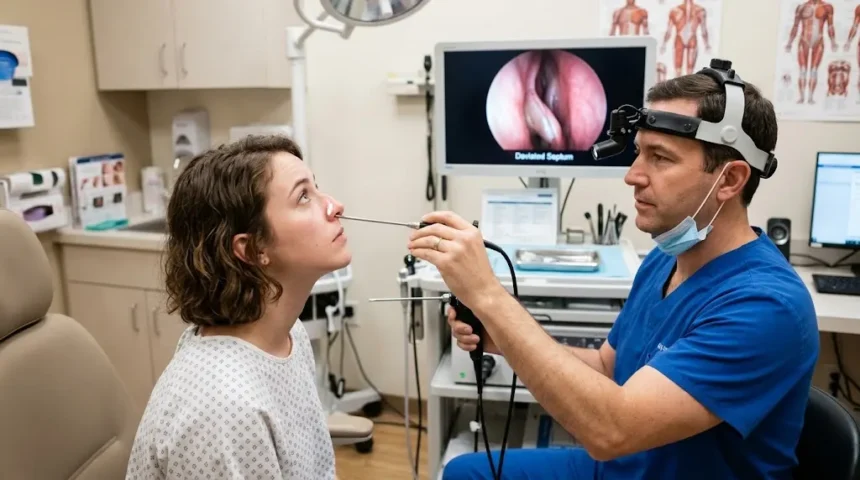
Nasal endoscopy may be used when the deeper nasal cavity cannot be adequately evaluated during a basic examination. The procedure involves passing a thin, illuminated scope into the nose so the clinician can inspect areas farther back. The AAO-HNS lists obstructed nasal breathing, recurrent nosebleeds, certain facial pain patterns, persistent drainage, smell disturbance, snoring, and suspected sinus disease among situations in which diagnostic nasal endoscopy may be relevant. The procedure can also reveal polyps, inflammation, drainage, or other causes of blockage that might otherwise be missed. Local anesthetic or decongestant may be used to improve comfort depending on the setting.
A CT scan is not necessary simply to prove that every deviated septum exists. Physical examination is often sufficient when the anatomy and symptoms are straightforward. Imaging may become useful if chronic sinus disease, unusual anatomy, a mass, previous trauma, or another problem needs investigation. Cleveland Clinic lists CT scanning and nasal endoscopy among tests that may sometimes be used to evaluate deeper nasal tissues. The AAO-HNS also lists CT as an optional test in its septoplasty clinical indicators rather than something every patient automatically requires. Avoiding unnecessary imaging reduces cost and radiation exposure while still allowing appropriate testing when clinical questions remain.
A careful diagnosis also requires considering other reasons someone may struggle to breathe through the nose. Enlarged turbinates, allergic rhinitis, nonallergic rhinitis, nasal valve collapse, polyps, sinus disease, enlarged adenoids, medication effects, and rarely tumors can produce similar symptoms. The AAO-HNS specifically recommends documenting potential alternative causes such as polyps, turbinate hypertrophy and nasal valve compromise when evaluating people for septoplasty. More than one problem can exist simultaneously, meaning straightening the septum may not resolve every symptom unless additional contributors are addressed. A thorough examination therefore protects against assuming that every blocked nose needs septal surgery.
Deviated Septum Treatment Without Surgery
A mild deviated septum that causes little or no discomfort generally needs no treatment. Even moderate structural deviation may be manageable when symptoms occur mainly during allergy seasons or respiratory infections. Medicines cannot straighten cartilage or bone, but they can reduce swelling in surrounding tissues and create more usable space for airflow. Mayo Clinic and Cleveland Clinic both describe medication as an option for controlling symptoms while emphasizing that surgery is required to physically correct the deviation itself. This distinction helps set realistic expectations. If medication makes breathing comfortable enough for daily life, a person may reasonably decide that surgery is unnecessary.
Nasal corticosteroid sprays are commonly used when allergies or chronic nasal inflammation contribute to blockage. These sprays gradually reduce inflammation inside the nose rather than producing an instant opening sensation. Proper technique matters because spraying directly toward the septum can increase irritation or nosebleeds in some users. The nozzle is generally directed slightly outward toward the side wall of the nostril rather than toward the center septum. Consistent use may be necessary before the full benefit becomes apparent. People with persistent symptoms should follow the specific product instructions or recommendations from their healthcare professional rather than repeatedly changing sprays after only one or two doses.
Antihistamines may help when sneezing, itching, watery discharge, or allergy-related congestion accompanies the septal problem. They work by reducing the effects of histamine and therefore address allergic symptoms rather than the crooked structure itself. Some older antihistamines can cause sedation and dryness, while newer options are generally less sedating for many users. Nasal antihistamine sprays are another possibility in selected cases of allergic or nonallergic rhinitis. Choosing a treatment depends on the symptom pattern and other health conditions. Someone whose congestion is entirely structural may notice little improvement from allergy medication, which itself can provide useful information during the evaluation process.
Decongestants can temporarily shrink swollen nasal tissues, but they require more caution. Oral decongestants are not appropriate for everyone, particularly people with certain cardiovascular conditions or medication interactions. Topical decongestant nasal sprays can provide rapid relief but should not be used continuously for long periods because rebound congestion can develop. Cleveland Clinic advises limiting nasal decongestant sprays to no more than three consecutive days because prolonged use may worsen congestion. People frequently trapped in a cycle of repeatedly using decongestant spray may have medication-induced nasal congestion on top of the original problem. A clinician can help plan a safer way to discontinue overused sprays.
Saline nasal sprays or rinses can help moisturize dry nasal tissues and clear mucus or allergens without straightening the septum. Using sterile, distilled, or appropriately boiled and cooled water for nasal irrigation is important rather than using untreated tap water. Humidification may also reduce dryness and crusting for some people, particularly in heated indoor environments. Allergy avoidance, smoke reduction, and treatment of chronic rhinitis can further improve airflow around a deviated septum. These measures are most successful when inflammation contributes substantially to the blockage. When symptoms remain significant after reasonable medical management, surgery may become a more appropriate discussion.
Septoplasty: Surgery to Fix a Deviated Septum
Septoplasty is the operation used to straighten a deviated nasal septum. During the procedure, the surgeon works inside the nose to reposition, reshape, remove, or preserve selected portions of cartilage and bone so the septum sits in a more functional position. The goal is usually to improve nasal airflow rather than to create a mathematically perfect septum. Cleveland Clinic describes septoplasty as surgery that straightens the septum to improve breathing and notes that it is commonly performed as an outpatient procedure. Most people therefore return home the same day unless their health circumstances or additional procedures require observation. Specific surgical techniques vary according to the anatomy.
Surgery is generally considered when septal deviation produces persistent symptoms that remain bothersome despite appropriate medical treatment. The AAO-HNS lists nasal airway obstruction causing mouth breathing, snoring, congestion or sleep-related problems despite medical management among important reasons septoplasty may be considered. Recurrent nosebleeds related to the deviation and selected other structural problems may also support surgery. The decision is based on quality of life as much as anatomy. Someone with a severely crooked septum but comfortable breathing may not benefit enough to justify surgery, while another person with substantial functional obstruction may experience meaningful improvement.
Septoplasty is different from rhinoplasty, although the procedures can be combined. Septoplasty focuses primarily on internal function, whereas rhinoplasty changes the shape or appearance of the external nose. If previous trauma has created both internal obstruction and visible deformity, a surgeon may discuss a combined functional and cosmetic approach. Some people may also require turbinate reduction when enlarged turbinates contribute substantially to obstruction. Treating several structural causes during the same operation can sometimes improve airflow more effectively than addressing the septum alone. A detailed examination before surgery helps the surgeon decide which structures actually require treatment rather than performing unnecessary additional procedures.
No operation guarantees perfect breathing, and septoplasty has potential risks. The AAO-HNS lists complications including postoperative bleeding, crusting, scarring, incomplete improvement in breathing, septal perforation and, rarely, changes in nasal appearance. Infection, reduced sense of smell, numbness, or the need for revision surgery may also occur in selected cases. Serious complications are uncommon, but understanding them is part of informed consent. The likelihood of benefit depends partly on whether septal deviation is truly the main cause of obstruction. Someone whose symptoms come largely from uncontrolled allergies or nasal valve collapse may still experience congestion after a technically successful septoplasty.
Preparing for septoplasty may involve reviewing medications, medical conditions, previous surgeries, bleeding history, allergies, and tobacco use with the surgical team. Certain medications or supplements that increase bleeding risk may need adjustment under professional guidance rather than being stopped independently. Patients should arrange transportation because anesthesia or sedation prevents safe driving immediately after surgery. Instructions about eating, drinking, nasal care, and medications vary by facility and should be followed carefully. It is also helpful to discuss realistic expectations beforehand, including whether external appearance is expected to change. A well-informed patient is better prepared for both the early recovery period and the gradual improvement that follows.
Septoplasty Recovery and Expected Results
The first several days after septoplasty usually involve swelling, congestion, mild bleeding or bloody drainage, and a sensation that the nose is more blocked rather than less. This can feel discouraging when the purpose of surgery was to improve breathing, but early swelling temporarily narrows the passages. Surgeons may place internal splints or other supports depending on the procedure, and these can also contribute to stuffiness until they are removed. Cleveland Clinic notes that the initial recovery period generally takes about one to two weeks, although complete healing continues for several months. Improvement should therefore be judged over time rather than during the first few postoperative days.
Patients commonly receive instructions to avoid forceful nose blowing during the early healing period. Sleeping with the head elevated may help reduce swelling, while prescribed or recommended saline can keep the nasal lining moist when the surgeon considers it appropriate. Heavy lifting, intense exercise, bending and activities that increase the risk of facial injury may be restricted temporarily because they can contribute to bleeding or swelling. The exact timeline varies with surgical technique and whether other procedures were performed. Returning to work may be possible relatively quickly for people with desk jobs, while physically demanding occupations may require more recovery time. Following individualized postoperative instructions is more important than copying another person’s timetable.
Minor blood-tinged drainage can occur early, but heavy or persistent bleeding requires communication with the surgical team. Fever, rapidly worsening pain, difficulty breathing beyond expected congestion, significant swelling, or other unusual symptoms also deserve medical advice. One potential early complication is a septal hematoma, in which blood collects within septal tissues and requires prompt assessment. The AAO-HNS includes postoperative monitoring for bleeding, septal hematoma, infection and splint position among important aspects of follow-up. Routine appointments allow the surgeon to check healing, remove splints when used, and clear crusting if necessary. Attending follow-up visits remains important even when recovery seems uncomplicated.
Breathing improvement often develops gradually as swelling decreases and the internal tissues heal. Some people notice a clear difference within weeks, while others need longer before airflow stabilizes. The septum itself may continue to remodel during the months after surgery. Cleveland Clinic notes that full recovery may take several months despite the much shorter initial recovery period. Expectations should focus on meaningful functional improvement rather than the sensation that both nostrils always feel identical. The normal nasal cycle continues after surgery, so temporary alternating congestion can still occur. Allergies and infections can also cause nasal blockage even after a well-corrected septum.
Septoplasty can be very helpful when a fixed septal obstruction is truly responsible for symptoms, but it does not create immunity from every future nasal problem. Allergic rhinitis can still cause swelling, viral colds can still produce congestion, and other structures may continue to influence airflow. Some patients therefore continue nasal sprays or allergy treatment after surgery when those conditions remain present. A small number of people may experience persistent obstruction or eventually consider revision treatment. The most satisfying outcomes generally come from matching surgery to the right problem. Accurate diagnosis, realistic expectations and careful postoperative care are therefore all part of successful treatment.
Living With a Deviated Septum and When to Seek Care
Many people live comfortably with a deviated septum for their entire lives. If breathing is comfortable, sleep is unaffected, and nosebleeds are rare or absent, there may be no reason to correct the structure simply because it looks crooked during an examination. Cleveland Clinic notes that most people with minimal symptoms do not require treatment. Monitoring symptoms and managing allergies or dryness may be all that is needed. There is no evidence that every mild deviation inevitably progresses to severe disease. Treatment should therefore be driven by functional problems rather than fear that an asymmetrical septum is inherently unhealthy.
An appointment with a primary-care clinician or ear, nose and throat specialist is reasonable when one nostril remains persistently blocked despite treatment. Mayo Clinic specifically recommends seeking medical attention for a blocked nostril that does not clear with treatment or for frequent nosebleeds. People should also seek evaluation when congestion repeatedly interferes with sleep, exercise, work, or quality of life. A clinician can determine whether the septum is actually responsible and whether medical treatment should be tried before surgery. Bringing information about allergy patterns, previous nasal injuries, medications and which side feels blocked can make the consultation more useful.
Sleep-related symptoms deserve particular attention because chronic nasal obstruction may coexist with other breathing problems. Snoring alone is common and does not prove that someone has obstructive sleep apnea. However, loud habitual snoring combined with witnessed breathing pauses, gasping, choking, morning headaches, or excessive daytime sleepiness deserves evaluation. Septal deviation may contribute to airway resistance without being the only obstruction involved. Straightening the septum can improve nasal breathing but should not automatically be assumed to cure sleep apnea. People diagnosed with sleep apnea should continue their prescribed treatment unless their sleep specialist specifically recommends changes.
Sudden severe nasal blockage after an injury requires a different approach from long-standing congestion. Significant trauma can cause fractures, swelling, or a septal hematoma, particularly when the obstruction develops rapidly. Severe bleeding that does not stop with standard first-aid measures also requires prompt medical assessment. An obviously deformed nose, worsening pain, fever, clear watery drainage after major facial trauma, or visual or neurological symptoms should not be managed as an ordinary deviated septum. The AAO-HNS includes external nasal trauma as a reason diagnostic nasal assessment may be needed. Acute injuries sometimes require timely treatment before healing fixes structures in an abnormal position.
Ultimately, living well with a deviated septum means treating symptoms rather than obsessing over anatomical perfection. Mild deviation may require nothing beyond occasional saline or appropriate allergy treatment, while persistent structural obstruction may make septoplasty worthwhile. The best treatment decision considers nasal examination findings, symptom severity, response to medications, sleep quality and the presence of additional nasal conditions. Surgery has a clear role when obstruction remains significant, but it should be chosen for a realistic functional benefit rather than because the septum is simply not straight. With proper evaluation, most people can find an approach that makes breathing more comfortable while avoiding unnecessary treatment.
Frequently Asked Questions
Can a deviated septum get worse over time?
A septal deviation does not necessarily continue worsening, but aging and changes in surrounding nasal tissues can make existing obstruction more noticeable. Allergies, infections and chronic inflammation can also temporarily make a previously manageable deviation feel substantially worse.
Can you fix a deviated septum without surgery?
Medicines can reduce swelling and improve symptoms, but they cannot physically straighten displaced cartilage or bone. Septoplasty is the procedure used when the septum itself needs structural correction.
Does a deviated septum cause snoring?
A deviated septum can contribute to noisy breathing and snoring by restricting nasal airflow, particularly when other nasal tissues are swollen. Snoring can have many causes, however, and significant sleep-apnea symptoms require a broader evaluation.
Is septoplasty painful?
Most people experience congestion, pressure and manageable discomfort rather than extreme pain after septoplasty. Symptoms generally improve as swelling decreases, although complete internal healing can continue for several months.
How do I know if I have a deviated septum?
Persistent one-sided nasal obstruction can suggest septal deviation, but self-examination cannot reliably confirm the diagnosis. A healthcare professional can inspect the nasal passages and may use nasal endoscopy or imaging when additional evaluation is needed.