

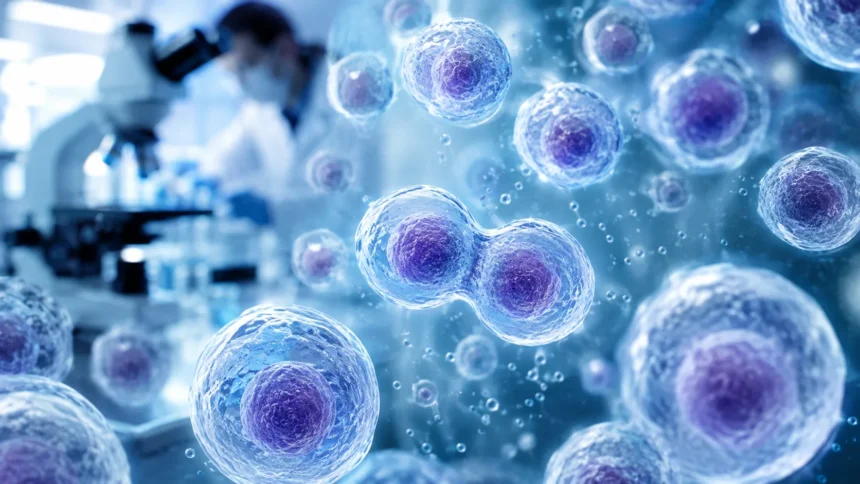
What Is a Stem Cell? A Simple Guide to How Stem Cells Work
A stem cell is a special type of cell that can make more copies of itself and, under the right conditions, develop into other types of cells. These abilities make stem cells important for normal growth, tissue maintenance, healing, medical research, and certain established treatments.
Unlike most specialized cells, stem cells have not yet fully committed to one specific job. A muscle cell is designed mainly to perform muscle-related functions, while a nerve cell has a different role. Stem cells can remain less specialized until biological signals guide them toward a particular cell type.
Scientists study stem cells because they can help explain how the human body develops and how diseases affect cells and tissues. Stem cell research also allows researchers to create laboratory models for studying conditions, testing potential medicines, and investigating new approaches in regenerative medicine.
However, stem cells should not be viewed as a universal cure. Some stem cell therapies, particularly blood-forming stem cell transplants, are well established for specific diseases, while many other potential applications remain experimental. Understanding what a stem cell is makes it easier to separate proven medicine from developing research.
What Is a Stem Cell in Simple Terms?
A stem cell is a cell with two important abilities: it can reproduce itself through a process known as self-renewal, and it can sometimes develop into more specialized cells through a process called differentiation. These features distinguish stem cells from many mature cells in the body.
Think of a stem cell as a biological starting point rather than a finished product. Depending on the type of stem cell and the signals it receives, it may eventually develop into cells associated with blood, bone, muscle, nerve tissue, or other parts of the body.
Not every stem cell can become every type of cell. Some have a very broad developmental potential, while others are more restricted. Scientists classify stem cells partly according to the range of specialized cells they can produce and where those stem cells originate.
Stem cells are found naturally at different stages of human development and in various adult tissues. Researchers can also create certain stem-cell-like cells in laboratories by reprogramming mature cells, giving scientists additional tools for studying development, disease, and potential treatments.
How Do Stem Cells Work?
Stem cells work by balancing two biological processes: self-renewal and differentiation. Self-renewal allows a stem cell to divide while maintaining a population of stem cells, helping ensure that a source of replacement cells remains available when the body needs them.
Differentiation happens when a stem cell begins changing into a more specialized cell. Genes are switched on and off as the cell receives chemical and environmental signals. These changes gradually influence the structure and function the developing cell will eventually have.
The surrounding environment also matters. Stem cells often live within specialized areas called stem cell niches, where neighboring cells, proteins, blood vessels, and chemical signals help regulate whether the stem cells remain inactive, divide, or begin differentiating.
This tightly controlled system is important because uncontrolled cell division can be harmful. Normal stem cells respond to complex biological signals that help regulate growth and tissue maintenance, while abnormalities in pathways controlling cell growth can contribute to diseases such as cancer.
Why Are Stem Cells Different From Other Cells?
Most cells in the human body eventually become specialized for particular functions. Red blood cells help transport oxygen, muscle cells contract, and many nerve cells transmit electrical and chemical signals. Their structures and biological activity are closely connected with these specialized jobs.
Stem cells remain less specialized, allowing them to act as a source for certain new cells. Their ability to continue dividing while maintaining stem cell populations makes them especially important in tissues that constantly need replacement cells throughout life.
Some tissues depend heavily on stem cells because mature cells are regularly lost. Blood cells, for example, have limited lifespans and must continually be replaced. Hematopoietic stem cells in bone marrow help produce the different types of blood cells needed by the body.
Other tissues have more limited regenerative capacity. The presence of stem cells does not mean every damaged organ can automatically repair itself completely. The ability to regenerate depends on the tissue, severity of damage, stem cell population, biological environment, and many other factors.
What Are the Main Types of Stem Cells?
Stem cells can be classified in several ways, but common categories include embryonic stem cells, adult or somatic stem cells, and induced pluripotent stem cells. Each type differs in where it comes from and the range of cell types it can potentially produce.
Embryonic stem cells are pluripotent, meaning they can develop into cells representing nearly all tissues of the body under appropriate conditions. Their broad developmental potential makes them useful for studying early development and exploring how specialized cells form.
Adult stem cells are found in developed tissues and usually have more limited developmental potential. Their primary role is often maintaining or repairing the tissue in which they normally reside. Examples include blood-forming stem cells and certain stem cells associated with skin and the intestine.
Induced pluripotent stem cells, commonly called iPSCs, are mature cells that scientists reprogram into a pluripotent state. They behave in several important ways like embryonic stem cells and have become valuable tools for disease modeling, drug research, and the study of human development.
What Are Embryonic Stem Cells?
Embryonic stem cells are derived from cells found at an early stage of embryonic development. They are known for pluripotency, which means they have the ability to develop into a very wide range of specialized cell types when exposed to appropriate biological signals.
This developmental flexibility has made embryonic stem cells highly valuable for scientific research. Researchers can use them to investigate how cells become specialized, how tissues develop, and what may go wrong during certain diseases or developmental conditions.
Scientists are also studying whether specialized cells produced from pluripotent stem cells could eventually help replace cells damaged by disease or injury. These areas of regenerative medicine remain active fields of research, and the safety and effectiveness of specific approaches must be carefully evaluated.
Embryonic stem cell research also involves ethical considerations because of how the cells are obtained. Regulations and policies differ among countries and research institutions, making ethical review and responsible scientific oversight important parts of work involving these cells.
What Are Adult Stem Cells?
Adult stem cells, also called somatic stem cells, are found in various tissues after development. They help maintain and repair those tissues by producing new cells when older cells are lost or damaged. Their capabilities usually depend on the tissue in which they are located.
One of the best understood examples is the hematopoietic stem cell. These blood-forming stem cells are primarily found in bone marrow and can develop into red blood cells, white blood cells, platelets, and other blood cell types needed for normal body function.
Other adult stem cell populations have been identified in tissues including the skin and intestinal lining. These tissues experience frequent cell turnover, so stem cells provide a continuing source of cells needed to maintain their structure and function.
Adult stem cells generally have a narrower developmental range than pluripotent stem cells. This limitation can make them less flexible for certain research applications, but some adult stem cells already have important and well-established roles in medical treatment.
What Are Induced Pluripotent Stem Cells?
Induced pluripotent stem cells are created by reprogramming mature cells so they return to a state with pluripotent characteristics. Scientists can introduce specific biological factors that change gene activity and cause a specialized cell to behave more like an early developmental stem cell.
This discovery significantly expanded stem cell research because researchers can create pluripotent cells without relying exclusively on embryonic stem cells. Scientists can also generate iPSCs from cells donated by individuals with particular diseases, creating models that contain relevant genetic information.
Researchers may guide these cells into specialized cell types and study how a disease develops in the laboratory. This approach can be particularly valuable for conditions that are difficult to examine directly in living tissues, including some neurological, cardiac, and genetic disorders.
Induced pluripotent stem cells also support drug discovery and personalized research. However, turning laboratory findings into safe medical treatments requires careful testing because researchers must understand issues such as genetic stability, cell behavior, immune responses, manufacturing quality, and unwanted cell growth.
What Does Stem Cell Potency Mean?
Stem cell potency describes the range of cell types that a stem cell can potentially produce. Scientists use terms such as totipotent, pluripotent, multipotent, and unipotent to describe different levels of developmental capability.
Totipotent cells have the broadest developmental potential and occur during the earliest stages after fertilization. They can contribute to all cell types required for early development, including tissues associated with both the embryo and supporting structures.
Pluripotent stem cells can form nearly all cell types of the body but have a more restricted capacity than totipotent cells. Embryonic stem cells and induced pluripotent stem cells are commonly discussed examples of pluripotent cells in stem cell biology.
Multipotent stem cells produce a more limited group of related cell types. Hematopoietic stem cells, for instance, generate different types of blood cells rather than every cell type in the body. Understanding potency helps researchers choose appropriate cells for particular scientific questions.
Where Are Stem Cells Found in the Human Body?
Stem cells are found in several tissues, where they contribute to normal maintenance and cell replacement. Bone marrow is one of the most familiar sources because it contains hematopoietic stem cells that continuously generate the blood cells required throughout life.
Stem and progenitor cells are also associated with tissues that experience frequent renewal. The intestinal lining replaces cells rapidly, while the skin constantly generates new cells as older ones are lost from the surface. Specialized stem cell populations contribute to these renewal processes.
Stem cells can also be collected from blood-related sources such as umbilical cord blood. Cord blood contains blood-forming stem cells that may be stored and used in certain transplant situations when medically appropriate and suitably matched.
The distribution and regenerative ability of stem cells vary greatly among tissues. Finding stem cells in a tissue does not automatically mean scientists can use them to regenerate an entire damaged organ, because tissue repair involves complicated interactions among cells, structural components, blood supply, and signaling systems.
How Are Stem Cells Used in Medicine?
One of the most established medical uses of stem cells is hematopoietic stem cell transplantation. These procedures replace or restore blood-forming cells and may be used in the treatment of certain leukemias, lymphomas, bone marrow disorders, immune disorders, and other serious conditions.
Stem cells used for these transplants may come from bone marrow, circulating blood, or umbilical cord blood. Depending on the condition, cells may come from the patient or from a compatible donor. Treatment decisions depend on diagnosis, overall health, donor availability, and other clinical factors.
A transplant can allow doctors to restore blood production after disease or treatments have damaged bone marrow. However, stem cell transplantation is a major medical procedure and can involve serious risks, including infections, organ complications, treatment-related side effects, and immune reactions.
The fact that stem cells are used successfully for certain blood disorders does not mean all advertised stem cell treatments are proven. Patients considering stem cell therapy should understand exactly what cells are being used, whether the treatment is approved or experimental, and what reliable clinical evidence supports it.
What Is Regenerative Medicine?
Regenerative medicine is a field focused on repairing, replacing, or restoring damaged cells, tissues, and biological functions. Stem cells are one area of regenerative medicine because researchers are investigating whether their ability to produce specialized cells can be used therapeutically.
Researchers are studying potential applications involving the heart, nervous system, eyes, pancreas, joints, and other tissues. Some investigations involve transplanting cells, while others examine ways to stimulate the body’s own repair systems or combine cells with biomaterials and tissue-engineering approaches.
Developing regenerative therapies is difficult because replacement cells need to survive, behave correctly, integrate with surrounding tissue, and avoid unwanted effects. In complex organs, simply placing new cells into damaged tissue may not be enough to restore normal biological function.
For this reason, promising laboratory results do not automatically translate into effective treatments. New therapies must progress through carefully controlled research and clinical trials so scientists can evaluate dosage, safety, effectiveness, manufacturing standards, and long-term outcomes.
How Are Stem Cells Used in Scientific Research?
Stem cells allow scientists to study human development in ways that would otherwise be difficult. Researchers can observe how cells respond to specific biological signals and investigate how changes in gene activity cause an unspecialized cell to develop into a mature cell type.
Stem cells can also be used to create disease models. Researchers may generate nerve cells, heart cells, or other specialized cells carrying genetic characteristics associated with a condition, allowing them to study disease-related changes under controlled laboratory conditions.
These models can support drug discovery. Scientists can expose laboratory-grown cells to potential medicines and observe how the cells respond. This can help researchers identify promising compounds or detect certain harmful effects before treatments advance into more complex stages of testing.
Stem cell research can also improve understanding of genetic diseases and biological differences among patients. Although laboratory models cannot perfectly reproduce an entire human body, they provide valuable tools that complement animal studies, clinical research, genetic analysis, and other scientific methods.
What Diseases Can Stem Cells Treat?
Stem cell-based treatment is most firmly established for certain disorders affecting blood and bone marrow. Hematopoietic stem cell transplantation has long been used in appropriate patients with conditions such as some leukemias, lymphomas, severe bone marrow disorders, and selected inherited blood or immune diseases.
Different conditions require different treatment strategies, and not every patient with these diseases needs or qualifies for a stem cell transplant. Doctors consider disease type, severity, previous treatment, age, health status, donor compatibility, and the expected balance between benefits and risks.
Research is underway to determine whether stem-cell-derived treatments could eventually help other diseases. Potential applications are being investigated in areas such as neurological disorders, diabetes, heart disease, eye disease, and tissue injury, but the stage of evidence varies considerably.
People should be cautious when clinics advertise stem cells as treatments for long lists of unrelated conditions. A scientifically established therapy should have evidence for a specific disease, defined cell products, controlled manufacturing procedures, appropriate medical oversight, and a clear understanding of potential risks.
Are Stem Cell Treatments Safe?
The safety of stem cell treatment depends on the exact therapy, cell source, disease, medical procedure, and quality of clinical oversight. Established treatments such as hematopoietic stem cell transplantation have known benefits for selected conditions, but they can still carry significant risks.
Potential risks can include infection, immune complications, treatment-related toxicity, abnormal cell behavior, and other problems depending on the procedure. In donor transplants, graft-versus-host disease can occur when transplanted immune cells attack tissues in the recipient.
Experimental stem cell products may involve additional uncertainties because long-term effects may not yet be known. Scientists need to determine whether transplanted cells remain stable, reach the correct location, perform the desired function, and avoid forming unwanted tissue or abnormal growths.
Patients considering a stem cell procedure should discuss the evidence with qualified medical professionals. Claims that one treatment can cure many unrelated diseases, guarantees of success, or pressure to pay for poorly explained experimental procedures should be treated cautiously.
Stem Cells vs Specialized Cells: What Is the Difference?
A specialized cell has developed characteristics that allow it to perform a particular biological role. Heart muscle cells, neurons, skin cells, and blood cells have different structures and patterns of gene activity because each performs specialized functions within the body.
Stem cells are different because they retain some capacity for self-renewal and differentiation. They can maintain a stem cell population while producing cells that move toward more specialized states. The exact range of possibilities depends on the specific stem cell type.
As differentiation occurs, cells usually become progressively more specialized. Their gene activity changes, structures develop, and biological functions become increasingly defined. These developmental pathways are controlled through complex interactions between genetic programs and environmental signals.
Understanding these processes helps researchers investigate both normal biology and disease. If scientists learn how healthy differentiation works, they may better understand what happens when development goes wrong or when damaged tissues can no longer replace necessary cells effectively.
What Is Stem Cell Differentiation?
Stem cell differentiation is the process through which a relatively unspecialized cell develops into a cell with a more specific structure and function. This transition involves coordinated changes in gene expression, proteins, cell shape, metabolism, and communication with surrounding cells.
Different signals can guide cells toward different developmental pathways. Researchers use carefully controlled laboratory conditions to encourage pluripotent stem cells to become particular cell types, such as neurons or heart muscle cells, for research and potential therapeutic development.
The process is more complicated than simply switching one cell type into another. Scientists often need to recreate sequences of signals similar to those that occur during natural development, and even then the resulting cells must be tested to determine how closely they resemble healthy mature cells.
Reliable differentiation is especially important for future cell therapies. Researchers need populations containing the desired cells while minimizing unwanted or incompletely differentiated cells. Manufacturing cells consistently and safely remains an important challenge in translating stem cell science into treatments.
What Are the Benefits of Stem Cell Research?
Stem cell research provides a way to study how human cells develop from less specialized states into mature tissues. This knowledge helps scientists understand basic biology and can reveal how genetic or developmental errors contribute to disease.
Disease modeling represents another major benefit. Patient-derived induced pluripotent stem cells can sometimes allow researchers to recreate aspects of a disease in laboratory-grown cells. These models can provide information that would be difficult to obtain directly from living human organs.
Stem cells may also contribute to the development of future regenerative therapies. Researchers hope that carefully produced cells could eventually replace particular cell populations lost through disease or injury, although the feasibility and evidence differ substantially among medical conditions.
The field may also support improved drug testing and personalized medicine research. Scientists can compare how cells with different genetic backgrounds respond to potential treatments, helping researchers explore why therapies may work differently among individuals.
What Are the Limitations of Stem Cells?
One major limitation is that producing the correct cell type does not automatically restore damaged tissue. Cells may need to survive transplantation, connect with neighboring cells, receive a blood supply, respond to biological signals, and function appropriately within a complicated organ.
Immune rejection is another potential challenge when transplanted cells come from another person. The immune system may recognize foreign cells and attack them. Researchers study matching strategies, immune-suppressing treatments, and other approaches to manage this problem.
Safety must also be carefully controlled. Pluripotent stem cells can continue dividing and have broad developmental potential, so researchers must prevent unwanted cell types or abnormal growth from being introduced during therapeutic applications.
Finally, scientific evidence develops slowly because responsible clinical research requires careful testing. A treatment that looks promising in laboratory cells or animals may not prove safe or effective in humans. This is why properly conducted clinical trials are essential before new stem cell treatments become routine care.
How to Evaluate Stem Cell Treatment Claims
Begin by asking what exact type of stem cell is being used. The phrase “stem cell therapy” is extremely broad and does not describe a specific medical treatment. A legitimate explanation should identify the cell source, preparation, intended function, and condition being treated.
Next, ask what clinical evidence supports the treatment. Testimonials and before-and-after stories cannot replace carefully designed studies. Reliable evidence should demonstrate that researchers have systematically evaluated whether a treatment provides meaningful benefits and what risks are associated with it.
Also consider whether the provider clearly explains potential harms and alternatives. Responsible medical professionals should not guarantee results or suggest that experimental treatment is risk-free. Patients should receive enough information to understand uncertainties before making decisions.
Finally, consider whether the claims sound biologically plausible and condition-specific. A single stem cell product advertised as a cure for many unrelated diseases should raise questions. Different tissues and diseases involve very different mechanisms, so effective treatments usually require carefully targeted approaches.
The Future of Stem Cell Science
The future of stem cell science will likely involve increasingly sophisticated disease models, improved methods for controlling cell differentiation, and better understanding of how cells interact with tissues. These advances could improve both basic research and the development of new therapies.
Scientists are also combining stem cells with technologies such as gene editing, tissue engineering, organoids, biomaterials, and advanced imaging. These approaches can help researchers study disease mechanisms and create more realistic laboratory models of human tissues.
Personalized research is another promising area. Cells derived from individual patients may help scientists examine how genetic differences influence disease or treatment response. This could eventually support more precise approaches to medicine, although many applications remain under active investigation.
Progress should still be evaluated carefully. Stem cells have enormous scientific importance, but responsible development depends on rigorous evidence, transparent clinical trials, manufacturing standards, ethical oversight, and realistic communication about what is proven today versus what may become possible in the future.
Final Thoughts: What Is a Stem Cell?
A stem cell is a special cell capable of self-renewal and, depending on its type, developing into one or more specialized cell types. Stem cells contribute to normal development, maintain certain tissues, and provide scientists with powerful tools for understanding human biology.
The three commonly discussed categories are embryonic stem cells, adult stem cells, and induced pluripotent stem cells. They differ in their origins and developmental potential, which makes each type useful for different areas of scientific research and medicine.
Stem cells already have proven medical applications, particularly blood-forming stem cell transplants for selected diseases. At the same time, researchers are studying many additional uses in regenerative medicine, disease modeling, drug discovery, and cell-based therapies.
For patients and families, the most important distinction is between established treatments and experimental claims. Stem cell science is advancing rapidly, but responsible medicine requires evidence. Understanding how these cells work can help people appreciate both their genuine potential and their current limitations.
Frequently Asked Questions
What is a stem cell in simple words?
A stem cell is a special cell that can make copies of itself and may develop into other types of cells. Stem cells help support growth, tissue maintenance, and certain forms of repair.
Where do stem cells come from?
Stem cells can come from early embryonic tissue, adult tissues such as bone marrow, and umbilical cord blood. Scientists can also create induced pluripotent stem cells by reprogramming mature cells.
What are the three main types of stem cells?
The commonly discussed types are embryonic stem cells, adult or somatic stem cells, and induced pluripotent stem cells. Each has different origins and developmental capabilities.
Can stem cells cure diseases?
Stem cell transplants are established treatments for certain blood and bone marrow diseases, but stem cells are not a universal cure. Many other proposed applications are still being studied in clinical research.
What is the main purpose of stem cells?
In the body, stem cells help generate new cells for growth, maintenance, or tissue renewal. In research, scientists use them to study development, model diseases, test potential drugs, and investigate new treatments.