
Aesthetician: What They Do, Services & Career Guide
An aesthetician is a trained skincare professional who provides cosmetic treatments designed to improve the appearance, comfort, and general condition of the skin. Depending on their training, workplace, and local licensing rules, aestheticians may perform facials, skin analysis, exfoliation, waxing, body treatments, makeup application, and other nonmedical skincare services. Some work in traditional spas or salons, while others build careers in resorts, beauty businesses, wellness centers, or medical settings. The occupation combines practical skincare knowledge with customer service, sales, sanitation, and hands-on treatment skills. People often enter the field because they enjoy beauty, wellness, and working directly with clients. However, building a successful career requires much more than simply learning how to perform facials.
The terms aesthetician and esthetician are frequently used interchangeably, although spelling preferences and professional titles can vary between employers and locations. In the United States, government career resources commonly classify these professionals as skincare specialists, and state licensing rules determine which services they may legally perform. Some professionals use titles such as medical aesthetician or clinical esthetician when working in medical spas or dermatology-related environments, but those titles do not automatically expand a person’s legal scope of practice. Training requirements, advanced procedures, and licensing rules differ considerably by jurisdiction. Anyone considering this career should therefore understand both the practical work and the regulations where they intend to practice. This guide explains aesthetician duties, services, training, career opportunities, earning factors, and professional growth.
What Is an Aesthetician?
An aesthetician is a professional who specializes primarily in cosmetic skincare and appearance-focused treatments. Their work typically begins with understanding a client’s skin concerns and selecting services that are appropriate within their professional scope. Common concerns may include dryness, oiliness, uneven texture, clogged pores, superficial signs of aging, or unwanted hair. Aestheticians generally work with the outer layers and appearance of the skin rather than diagnosing or treating medical diseases. They may also educate clients about basic home skincare routines and recommend suitable cosmetic products. The profession therefore combines hands-on treatment with consultation, product knowledge, hygiene, and ongoing client communication.
In career classifications, aestheticians are often grouped under the broader occupation of skincare specialists. CareerOneStop lists aesthetician, esthetician, facialist, skin therapist, medical esthetician, and skincare specialist among titles associated with this occupation. The practical title used by an employer may therefore vary even when the core work is similar. A spa might advertise for an esthetician, while a medical aesthetics business might prefer the term aesthetician or clinical esthetician. Titles alone should not be used to determine what treatments someone is qualified to provide. Licensing, education, workplace policies, and local scope-of-practice regulations are more important than the wording on a job advertisement.
Aestheticians are not physicians and generally do not diagnose skin diseases such as melanoma, severe eczema, psoriasis, bacterial infections, or other medical disorders. They may notice suspicious changes while examining a client’s skin, but an appropriate response is usually to recommend evaluation by a dermatologist or another qualified healthcare professional. This boundary is important because cosmetic skin concerns can sometimes resemble medical conditions requiring diagnosis or prescription treatment. A responsible aesthetician recognizes when a concern falls outside cosmetic skincare. They also avoid promising to cure acne, reverse disease, or permanently eliminate medical skin problems through spa treatments. Clear professional boundaries protect both clients and practitioners while supporting collaboration with healthcare providers when necessary.
The profession requires significant knowledge of skin structure, sanitation, products, ingredients, treatment protocols, and client safety. Students in approved esthetics programs typically learn how to assess skin, prepare treatment areas, perform common services, prevent cross-contamination, and communicate aftercare instructions. Training may also cover topics such as hair removal, makeup, facial massage, exfoliation, and basic business practices. Exact curriculum requirements depend on the licensing authority and educational program. Continued education becomes important because skincare products, equipment, trends, and professional techniques constantly evolve. Aesthetician education therefore does not end when someone passes an initial licensing examination.
An aesthetician’s role can ultimately be summarized as helping clients care for and improve the cosmetic appearance of their skin within a defined nonmedical scope. Some professionals build highly specialized practices around acne-focused skincare, facials, waxing, mature skin, body treatments, or luxury spa experiences. Others develop broader service menus to meet the needs of different customers. Success depends on more than technical skill because client trust, communication, professionalism, and consistency strongly influence repeat appointments. An aesthetician who understands limitations can often provide better service than someone who promises dramatic results from every treatment. The strongest professionals combine realistic expectations with thoughtful skincare recommendations and excellent client experiences.
What Does an Aesthetician Do?
A typical aesthetician appointment often begins with a client consultation. The professional may ask about current skincare products, sensitivities, previous treatments, allergies, cosmetic goals, and any conditions that could affect service safety. They then visually examine the skin and discuss what they observe within their professional scope. This process helps determine whether a hydrating facial, gentle exfoliation, extraction-focused treatment, or another service may be appropriate. Good consultations also identify situations where a procedure should be modified or postponed. For example, recent cosmetic procedures, irritated skin, or certain medications may influence whether particular forms of exfoliation are suitable.
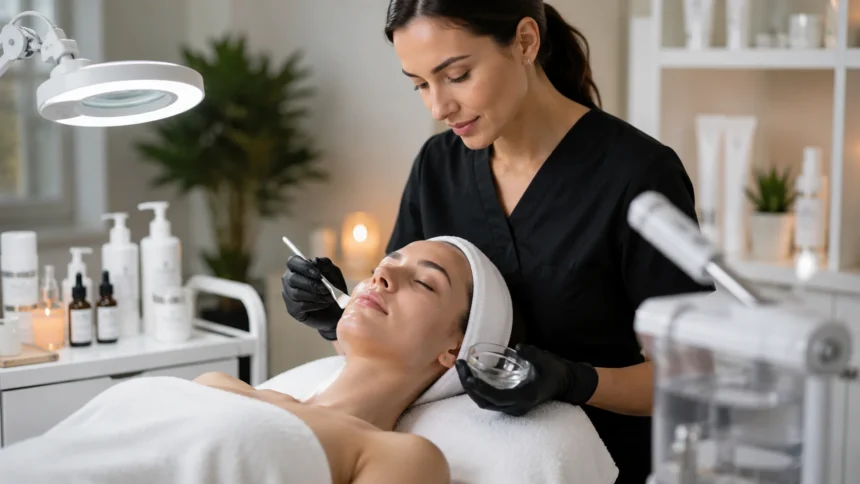
Hands-on skincare treatments form a major part of an aesthetician’s daily work. A facial may involve cleansing, exfoliation, steam when appropriate, extractions, massage, masks, serums, moisturizers, and sunscreen. The exact sequence varies according to the service and the client’s skin. Some aestheticians use equipment designed for cosmetic treatments, but what devices they may legally operate depends on local regulations. Treatment should be customized rather than applying exactly the same products and intensity to every person. Professional judgment is important because skin that is dry and reactive needs a different approach from skin that is oily and relatively resilient.
Hair-removal services are another common responsibility in many aesthetic practices. Aestheticians may perform waxing or other permitted techniques on areas such as the eyebrows, face, arms, legs, underarms, or bikini area. Proper technique matters because hair removal can produce irritation, burns, bruising, ingrown hairs, or skin lifting when performed incorrectly. The practitioner needs to evaluate product use, skin sensitivity, and other factors before beginning. Hygiene is equally important because reusable tools and treatment surfaces require appropriate cleaning or disinfection. A professional hair-removal service should therefore combine cosmetic skill with careful preparation, client privacy, and clear aftercare instructions.
Product education is another important part of the job because clients frequently ask what they should use between professional treatments. Aestheticians may recommend cleansers, moisturizers, sunscreens, exfoliants, serums, or other cosmetic products based on their assessment and product knowledge. Recommendations should focus on realistic goals and avoid presenting ordinary cosmetics as medical cures. A good practitioner can explain how often a product should be used, which ingredients may be irritating, and how several products fit together in a routine. They should also recognize when persistent or severe concerns require a dermatologist. Thoughtful home care can often matter more to long-term appearance than relying solely on occasional professional facials.
Aesthetician work also includes many responsibilities clients never see directly. Professionals clean treatment rooms, disinfect equipment, wash linens, organize supplies, maintain product inventory, update client records, manage appointments, and prepare rooms between services. Self-employed aestheticians may additionally handle marketing, bookkeeping, purchasing, taxes, pricing, and customer retention. BLS notes that tidiness, time management, customer service, initiative, and business skills are important qualities in this occupation. These operational responsibilities can take a significant portion of the working day. Someone considering the career should therefore enjoy both skincare and the disciplined routine required to deliver services safely and professionally.
Common Services Aestheticians Provide
Facials are among the most recognizable aesthetician services and can be adapted for different cosmetic skin goals. A basic facial often includes cleansing, exfoliation, skin assessment, a mask, moisturizing products, and sun protection. Additional steps might include gentle massage or carefully performed extractions when appropriate. Some facials emphasize hydration, while others focus on oil control, texture, or relaxation. The products selected should match the client’s skin tolerance rather than simply following whichever treatment is currently popular online. Regular facials may help some people maintain a comfortable skincare routine, but they should not be presented as medical treatment for serious dermatological conditions.
Exfoliation treatments are also widely offered because removing superficial dead skin cells can temporarily make skin feel smoother and appear brighter. Depending on licensing and local regulations, an aesthetician may use scrubs, enzymes, superficial chemical exfoliation, or devices designed for cosmetic resurfacing. Stronger is not always better because excessive exfoliation can damage the skin barrier and produce redness, burning, sensitivity, or post-inflammatory pigmentation. Clients using retinoids, acne medicines, or other active products may require adjustments. Aesthetic professionals should therefore understand contraindications and avoid combining treatments aggressively simply to create a dramatic immediate effect. Healthy-looking skin often benefits from consistency and barrier protection more than repeated irritation.
Waxing and cosmetic hair removal can become major revenue sources for aestheticians because clients frequently return for recurring appointments. Brow shaping is especially common because the service combines hair removal with attention to facial proportions and personal preferences. Body waxing requires speed, technique, privacy, and careful temperature control. Clients should be asked about products or medications that may increase skin sensitivity before waxing begins. Appropriate preparation and aftercare can reduce irritation, although temporary redness is common. Because hair removal involves close client contact and repeated use of supplies, sanitation practices should remain consistent regardless of how routine the service becomes.
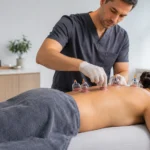
Many aestheticians also provide body treatments that extend skincare beyond the face. Services may include body exfoliation, masks, moisturizing treatments, back facials, or cosmetic treatments designed to improve the feel and appearance of the skin. Spa-oriented treatments sometimes combine skincare with relaxation-focused techniques, aromatherapy, or massage elements that are permitted within the professional’s training. The scope of massage performed by an aesthetician can be limited depending on local regulations, particularly when massage therapy requires a separate license. Practitioners should understand those boundaries rather than assuming any spa service can be added to the menu. Clients benefit when each treatment is delivered by someone legally trained and appropriately qualified.
Advanced aesthetic services require particularly careful attention to local scope-of-practice rules. Medical spas may advertise procedures involving stronger chemical peels, lasers, intense pulsed light, microneedling, or other technology, but whether an aesthetician can perform these services varies significantly by jurisdiction and supervision requirements. A title such as medical aesthetician does not automatically give someone permission to perform procedures reserved for nurses, physicians, or other licensed professionals. Career decisions should therefore be based on the regulations where the person plans to work. Training certificates from private companies may demonstrate education on a device without replacing a legally required professional license. Understanding this difference can prevent both safety problems and career setbacks.
Aesthetician vs Esthetician, Cosmetologist and Dermatologist
Aesthetician and esthetician are commonly used as alternate spellings for professionals who specialize in skincare. In many U.S. career resources, esthetician is the spelling commonly associated with formal education and licensing, while employers may use either term in job titles. CareerOneStop specifically lists both aesthetician and esthetician under the skincare specialist occupation. People sometimes claim that aesthetician always means medical skincare and esthetician always means spa skincare, but real-world usage is not that consistent. A job title should therefore not be treated as proof of a different professional license. The licensing authority in the relevant state or jurisdiction provides the more reliable definition of permitted practice.
A cosmetologist usually receives broader beauty training that can include hair styling, hair coloring, nails, makeup, and skincare, depending on the licensing system. An esthetics program generally concentrates much more heavily on skin treatments and related services. Someone who knows they want to specialize primarily in facials, waxing, and skincare may therefore prefer esthetics training rather than a broader cosmetology pathway. On the other hand, a person interested in hair and several beauty services may find cosmetology more suitable. Licensing requirements and cross-credits between programs vary by state. Students should compare approved curricula rather than selecting a program only by its title or marketing language.
A dermatologist is fundamentally different because dermatologists are physicians who diagnose and treat diseases affecting the skin, hair, and nails. They can evaluate suspicious moles, prescribe medication, manage severe acne, diagnose inflammatory diseases, and treat skin cancers and other medical conditions. Aestheticians focus primarily on cosmetic skincare and appearance-focused services rather than medical diagnosis. The two professions can complement each other when appropriate. For example, a dermatologist may manage a patient’s acne medically while an aesthetician provides permitted supportive skincare treatments. Problems arise when cosmetic practitioners present themselves as substitutes for doctors or when clients expect dermatologists to provide the same spa-style services as aestheticians.
The term medical aesthetician can create confusion because it often describes where someone works rather than a universally separate medical license. An aesthetician may work inside a dermatology practice, plastic surgery office, or medical spa and provide services that fall within their legal scope. The clinical environment may expose them to clients preparing for or recovering from physician-directed cosmetic procedures. However, procedures that involve prescribing, diagnosing, injecting medications, or performing regulated medical treatments remain subject to professional licensing laws. Requirements may also vary for laser use, microneedling, and deeper chemical peels. Professionals interested in medical aesthetics should research their local rules before paying for advanced training or accepting job duties.
Clients can benefit from understanding these distinctions because the appropriate professional depends on the problem they want addressed. Someone seeking a relaxing facial, cosmetic skin maintenance, or eyebrow waxing may be well served by a licensed aesthetician. Someone with a changing mole, severe cystic acne, unexplained rash, persistent infection, or suspected skin cancer needs medical evaluation. A person seeking injectable fillers or prescription treatments needs an appropriately licensed medical professional. Titles in beauty marketing can sometimes sound more medical than the practitioner’s actual qualifications. Asking about licensing, training, and scope of practice provides more useful information than relying on phrases such as advanced, clinical, medical-grade, or master aesthetician alone.
Where Aestheticians Work
Day spas and salons are among the most traditional workplaces for aestheticians. These environments typically focus on facials, waxing, body treatments, relaxation, makeup, and retail skincare products. Clients may book appointments as occasional self-care or return regularly for ongoing cosmetic maintenance. Spa aestheticians need strong hospitality skills because the overall experience matters alongside the technical treatment. Lighting, room cleanliness, punctuality, music, communication, and privacy can all influence whether a client returns. Many spas also set retail or rebooking goals, meaning aestheticians may be expected to recommend products and encourage future appointments without making clients feel pressured.
Resorts, hotels, cruise ships, and destination spas offer another career path for professionals interested in hospitality. These jobs may expose aestheticians to clients from many countries and create opportunities to work in luxury environments. The pace can be demanding because treatment schedules may be tightly booked during busy travel periods. Employees may need to work evenings, weekends, or holidays when guests are most likely to schedule services. Communication skills become particularly important when clients have different expectations or language backgrounds. Some hospitality roles provide commissions or gratuities in addition to base pay, while compensation structures vary considerably between employers and locations.
Medical spas, dermatology offices, and plastic surgery practices also employ some skincare specialists. In these environments, aestheticians may provide approved cosmetic services, skincare consultations, product education, or supportive treatments before and after certain medical procedures when permitted. Working near healthcare professionals can create opportunities to learn about medical skincare terminology and client safety. However, the workplace does not automatically expand the aesthetician’s legal scope. Procedures involving lasers, injections, deeper resurfacing, or other technologies may require different licenses or medical supervision depending on local law. Professionals should understand both employer expectations and licensing regulations before assuming that advanced services are legally permitted.
Some aestheticians choose self-employment by renting treatment rooms, operating private studios, or eventually opening their own spas. Entrepreneurship offers greater control over pricing, branding, services, scheduling, and product selection. It also creates responsibility for expenses such as rent, insurance, supplies, software, advertising, taxes, and equipment. Building a steady client base often takes time because income depends heavily on repeat appointments and referrals. Business owners need to understand customer acquisition and retention rather than focusing only on treatment technique. BLS specifically notes that skincare specialists who operate their own salons benefit from business knowledge and initiative because they must generate opportunities and manage operations effectively.
Aestheticians may also work for cosmetic brands, skincare retailers, education companies, equipment manufacturers, or beauty distributors. Experienced professionals can become product educators, sales representatives, trainers, brand specialists, or account managers. These roles may involve demonstrating treatments, teaching other professionals, attending trade events, or supporting product launches. Some people eventually move away from providing appointments every day while still using their industry expertise. Digital content creation has created additional opportunities for professionals who can explain skincare responsibly online. Career flexibility is one advantage of developing both technical skincare knowledge and transferable skills such as communication, sales, education, and business management.
Skills Successful Aestheticians Need
Technical skincare knowledge provides the foundation of an aesthetician career. Professionals need to understand basic skin structure, common cosmetic concerns, product categories, exfoliation methods, hair-removal techniques, sanitation, and service contraindications. Memorizing treatment steps is not enough because real clients have different skin characteristics and histories. A good aesthetician can modify a procedure when irritation appears or explain why a particular service is unsuitable. They should also stay current as new ingredients and devices become popular. Continuing education helps professionals distinguish useful developments from beauty trends that may be poorly supported, excessively aggressive, or outside their legal scope.
Customer service is equally important because aesthetics is a relationship-based business. Clients often return to professionals who make them feel comfortable, listened to, and respected even when several nearby providers offer similar treatments. Aesthetician consultations may involve sensitive concerns about acne, facial hair, aging, scars, or body appearance, so communication should remain tactful rather than judgmental. Professionals should avoid creating insecurity simply to sell additional services or products. Clear explanations about expected results can strengthen trust because clients know what a treatment can and cannot accomplish. BLS identifies customer-service skills as an important quality for skincare specialists, particularly because positive experiences encourage repeat business.
Attention to detail is essential because small mistakes can affect both appearance and safety. Wax temperature, product timing, sanitation procedures, client records, and contraindications all require careful attention. An aesthetician should notice when the skin becomes unusually red or when a client reports unexpected burning during a treatment. They also need to remember preferences and previous reactions when clients return. Accurate documentation can help track which products and procedures were used. Professionalism means taking routine services seriously even after performing them hundreds of times. Familiarity should improve efficiency without leading to shortcuts in hygiene or client assessment.
Sales skills can contribute significantly to income, but effective selling in aesthetics should be based on genuine client needs. Professionals may receive commissions for retail skincare products, upgraded treatments, or service packages. Recommending appropriate home products can benefit clients while creating additional revenue for the business. Problems occur when financial targets encourage exaggerated claims or unnecessary purchases. A sustainable approach focuses on explaining why a product may help and allowing clients to decide without pressure. Trust can produce stronger long-term business than maximizing the value of one appointment. Self-employed aestheticians particularly benefit from understanding ethical sales, pricing, marketing, and client retention.
Physical stamina and time management are also important because the work can be more physically demanding than it appears. Skincare specialists may spend long periods standing, bending, reaching, or using repetitive hand movements during treatments. Appointment schedules can leave limited time between clients for cleaning and resetting rooms. BLS notes that part-time work is common and schedules may include evenings and weekends, while extended standing is part of the work environment. Professionals need to protect their own posture and ergonomics to sustain a long career. Effective scheduling should leave enough time for consultations and sanitation instead of creating unsafe pressure to rush between appointments.
How to Become an Aesthetician
The first step toward becoming an aesthetician is researching the licensing requirements where you plan to work. In the United States, requirements are determined at the state level and can differ in training hours, examinations, renewal rules, and permitted services. BLS states that skincare specialists typically complete a state-approved cosmetology or esthetician program and then pass the relevant licensing examination. CareerOneStop also emphasizes that occupational license requirements vary by state. Prospective students should therefore check the official licensing board before enrolling in a school. A program that is convenient or inexpensive is not useful if it does not satisfy the requirements needed to obtain a professional license.
Approved esthetics programs are usually offered through beauty schools, vocational schools, technical institutions, or specialized cosmetology academies. Students learn through a combination of classroom instruction and practical treatment experience. Subjects can include skin science, facials, sanitation, makeup, waxing, product chemistry, client consultation, and professional practices. Programs may also prepare students for written or practical licensing examinations. Course duration varies because required training hours differ by jurisdiction and school schedule. Full-time students may complete training more quickly than those attending evenings or weekends. Comparing graduation rates, licensing preparation, practical experience, costs, and employer reputation can help applicants choose programs more thoughtfully.
After completing required education, candidates generally need to satisfy the licensing process established by their jurisdiction. This may include written examinations, practical testing, application fees, identity requirements, or other state-specific steps. BLS notes that written and practical exams are commonly part of obtaining a state license, although exact requirements vary. Candidates should study using official examination information rather than relying entirely on social media advice from professionals licensed elsewhere. Licensing also needs to be maintained after someone begins working. Some jurisdictions require periodic renewal or continuing education, while rules regarding reciprocity for people moving between states can differ.
Newly licensed aestheticians often continue learning after graduation because school provides a foundation rather than mastery of every service. Entry-level professionals may start in salons or spas where experienced employees can help them improve consultation, timing, retail knowledge, and treatment customization. Manufacturers and professional organizations also offer post-licensing education on products and techniques. Additional courses can be useful when they expand real skill within the practitioner’s legal scope. However, certificates should not be mistaken for licenses that legally authorize regulated procedures. Before paying for training in lasers, microneedling, advanced peels, or similar services, professionals should confirm that their license permits them to perform the procedure where they practice.
Building a career also requires developing a portfolio and professional reputation. New aestheticians can document appropriate before-and-after results with written client permission, gather reviews, improve their consultation process, and gradually identify which services they perform best. Social media may help attract clients, but online content should remain professional and avoid exaggerated medical claims. Networking with hairstylists, makeup artists, massage therapists, dermatology practices, photographers, and wellness businesses can also create referrals. Consistency is particularly important during the early career stage because repeat clients usually provide more stable income than constantly finding new customers. Technical ability attracts clients initially, but reliability and trust often determine whether they return.
Aesthetician Salary and Job Outlook
Aesthetician income varies substantially according to location, experience, employer, service mix, commissions, gratuities, and whether the person is self-employed. Current BLS data classify the occupation as skincare specialists and report a median hourly wage of $21.79 in May 2025. That figure represents the point at which half of workers earned more and half earned less, rather than a guaranteed salary for every aesthetician. Earnings can differ considerably between luxury resorts, small salons, medical spas, and independent studios. Commission structures can also affect take-home income, particularly when professionals sell retail products or higher-priced services.
CareerOneStop’s current national wage profile similarly lists a median hourly wage of $21.79 and shows substantial variation across the wage distribution. Lower-paid workers may be new to the field, work fewer hours, or operate in lower-cost markets, while experienced professionals with strong demand may earn considerably more. Tips and self-employment earnings can complicate comparisons because advertised wage figures do not capture every possible revenue structure in exactly the same way. Aesthetician candidates should therefore research pay in their local market rather than assuming national figures will match their area. Comparing several job postings can reveal whether employers offer hourly pay, commission, benefits, tips, or combinations of these forms of compensation.
The employment outlook is relatively positive. BLS projects employment of skincare specialists to grow 9 percent between 2025 and 2035, which it describes as much faster than the average for all occupations. Approximately 14,200 openings are projected each year on average over the decade, including both employment growth and vacancies created when workers change occupations or leave the workforce. Demand can be influenced by consumer interest in skincare, wellness, and personal appearance services. However, national growth does not guarantee that every local market will offer the same opportunities. Competition can be intense in cities with large numbers of beauty professionals.
Income growth often depends on client retention rather than simply completing more certifications. An experienced aesthetician who consistently rebooks clients can develop a more predictable schedule and stronger earning potential. Specializing in services with recurring demand, such as waxing or results-focused facial programs, may also improve consistency. Retail commissions and gratuities can add revenue when the employer’s compensation model includes them. Professionals who build businesses need to distinguish gross revenue from actual profit because rent, supplies, processing fees, marketing, insurance, taxes, and unpaid administrative work reduce take-home earnings. High service prices therefore do not automatically translate into equally high personal income.
Benefits also vary widely across the occupation. Employees in larger spas, resorts, medical practices, or established companies may receive health insurance, paid leave, retirement plans, service discounts, or continuing-education support. Independent contractors and self-employed professionals may have more schedule flexibility but usually need to fund their own benefits and handle taxes independently. Part-time work is common within the profession, according to BLS, and evenings or weekends may be necessary because clients often book outside traditional business hours. Career decisions should therefore consider total compensation and lifestyle rather than hourly rates alone. A position with slightly lower commission may still be attractive if it provides reliable bookings, benefits, education, and a supportive workplace.
Career Paths and Growth Opportunities for Aestheticians
Many aestheticians begin as generalists and gradually specialize as they discover which services and clients they enjoy most. One person may develop a strong waxing business, while another becomes known for customized facials or acne-focused cosmetic care. Specialization can help professionals differentiate themselves in crowded markets. It also allows them to develop deeper knowledge rather than continually adding unrelated services. Successful niches often emerge from repeated client demand rather than from choosing the trendiest treatment available. Professionals should balance specialization with enough flexibility to adapt when consumer preferences change. A clear professional identity can make marketing easier because potential clients quickly understand what the aesthetician does particularly well.
Management offers another path for experienced practitioners who enjoy leadership. Spa managers may supervise schedules, employees, inventory, service standards, customer issues, and sales performance. This role requires a broader skill set than providing treatments alone because managers must balance client experience with financial and operational responsibilities. Experienced aestheticians can also become trainers who help new staff learn protocols and customer-service standards. People considering management should develop conflict resolution, scheduling, budgeting, and team communication skills early. A technically talented aesthetician does not automatically become an effective manager, but hands-on industry experience can provide useful insight into the challenges employees face.
Education and brand representation can provide opportunities for aestheticians who enjoy teaching. Skincare companies often need trainers who explain product lines, protocols, and ingredients to spa professionals or retail employees. Equipment manufacturers may employ educators to demonstrate devices within the procedures users are legally permitted to perform. Trade shows, professional conferences, and beauty schools also create instructional opportunities. Strong public speaking and presentation skills can therefore expand an aesthetician’s career beyond the treatment room. Professionals pursuing education roles should remain careful about evidence and safety because students may repeat whatever instructors teach. Credible educators explain limitations alongside benefits rather than functioning only as salespeople.
Entrepreneurship is another popular career goal. An experienced aesthetician may open a private studio, create a multi-room spa, hire additional practitioners, develop a skincare brand, or build an education business. Ownership offers creative control but also exposes the professional to financial risk. Before expanding, business owners should understand local facility regulations, insurance, employment rules, taxes, inventory management, and customer acquisition costs. A full appointment book does not always mean a business is highly profitable if overhead is excessive. Starting small and tracking financial performance carefully can help entrepreneurs determine whether expansion is sustainable. Strong treatment skills need to be supported by equally disciplined business management.
Long-term career growth often comes from combining several complementary skills rather than depending on one treatment technique forever. An aesthetician might eventually blend hands-on services with education, retail consulting, content creation, management, or business ownership. Others may decide to pursue additional healthcare education if they want to move into professions with broader medical scopes of practice. There is no single ideal career ladder because personal goals differ considerably. The most sustainable approach is to keep learning while remaining within professional and legal boundaries. Aesthetic trends will continue changing, but communication, safety, customer trust, business discipline, and strong foundational skincare knowledge remain valuable across almost every career direction.
Frequently Asked Questions About Aestheticians
What does an aesthetician do?
An aesthetician is a skincare professional who provides cosmetic treatments such as facials, skin analysis, waxing, exfoliation, body treatments, and product guidance. Exact services depend on the person’s training, workplace, and local scope-of-practice rules.
Is an aesthetician the same as an esthetician?
The terms aesthetician and esthetician are commonly used interchangeably, and both can refer to professional skincare specialists. Job titles vary, so licensing and legal scope are more important than spelling when determining someone’s qualifications.
How long does it take to become an aesthetician?
Training time varies because licensing requirements and required program hours differ by state or jurisdiction. Candidates typically complete an approved esthetics or cosmetology program and then satisfy the examination and licensing requirements where they intend to work.
Can an aesthetician treat acne?
An aesthetician may provide cosmetic skincare services that support clients with mild acne concerns, such as appropriate cleansing, exfoliation, or product education within their scope. Severe, persistent, painful, or scarring acne should be evaluated by a dermatologist or other qualified healthcare professional.
Is being an aesthetician a good career?
It can be a rewarding career for people who enjoy skincare, customer service, hands-on work, and relationship building. U.S. BLS projections currently show skincare specialist employment growing 9 percent from 2025 to 2035, although individual earnings and opportunities vary considerably by market and experience.