

Do Vibration Plates Work? Benefits & Evidence Explained
Vibration plates have become increasingly popular in home gyms, rehabilitation centers, fitness studios, and wellness settings because they promise a relatively simple way to stimulate muscles while standing or exercising on a vibrating platform. These machines, commonly called whole-body vibration platforms, produce rapid mechanical oscillations that travel through the feet and legs into the body. Supporters claim they can improve muscle strength, balance, circulation, flexibility, bone density, weight loss, and exercise recovery. Research suggests that some of these claims have more support than others. Whole-body vibration training can produce useful physical effects, particularly for certain older adults and people with limited exercise capacity, but it does not replace conventional exercise. Understanding what vibration plates actually do helps separate realistic benefits from marketing promises.
The effectiveness of a vibration plate depends heavily on how it is used. Simply standing passively on a machine for a few minutes is very different from performing squats, calf raises, balance exercises, or rehabilitation movements while the platform vibrates. Frequency, amplitude, session duration, body position, training frequency, and the user’s health all influence the stimulus. Recent research has reported improvements in balance, lower-body function, and certain strength measures in some populations, while evidence for major weight loss or dramatic increases in bone density remains much less consistent. Vibration training may therefore be useful as an additional exercise tool rather than a shortcut around physical activity. This guide explains how vibration plates work, their potential benefits, the evidence behind common claims, and how to use them more safely.
What Is a Vibration Plate?
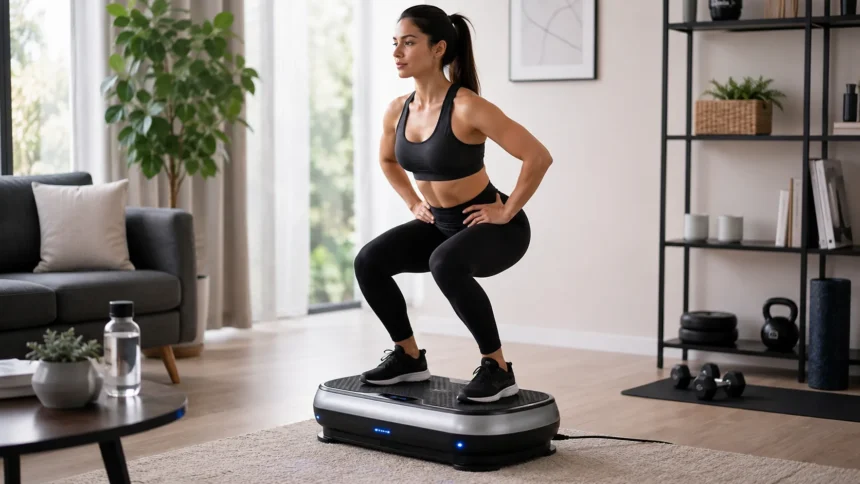
A vibration plate is an exercise or rehabilitation machine with a platform that moves rapidly in controlled patterns. A person normally stands, sits, or places part of the body on the platform while it vibrates. The mechanical movement causes rapid changes in the position of the body, requiring muscles to respond repeatedly to maintain stability. This approach is commonly referred to as whole-body vibration, or WBV, when the vibration is transmitted through a substantial portion of the body. Vibration machines range from relatively inexpensive home platforms to larger professional systems used in research, sports training, and rehabilitation. Their settings and mechanical performance can vary significantly, so different machines should not automatically be expected to produce identical effects.
Whole-body vibration is different from handheld massage guns or local vibration devices. A massage gun directs vibration or percussion toward one relatively small body area, while a vibration plate creates mechanical movement through the surface supporting the user. The entire lower body and sometimes the trunk must respond to this repeated motion. Research on whole-body vibration should therefore not automatically be applied to every type of vibrating fitness product. Likewise, results from one platform design may not perfectly transfer to another machine with different frequencies or amplitudes. When scientific studies describe successful vibration training, the exact equipment and treatment protocol matter considerably. “Vibration therapy” is therefore a broad category rather than one standardized treatment.
There are several common platform designs. Synchronous or vertical vibration platforms move both sides of the platform largely upward and downward together. Side-alternating platforms operate more like a seesaw, with one side rising as the other side falls. Some machines use multidirectional or oscillating movements that combine different patterns. These designs create different mechanical forces through the legs and body. Researchers continue to investigate whether one pattern is more suitable for specific goals such as bone stimulation, balance, or muscular activation. Consumers should therefore look beyond the maximum advertised speed and understand what kind of motion the machine actually produces.
Frequency is one of the most important technical specifications and is usually measured in hertz, or cycles per second. A platform operating at 30 Hz completes approximately thirty vibration cycles each second. Amplitude describes how far the platform moves during each cycle, while acceleration reflects the mechanical force created by the combination of movement and frequency. Higher numbers are not automatically better because stronger vibration can become uncomfortable and may increase unwanted loading. Research protocols use widely different combinations of frequency, amplitude, body posture, and exposure time. This variation is one major reason studies sometimes reach different conclusions about vibration plate benefits.
Vibration plates are best understood as exercise devices that alter the mechanical environment in which the body performs a movement. They do not generate fitness benefits without any physiological response from the user. A person still needs functioning muscles, balance systems, bones, joints, nerves, and cardiovascular responses to adapt to the stimulus. This is why vibration training is often more effective when paired with exercises than when users simply stand motionless. The platform provides an additional mechanical challenge rather than replacing the principles of progressive exercise. Its value depends on whether that additional stimulus helps the user achieve a meaningful goal more effectively or accessibly.
How Do Vibration Plates Work?
When a vibration platform moves, it repeatedly changes the position of the person’s feet and lower limbs. The body responds by making rapid muscular adjustments to maintain posture and joint stability. Researchers often discuss these responses in connection with reflexive muscle activation, sometimes referred to as the tonic vibration reflex. Muscle spindles and other sensory structures detect changes in muscle length and movement, contributing to neuromuscular responses. These contractions happen rapidly and may increase muscular activity beyond what occurs during completely passive standing. However, the size of the response depends on platform settings, exercise position, and the muscles being measured. Vibration does not cause every muscle in the body to contract maximally.
Body position can substantially change how vibration travels through the body. Standing with completely locked knees may transmit more vibration upward toward the hips, spine, and head, whereas keeping the knees slightly bent can allow muscles and joints to absorb some of the mechanical energy. Exercise selection changes the stimulus further. A squat places different demands on the thighs and hips than standing upright, while a calf raise emphasizes the lower legs. This means that “ten minutes on a vibration plate” does not describe the exercise very well without explaining what the person was doing. Scientific training programs usually specify body position because it influences both effectiveness and comfort.
Frequency also appears to influence physical outcomes. A 2026 systematic review and network meta-analysis involving 27 randomized trials and 1,608 older adults compared low-, medium-, and high-frequency whole-body vibration training. Medium-frequency training ranked most favorably for static balance, while higher-frequency protocols ranked best for dynamic balance and gait performance. Interestingly, traditional exercise ranked better than vibration training for muscle strength in that analysis. These findings suggest that vibration frequency matters and also reinforce the idea that conventional training remains highly effective. A vibration plate is not automatically superior simply because it produces a novel or intense sensation.
The vibration stimulus may also increase the challenge of maintaining balance. When the platform moves under the feet, the nervous system must continuously process information from the eyes, inner ear, joints, muscles, and skin to keep the body stable. Repeated exposure during properly designed exercises may therefore help train aspects of postural control. This mechanism is particularly interesting for older adults or rehabilitation populations who may not tolerate demanding conventional exercises initially. However, people with very poor balance may require supervision because the same instability that makes vibration training challenging can increase the chance of losing balance. Safety rails or professional support can be valuable during early sessions.
Vibration does not bypass the normal principles of adaptation. Improvements still depend on receiving enough stimulus, recovering appropriately, and repeating the training consistently over time. A single session may make muscles feel activated or temporarily change flexibility, but long-term strength, balance, or physical function requires repeated training. The body also becomes accustomed to a familiar stimulus, meaning progression may eventually be needed. Progression can involve different exercises, slightly longer sessions, altered platform settings, or more challenging positions rather than simply choosing the highest vibration intensity. Effective vibration training should therefore be planned like exercise, not treated as a passive treatment that produces unlimited results automatically.
Do Vibration Plates Actually Work?
The most accurate answer is that vibration plates can work for certain goals, but the strength of evidence depends on the outcome and population. Whole-body vibration research has investigated muscle strength, physical performance, balance, gait, bone mineral density, pain, body composition, and rehabilitation. Some outcomes consistently show small or moderate benefits, especially when vibration training is compared with doing little or no exercise. Results become less impressive when vibration is compared directly with well-designed conventional exercise. This is an important distinction because advertisements sometimes imply that standing on a vibration platform can outperform traditional training. Current research instead suggests that whole-body vibration is often best viewed as an alternative or adjunct for selected people.
Older adults represent one of the populations with the strongest body of research. A systematic review of 36 studies published in 2026 found that approximately two-thirds reported significant improvements in lower-limb strength, with especially frequent benefits for knee extensor strength. Around half reported benefits in balance or functional measures, particularly among frail or mobility-limited older people. However, several studies found that vibration was not superior to active exercise comparisons. Adverse events were generally described as mild and temporary when reported. These findings support vibration training as a possible exercise option while also showing that results vary depending on the participant and program.
Another meta-analysis examining older adults found improvements in knee strength, explosive power, sit-to-stand performance, walking speed, walking endurance, and some balance measures. The authors concluded that whole-body vibration may improve lower-limb strength and physical performance. However, another review found that while vibration improved several strength measures compared with control groups, it was not significantly better than other forms of exercise. Together, these results suggest that vibration can provide a useful physical stimulus but does not appear to possess unique muscle-building properties that make traditional resistance exercise unnecessary.
People with chronic low-back pain have also been studied. A meta-analysis of randomized trials reported reductions in pain and disability among people with nonspecific chronic lower-back pain who performed whole-body vibration exercise. Improvements were also reported in balance and proprioception, although certainty varied between outcomes. Other reviews have similarly reported potential benefits while emphasizing differences between protocols and limited certainty. It is important to distinguish therapeutic vibration exercise from long-term occupational vibration exposure, such as heavy vehicle driving, which has been associated with increased lower-back problems. Controlled exercise exposure and prolonged workplace vibration are very different circumstances.
The broader conclusion is that vibration plates are neither useless gadgets nor miracle exercise machines. They produce genuine mechanical and neuromuscular stimulation, and research supports meaningful benefits in some situations. Their strongest role may be as an additional method for people who need lower-impact exercise, balance training, rehabilitation support, or variety within an existing fitness program. Healthy adults capable of resistance training, walking, running, and other conventional exercise should not expect vibration to replace those activities completely. Traditional exercise provides cardiovascular, strength, coordination, and metabolic benefits that cannot be fully reproduced by standing on a vibrating platform. Whether a vibration plate is worthwhile depends on the user’s specific goal.
Potential Benefits of Vibration Plates
Improved lower-body strength is one of the more plausible vibration plate benefits. Standing or exercising on a moving surface increases the need for muscular stabilization, and repeated sessions can improve neuromuscular performance in some populations. Older adults appear to benefit particularly when their baseline strength is relatively low or conventional exercise options are limited. However, strength improvements tend to be more meaningful when users perform active exercises such as squats, lunges, or calf raises rather than simply standing. Traditional resistance training remains highly effective and may outperform vibration for maximizing strength in healthy people. Vibration therefore works best as a tool that makes an exercise more challenging rather than as a complete substitute for resistance.
Balance and mobility may also improve with whole-body vibration training. The moving surface repeatedly challenges postural control, requiring rapid adjustments from the legs and nervous system. Research in older adults has reported improvements in tests such as Timed Up and Go, walking speed, chair rising, and other functional measures. A 2024 review specifically examining nursing-home residents older than 80 found improvements in lower-limb strength, mobility, gait, balance, and physical performance. These findings make vibration particularly interesting for rehabilitation settings where conventional high-intensity exercise may be difficult. Professional supervision remains important for frail individuals because the platform itself can create a balance challenge.
Vibration training may also help some people with chronic musculoskeletal discomfort. Studies involving chronic nonspecific lower-back pain have reported reductions in pain intensity and disability when whole-body vibration exercise is included in rehabilitation. The likely benefit may involve a combination of muscle activation, movement exposure, sensory stimulation, and improved physical function rather than one simple mechanism. Pain relief does not prove that a damaged spinal structure has been repaired. Someone with persistent back pain should still consider strengthening, activity modification, sleep, general fitness, and professional assessment when necessary. Vibration may be incorporated into a broader rehabilitation program rather than becoming the only treatment.
Flexibility is another commonly reported short-term effect. Vibrating muscles may feel warmer or less stiff after a session, and some studies have reported temporary improvements in range of motion. This could make vibration useful as part of a warm-up for certain people, although conventional dynamic movement can accomplish similar goals without specialized equipment. Greater flexibility is not always desirable when joints are already unstable, and increased range of motion should not be confused with better strength or movement control. Athletes should evaluate whether the effect actually improves performance instead of assuming that greater immediate flexibility is automatically beneficial. The best warm-up still needs to prepare the body specifically for the activity that follows.
Whole-body vibration can also offer accessibility advantages. Some older adults, people undergoing rehabilitation, or individuals with limited exercise tolerance may find brief vibration-assisted exercises easier to perform than more demanding workouts. A 2026 meta-analysis in older adults with sarcopenia reported moderate improvements in lower-limb strength and physical performance, although muscle mass itself did not significantly increase. This distinction is useful because someone can become functionally stronger without adding large amounts of muscle tissue. Vibration training may therefore provide a practical bridge toward more conventional exercise for certain users. It should ideally expand someone’s ability to move rather than become a reason to avoid broader physical activity permanently.
Can Vibration Plates Help With Weight Loss?
Weight loss is one of the most heavily marketed vibration plate benefits, yet it is also one of the easiest claims to exaggerate. Body fat decreases when long-term energy expenditure exceeds energy intake, and meaningful weight management usually requires dietary habits, physical activity, sleep, and behavioral consistency. Standing on a vibration platform does use some muscular energy, but the calorie expenditure is generally far below that of sustained cardiovascular or resistance exercise performed at meaningful intensity. Users should therefore be skeptical of advertisements implying that a few minutes of passive vibration can replace walking, cycling, strength training, or changes in food intake. Vibration may support a program, but it does not override energy balance.
Research on body composition has produced mixed but somewhat interesting findings. An earlier systematic review involving overweight and obese adults reported reductions in percentage body fat and fat mass, particularly when whole-body vibration was combined with conventional diet and exercise interventions. This suggests the platform may contribute additional activity within a broader weight-management program. However, the evidence does not establish vibration as an effective stand-alone fat-loss strategy. Studies have also used different protocols, participant groups, and treatment durations, making it difficult to identify an ideal program. The safest interpretation is that vibration training may complement conventional approaches rather than replace them.
A newer systematic review and meta-analysis published in 2025 evaluated randomized trials of whole-body vibration training and body-mass outcomes. Twenty trials involving 585 participants were included, reflecting continued interest in whether vibration affects weight, BMI, or fat mass. The authors emphasized that the effectiveness of vibration training for body composition remains uncertain and depends on participant and program characteristics. This is consistent with the broader exercise literature: isolated exercise devices generally produce modest weight changes unless combined with a sustainable nutritional strategy. A machine can increase activity, but it cannot determine how much someone eats or how consistently they follow a long-term plan.
Vibration may still contribute indirectly to weight-management efforts if it makes exercise more accessible. Someone with limited mobility might begin with supported squats or balance exercises on the platform and gradually increase overall physical activity as strength improves. A person who enjoys vibration sessions may also be more consistent with exercise than someone who dislikes conventional gym routines. These behavioral advantages matter because an imperfect activity performed consistently can be more useful than an theoretically ideal program that is rarely followed. However, calorie-burning claims should remain realistic. Users interested primarily in weight loss should prioritize dietary patterns and exercise that can be sustained for months and years.
Body composition should also be distinguished from the number on a scale. Strength training can improve muscle function and reduce waist circumference even when body weight changes modestly. Some vibration studies report functional improvements without significant increases in muscle mass, while others find small changes in fat-related measurements. This means success should not be judged only by whether a vibration plate produces rapid weight loss. A useful fitness program can improve balance, strength, mobility, blood pressure, cardiovascular fitness, and quality of life without dramatic scale changes. Vibration plates may contribute to some of those outcomes, but marketing them primarily as effortless weight-loss machines oversimplifies both physiology and the available evidence.
Vibration Plates for Strength, Balance and Older Adults
Older adults are one of the most researched populations in whole-body vibration because maintaining muscle strength and balance becomes increasingly important with age. Age-related loss of strength can make standing from a chair, climbing stairs, carrying groceries, and recovering from a stumble more difficult. Conventional resistance and balance training remain central strategies for maintaining independence, but some people cannot initially tolerate intensive exercise. Vibration platforms provide another way to challenge the muscles and postural system while exercises remain relatively simple. The user can hold support rails and begin with small knee bends or stable positions before progressing. This makes the technology potentially useful in supervised geriatric and rehabilitation programs.
Recent evidence suggests that vibration frequency may influence which physical ability improves most. The 2026 network meta-analysis comparing vibration frequencies found that medium-frequency training ranked highly for static balance, while high-frequency training performed well for dynamic balance and gait. Traditional exercise, however, ranked better for improving muscle strength. These findings provide a useful practical message: vibration may offer particular value for balance and gait, but there is little reason for capable adults to abandon resistance training if strength is the primary goal. Different forms of exercise can be combined rather than forced into competition with one another.
Whole-body vibration may be especially relevant for older people with limited mobility. Research involving nursing-home residents over age 80 found improvements across several measures of function, including balance, lower-limb strength, mobility, and walking ability. This does not mean every frail adult should purchase a home vibration plate. Frailty, dizziness, medication effects, neurological disease, and poor balance can make unsupervised equipment use risky. A physiotherapist or rehabilitation professional can determine whether vibration is appropriate and help select safe positions. For some individuals, simply learning to stand securely on the platform may require supervision before more challenging exercises are introduced.
Fall prevention is another area of interest because falls often result from combinations of weakness, impaired balance, vision problems, medications, environmental hazards, and neurological factors. Whole-body vibration may improve some physical capacities associated with lower fall risk, particularly lower-body strength and balance. However, evidence that purchasing a vibration plate by itself prevents actual falls is less direct. Effective fall prevention may also involve reviewing medications, improving lighting, correcting trip hazards, managing vision, practicing walking, and addressing underlying medical conditions. Vibration can therefore become one component of a broader strategy rather than a complete fall-prevention solution. The distinction between improving a balance test and preventing real-world injuries is important.
Active exercise on the vibration plate generally makes more sense than passive standing when the goal is functional improvement. Supported squats, heel raises, weight shifts, and carefully chosen balance drills can connect the vibration stimulus with movements people actually need in daily life. Progress can then involve deeper ranges of motion, less hand support, or longer exercise intervals when appropriate. Older adults should not chase aggressive settings simply because the machine can operate at higher intensity. Effective training is the lowest challenge that produces progress without causing excessive discomfort or instability. Consistency, progressive loading, and safety remain more important than maximizing the vibration number shown on the display.
Do Vibration Plates Improve Bone Density?
Bone health is one of the most debated uses of whole-body vibration. Bone tissue responds to mechanical loading, which is why weight-bearing exercise and resistance training are recommended for maintaining skeletal health. Researchers have investigated whether vibration can provide a mechanical signal strong enough to stimulate bone without requiring high-impact exercise. This possibility is particularly attractive for postmenopausal women and older adults who may have osteoporosis or difficulty tolerating jumping and other impact activities. Some individual trials and meta-analyses have reported small improvements in bone mineral density, while others have found little meaningful advantage. The results appear highly dependent on vibration settings and study design.
A 2024 overview evaluated fifteen systematic reviews examining whole-body vibration and bone mineral density in postmenopausal women. The authors found that most of the included systematic reviews had major methodological weaknesses and concluded that existing evidence could not establish a definitive advantage for improving bone mineral density. They did not recommend whole-body vibration specifically as a reliable method for increasing bone density, although they noted that it could potentially have value in maintaining bone and deserved further study. This higher-level review is important because it shows why positive individual studies should not automatically be treated as definitive evidence.
Other analyses have reached somewhat more positive conclusions. A 2024 meta-analysis of thirteen randomized trials involving 783 postmenopausal women with osteoporosis reported small improvements in lumbar-spine and femoral-neck bone mineral density along with reduced pain. Muscle mass and fat mass did not significantly improve. An earlier systematic review also identified particular high-frequency, low-magnitude protocols that appeared beneficial for lumbar-spine bone density. Differences in protocols may partly explain why reviews reach different conclusions. The scientific question may eventually become not simply whether vibration works for bones, but which frequency, amplitude, duration, and patient characteristics produce a meaningful response.
People with osteoporosis should not interpret these findings as a reason to replace established bone-health treatment with a vibration plate. Adequate calcium and vitamin D where appropriate, resistance exercise, suitable weight-bearing activity, fall prevention, smoking avoidance, and prescribed osteoporosis medication can all play important roles depending on individual risk. Someone with fragile bones may also need guidance about safe exercise positions because poorly controlled movements could increase injury risk. A vibration plate may be considered as an additional exercise option when a clinician or physiotherapist believes it is appropriate. It should not delay bone-density testing or treatment when fracture risk is high.
The likely bone effects of vibration also develop much more slowly than the immediate sensation created by the machine. Bone remodeling occurs over months rather than during a few sessions, so claims of rapid “bone strengthening” should be treated skeptically. Research programs investigating bone density typically involve repeated sessions over extended periods and carefully defined settings. A home user cannot assume that random five-minute sessions reproduce those protocols. People interested specifically in bone health should choose evidence-based exercise first and view vibration as optional rather than essential. At present, its potential is interesting, but the evidence remains too inconsistent to call vibration plates a proven osteoporosis treatment.
How to Use a Vibration Plate Effectively
Beginners should generally start with conservative settings rather than immediately selecting maximum frequency or amplitude. The first goal is learning how the platform feels and whether balance can be maintained comfortably. Keeping the knees slightly bent can help reduce the amount of vibration transmitted directly upward through the body. Holding a stable rail or nearby support may also be appropriate during early sessions. Short exposures allow users to judge whether dizziness, headache, unusual joint discomfort, or other symptoms develop. Manufacturer instructions should be followed because machines differ in movement pattern and available settings. A protocol borrowed from another model may not produce the same mechanical stimulus.
Active exercises can make vibration sessions more useful. Basic movements may include shallow squats, calf raises, supported lunges, weight shifts, or static squat holds. Exercises should be selected according to the user’s fitness and mobility rather than social-media demonstrations. Advanced movements performed on an unstable platform can increase injury risk without necessarily producing greater benefit. Someone who cannot perform an exercise safely on the floor may not be ready to perform it while the surface is moving. Progression should follow normal training principles by increasing difficulty gradually. Good technique remains important even when vibration adds an additional challenge.
Session length does not need to be extreme. Research protocols frequently use repeated short bouts rather than continuous prolonged exposure. A training session may involve brief vibration intervals separated by rest or other exercises, depending on the program. More minutes are not automatically better because vibration is a mechanical dose, and excessive exposure can create discomfort or fatigue. Users should focus on the quality of the exercises performed rather than trying to accumulate the longest possible platform time. A brief structured routine combined with walking or strength training may provide more balanced fitness benefits than spending a long period simply standing on the machine.
Vibration training should ideally be integrated into a broader exercise program. Healthy adults still benefit from aerobic activity, resistance training, mobility work, and movement that develops coordination beyond the platform. Someone might use five or ten minutes of vibration-assisted lower-body exercises before moving to conventional strength training. An older adult might combine supervised vibration balance drills with walking and chair-rise practice. A rehabilitation patient may use the platform only for exercises selected by a physiotherapist. The machine becomes more valuable when it serves a defined role rather than becoming the entire fitness plan. No single exercise device provides every adaptation required for long-term health.
Tracking progress can help determine whether the vibration plate is actually useful. Someone training for strength might record squat repetitions, chair-rise performance, or loads used during conventional exercises. An older adult could monitor walking confidence, balance, and functional tasks. A person using vibration during rehabilitation could track pain and mobility with guidance from a clinician. If several weeks of consistent use produce no meaningful improvement, changing the program may make more sense than simply increasing vibration intensity. Equipment should earn its place in a fitness routine through measurable results, convenience, or enjoyment rather than through promises printed on the box.
Risks, Side Effects and Who Should Be Careful
Most research trials of appropriately prescribed whole-body vibration report relatively few serious adverse events, but side effects can occur. Some users experience dizziness, headache, nausea, temporary muscle soreness, joint discomfort, tingling, or an unpleasant sensation from the vibration. Excessively strong settings can make symptoms more noticeable. People who become dizzy should step off the machine carefully and avoid continuing until they understand what caused the reaction. Persistent pain, neurological symptoms, or unusual weakness should not be treated as normal training effects. Exercise equipment should challenge the body without producing concerning symptoms that continue after the session.
Balance itself can become a safety issue. The platform moves beneath the feet, so people who already have severe instability may be more likely to stumble when using the machine without support. Older adults and rehabilitation patients should have secure handles or professional supervision when necessary. Placing the machine on a stable level surface is also essential because an unstable platform can move unexpectedly during use. Footwear recommendations differ between machines and protocols, so manufacturer guidance should be followed. The area around the plate should remain free of objects that could cause injury if the user steps off quickly.
People who are pregnant, recovering from recent surgery or fractures, or managing significant cardiovascular, neurological, joint, or balance disorders should obtain individualized advice before beginning whole-body vibration training. The same caution applies when someone has an implanted medical device or a complex condition that could potentially be affected by mechanical vibration. This does not mean every person in these categories is automatically prohibited from using a vibration platform. Safety depends on the condition, machine, settings, and intended exercises. A healthcare professional familiar with the person’s history can provide more useful guidance than a generic list of internet contraindications.
People with osteoporosis need particularly thoughtful exercise selection. Whole-body vibration has been studied as a possible bone-health intervention, so osteoporosis itself does not mean vibration can never be used. However, severe osteoporosis and previous fragility fractures can change which positions and movements are appropriate. Aggressive twisting, uncontrolled bending, or unstable exercises may pose more risk than a carefully supervised low-intensity protocol. Anyone purchasing a vibration platform specifically because they have osteoporosis should discuss the plan with a clinician or physiotherapist. The objective should be safer bone-loading exercise, not testing the maximum intensity of the machine.
Long-term occupational vibration should also not be confused with short exercise sessions. Workers who spend many hours operating trucks, heavy machinery, or vibrating equipment may experience much longer daily exposure than someone completing a controlled fitness routine. Occupational research has associated repeated high whole-body vibration exposure with lower-back pain and sciatica. These findings do not prove that brief therapeutic vibration is harmful, but they show that mechanical vibration is not biologically neutral and that dose matters. Controlled exercise protocols intentionally limit exposure and select body positions. Users should therefore avoid the assumption that if a little vibration might help, prolonged high-intensity exposure must produce even greater benefits.
Are Vibration Plates Worth It?
Whether a vibration plate is worth buying depends primarily on what the user expects it to accomplish. For someone hoping to lose large amounts of weight without changing diet or performing other exercise, the machine is unlikely to meet expectations. For an older adult who enjoys supported balance and lower-body exercises, it could provide a useful additional training option. A rehabilitation patient may also benefit when vibration is prescribed as part of a structured program. Healthy fitness enthusiasts can use the machine for variety, warm-ups, or additional neuromuscular challenge. The value therefore depends more on the use case than on whether vibration plates “work” in a universal sense.
People considering a purchase should also think about what they could achieve with less expensive equipment. Squats, calf raises, resistance bands, walking, dumbbells, and balance exercises can produce substantial health benefits without a specialized platform. If budget is limited, conventional exercise equipment may provide greater versatility. A vibration plate becomes more attractive when its specific characteristics improve adherence or make certain exercises easier to tolerate. Equipment that is enjoyable and used consistently can provide more practical value than sophisticated equipment that remains unused. Marketing claims should therefore be evaluated alongside personal preference, available space, price, and realistic exercise goals.
Machine specifications matter as well. Consumers should look for clearly stated frequency ranges, platform movement type, amplitude information where available, weight limits, stability, and useful safety features. Handrails may be particularly valuable for people purchasing a unit for balance or rehabilitation. Extremely cheap devices that provide little technical information can make it difficult to know whether the machine resembles those used in research. More expensive does not automatically mean medically effective, but transparent specifications make informed comparison easier. Buyers should also consider noise, platform size, warranty, return policies, and whether replacement parts or technical support are available.
The strongest evidence suggests that vibration training can improve particular aspects of physical function, especially in older adults and certain rehabilitation populations. Benefits for strength often appear when vibration is compared with inactivity, while conventional training can perform equally well or better. Balance and gait may respond favorably to specific vibration frequencies, while bone-density research remains mixed. Weight-loss evidence does not support the idea that passive vibration is a substitute for diet and active exercise. These distinctions matter because the same machine can be useful for one goal and disappointing for another. The evidence is therefore best described as promising but highly outcome-specific.
Ultimately, vibration plates are tools rather than shortcuts. They generate real mechanical stimulation and can make exercises feel significantly different, but the machine does not remove the need for progressive movement, healthy nutrition, cardiovascular activity, sleep, and appropriate medical care. People who enjoy vibration training and have a clear goal may find it a useful addition to their routine. Those expecting effortless fat loss or dramatic muscle growth are more likely to be disappointed. The most evidence-informed approach is to use vibration where it adds value, keep conventional exercise as the foundation when possible, and measure whether meaningful improvements actually occur over time.
Frequently Asked Questions About Vibration Plates
Do vibration plates actually work?
Yes, vibration plates can produce genuine neuromuscular stimulation, and studies show potential benefits for balance, lower-body strength, mobility, and physical performance, particularly in some older adults. However, they are generally better viewed as an adjunct to conventional exercise rather than a replacement for it.
Can a vibration plate help you lose weight?
A vibration plate may contribute modestly to a broader weight-management program, especially when combined with diet and active exercise. Evidence does not support relying on passive vibration alone for substantial or sustained weight loss.
How long should you use a vibration plate?
There is no single ideal session length because research protocols vary by frequency, amplitude, exercise, and fitness level. Beginners are generally better starting with brief, conservative sessions and gradually progressing according to tolerance and the machine’s instructions.
Are vibration plates good for older adults?
They can be useful for some older adults, particularly for improving balance, mobility, and lower-limb function when appropriately supervised. People with significant balance difficulties or complex medical conditions should obtain professional guidance before using one independently.
Can vibration plates increase bone density?
Research has produced mixed results. Some studies report small improvements in bone mineral density with particular whole-body vibration protocols, while higher-level reviews conclude that the evidence is not yet strong enough to recommend vibration as a reliable stand-alone treatment for osteoporosis.