
Constipation can make your abdomen feel heavy, bloated, uncomfortable, and difficult to relax. Along with hydration, fiber, regular meals, and appropriate medical care, gentle movement may help some people feel more comfortable. Certain stretches can encourage abdominal movement, reduce tension around the hips and pelvis, and make it easier to stay physically active when you feel sluggish.
Stretching is not a guaranteed treatment for constipation, and it cannot correct every underlying cause. However, gentle positions that involve twisting, hip movement, and relaxed breathing can complement other healthy bowel habits. The key is using comfortable movements without forcing your abdomen, holding your breath, or pushing through sharp pain.
Can Stretching Really Help With Constipation?
Stretching may help indirectly by encouraging general movement and reducing physical tension. When the body stays inactive for long periods, digestion may feel slower for some people, especially if sitting is combined with low fluid intake or irregular eating. Gentle movement can make the abdomen and hips feel less stiff while supporting a more active routine.
Some stretches also involve mild abdominal compression or rotation, which may feel soothing when you are bloated. These movements do not physically “push” stool through the intestines, but they can help you relax and move more comfortably. Relaxation can be especially useful if you tend to tense your abdomen or pelvic floor when trying to have a bowel movement.
The biggest benefit often comes from combining stretching with walking, hydration, fiber, and consistent toilet habits. If constipation is severe, persistent, or accompanied by significant pain, stretching alone is not enough. A healthcare professional can help determine whether medication, dietary changes, testing, or another approach is needed.
Knee-to-Chest Stretch for Constipation
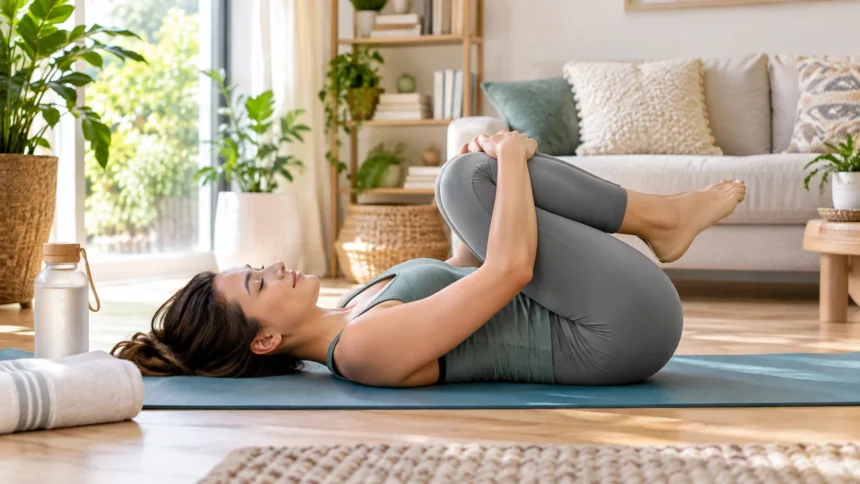
Lie on your back with both legs extended or knees bent, whichever feels more comfortable. Bring one knee toward your chest and gently hold it with your hands while keeping your shoulders relaxed. Breathe slowly and hold the position without pulling so hard that the hip or abdomen feels compressed or painful.
After several breaths, switch sides and repeat the same movement with the opposite leg. You can also bring both knees toward the chest if that position feels comfortable. Some people find this gentle compression soothing when they feel bloated or tight across the lower abdomen.
Keep the movement relaxed rather than turning it into an intense flexibility exercise. Hold for around 20 to 30 seconds and repeat as desired. If you have recent abdominal surgery, significant hip problems, or a medical condition that makes compression uncomfortable, ask a healthcare professional before using this stretch.
Seated Spinal Twist
Sit upright on a chair with both feet flat on the floor. Place one hand on the outside of the opposite thigh and gently rotate your upper body toward that side. Keep the movement small and comfortable rather than forcing your spine as far as possible.
Breathe normally while maintaining the twist for several seconds, then slowly return to the center. Repeat on the other side. The movement can help reduce stiffness through the torso and provide gentle rotation around the abdomen without requiring you to get down onto the floor.
Avoid holding your breath or pulling aggressively with your arms. The goal is easy movement rather than creating a powerful stretch. This exercise can be particularly useful during long periods of sitting, when both your back and digestive system may benefit from a short movement break.
Child’s Pose for Relaxation
Start on your hands and knees, then move your hips backward toward your heels while reaching your arms forward. Let your head and shoulders relax and breathe slowly into your abdomen. If your hips or knees feel uncomfortable, place a cushion under your body or reduce how far you move backward.
Child’s pose can create a gentle sense of compression and relaxation around the abdomen. Some people find it especially calming when constipation is accompanied by stress or general muscular tension. Slow breathing in this position can also help you become more aware of whether you are unconsciously bracing your abdominal muscles.
Stay in the position only as long as it remains comfortable. You do not need to force your forehead to the floor or sit completely onto your heels. A modified version is just as useful if it helps you relax without creating knee, hip, or abdominal discomfort.
Cat-Cow Stretch for Abdominal Movement
Begin on your hands and knees with your wrists below your shoulders and knees below your hips. Slowly round your upper and lower back while allowing your head to move naturally. Then reverse the movement gently by lifting your chest and allowing the abdomen to move downward within a comfortable range.
Move between these positions slowly while breathing normally. The alternating spinal motion can reduce stiffness around the back and abdomen, especially after prolonged sitting. It also encourages you to move the trunk through a comfortable range instead of staying rigid when you already feel bloated or uncomfortable.
Do not force the lower back into a deep arch. Small, controlled movements are enough. If you experience sharp abdominal pain, dizziness, or symptoms that feel different from ordinary constipation, stop the exercise and seek medical advice rather than continuing to stretch.
Supine Twist for Constipation Relief
Lie on your back with your knees bent and feet on the floor. Let both knees gently fall toward one side while keeping your shoulders relaxed against the surface. You can extend your arms outward if that feels comfortable and helps keep the upper body stable.
Hold the position for a few relaxed breaths before returning to the center and repeating on the opposite side. This stretch creates gentle rotation through the lower back, hips, and abdomen. Many people find it useful when they feel stiff from sitting or when bloating makes the midsection feel tense.
Keep the knees supported if they do not comfortably reach the floor. A pillow under the legs can reduce the intensity and make the position more relaxing. The stretch should never produce sharp pain, strong pulling in the abdomen, or worsening pelvic symptoms.
Happy Baby Pose
Lie on your back and bring your knees toward your chest. Hold the backs of your thighs, shins, or outer feet depending on your flexibility, then allow the knees to move gently outward. Keep your lower back and shoulders relaxed instead of trying to force your legs closer to the floor.
This position opens the hips and can create a sense of relaxation around the pelvic area. Some people find it comfortable when constipation is associated with pelvic tension or prolonged sitting. Slow breathing can help reduce unnecessary bracing and make the stretch feel easier.
You do not need to hold your feet if doing so causes strain. Holding behind the thighs is often more comfortable and produces a similar relaxed position. Stop if you feel pressure in the knees, sharp hip pain, or discomfort that increases instead of easing.
Deep Squat Stretch
Stand with your feet slightly wider than hip width and slowly lower into a comfortable squat. Keep your heels supported if possible, but place a folded towel or small support under them if your ankles feel tight. Hold onto a stable surface if you need help with balance.
A deep squat can place the hips and pelvis in a position similar to the posture many people use for easier bowel movements. The position may help you relax around the pelvic floor when performed comfortably. However, you should not strain, hold your breath, or force yourself into a depth your hips or knees cannot tolerate.
If the full squat is difficult, use a chair or countertop for support and stay higher. The movement still provides hip and ankle mobility without requiring maximum depth. People with significant knee, hip, or balance problems may prefer a supported version or another stretch entirely.
How Breathing Helps With Constipation
Breathing patterns can influence how much tension you carry through the abdomen and pelvic floor. When people strain, they often hold their breath and tighten the entire midsection. This can make bowel movements feel more difficult, particularly if the pelvic floor is already tense or poorly coordinated.
Try slow diaphragmatic breathing while lying down or sitting comfortably. Let your abdomen expand gently as you inhale, then relax as you exhale. The goal is not to push the belly outward forcefully but to allow the abdominal wall and pelvic region to move naturally with each breath.
Breathing exercises can be combined with stretches such as child’s pose, knee-to-chest, or a supported squat. If constipation occurs alongside ongoing pelvic pain, especially with urinary, menstrual, or sexual symptoms, professional evaluation may be useful because more than digestion may be involved.
When and How Often to Stretch
You can perform gentle constipation stretches once or twice daily if they feel comfortable. Some people prefer using them in the morning, after meals, or during periods of prolonged sitting. There is no need to complete every exercise each time, and a short routine is often easier to maintain consistently.
Choose three or four movements that feel relaxing and spend several minutes moving slowly through them. Stretching should not leave you exhausted or sore. Walking for 10 to 20 minutes can also complement the routine because general physical activity may support normal digestive movement.
Avoid turning stretching into a rigid requirement for having a bowel movement. If constipation keeps returning, look at hydration, dietary fiber, medications, activity level, stress, and overall bowel habits as well. Stretching works best as one part of a broader routine rather than as the only strategy.
Other Ways to Support Constipation Relief
Hydration is important because insufficient fluid can make stool harder and more difficult to pass. Water needs vary between people, climate, diet, and activity level, so there is no single perfect amount for everyone. Drinking regularly throughout the day is generally more practical than suddenly consuming large amounts at once.
Fiber from vegetables, fruit, whole grains, beans, and other foods can support bowel regularity for many people. Increase fiber gradually because adding too much too quickly may worsen bloating or gas. Some people also require a different approach depending on medical conditions or the type of constipation they experience.
Establishing a consistent toilet routine can also help. Give yourself enough time, avoid repeatedly ignoring the urge to go, and consider placing your feet on a small stool to create a more comfortable position. Avoid prolonged straining, which can increase pressure and make the experience more uncomfortable.
When Constipation Needs Medical Attention
Seek medical care if constipation is severe, lasts for an extended period, or repeatedly returns despite reasonable dietary and lifestyle changes. A healthcare professional can review medications, medical history, diet, bowel habits, and other symptoms to identify possible causes. Chronic constipation may require more than simple home management.
Prompt medical assessment is important when constipation occurs with severe abdominal pain, persistent vomiting, fever, blood in the stool, or unexplained weight loss. A swollen abdomen combined with an inability to pass stool or gas can also be concerning and should not be treated only with stretching.
Sudden changes in bowel habits should also be discussed with a clinician, particularly when they persist or occur with other symptoms. Constipation can result from diet and inactivity, but medications, digestive disorders, pelvic floor dysfunction, and other medical conditions can also contribute.
Conclusion
Stretches for constipation can provide gentle movement, abdominal relaxation, and hip mobility while supporting a more active daily routine. Knee-to-chest stretches, seated twists, child’s pose, cat-cow, supine twists, and supported squats are simple options that can be adjusted according to your flexibility and comfort.
Stretching works best alongside hydration, adequate fiber, regular physical activity, and healthy bowel habits. Slow breathing can also help reduce unnecessary tension through the abdomen and pelvic floor. Avoid forcing movements or assuming a stronger stretch will produce faster digestive relief.
Persistent or severe constipation should be medically evaluated, especially when accompanied by bleeding, vomiting, severe pain, weight loss, or an inability to pass gas. For ordinary mild constipation, gentle movement can be a useful supportive habit, but it should remain only one part of a broader approach to digestive health.
FAQs
What is the best stretch for constipation?
Knee-to-chest stretches, gentle spinal twists, and supported squats are commonly used because they move the hips and trunk while creating mild abdominal compression. The best option is whichever feels most comfortable.
How long should I stretch for constipation?
A short routine of around 5 to 10 minutes can be enough. Hold gentle stretches for roughly 20 to 30 seconds and repeat them without forcing your body into painful positions.
Can walking help constipation?
Yes, regular walking may support bowel movement by increasing overall physical activity. Even short walks can complement hydration, fiber, and stretching as part of a broader constipation-relief routine.
Can constipation cause back or pelvic pain?
Constipation can create abdominal pressure and discomfort that may be felt around the lower back or pelvis. Persistent pain should still be evaluated because other digestive, urinary, muscular, or pelvic conditions can feel similar.
When should I worry about constipation?
Seek medical care for severe or persistent constipation, blood in the stool, vomiting, unexplained weight loss, significant abdominal pain, or inability to pass stool or gas.