

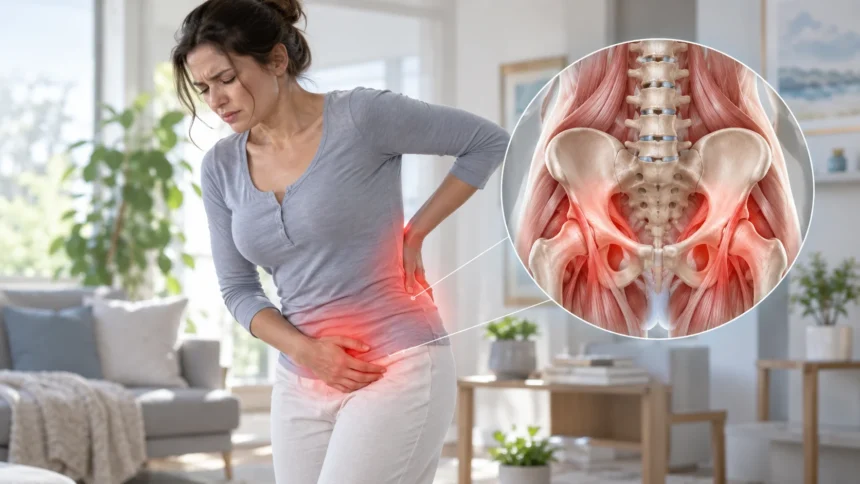
Lower back and pelvic pain in women can come from many different sources, including muscles, joints, reproductive organs, the urinary system, or digestive conditions. Sometimes the discomfort is mild and temporary, while other cases can interfere with walking, sitting, sleep, exercise, or normal daily activities. The location and timing of the pain can provide useful clues.
Symptoms may appear during menstruation, after exercise, during pregnancy, with urination, or seemingly without an obvious trigger. Because the lower back and pelvis contain many closely connected structures, pain from one area can sometimes be felt somewhere else. Understanding common possibilities can help you decide when simple self-care may be reasonable and when medical evaluation is important.
Common Causes of Lower Back and Pelvic Pain in Women
Muscle strain is a common cause, especially after lifting, exercising, repetitive bending, or suddenly increasing physical activity. Muscles around the lower back, hips, abdomen, and pelvic region work together during movement, so irritation in one area can create discomfort across a wider region. Mild strains may feel sore, stiff, or tender rather than sharp.
Menstrual and reproductive causes are also important. Period cramps, ovulation, endometriosis, ovarian cysts, and other gynecological conditions can create pelvic pain that spreads toward the lower back. The timing of symptoms in relation to the menstrual cycle can sometimes help distinguish these causes from purely muscular pain.
Urinary, digestive, and spinal conditions can produce similar symptoms as well. Urinary tract infections, kidney problems, constipation, irritable bowel symptoms, nerve irritation, or joint problems may all contribute. Because several conditions overlap, persistent pain should not automatically be assumed to come from the reproductive system or the back alone.
Period Cramps and Menstrual Back Pain
Menstrual cramps commonly cause aching or cramping in the lower abdomen and pelvis, and the discomfort can extend into the lower back or thighs. The pain often starts shortly before or during menstruation and may last for several days. Some women experience only mild discomfort, while others have symptoms that significantly affect daily activities.
The uterus contracts during menstruation, and these contractions can contribute to pelvic cramping. Hormonal changes may also influence pain sensitivity, fatigue, bloating, headaches, and digestive symptoms. A heating pad, gentle movement, and rest may help some people manage ordinary menstrual discomfort.
Severe period pain should not automatically be dismissed as normal, especially when it repeatedly causes missed work, school, or sleep. Conditions such as endometriosis or adenomyosis can cause more significant menstrual and pelvic pain. A healthcare professional can help investigate symptoms that are severe, worsening, or different from your usual cycle.
Endometriosis and Chronic Pelvic Pain
Endometriosis occurs when tissue similar to the lining of the uterus grows outside the uterus. It can cause pelvic pain, painful periods, discomfort during or after sex, bowel or bladder symptoms, and lower back pain. Symptoms can vary considerably, and the severity of pain does not always match the extent of the condition.
Some women notice symptoms mainly during menstruation, while others experience discomfort throughout the month. Pain may feel deep within the pelvis and can spread into the lower back, hips, or legs. Fertility difficulties can also occur in some people, although endometriosis does not affect everyone in the same way.
Persistent pelvic pain deserves evaluation if it repeatedly interferes with daily life. Treatment may involve pain management, hormonal approaches, physical therapy, surgery, or a combination depending on symptoms and individual goals. A detailed medical history can help identify patterns that suggest endometriosis or another pelvic condition.
Ovarian Cysts and Pelvic Discomfort
Ovarian cysts are fluid-filled sacs that can develop on or within the ovaries. Many are harmless and disappear without treatment, but some may cause pelvic pressure, aching, bloating, or pain on one side. The discomfort can occasionally extend toward the lower back or upper thigh.
Symptoms may become more noticeable during exercise, sex, or certain points in the menstrual cycle. Larger cysts can create a sense of heaviness or fullness in the pelvis. However, pelvic pain alone cannot confirm that an ovarian cyst is present because several other conditions can feel similar.
Sudden severe one-sided pelvic pain, especially with nausea, vomiting, faintness, or significant weakness, requires prompt medical assessment. Rarely, a cyst can rupture or the ovary can twist, which may need urgent treatment. Persistent or recurring pelvic pain should also be evaluated rather than repeatedly self-diagnosed.
Could Sciatica Cause Pelvic or Groin Pain?
Sciatica usually causes pain that travels from the lower back or buttock into the leg, often with tingling, numbness, burning, or weakness. Classic sciatica does not usually cause isolated pelvic pain. However, other spinal nerves can create discomfort closer to the groin, hip, or front of the thigh.
If your symptoms include lower-back pain and discomfort near the groin, understanding sciatica and groin pain can help you see why the pattern may involve more than one possible source. Hip, pelvic, muscular, and nerve-related conditions can overlap significantly.
Numbness around the groin or saddle area is different from ordinary muscular pain and can be a serious warning sign when combined with bladder, bowel, or leg weakness. These symptoms require urgent medical assessment. Persistent radiating pain without emergency signs should still be evaluated if it is worsening or limiting movement.
Urinary Tract and Kidney Problems
Urinary tract infections can cause pelvic pressure, lower abdominal discomfort, burning during urination, urgency, or frequent urination. Some women may also notice mild lower-back discomfort. Symptoms usually differ from ordinary muscular pain because urinary changes tend to appear at the same time.
If an infection travels toward the kidneys, pain may develop higher in the back or side, often below the ribs. Fever, chills, nausea, and feeling generally unwell can also occur. These symptoms require medical attention because kidney infections can become serious if left untreated.
Kidney stones can produce intense pain that may travel from the side or back toward the lower abdomen or groin. Nausea, blood in the urine, or urinary discomfort may accompany the pain. Severe or sudden urinary-related pain should be assessed rather than managed as routine back strain.
Pelvic Floor Muscle Problems
The pelvic floor is a group of muscles that supports the bladder, uterus, bowel, and other pelvic structures. These muscles can become weak, overactive, tight, or poorly coordinated. Pelvic floor dysfunction may contribute to pelvic pressure, painful urination, constipation, painful sex, or aching around the pelvis and lower back.
Some people assume pelvic floor problems always involve weakness, but excessive muscle tension can also create symptoms. Tight pelvic floor muscles may have difficulty relaxing during bowel movements or urination. Pain can also spread into the hips, buttocks, lower abdomen, or lower back.
Pelvic floor physical therapy can be helpful for certain conditions, but treatment should match the specific problem. Kegel exercises are not appropriate for everyone, particularly when the muscles are already overactive. A trained pelvic health professional can assess muscle function and recommend a more suitable approach.
Pregnancy and Lower Back Pelvic Pain
Lower back and pelvic discomfort are common during pregnancy as the body changes to support a growing baby. Hormonal changes, weight distribution, altered movement patterns, and increased demand on the hips and back can all contribute. Some women also experience pelvic girdle pain around the pubic area, hips, or sacroiliac region.
Gentle activity, supportive positioning, and appropriately selected exercises may help manage common pregnancy-related discomfort. Pillows can improve sleep positioning, while avoiding activities that clearly aggravate symptoms may reduce irritation. Exercise recommendations should match the stage of pregnancy and individual medical circumstances.
Severe pelvic pain, heavy bleeding, dizziness, fever, fluid leakage, or symptoms suggesting contractions require medical attention. Early pregnancy pain can also have causes unrelated to ordinary musculoskeletal discomfort. When symptoms are unusual, intense, or rapidly worsening, contacting a maternity or healthcare provider is the safer choice.
Digestive Problems That Can Feel Like Pelvic Pain
Constipation can cause pressure, cramping, bloating, and aching in the lower abdomen or pelvis. When bowel movements become difficult or infrequent, discomfort may also be felt around the lower back. Symptoms often improve after bowel movements, although persistent constipation may require further attention.
Irritable bowel syndrome can cause recurring abdominal pain, bloating, diarrhea, constipation, or alternating bowel habits. Some women notice symptoms become worse around menstruation, which can make digestive and gynecological pain difficult to distinguish. Tracking symptoms can help reveal whether discomfort follows meals, bowel movements, or menstrual changes.
Severe abdominal or pelvic pain with vomiting, fever, blood in the stool, or an inability to pass stool or gas requires prompt assessment. Digestive problems should not be assumed to be harmless when symptoms are sudden or severe. Persistent bowel changes also deserve medical evaluation.
What You Can Do for Mild Lower Back and Pelvic Pain
For mild symptoms without warning signs, gentle movement may help prevent stiffness. Short walks, comfortable stretching, and regular position changes can be more useful than remaining in bed for long periods. Reduce activities that clearly make the pain worse, but avoid assuming all movement is harmful.
Heat can be soothing for muscular tension or menstrual cramps. A heating pad or warm shower may help relax the area temporarily, provided the temperature is comfortable and does not burn the skin. Cold packs may feel better after a recent muscular strain or activity-related flare-up.
Over-the-counter pain medication may be suitable for some people, but it is not safe for everyone. Pregnancy, kidney disease, stomach problems, allergies, and medication interactions can affect what you should take. A pharmacist or healthcare professional can help you choose an appropriate option when needed.
When Lower Back and Pelvic Pain Needs Medical Attention
Arrange medical evaluation if pain persists, repeatedly returns, or significantly interferes with work, exercise, sleep, sex, urination, or bowel movements. Symptoms that change with the menstrual cycle or become progressively worse should also be discussed. A clear history can help distinguish musculoskeletal, gynecological, urinary, and digestive causes.
Seek prompt medical attention for severe one-sided pelvic pain, fever, heavy bleeding, fainting, persistent vomiting, or suspected pregnancy complications. Significant urinary symptoms or severe flank pain also need evaluation. These signs can indicate conditions that should not be managed through stretching or home remedies alone.
Urgent care is particularly important for new bladder or bowel control problems, saddle numbness, or major leg weakness alongside back pain. These neurological symptoms may indicate serious nerve compression. Recognizing warning signs matters more than trying to determine the exact diagnosis yourself at home.
How Doctors Evaluate Lower Back and Pelvic Pain
A healthcare professional will usually ask when the pain started, where it is located, whether it changes with menstruation, and which activities affect it. They may also ask about pregnancy possibility, urinary symptoms, bowel changes, sexual pain, injuries, fever, and neurological symptoms.
The physical examination may include assessment of the lower back, hips, abdomen, or pelvis depending on the symptoms. Strength, reflexes, sensation, and hip movement can be checked when a spinal or musculoskeletal cause is suspected. Pelvic examination or other specialist assessment may be appropriate in some cases.
Tests are selected according to the suspected cause rather than ordered automatically. Urine testing, pregnancy tests, blood tests, ultrasound, or imaging may sometimes be recommended. Combining symptoms, examination findings, and appropriate tests usually provides more useful information than relying on one scan or laboratory result alone.
Conclusion
Lower back and pelvic pain in women can come from muscles, joints, nerves, menstrual changes, reproductive conditions, urinary problems, pregnancy, pelvic floor dysfunction, or digestive issues. Because these systems are located close together, symptoms can overlap and may not clearly identify the underlying cause.
Mild discomfort may improve with gentle movement, heat, activity modification, and appropriate self-care. However, persistent or recurring symptoms deserve evaluation, particularly when they affect menstruation, urination, bowel movements, sex, sleep, or normal mobility. Treating the likely cause is more useful than repeatedly managing pain alone.
Seek urgent medical care for severe sudden pain, heavy bleeding, fainting, fever, major neurological symptoms, or concerning pregnancy-related signs. Paying attention to symptom patterns and warning signs can help you make safer decisions while avoiding unnecessary alarm about every episode of lower back or pelvic discomfort.
FAQs
What causes lower back and pelvic pain in women?
Possible causes include muscle strain, menstrual cramps, endometriosis, ovarian cysts, urinary problems, pelvic floor dysfunction, pregnancy-related changes, digestive conditions, and spinal or nerve-related problems.
Can period pain cause lower back and pelvic pain?
Yes. Menstrual cramps commonly cause pelvic and lower abdominal pain that can spread into the lower back or thighs. Severe or disabling period pain should be medically evaluated.
When should I worry about pelvic and lower back pain?
Seek care for severe or worsening pain, fever, heavy bleeding, fainting, urinary problems, pregnancy-related concerns, or persistent symptoms. Bladder or bowel changes with saddle numbness require urgent medical attention.
Can a UTI cause pelvic and lower back pain?
Yes. A UTI can cause pelvic pressure and urinary symptoms, while infection involving the kidneys may produce stronger back or side pain along with fever or feeling unwell.
Can pelvic floor problems cause lower back pain?
Yes. Pelvic floor dysfunction can sometimes contribute to pain around the pelvis, hips, buttocks, or lower back. Treatment depends on whether the muscles are weak, tight, painful, or poorly coordinated.