
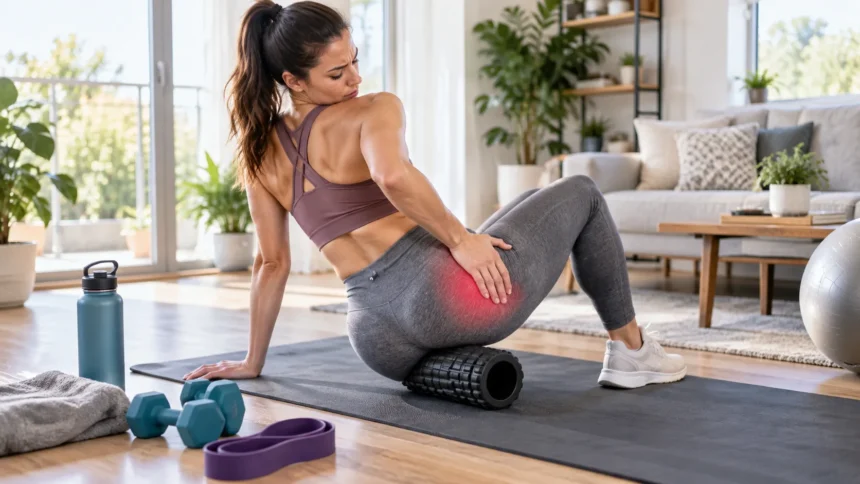
Buttock muscle pain can make sitting, walking, climbing stairs, exercising, or even sleeping uncomfortable. The discomfort may feel like aching, tightness, burning, tenderness, or a deep pulling sensation in one or both sides of the buttocks. Common causes include muscle strain, prolonged sitting, overuse, hip weakness, or irritation involving nearby nerves and joints.
Relief usually depends on identifying what is triggering the pain and avoiding activities that continually aggravate it. Gentle movement, appropriate stretching, heat or cold, strengthening, and better sitting habits can help many mild muscular problems. However, severe or persistent buttock pain may have another cause and should be professionally evaluated.
Understand What May Be Causing the Pain
The gluteus maximus, gluteus medius, and gluteus minimus are the main muscles of the buttocks. They help extend, rotate, and stabilize the hips during walking, running, standing, and climbing stairs. When these muscles are overloaded, strained, or held in one position for long periods, soreness and tightness can develop.
Pain may begin after exercise, heavy lifting, sprinting, squatting, or suddenly increasing your activity level. It can also develop gradually from sitting for many hours or repeatedly using the same movement pattern. Knowing when symptoms started and which activities worsen them can provide useful clues about whether the problem is muscular.
Not all buttock pain comes directly from the glute muscles. The lower back, hip joint, sacroiliac region, hamstrings, and nerves can refer pain into the buttock. If symptoms include numbness, tingling, weakness, or pain traveling down the leg, another structure may be involved.
Reduce Activities That Clearly Increase Pain
Temporary activity modification is often one of the first practical steps for relieving muscular buttock pain. Avoid repeatedly performing movements that create sharp discomfort, such as heavy squats, sprinting, deep lunges, or long periods of sitting. Continuing to irritate the area can make a mild problem last longer.
This does not usually mean staying in bed or avoiding all movement. Gentle walking and normal daily activities may be helpful when they can be performed comfortably. The goal is to reduce excessive loading while keeping the body moving enough to avoid unnecessary stiffness and loss of strength.
Pay attention to how you feel later in the day and the following morning. If an activity causes symptoms to increase substantially afterward, reduce the intensity, duration, or frequency. Gradual improvement is generally a better sign than repeatedly testing the painful area with demanding exercise.
Use Heat or Cold for Temporary Relief
Cold therapy may feel helpful when pain begins after a recent strain or intense workout. A wrapped cold pack can reduce the sensation of soreness and provide short-term comfort. Apply it for a limited period and avoid placing ice directly against the skin, which can cause irritation.
Heat may be more comfortable when the main problem is stiffness or muscle tightness. A warm shower, heating pad, or warm compress can make the gluteal area feel more relaxed before gentle movement. Heat is especially popular when discomfort develops after sitting for a long period rather than after a fresh injury.
Neither heat nor cold directly fixes the underlying cause of buttock pain. Think of them as symptom-management tools that may make movement more comfortable. The longer-term plan should still address activity levels, muscle strength, flexibility, posture, or other contributing factors.
Try Gentle Glute and Hip Stretches
Gentle stretching may help when the glutes and surrounding hip muscles feel tight. A lying figure-four stretch is a simple option: cross one ankle over the opposite thigh and gently bring the supporting leg toward your chest. You should feel a mild stretch through the outer buttock rather than sharp pain.
A seated variation can also work well for people who prefer not to lie on the floor. Sit tall, place one ankle over the opposite thigh, and lean slightly forward from the hips. Keep the movement controlled and stop if you feel pinching inside the hip or symptoms traveling down the leg.
Stretching should never be aggressive. Pulling hard on an irritated muscle can increase soreness, especially if the pain started after a strain. Use short, comfortable holds and combine mobility with gradual strengthening rather than assuming more flexibility alone will solve the problem.
Strengthen the Glutes Gradually
Weak or poorly conditioned glute muscles can become tired quickly during walking, running, lifting, or prolonged standing. Strengthening can improve the amount of load these muscles tolerate and may reduce recurring soreness. Begin with simple exercises that allow good control rather than immediately using heavy resistance.
Glute bridges are a useful starting point. Lie on your back with your knees bent, press through your feet, and lift your hips while gently squeezing the glutes. Lower under control and avoid arching the lower back excessively in an attempt to raise the hips higher.
As symptoms improve, progress to exercises such as step-ups, controlled squats, side-lying hip abduction, or resistance-band walks. Increase resistance gradually and watch how the area responds afterward. If pain is linked to a recent strain, reviewing basic muscle strain recovery principles can help you avoid progressing too quickly.
Change How You Sit During the Day
Long periods of sitting can place continuous pressure on the buttocks and reduce opportunities for the hip muscles to move. Office work, driving, gaming, and long travel can all contribute. Even a comfortable chair may become irritating when you remain in essentially the same position for several hours.
Try standing or walking briefly every 30 to 60 minutes when possible. You do not need a long exercise break; simply changing position can reduce pressure and encourage normal movement. Alternate between sitting and standing if your work environment allows it instead of searching for one perfect posture to maintain all day.
Your chair should also allow your feet to rest comfortably and avoid creating excessive pressure under one side of the pelvis. Sitting on a wallet or phone can create uneven loading. If one specific seat consistently worsens symptoms, adjusting the height, cushion, or sitting duration may help.
Improve Hip and Lower-Body Mobility
Limited mobility around the hips can sometimes make the glutes work harder during everyday movement. Tight hip flexors, reduced hip rotation, or restricted ankle motion may alter how you squat, walk, or climb stairs. Improving comfortable movement across the lower body can reduce unnecessary compensation.
Gentle hip flexor stretches, controlled hip rotations, and easy walking can be useful additions to a mobility routine. The objective is not to force extreme flexibility. Instead, aim for enough movement to perform daily activities and exercises without compensating through the lower back or other areas.
Mobility and strength should develop together. A joint that moves well but lacks control may still cause problems, while a strong muscle operating through very limited range can also become overloaded. Combining gentle mobility with progressive resistance usually provides a more balanced approach.
Know When Sciatica May Be Involved
Sciatica refers to symptoms caused by irritation affecting the sciatic nerve or related nerve roots. Pain may begin in the lower back or buttock and travel down the back or side of the leg. Burning, tingling, numbness, or electric sensations are more suggestive of nerve involvement than simple muscle soreness.
Stretching the buttock aggressively is not always helpful when a nerve is irritated. Some positions may actually increase symptoms by adding tension along the nerve. If pain repeatedly travels below the knee or changes with spinal movements, a healthcare professional can help determine whether the problem is coming from the back.
Seek prompt assessment if nerve-like pain is accompanied by significant weakness, loss of balance, or rapidly worsening symptoms. Changes in bladder or bowel control or numbness around the groin require urgent medical attention. These signs should not be treated as routine muscle tightness.
Support Recovery With Sleep and Nutrition
Muscles recover more effectively when the body receives enough sleep and nutrition. Poor sleep can increase pain sensitivity and reduce energy for rehabilitation. Try to maintain a consistent sleep schedule and choose a position that does not place prolonged uncomfortable pressure directly on the painful buttock.
Adequate protein supports muscle repair, while carbohydrates provide energy for everyday activity and rehabilitation exercises. Include balanced sources such as eggs, dairy, fish, poultry, legumes, tofu, whole grains, fruits, and vegetables based on your preferences. You do not need a special food or supplement to repair ordinary muscle soreness.
Hydration also supports general health and exercise performance. Rather than focusing on one recovery product, aim for consistently good habits. Sleep, appropriate activity, balanced nutrition, and gradual strengthening are more useful over time than relying on quick-fix remedies that promise immediate muscle recovery.
Know When Buttock Pain Needs Medical Attention
Professional evaluation is important when buttock pain is severe, follows a significant fall, or makes it difficult to walk normally. Large bruising, swelling, or sudden weakness after exercise can suggest a more substantial muscle injury. These symptoms deserve more attention than routine post-workout soreness.
See a healthcare professional if pain persists for several weeks despite sensible activity modification and gradual exercises. Recurrent pain may come from the hip joint, sacroiliac region, lower back, tendons, or nerves rather than a simple glute strain. An examination can help identify which movements and structures are actually involved.
Seek urgent medical attention for significant leg weakness, loss of bladder or bowel control, numbness around the groin, fever with severe pain, or symptoms following major trauma. These are not typical signs of uncomplicated muscle soreness. Early assessment is important when the symptom pattern suggests something more serious.
Conclusion
Buttock muscle pain is commonly linked to overuse, prolonged sitting, muscle strain, weakness, or reduced hip mobility. Mild muscular symptoms often improve when you temporarily reduce aggravating activities and use gentle movement instead. Heat, cold, stretching, and simple strengthening can provide additional relief when used appropriately.
Long-term improvement usually requires more than treating soreness whenever it appears. Build glute and hip strength gradually, take regular movement breaks, and pay attention to how training volume affects symptoms. Avoid aggressive stretching or returning to demanding exercise before the area can tolerate basic daily activity comfortably.
Persistent, severe, or nerve-like buttock pain should be evaluated rather than repeatedly managed as muscle tightness. Numbness, weakness, pain traveling down the leg, or significant functional changes can indicate another cause. Identifying the problem accurately helps you choose the safest and most effective path back to comfortable movement.
FAQs
What is the fastest way to relieve buttock muscle pain?
Reducing aggravating activity, using comfortable heat or cold, gentle movement, and avoiding prolonged sitting may provide relief. Recovery speed depends on the cause and severity of the pain.
Is walking good for buttock muscle pain?
Gentle walking can be helpful when it does not worsen symptoms. Reduce distance or intensity if pain increases significantly during the walk or remains noticeably worse afterward.
Should I stretch a painful glute muscle?
Gentle stretching may help mild tightness, but aggressive stretching can irritate a strained muscle. Stop if the stretch causes sharp, radiating, or increasing pain.
How long does buttock muscle pain usually last?
Mild muscle soreness may improve within days, while strains can take several weeks or longer. Persistent pain without improvement should be evaluated for another underlying cause.
How do I know if buttock pain is sciatica?
Sciatica often causes burning, tingling, numbness, or pain traveling from the buttock down the leg. A healthcare professional can help distinguish nerve irritation from ordinary muscular pain.