
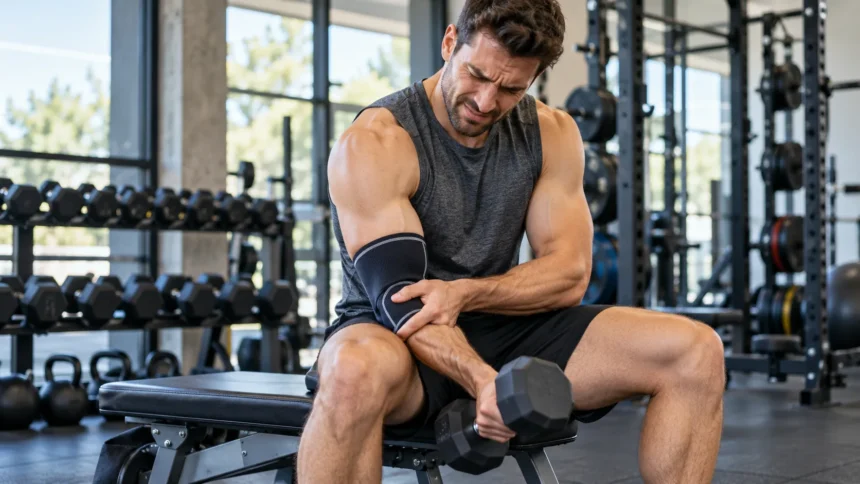
Elbow pain when lifting can turn simple activities such as carrying groceries, picking up a bag, or performing gym exercises into uncomfortable tasks. The pain may appear on the inside, outside, front, or back of the elbow depending on which muscles, tendons, joints, or nerves are irritated. In many cases, repetitive loading, poor technique, or sudden increases in training are involved.
Although mild elbow discomfort may settle with activity modification and gradual rehabilitation, persistent or severe pain deserves closer attention. Understanding what movements trigger symptoms can help narrow down the possible cause and guide safer recovery. The goal is not simply to stop using the arm but to identify irritating activities, restore strength, and gradually rebuild tolerance.
Why Does My Elbow Hurt When Lifting?
Elbow pain during lifting often develops when the tissues around the joint are exposed to more stress than they can currently tolerate. Tendons that connect the forearm and upper-arm muscles to the elbow can become irritated after repeated gripping, pulling, pressing, or carrying. Sudden increases in workout intensity can also overload these tissues before they have adapted.
The exact location of pain provides useful clues. Pain on the outside of the elbow is often associated with the wrist extensor tendons, while discomfort on the inside may involve the wrist flexor and forearm muscles. Pain at the back of the elbow can sometimes relate to the triceps tendon or structures surrounding the joint.
Not every case of elbow pain comes directly from the elbow itself. Irritation of nerves in the neck, shoulder, forearm, or around the elbow may sometimes create pain that travels into the arm. Because several structures can produce similar symptoms, persistent pain should be evaluated if basic load modification and recovery measures do not help.
Tennis Elbow and Outer Elbow Pain
Tennis elbow, also called lateral epicondylitis or lateral elbow tendinopathy, is a common cause of pain on the outside of the elbow. Despite its name, you do not need to play tennis to develop it. Repeated gripping, lifting, typing, using tools, or performing certain gym exercises can irritate the tendons that attach near the outer elbow.
People with tennis elbow may notice discomfort when lifting a cup, carrying bags, opening jars, shaking hands, or performing exercises involving strong gripping. The pain may become sharper when extending the wrist against resistance. Some people also experience reduced grip strength because gripping harder increases tension through the irritated tendon.
Treatment usually focuses on temporarily reducing aggravating movements and gradually rebuilding tendon strength. Complete rest for long periods may reduce symptoms temporarily but does not always restore the tendon’s ability to handle load. A progressive strengthening program involving the wrist and forearm muscles is commonly introduced as discomfort becomes more manageable.
Golfer’s Elbow and Inner Elbow Pain
Golfer’s elbow, or medial epicondylitis, affects the tendons attaching to the inside of the elbow. Similar to tennis elbow, it can develop even in people who never play golf. Repetitive gripping, wrist flexion, throwing, weight training, or occupational activities can place repeated stress on the muscles and tendons around the inner elbow.
Pain may appear when lifting objects with the palm facing upward, squeezing something tightly, or bending the wrist against resistance. Some people notice tenderness directly over the bony area on the inside of the elbow. The discomfort may also extend slightly down the forearm when the muscles and tendons remain irritated.
Reducing the activities that repeatedly trigger pain can create an opportunity for the tissues to recover. Gentle mobility and progressive strengthening can then be introduced according to tolerance. If inner elbow pain is accompanied by tingling or numbness in the ring and little fingers, nerve irritation may also need to be considered.
Elbow Tendon and Muscle Strains
A muscle or tendon strain can occur when the elbow and forearm are suddenly exposed to a force greater than the tissues can handle. Heavy curls, pulling exercises, awkward lifts, or catching a falling object may trigger symptoms. Mild strains may produce soreness and tenderness, while more significant injuries can cause sudden pain, weakness, or bruising.
The biceps and triceps tendons can also become irritated during repetitive resistance training. Biceps-related pain is often felt toward the front of the elbow, especially during curls or pulling movements. Triceps tendon problems generally cause discomfort near the back of the elbow during pressing exercises, push-ups, or movements that require forceful elbow extension.
Minor strains often improve with reduced loading and a gradual return to movement. However, sudden severe pain accompanied by a popping sensation, visible changes in the muscle, major weakness, or significant bruising should be assessed promptly. These symptoms may suggest a more serious tendon injury rather than simple exercise-related soreness.
Can Weightlifting Cause Elbow Pain?
Weightlifting can contribute to elbow pain when training volume, exercise selection, or technique places repeated stress on the same tissues. Increasing weight too quickly is a common trigger because muscles may adapt faster than tendons. High numbers of curls, pull-ups, presses, rows, and gripping exercises can also create irritation when recovery between sessions is limited.
Grip position can influence how much stress reaches the elbow. A very tight grip or consistently using the same hand position may overload specific forearm muscles and tendons. Barbell exercises can sometimes feel more restrictive than dumbbells or neutral-grip variations because both hands are fixed into one position throughout the movement.
Training does not necessarily need to stop completely. The better approach is often to reduce painful loads, adjust exercises, and maintain movements that remain comfortable. Similar principles apply when recovering from other joint problems such as knee effusion, where gradual load management is more useful than repeatedly forcing painful activity.
How to Relieve Elbow Pain When Lifting
The first step is usually to reduce or modify movements that consistently reproduce significant pain. This might mean lowering the weight, decreasing repetitions, changing grip position, or temporarily replacing a painful exercise. Continuing to push through sharp pain can keep the irritated tissue under excessive stress and delay the recovery process.
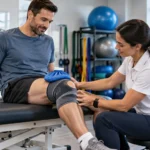
Cold therapy may help reduce discomfort after activity, particularly when symptoms have recently appeared. Apply a wrapped cold pack for around 15 to 20 minutes rather than placing ice directly against the skin. Some people prefer warmth before activity because it can make stiff muscles and joints feel more comfortable during movement.
Over-the-counter pain medication may provide short-term relief for some people, but it is not appropriate for everyone. Existing medical conditions, allergies, or other medications may affect what is safe to use. If medication is needed repeatedly just to continue training, it is worth addressing the underlying cause rather than relying only on temporary symptom control.
Best Exercises for Elbow Pain Recovery
Gentle wrist and forearm strengthening can help rebuild capacity when tendon irritation contributes to elbow pain. Wrist extension and flexion exercises can be performed with a very light dumbbell or resistance band. Begin with a load that produces little or manageable discomfort and increase resistance gradually as strength improves.
Isometric exercises may also be useful during the early stages of rehabilitation. These involve contracting the muscles without moving through a large range of motion, such as holding the wrist against resistance for several seconds. Isometric loading can provide a starting point for people who find full movement uncomfortable when symptoms are more sensitive.
Later, strengthening can progress toward gripping, rows, presses, curls, and sport-specific movements. The goal is to restore the elbow’s ability to tolerate normal loads rather than avoiding loading permanently. Exercise progression should remain controlled, and a noticeable increase in pain or swelling after training may mean the workload needs to be reduced.
How to Modify Your Lifting Technique
Reducing unnecessary grip tension is one practical way to decrease stress through the forearm and elbow. Many lifters squeeze the bar or dumbbell harder than necessary during every exercise. Maintaining a secure but controlled grip can help prevent excessive fatigue while still allowing safe control of the weight.
Consider experimenting with neutral-grip dumbbells, cable handles, or other variations when straight-bar exercises cause discomfort. Neutral positions allow the wrist and forearm to move more naturally for some people. Changing exercise angles can also distribute load differently and help maintain training without repeatedly irritating the same tendon attachment.
Avoid allowing the wrist to bend excessively during pressing or pulling movements. Keeping the wrist relatively stable can reduce unnecessary tension through the forearm muscles. It may also help to record your technique or work with a qualified trainer if elbow pain repeatedly appears during specific exercises despite lowering the load.
How Long Does Elbow Pain Take to Heal?
Recovery time varies depending on what is causing the pain and how long symptoms have already been present. Mild muscular irritation may settle within several days or a few weeks. Tendon-related problems can take longer because tendons adapt gradually and often require consistent strengthening rather than only rest.
Long-standing tennis elbow or golfer’s elbow may improve slowly over several weeks or months. Progress is not always perfectly linear, and occasional symptom increases can occur when activity levels rise. The most useful sign of improvement is usually greater tolerance for lifting, gripping, and daily tasks rather than expecting the elbow to feel completely different overnight.
Returning to full training too quickly can cause symptoms to flare again. Increase resistance, repetitions, and training volume progressively rather than changing everything at once. If pain remains unchanged despite several weeks of sensible modification and rehabilitation, professional evaluation can help identify whether another structure or condition is contributing.
How to Prevent Elbow Pain From Returning
Gradual progression is one of the most effective ways to reduce repeated elbow irritation. Avoid making large increases in training weight, volume, or frequency within a short period. Tendons need time to adapt to heavier loading, so consistent progression is generally more sustainable than repeatedly moving between inactivity and very intense training.
A balanced strength program should train more than just the muscles that are easiest to see. Forearm extensors, flexors, shoulders, upper back, biceps, triceps, and grip strength all contribute to upper-body movement. Building capacity across these areas can help distribute forces more effectively rather than concentrating excessive stress around the elbow.
Recovery also matters. Repeating high-volume arm exercises every day may not give irritated tissues enough time to adapt. Adequate sleep, sensible training frequency, warm-ups, exercise variation, and attention to early warning signs can reduce the likelihood that mild discomfort develops into a more persistent problem.
When Should You See a Doctor for Elbow Pain?
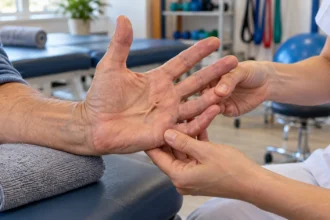
Medical evaluation is appropriate when elbow pain is severe, persistent, or interfering with normal daily activities. Pain that continues despite reducing aggravating movements and gradually rebuilding strength may require closer assessment. A healthcare professional can examine the elbow and determine whether tendons, muscles, ligaments, nerves, or the joint itself may be involved.
Seek care sooner if elbow pain follows a fall, direct impact, or sudden heavy lift and is accompanied by major swelling, bruising, deformity, or loss of movement. A popping sensation followed by immediate weakness may indicate a tendon injury. Significant injuries should not be treated as ordinary gym soreness without an appropriate evaluation.
Numbness, tingling, increasing weakness, fever, redness, significant warmth, or unexplained swelling are also reasons to seek medical advice. These symptoms may point to nerve involvement, inflammation, infection, or another condition requiring specific treatment. Early assessment is particularly important when symptoms are worsening rather than gradually improving.
Conclusion
Elbow pain when lifting can result from tendon irritation, muscle strain, repetitive gripping, poor load management, or technique problems. The location and type of pain can provide useful clues about the structures involved. Tennis elbow and golfer’s elbow are common possibilities, but other muscles, tendons, joints, and nerves can also contribute.
In many mild cases, reducing painful movements and gradually rebuilding strength can help the elbow recover. Changing grip positions, adjusting training volume, and using more comfortable exercise variations can allow you to remain active without repeatedly irritating the area. Long-term recovery generally depends on restoring the tissue’s ability to tolerate load.
Persistent, worsening, or severe symptoms should not be ignored. Sudden weakness, major swelling, bruising, numbness, fever, deformity, or difficulty moving the elbow requires professional assessment. Understanding the cause and following a gradual recovery approach can help you return to lifting more safely while reducing the likelihood of recurring pain.
FAQs
Why does my elbow hurt when I lift weights?
Elbow pain while lifting commonly results from tendon irritation, muscle strain, excessive gripping, poor technique, or increasing training volume too quickly. The pain location can help indicate which tissues may be involved.
Should I stop lifting if my elbow hurts?
You may not need to stop all exercise, but movements that significantly worsen pain should be reduced or modified. Lowering the load, changing grip positions, and using pain-free alternatives can help maintain activity during recovery.
Can tennis elbow cause pain when lifting?
Yes. Tennis elbow commonly causes pain on the outside of the elbow during gripping, carrying, wrist extension, and lifting activities. Symptoms may also include tenderness and reduced grip strength.
How long should I rest an elbow injury?
The appropriate recovery period depends on the cause and severity of the problem. Mild irritation may improve within days or weeks, while tendon injuries can require several weeks or months of gradual rehabilitation.
When is elbow pain serious?
Elbow pain needs prompt evaluation when it follows major trauma or occurs with deformity, severe swelling, sudden weakness, extensive bruising, numbness, fever, redness, or an inability to move the arm normally.