

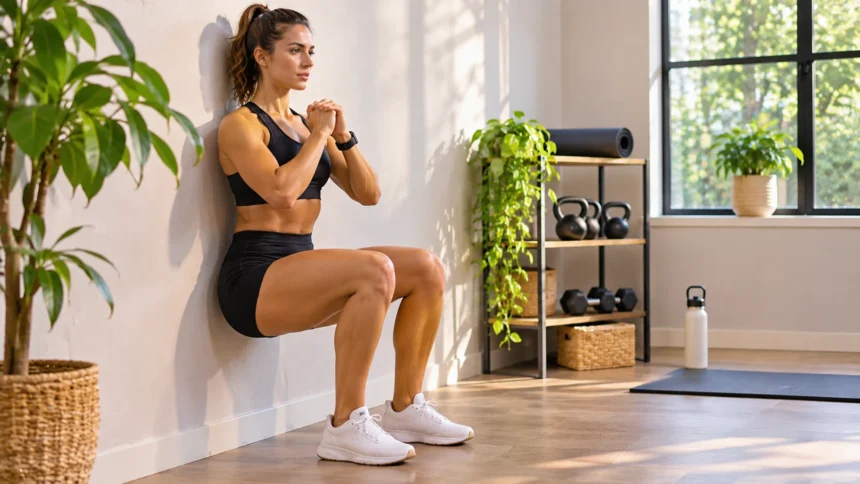
Muscles do not always need to move to produce force. Sometimes, they work hard while your body remains in the same position. This happens during an isometric contraction, a type of muscle activity commonly used in strength training, rehabilitation, and everyday movements. Holding a plank, maintaining your posture, or gripping an object can involve isometric muscle contractions.
Understanding how isometric contractions work can help you make better decisions about exercise, muscle development, and physical rehabilitation. These contractions differ from traditional movements because the muscle generates tension without noticeably changing its overall length. This guide explains isometric contraction anatomy, muscle function, benefits, examples, and important safety considerations in simple language.
What Is an Isometric Contraction?
An isometric contraction occurs when a muscle produces force without a noticeable change in its overall length or the angle of the joint it controls. The muscle remains active even though the body part does not move significantly. This type of contraction helps maintain stable positions and resist forces acting on the body.
For example, imagine holding a heavy shopping bag without lifting or lowering it. Your arm muscles generate tension to maintain the same position against gravity. Although your arm appears stationary, the muscles are actively working to support the weight and prevent unwanted movement.
Isometric contractions occur naturally during everyday activities and structured exercise routines. They help maintain posture, support joints, and provide stability during more complicated movements. Unlike exercises involving repeated lifting and lowering, isometric activities challenge muscles through sustained effort at a relatively fixed position.
How Does an Isometric Muscle Contraction Work?
Muscle contractions begin when the nervous system sends electrical signals to muscle fibers. These signals trigger interactions between proteins called actin and myosin, which generate muscular force. During an isometric contraction, the muscle produces tension while its overall length remains relatively constant.
At the microscopic level, individual muscle fibers still undergo complex mechanical activity. However, the total muscle-tendon system does not create enough movement to noticeably change the joint position. This happens because the generated muscular force is balanced by external resistance or opposing forces.
The amount of tension produced depends on several factors, including muscle activation, resistance, and joint position. A gentle contraction may require relatively little effort, while maintaining a challenging position can demand substantial muscular force. This explains why remaining still during an exercise can sometimes feel surprisingly difficult.
Understanding the Anatomy Behind Isometric Contractions
Skeletal muscles contain bundles of muscle fibers that generate force through specialized structures called sarcomeres. These structures contain actin and myosin filaments responsible for muscle contraction. When activated by the nervous system, the filaments interact to produce tension that can either create movement or maintain a stable position.
Muscles connect to bones through tendons, allowing muscular force to influence joints and body movements. During an isometric contraction, the muscle-tendon unit develops tension without producing substantial external movement. Small internal changes may still occur as muscle fibers and tendons respond to the applied forces.
Several muscle groups can work isometrically at the same time to stabilize the body. For example, the abdominal muscles, spinal stabilizers, and shoulder muscles contribute during a plank. Their coordinated activity helps maintain the position while resisting gravity and unwanted movement around multiple joints.
Isometric vs. Isotonic Muscle Contractions
The main difference between isometric and isotonic contractions involves movement and muscle length. During an isometric contraction, the muscle generates tension without a noticeable change in joint position. In a traditional isotonic contraction, the muscle changes length while moving a resistance through a range of motion.
A biceps curl provides a familiar example of dynamic muscle activity. As the weight rises, the elbow bends and the biceps shorten under tension. When the weight is lowered under control, the muscle lengthens while continuing to produce force.
An isometric biceps exercise involves holding the weight at a fixed elbow angle instead of repeatedly lifting and lowering it. Both approaches can challenge the muscle, but they create different mechanical demands. Combining static and dynamic exercises may provide useful training variety depending on individual goals and physical abilities.
Isometric vs. Concentric and Eccentric Contractions
Muscle contractions are commonly classified as isometric, concentric, or eccentric based on how muscle length changes during activity. A concentric contraction occurs when a muscle shortens while producing force. An eccentric contraction occurs when an active muscle lengthens under tension, often while controlling a movement.
During a squat, the quadriceps typically perform substantial eccentric work as the body lowers. They then contribute concentrically when the body rises. If a person pauses and holds a squat position, the muscles generate tension isometrically to maintain the position.
These contraction types often work together during everyday physical activities. Walking, lifting objects, and climbing stairs require muscles to alternate between producing movement and maintaining stability. Understanding these differences helps explain why exercise programs may include both controlled repetitions and stationary holds.
Common Examples of Isometric Contractions
One of the most recognizable examples of an isometric contraction is holding a plank. During this exercise, muscles around the abdomen, shoulders, hips, and spine work together to maintain the body position. Although there is little visible movement, muscular tension helps prevent the torso from collapsing or shifting excessively.
Holding a wall sit is another common example of isometric exercise. The quadriceps and other lower-body muscles remain active while the knees and hips stay in relatively fixed positions. The exercise challenges muscular endurance because maintaining the position requires continuous effort against gravity.
Isometric contractions also occur outside formal exercise settings. Standing upright, carrying groceries without moving your arms, and holding an object steadily can involve sustained muscle activity. These everyday examples demonstrate that isometric contractions are a normal part of movement control rather than something limited to fitness training.
What Muscles Are Used During Isometric Exercises?
Isometric exercises can target many different muscle groups depending on the body position and resistance involved. A plank primarily challenges muscles responsible for trunk stability, while a wall sit emphasizes the quadriceps and other supporting muscles. Upper-body exercises can involve the shoulders, chest, arms, and back.
Some isometric movements emphasize one particular muscle group through a fixed-position contraction. For example, holding a resistance band under tension can challenge the biceps or shoulder muscles. However, supporting muscles often remain active to maintain joint alignment and overall body control.
The muscles involved also depend on the exercise angle and how force is applied. Small adjustments in body position can change the mechanical demands placed on different muscle groups. Choosing appropriate exercises allows people to train specific areas while developing coordinated stability across several joints.
Key Benefits of Isometric Contraction Exercises
One important benefit of isometric exercise is its ability to improve strength at the positions being trained. Sustained muscular tension provides a stimulus that can support strength development over time. The results depend on factors such as contraction intensity, exercise selection, training consistency, and individual physical condition.
Isometric training can also improve muscular endurance during activities that require maintaining a position. Holding a plank or wall sit challenges the muscles to sustain tension for a period of time. With suitable progression, these exercises may help improve tolerance for similar physical demands.
Another advantage is that many isometric exercises require little equipment or space. Bodyweight holds and carefully selected resistance exercises can be performed in different environments. This accessibility makes them useful additions to broader strength training programs, although the exercises should still match individual abilities and health considerations.
How Isometric Contractions Improve Muscle Strength
Muscle strength develops when training places appropriate demands on muscular tissues and the nervous system. Isometric contractions can create meaningful resistance even without visible joint movement. When repeated consistently with suitable effort and recovery, these contractions can contribute to increased force-producing ability.
One limitation is that strength improvements from isometric training can be particularly noticeable near the joint angles used during exercise. Training at several different positions may help develop strength across a broader range. Dynamic resistance exercises can also complement this approach by challenging muscles throughout movement.
The effectiveness of isometric training depends on the intensity and duration of contractions. Very light holds may provide a different stimulus from challenging contractions performed under controlled conditions. Training should progress gradually rather than relying on excessively long or uncomfortable holds to demonstrate improvement.
The Role of Isometric Contractions in Joint Stability
Isometric muscle activity helps support joints by generating forces that control body position. Muscles surrounding the shoulders, hips, knees, and spine contribute to stability during everyday activities. Maintaining appropriate muscular tension can help prevent unwanted movement when the body encounters external resistance.
For example, muscles around the trunk work isometrically when a person carries a bag on one side. Their coordinated activity helps control the torso against the uneven load. Similar stabilization occurs when standing, reaching, or holding objects in positions that require balance and control.
Isometric exercises can provide an opportunity to practice stability at selected joint angles. However, they do not automatically correct every movement problem or prevent all injuries. Joint health also depends on mobility, coordination, overall strength, physical activity, and the condition of surrounding tissues.
Isometric Contractions in Physical Therapy
Physical therapists sometimes use isometric exercises during rehabilitation because they allow muscles to generate tension with limited joint movement. This can be useful when certain movements are uncomfortable or temporarily restricted. The appropriate exercise depends on the injury, medical condition, and stage of recovery.
For example, gentle quadriceps contractions may be included in some knee rehabilitation programs. Selected shoulder or hip exercises can also help maintain muscle activation while movement is gradually restored. These approaches are individualized because different injuries require different levels of loading and protection.
Isometric exercises are not suitable for every injury or rehabilitation stage. Some conditions require temporary rest, while others benefit from carefully controlled movement rather than static contractions. Following professional guidance helps ensure that rehabilitation exercises support healing without placing unnecessary stress on affected tissues.
Can Isometric Exercises Help With Muscle Pain?
Isometric exercises are sometimes used in rehabilitation programs for certain muscle and tendon conditions. Controlled contractions may help some individuals tolerate activity while gradually rebuilding strength. However, their effects on pain vary, and they should not be considered a guaranteed method of immediate pain relief.
Some people find that gentle isometric movements are more comfortable than exercises requiring a large range of motion. Others may experience increased discomfort, especially when contractions are too intense or poorly matched to their condition. The response depends on the affected tissues and the underlying cause of symptoms.
Persistent muscle or joint pain should be assessed before beginning an intensive exercise routine. A healthcare professional can help determine whether static strengthening is appropriate or whether another approach would be more beneficial. Pain that worsens during exercise is a reason to stop and reconsider the activity.
How to Perform Isometric Exercises Safely
Safe isometric training begins with selecting positions that allow comfortable and controlled muscle activation. Start with manageable resistance and maintain a natural breathing pattern throughout the contraction. Avoid forcing joints into uncomfortable positions or continuing an exercise when it causes sharp pain.
Many beginners find short, controlled holds easier to manage than prolonged contractions. As strength and confidence improve, the duration or resistance may be adjusted gradually. The appropriate progression depends on exercise experience, physical condition, and how the body responds after each session.
Breathing is particularly important because forceful isometric contractions can temporarily increase blood pressure, especially when combined with breath-holding. People with cardiovascular conditions or blood pressure concerns should seek medical guidance before performing intense static exercises. Keeping effort controlled and avoiding unnecessary straining supports a safer training experience.
Best Isometric Exercises for Beginners
A modified plank is a common beginner-friendly option for developing trunk stability. It can be performed with support from the knees or against an elevated surface to reduce difficulty. Maintaining a comfortable body position is more important than holding the exercise for an unusually long time.
A gentle wall sit offers another option for challenging the muscles around the hips and knees. Beginners can use a relatively shallow knee bend rather than lowering into a deep sitting position. Adjusting the position helps manage exercise intensity while allowing the lower-body muscles to work.
Other simple options include a supported calf raise hold or a light resistance band hold. These exercises allow individuals to explore muscle tension without complicated movement patterns. People with injuries or ongoing health concerns should choose exercises with professional guidance rather than assuming every beginner variation is suitable.
How Long Should You Hold an Isometric Contraction?
The ideal duration of an isometric contraction depends on the purpose of the exercise and the intensity of muscular effort. Shorter holds may be appropriate for challenging contractions, while longer holds can emphasize muscular endurance. There is no single duration that works equally well for every muscle group or individual.
Beginners may use brief holds that allow them to maintain proper positioning and steady breathing. More experienced individuals can gradually adjust duration, resistance, and repetitions according to their training goals. The quality of the contraction matters more than reaching an arbitrary time target.
Rest between sets is also important because muscles need opportunities to recover from demanding contractions. Excessive fatigue can reduce movement control and make maintaining a comfortable position difficult. A balanced exercise plan should consider total workload rather than focusing only on the length of individual holds.
Can Isometric Exercises Build Muscle?
Isometric exercises can contribute to muscle growth when they provide sufficient muscular tension and an appropriate training stimulus. Although the joint remains relatively stationary, the muscle still works against resistance. This activity can support muscular adaptation when combined with adequate recovery and consistent training.
However, muscle growth depends on several factors, including training intensity, overall exercise volume, nutrition, and individual responses. Isometric exercises may not provide the same range of mechanical demands as dynamic resistance movements. Using both approaches can help create a more varied strength training routine.
For people interested in general muscular development, progressive resistance training remains an important part of exercise programming. Isometric holds can complement movements such as squats, presses, and rows. The best combination depends on personal goals, available equipment, physical abilities, and any medical restrictions.
Common Mistakes During Isometric Contractions
One common mistake is holding the breath while generating muscular tension. This can increase internal pressure and contribute to temporary blood pressure elevation during demanding contractions. Maintaining controlled breathing is particularly important for people with cardiovascular concerns or those performing challenging static exercises.
Another mistake is choosing positions that are too difficult to maintain comfortably. For example, a plank performed with excessive lower-back discomfort may indicate that the exercise needs modification. Selecting a manageable variation helps maintain control while allowing the intended muscles to work.
Some people also assume that longer holds always produce better results. However, excessive duration can increase fatigue without necessarily providing additional benefits for the intended goal. Appropriate resistance, controlled technique, and gradual progression are more useful than turning every isometric exercise into a maximum endurance challenge.
How to Include Isometric Training in a Workout
Isometric exercises can be included in full-body workouts, strength training sessions, or rehabilitation routines. They may be used as supplementary movements alongside traditional resistance exercises. For example, a workout could include controlled squats followed by a suitable static lower-body hold.
Exercise selection should reflect the muscle groups and movement abilities being developed. A plank variation may challenge trunk stability, while a calf hold can emphasize lower-leg muscles. Rotating exercises across different muscle groups can help prevent unnecessary repetition while maintaining variety.
Training frequency and intensity should match individual recovery needs and overall physical activity. Beginners can start with manageable sessions and gradually increase demands as their strength develops. People recovering from injuries should follow individualized rehabilitation plans to ensure that static exercises support their specific recovery goals.
Conclusion
An isometric contraction occurs when a muscle generates tension without noticeably changing its overall length or moving the associated joint. This type of muscle activity plays an important role in posture, stability, and everyday movements. Common examples include planks, wall sits, and holding objects in a fixed position.
Isometric exercises can support strength development, muscular endurance, and joint control when used appropriately. They can also provide useful options within certain rehabilitation programs. However, their effectiveness depends on contraction intensity, exercise technique, individual health, and how they fit into a broader training routine.
Understanding the difference between isometric and dynamic muscle contractions helps explain how muscles work under different physical demands. Combining suitable exercise variations can support balanced strength training and movement development. With gradual progression, controlled breathing, and attention to comfort, isometric exercises can become a practical part of regular physical activity.
Frequently Asked Questions
What is an isometric contraction in simple terms?
An isometric contraction occurs when a muscle produces tension without noticeably changing its length or moving the joint. Holding a plank or maintaining a fixed position against resistance are common examples.
What are three examples of isometric exercises?
Three common isometric exercises are planks, wall sits, and static calf raise holds. Each involves maintaining a position while muscles generate tension to resist gravity or another external force.
Do isometric contractions build muscle strength?
Yes, isometric contractions can improve muscle strength when performed with suitable intensity and consistent training. Strength gains may be particularly noticeable around the joint positions used during the exercises.
What is the difference between isometric and isotonic contractions?
Isometric contractions generate muscle tension without significant joint movement. Isotonic contractions involve muscles changing length during movement, such as lifting and lowering a weight during a biceps curl.
Are isometric exercises safe for everyone?
Not every isometric exercise is suitable for every person. Intense static contractions can increase blood pressure, so individuals with cardiovascular conditions, injuries, or other medical concerns should seek appropriate professional guidance.