
Finding the right shoes for work can make a big difference in how comfortable you feel throughout the day. Whether your job involves sitting at a desk, walking between departments, or standing for long periods, uncomfortable footwear can become distracting. The right office shoes should provide a practical combination of support, comfort, durability, and a professional appearance.
Choosing comfortable office shoes does not mean sacrificing personal style or wearing the same footwear every day. From classic loafers and supportive flats to smart sneakers and low-heeled shoes, many options can complement professional clothing. This guide explains what makes office footwear comfortable, which styles are worth considering, and how to choose shoes that suit your working environment.
What Makes Office Shoes Comfortable?
Comfortable office shoes should fit properly, support natural foot movement, and feel suitable for your daily activities. Important features include adequate toe space, secure heel positioning, cushioning, and a stable sole. The best combination depends on your foot shape and work routine. Footwear that feels comfortable during a short fitting may not always remain comfortable throughout a working day.
A well-designed shoe should provide enough room for your toes without allowing excessive movement inside. Shoes that squeeze the front of the foot can cause rubbing and discomfort, while loose footwear may slip during walking. Adjustable closures can help improve fit. Choosing the correct size and width is often more important than selecting a particular brand.
Breathability and material flexibility also influence comfort. Leather, textile, and certain engineered materials can allow different levels of airflow and movement. A cushioned footbed may provide additional comfort when standing or walking. However, excessive softness does not automatically mean better support. A balanced design should match your individual needs and workplace conditions.
Why Comfortable Office Shoes Matter for Everyday Work
Office workers often spend several hours wearing the same footwear, making comfort an important practical consideration. Even desk-based jobs may involve walking to meetings, commuting, or standing during daily activities. Shoes that cause pressure or rubbing can make these movements uncomfortable. Appropriate footwear helps reduce unnecessary distractions during the working day.
People who stand for extended periods may benefit from shoes with stable soles and suitable cushioning. Different workplaces involve different flooring surfaces, including carpet, tile, concrete, and polished floors. These surfaces can affect how footwear feels during movement. Considering your workplace environment helps you choose shoes that remain practical beyond their appearance.
Comfortable footwear may also support better movement habits by allowing your feet to function without unnecessary restriction. However, shoes alone cannot correct every foot, knee, or back problem. Persistent discomfort may involve medical conditions or other physical factors. A healthcare professional can assess symptoms that do not improve after changing footwear.
How to Choose the Right Fit for Office Shoes
Proper fit is one of the most important factors when choosing office footwear. Shoes should provide enough length and width for your feet while keeping the heel reasonably secure. Your toes should not feel compressed against the front or sides. Trying different sizes and widths can help identify a more suitable option.
Foot size can change over time, so relying only on a familiar shoe size may lead to problems. Some people also notice minor changes in foot volume throughout the day. Trying shoes later in the day can help account for these differences. Always test both shoes because one foot may be slightly larger than the other.
Walk around during the fitting rather than judging comfort while standing still. Notice whether the heels slip, the toes feel crowded, or any area creates pressure. Shoes should feel reasonably comfortable from the beginning. Depending on substantial stretching or a lengthy break-in period to correct an unsuitable fit is generally not a reliable approach.
Best Loafers for Comfortable Office Outfits
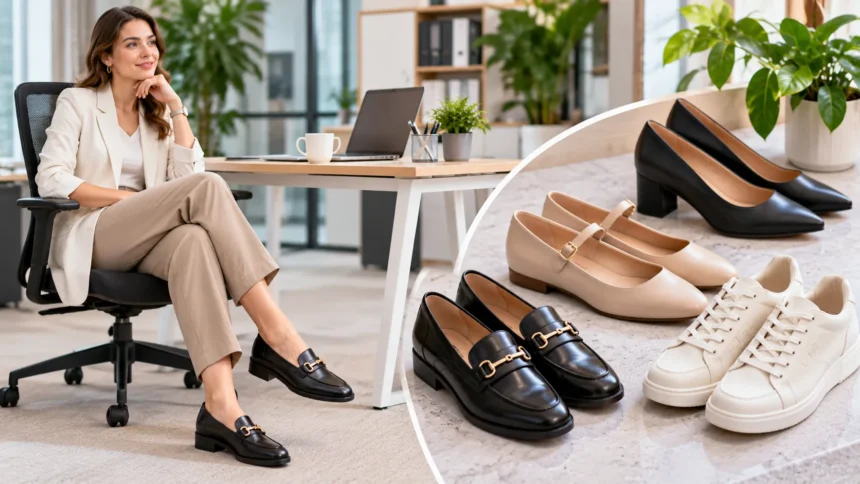
Loafers are a popular choice for office footwear because they combine a structured appearance with practical everyday styling. Their slip-on design works well with tailored trousers, chinos, midi skirts, and professional dresses. Leather and suede versions provide different finishes. Choosing a flexible sole and comfortable footbed can make loafers suitable for many working environments.
Classic penny loafers offer an understated appearance that complements business-casual clothing. Black leather designs work well with gray trousers and white shirts, while brown loafers pair naturally with navy and beige outfits. Their versatility makes them useful for building a practical work wardrobe. A secure fit is important because loafers generally lack adjustable laces.
Chunky loafers provide a more noticeable alternative with thicker soles and contemporary styling. Some designs offer additional cushioning, although thickness alone does not guarantee comfort. Check the shoe’s weight, flexibility, and heel fit before purchasing. The best loafers should feel stable during walking while complementing the dress code of your workplace.
Comfortable Ballet Flats for Office Wear
Ballet flats are a familiar office footwear option because their simple design complements many professional outfits. They work particularly well with ankle-length trousers, skirts, and lightweight dresses. Rounded-toe styles create a classic appearance, while pointed-toe designs provide a more structured look. However, the shape should not compromise comfortable toe space.
A supportive ballet flat may include a cushioned insole, flexible upper material, and a sole suitable for regular walking. Some very thin flats provide limited protection from hard surfaces. This can become uncomfortable during long periods of standing. Choosing a design with appropriate cushioning and stability may improve everyday wearability.
For a practical office outfit, pair black ballet flats with tailored trousers and a lightweight blouse. Beige or brown flats can complement cream trousers and neutral knitwear. These simple combinations create a polished appearance without requiring heels. If you experience persistent discomfort in very flat footwear, consider alternatives with different support characteristics.
Supportive Sneakers That Work in the Office
Sneakers can be suitable office shoes when the workplace allows casual or business-casual footwear. Minimalist leather sneakers and simple low-profile designs often coordinate well with professional clothing. Their appearance is generally more understated than brightly colored athletic shoes. However, dress codes vary, so checking workplace expectations is important before choosing sneakers.
For a smart-casual outfit, pair white leather sneakers with navy trousers and a structured shirt. Black or gray sneakers can also complement tailored clothing without creating strong contrast. Keeping shoes clean helps maintain a professional appearance. Simple designs are especially useful when you want footwear that works for both commuting and office activities.
Comfort features vary considerably between sneaker models. Some offer generous cushioning and flexible soles, while others prioritize appearance over support. Check the fit, heel stability, and available toe space before purchasing. If your commute involves extensive walking, selecting shoes suitable for that activity may be more practical than relying on appearance alone.
Low-Heeled Shoes for Professional Comfort
Low-heeled shoes can provide a polished appearance for offices with more formal dress requirements. Block heels, low pumps, and certain slingback designs complement tailored clothing and professional dresses. Their suitability depends on heel shape, height, and fit. A lower heel may feel more manageable for some people than a narrow, elevated design.
Block heels often provide a wider base of support compared with thin heels. This can make them feel more stable during ordinary walking. However, the overall construction still matters. A poorly fitted block heel may cause discomfort despite its wider shape, making proper sizing and toe space essential.
For a professional outfit, pair low black heels with straight-leg trousers and a fitted blazer. Neutral pumps also work well with midi skirts and coordinated office separates. Choose a heel height that allows comfortable movement throughout your routine. If your job requires extensive standing, consider whether a lower or flatter alternative would be more practical.
Oxford Shoes and Derby Shoes for Work
Oxford shoes and Derby shoes offer classic lace-up styles that suit many professional environments. Oxfords have closed lacing, creating a neat and traditionally formal appearance. Derby shoes use open lacing, which may provide more adjustment around the upper foot. Both styles can work well with suits, tailored trousers, and smart-casual outfits.
The comfort of lace-up office shoes depends on factors such as width, flexibility, cushioning, and construction. Adjustable laces can help secure the foot, but they cannot correct a shoe that is too narrow. Leather uppers may gradually soften during wear. However, significant discomfort should not be accepted as a normal requirement.
Black Oxfords are a dependable choice for formal business clothing, while brown Derby shoes complement navy and beige trousers. Suede versions may provide a softer visual appearance for less formal workplaces. Consider sole grip and weather conditions when selecting materials. Proper maintenance can also help these classic office shoes remain practical over time.
Comfortable Office Shoes for Standing All Day
Standing for extended periods can place demands on the feet and lower-body muscles. Office reception staff, retail employees, and professionals who move frequently may need footwear designed for sustained use. Stable soles, suitable cushioning, and adequate toe space are useful features. However, the right combination depends on individual comfort and workplace requirements.
Shoes with removable insoles may provide flexibility for people who use professionally recommended orthotic inserts. A secure heel can also help reduce excessive slipping during movement. Avoid assuming that the thickest sole always provides the greatest comfort. Footwear should feel balanced and allow natural movement without unnecessary restriction.
Workplace habits matter alongside shoe selection. Taking suitable movement breaks, changing standing positions, and using an appropriate anti-fatigue mat where permitted may improve comfort. Persistent foot pain should not be dismissed as an unavoidable part of the job. A healthcare professional can assess whether specific support or treatment is necessary.
Best Office Shoes for Walking and Commuting
People who walk to work or travel between locations often need shoes that suit both commuting and professional clothing. Comfortable loafers, supportive sneakers, and practical lace-up shoes can provide different options. The ideal design depends on walking distance, weather, and workplace expectations. Choosing footwear for the full day helps reduce unnecessary inconvenience.
A lightweight shoe with stable grip may be useful when navigating sidewalks, stairs, and public transportation. Breathable materials can also improve comfort during warmer conditions. However, thin soles may not provide sufficient protection on hard surfaces for every wearer. Testing shoes during normal walking can reveal whether the design feels suitable.
Some workers prefer wearing commuting shoes and changing into formal footwear at the office. This approach can be useful when professional dress requirements differ from travel needs. Others choose versatile shoes that work in both situations. The most practical option is one that supports your routine without causing unnecessary pressure or discomfort.
Breathable Office Shoes for Warm Weather
Warm weather can make enclosed office shoes feel uncomfortable, particularly when ventilation is limited. Breathable materials and suitable sock choices may help manage moisture during the day. Some leather and textile uppers allow better airflow than heavily coated materials. However, breathability varies between designs and cannot be judged from material names alone.
Loafers, lightweight sneakers, and certain flats may provide comfortable options for warmer workplaces. Open-toe shoes can also be considered when the dress code and safety requirements permit them. A stable fit remains important regardless of the season. Avoid choosing loose shoes simply to create more airflow around the feet.
Moisture management can also influence comfort. Clean socks made from suitable materials may help reduce dampness and friction. Allowing shoes to dry between uses can support hygiene and material care. If you experience persistent irritation, unusual sweating, or skin problems, professional advice may help identify an appropriate solution.
Office Shoes for Different Workplace Dress Codes
Workplace dress codes influence which shoe styles are considered appropriate. Formal business environments may favor leather Oxfords, polished loafers, or simple closed-toe pumps. Business-casual offices often provide more flexibility, including flats and understated sneakers. Understanding these expectations helps prevent buying shoes that cannot be worn regularly.
Creative workplaces may allow colorful footwear, chunky loafers, or contemporary sneakers. Even in relaxed environments, clean and well-maintained shoes can support a coordinated appearance. Choose styles that complement your clothing without creating unnecessary discomfort. Personal expression and professional presentation do not always require competing priorities.
Safety requirements can also affect office footwear choices. Certain workplaces may require closed toes, slip-resistant soles, or additional protection. These rules should take priority over decorative preferences. When choosing shoes, consider the actual duties involved rather than relying only on the workplace’s general dress code.
How to Match Comfortable Office Shoes With Outfits
Coordinating shoe colors with professional clothing makes everyday outfit planning easier. Black, brown, navy, beige, and gray are versatile choices that complement many workplace wardrobes. Neutral footwear can work with tailored trousers, skirts, dresses, and matching sets. Choosing a few practical colors may reduce the need for an extensive shoe collection.
For example, black loafers pair beautifully with gray trousers and a white blouse. Brown Derby shoes complement navy chinos and a light blue shirt. Beige flats can create a soft finish with cream trousers and neutral knitwear. These combinations provide reliable starting points without requiring exact color matches.
Footwear design also affects the final appearance. Minimalist sneakers can make tailored clothing feel more relaxed, while polished leather shoes create a structured finish. Low heels may complement dressier outfits where appropriate. Considering both color and style helps produce combinations that suit your workplace and preferred clothing.
Common Mistakes When Buying Comfortable Office Shoes
One common mistake is choosing office shoes based entirely on appearance. Attractive footwear may feel uncomfortable if the fit, width, or sole construction is unsuitable. A shoe should support your actual daily activities rather than only complement your clothing. Walking during the fitting process can reveal problems that are difficult to notice while standing.
Another mistake involves assuming all cushioned shoes provide adequate support. Very soft footwear may feel pleasant initially but lack stability for certain activities. Similarly, rigid shoes may require careful evaluation for comfort and fit. The best design depends on your feet and work routine rather than one specific feature.
Buying shoes that are too small and expecting them to stretch significantly can also cause problems. Tight toe areas and uncomfortable pressure should not be ignored. Returning or exchanging unsuitable footwear is often better than repeatedly wearing painful shoes. Proper fit from the beginning can help prevent unnecessary irritation and discomfort.
How to Care for Your Office Shoes
Regular shoe maintenance can help preserve comfort, appearance, and durability. Cleaning footwear according to its material prevents dirt and residue from accumulating. Leather shoes may benefit from suitable conditioning products, while fabric footwear requires different care. Always follow manufacturer instructions to avoid damaging finishes or materials.
Allowing shoes to air out between uses can help manage moisture. Avoid exposing them to excessive heat, which may damage certain materials or adhesives. Shoe trees can help some structured shoes maintain their shape. Rotating footwear may also reduce repeated exposure to moisture and everyday wear.
Inspect soles, insoles, and heel areas periodically for signs of damage. Worn tread can reduce traction, while damaged internal materials may affect comfort. Some shoes can be repaired, depending on their construction. Replacing footwear when it no longer provides a secure or comfortable fit is more practical than continuing to wear damaged shoes.
Conclusion
Comfortable office shoes combine suitable fit, practical support, and a style that works with your professional wardrobe. Loafers, ballet flats, supportive sneakers, low heels, and lace-up shoes all provide different possibilities. The best option depends on your workplace dress code, daily activities, and individual comfort needs.
When shopping for office footwear, pay attention to toe space, heel stability, cushioning, and material quality. Try shoes while walking and consider how they feel during your regular routine. A stylish appearance cannot compensate for persistent discomfort. Choosing footwear that suits your feet helps make everyday working hours more manageable.
You do not need a large shoe collection to create practical and professional office outfits. A few well-fitting pairs in versatile colors can complement many wardrobe essentials. Prioritize comfort, maintain your shoes properly, and select designs that match your responsibilities. Thoughtful footwear choices can support both personal style and everyday workplace comfort.
Frequently Asked Questions
What are the most comfortable office shoes?
Comfortable office shoe options include well-fitting loafers, supportive flats, cushioned sneakers, and low-heeled shoes. The best choice depends on foot shape, work activities, and the required dress code.
Are sneakers appropriate for office wear?
Sneakers may be appropriate in business-casual or relaxed offices. Minimalist leather designs and clean, neutral-colored sneakers often complement professional clothing, but workplace policies should guide the decision.
What office shoes are best for standing all day?
Shoes with a secure fit, appropriate cushioning, stable soles, and adequate toe space may help during extended standing. Individual needs vary, and persistent foot pain should be professionally assessed.
Are flat shoes better than heels for office comfort?
Flat shoes may be comfortable for many people, but heel height alone does not determine support. Proper fit, sole construction, stability, and individual foot needs are equally important.
How do I know if my office shoes fit properly?
Well-fitting shoes should allow comfortable toe movement, keep the heel reasonably secure, and avoid painful pressure. Walk around during fitting to check for slipping, rubbing, or discomfort.