

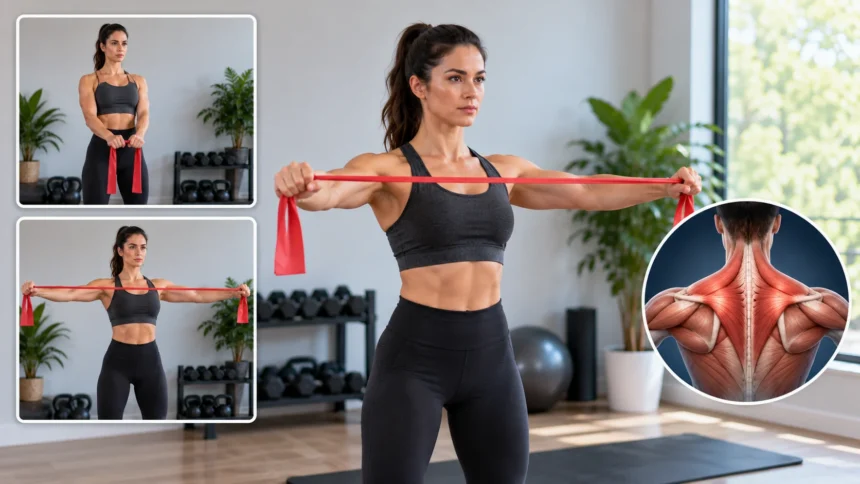
Band pull aparts are a simple resistance-band exercise used to strengthen the upper back, shoulders, and muscles that help control the shoulder blades. The movement requires very little equipment, making it popular for home workouts, warm-ups, rehabilitation programs, and strength-training routines. Despite looking easy, proper technique is important for getting the intended muscles involved.
This exercise can be especially useful for people who spend long hours sitting, working at a computer, or performing pressing exercises in the gym. Band pull aparts encourage controlled shoulder movement and upper-back engagement without requiring heavy weights. Understanding the correct form, resistance level, and common mistakes can help you use the exercise more effectively.
What Is a Band Pull Apart?
A band pull apart is a resistance exercise performed by holding an elastic band in front of the body and pulling the hands away from each other. As the band stretches, the muscles across the upper back and rear shoulders work to move and stabilize the shoulder blades. The exercise is usually performed while standing or sitting upright.
The movement mainly involves horizontal shoulder abduction and scapular retraction. In simple terms, your arms move outward while your shoulder blades gently move toward each other. The range does not need to be extreme, and the goal is controlled muscle engagement rather than stretching the band as far as physically possible.
Band pull aparts are commonly used as an accessory exercise rather than a major strength movement. They can fit into warm-ups, upper-body workouts, posture-focused routines, or recovery sessions. Because the resistance can be adjusted easily, beginners and experienced lifters can both use the exercise at an appropriate level.
What Muscles Do Band Pull Aparts Work?
The rear deltoids are heavily involved in band pull aparts because they help move the arms backward and outward. These muscles sit at the back of the shoulders and contribute to balanced shoulder development. Strengthening them can complement pressing movements that place more emphasis on the front portion of the shoulders.
Several upper-back muscles also contribute significantly to the exercise. The rhomboids and middle portions of the trapezius help control the shoulder blades as the arms separate. Smaller muscles around the shoulder joint also assist with stability, making the movement useful for improving control rather than simply building one isolated muscle.
Your core and postural muscles provide additional support by helping you remain upright during each repetition. However, the exercise should not turn into a full-body movement involving excessive leaning or arching. Keeping the torso relatively still allows the upper back and shoulders to perform most of the work.
Benefits of Band Pull Aparts
One major benefit of band pull aparts is that they strengthen muscles that may receive less attention in pressing-heavy workouts. Bench presses, push-ups, and overhead presses emphasize several muscles on the front of the upper body. Pull aparts can help add more work for the rear shoulders and upper back.
The exercise can also improve awareness of shoulder-blade movement. Learning to control scapular retraction can support many pulling movements such as rows, face pulls, and certain cable exercises. Better movement awareness may also help you recognize when you are shrugging excessively or relying on momentum during upper-body training.
Band pull aparts are also highly convenient. A resistance band is lightweight, inexpensive, and easy to store in a gym bag, desk drawer, or suitcase. This makes the movement practical for quick warm-ups, short home workouts, or adding extra upper-back training without needing a cable machine or free weights.
How to Do a Band Pull Apart Correctly
Stand tall with your feet comfortably apart and hold a resistance band in both hands. Extend your arms in front of you around chest or shoulder height while keeping a slight softness in the elbows. Your hands should begin far enough apart that the band has light tension without already being heavily stretched.
Pull your hands away from each other while keeping the arms roughly level with the floor. Think about moving from the shoulders and gently drawing the shoulder blades toward each other rather than simply yanking the band apart. Continue until the band approaches your chest or you reach your comfortable range.
Pause briefly at the end of the movement, then return your hands toward the starting position slowly. Do not allow the band to snap back or pull your shoulders forward suddenly. Every repetition should remain smooth and controlled, with your neck relaxed and your torso staying relatively still.
Common Band Pull Apart Mistakes
Using a band that is too strong is one of the most common mistakes. Excessive resistance may cause you to bend your elbows significantly, shrug your shoulders, or lean backward just to complete the movement. A lighter band usually produces better muscle engagement when it allows you to maintain consistent form.
Another frequent mistake is rushing through the returning phase. Some people pull the band apart under control but then allow it to collapse back toward the starting position. Slowing the return maintains muscular tension and improves control while reducing the chance of the resistance band pulling the arms forward abruptly.
Avoid excessively arching the lower back or pushing your ribs forward during each repetition. This compensation often appears when the band is too difficult or when shoulder mobility is limited. Keep the abdomen gently engaged and reduce the range if necessary so the movement remains focused on the shoulders and upper back.
How Much Resistance Should You Use?
The best resistance band is one that allows you to complete every repetition without losing shoulder position or relying on momentum. Beginners usually benefit from starting with a light band. You should feel the upper back working by the final repetitions while still being able to control the band in both directions.
Resistance can also be adjusted without changing bands. Holding your hands farther apart usually reduces tension, while bringing them closer together increases the amount the band must stretch. Small grip changes can make a noticeable difference, so experiment carefully rather than immediately switching to the heaviest resistance available.
Your ideal band may also change depending on how you use the exercise. A very light band can work well for warm-ups and higher-repetition sets, while moderate resistance may suit dedicated strength work. Regardless of the goal, technique should remain consistent instead of deteriorating as resistance increases.
Band Pull Apart Variations
The standard band pull apart is performed around chest or shoulder height, but changing arm position can slightly alter the emphasis. Diagonal pull aparts involve moving the hands apart along an upward or downward angle. These variations can introduce different shoulder positions while still training upper-back control.
You can also perform pull aparts with an underhand or overhand grip. Changing hand orientation may make one variation feel more comfortable depending on your shoulder mobility and individual anatomy. Keep the resistance light when experimenting with a new grip so you can determine whether the position feels natural.
Another option is performing the exercise from a seated position. Sitting can reduce lower-body movement and make it easier to notice whether you are leaning backward to create momentum. The essential technique remains the same: maintain a stable torso, control the shoulder blades, and return the band slowly after each repetition.
When to Use Band Pull Aparts in a Workout
Band pull aparts work well during an upper-body warm-up because they require minimal equipment and can activate the rear shoulders and upper back before heavier movements. A few controlled sets may help you focus on shoulder positioning before performing rows, presses, or other compound exercises. Warm-up resistance should usually remain fairly light.
The exercise can also be performed between sets of pressing movements. For example, light pull aparts may be paired with bench presses or push-ups to add upper-back activity without requiring another large piece of equipment. The total training volume should still be appropriate for your recovery and overall workout plan.
Band pull aparts can also fit into a balanced full-body routine. Pairing upper-body pulling work with lower-body movements such as the reverse lunge can help create a more complete session. Combining different movement patterns allows you to train multiple muscle groups without relying on complicated equipment.
How Many Band Pull Aparts Should You Do?
Beginners can start with approximately 10 to 15 controlled repetitions per set. Two or three sets are often enough to practice the movement and develop upper-back endurance. The exact number matters less than completing each repetition with consistent shoulder position and without using momentum.
Higher repetitions may work well because band pull aparts are usually performed with relatively light resistance. Sets of 15 to 25 repetitions can create substantial muscular fatigue when the movement remains controlled. However, there is no need to chase extremely high numbers if your shoulders begin shrugging or your form becomes inconsistent.
Progress can come from using a slightly stronger band, adding repetitions, increasing sets, or slowing the movement. Change one factor at a time so you can evaluate how your body responds. Gradual progression is more useful than immediately moving to heavy resistance that changes the exercise into an uncontrolled pulling motion.
Are Band Pull Aparts Good for Posture?
Band pull aparts strengthen muscles involved in controlling the shoulder blades and upper back, which are important for maintaining a comfortable upright position. This can be useful for people who spend significant time sitting or working at a computer. However, posture is influenced by many factors beyond the strength of one muscle group.
Doing band pull aparts does not automatically correct every postural issue. Workstation setup, movement habits, mobility, strength, fatigue, and the amount of time spent in one position can all influence how your body feels. Regularly changing positions throughout the day may be just as important as adding a single exercise.
Instead of thinking of pull aparts as a posture cure, view them as one tool for developing upper-back strength and shoulder control. Combining them with rows, mobility work, general strength training, and regular movement can create a more complete approach. Persistent pain or significant mobility limitations should be assessed individually.
Band Pull Aparts for Shoulder Warm-Ups
Band pull aparts are frequently included before upper-body training because the exercise can prepare the shoulders for controlled movement without heavy loading. A light band allows you to move through several repetitions while paying attention to your shoulder blades. This can be useful before pressing, pulling, or overhead exercises.
Warm-up sets should not be so demanding that they fatigue your upper back before the main workout begins. Use light resistance and keep repetitions smooth rather than performing every set to muscular failure. The goal is to prepare for training, not exhaust the same muscles that you will need during heavier exercises.
You can combine pull aparts with arm circles, light rows, controlled shoulder rotations, and other comfortable mobility exercises. A warm-up should gradually prepare your body for the movements that follow. If band pull aparts produce sharp pain or significant discomfort, choose a different warm-up rather than forcing the movement.
Safety Tips and Best Practices
Check your resistance band before every workout for cracks, tears, thin areas, or other visible damage. Bands can deteriorate over time, particularly when exposed to friction, excessive stretching, or poor storage conditions. A damaged band should be replaced because it may snap unexpectedly when placed under tension.
Keep the band away from your face and avoid stretching it far beyond what is necessary for the exercise. Use smooth repetitions and maintain a secure grip throughout the movement. If your hands become sweaty or the band feels difficult to control, stop and adjust your setup before continuing.
Normal muscular fatigue around the rear shoulders and upper back can occur during pull aparts, but sharp joint pain should not be ignored. Reduce the resistance or stop the exercise if symptoms appear. People recovering from shoulder injuries should follow the guidance of a qualified healthcare or rehabilitation professional.
Conclusion
Band pull aparts are a simple resistance-band exercise that targets the rear shoulders, upper back, and muscles responsible for controlling the shoulder blades. They require very little space or equipment and can easily fit into warm-ups, strength workouts, or home exercise routines. The movement is most effective when performed slowly with an appropriate level of resistance.
Good form involves keeping the torso stable, maintaining relatively straight arms, and pulling the band apart through a comfortable range. Avoid excessive shrugging, leaning backward, or allowing the band to snap toward the starting position. Using lighter resistance is often better than sacrificing technique to stretch a stronger band.
You can use band pull aparts alongside rows, presses, lower-body exercises, and mobility work as part of a balanced routine. Progress gradually through repetitions, sets, or resistance while continuing to prioritize movement quality. When performed consistently, pull aparts can be a practical way to build upper-back strength and shoulder control.
FAQs
What does a band pull apart work?
Band pull aparts primarily work the rear deltoids, rhomboids, and middle trapezius while involving other shoulder-stabilizing muscles. They are particularly useful for training upper-back strength and shoulder-blade control.
How many band pull aparts should I do?
Beginners can start with two or three sets of about 10 to 15 controlled repetitions. Higher-repetition sets may also be appropriate when using light resistance and maintaining proper form throughout.
Can I do band pull aparts every day?
Light pull aparts may be performed frequently by some people, but training needs vary. If your shoulders or upper back remain noticeably sore or fatigued, allow more recovery before another challenging session.
Are band pull aparts good for shoulders?
Band pull aparts can strengthen muscles that support shoulder movement and scapular control. However, they should feel comfortable and should not be forced if you have sharp shoulder pain or an active injury.
Should band pull aparts be done before or after a workout?
They can be used before training as a light shoulder warm-up or afterward as accessory work. Use lighter resistance before demanding exercises so the upper-back muscles are not excessively fatigued.