
Matera Travel Guide: Cave Hotels, Sights & Hidden Gems
Matera is one of Italy’s most unusual and visually memorable destinations, a city where ancient cave dwellings, stone churches, steep alleys, panoramic terraces, and dramatic ravines combine into a landscape that feels unlike anywhere else in the country. Located in Basilicata in southern Italy, Matera is famous for the Sassi di Matera, historic districts built into and around natural caves. What makes the city special is not simply its age, but the way generations of residents adapted rock, stone, water systems, courtyards, and narrow passages into a functioning urban environment. Today, many former cave homes have been transformed into boutique hotels, restaurants, museums, galleries, and atmospheric guesthouses. Matera rewards travelers who are curious about architecture, history, photography, food, and slower exploration.
First-time visitors sometimes assume Matera can be covered quickly because the historic center appears compact on a map. In reality, steep stairways, uneven stone lanes, layered neighborhoods, viewpoints, churches, museums, and hidden courtyards make the city feel much larger once you begin exploring on foot. A route that looks short can involve substantial climbing, especially when moving between the Sassi and the higher modern streets. This physical layout is part of Matera’s appeal because every turn reveals a different angle across the stone landscape. However, it also means comfortable footwear and realistic pacing are essential. Trying to rush through the city usually removes the atmosphere that makes it worth visiting in the first place.
Staying in a Matera cave hotel can be one of the highlights of the trip. Many properties have preserved original stone walls and cave interiors while adding modern bathrooms, comfortable beds, lighting, heating, and carefully designed furnishings. The result can feel romantic and deeply connected to the history of the city. However, cave rooms vary significantly in ventilation, natural light, accessibility, humidity, stairs, and overall comfort. Travelers should therefore read room descriptions carefully rather than assuming every cave hotel offers the same experience. A beautifully restored room can be unforgettable, but travelers who need large windows, easy access, or minimal stairs may prefer a conventional stone hotel nearby.
Matera is also an excellent destination for travelers who enjoy discovering places beyond famous attractions. While major sights such as Casa Grotta, the Cathedral, rock churches, and Belvedere viewpoints deserve attention, some of the most memorable moments come from quieter streets, small courtyards, local bakeries, artisan shops, and sunset walks. The surrounding Murgia landscape adds another dimension, offering views back toward the Sassi from across the ravine. This contrast between dense urban stone and open countryside helps explain Matera’s historic relationship with the landscape. Travelers who stay at least two nights gain more opportunities to experience these changes in atmosphere. Morning, afternoon, sunset, and nighttime each reveal a different version of the city.
This Matera travel guide covers the best cave hotels, top sights, viewpoints, neighborhoods, hidden gems, local food, day-trip ideas, transportation, walking tips, and practical advice for planning a first visit. It also explains how long to stay, when to visit, where to sleep, and how to explore without exhausting yourself on the steep terrain. Matera works particularly well as part of a southern Italy itinerary with Puglia, Basilicata, Naples, or other nearby destinations. Whether you come for one night or several days, the strongest experience comes from slowing down and allowing the city to reveal itself gradually. Matera is not simply a collection of monuments; it is an entire historic landscape designed to be explored on foot.
Why Matera Is Worth Visiting
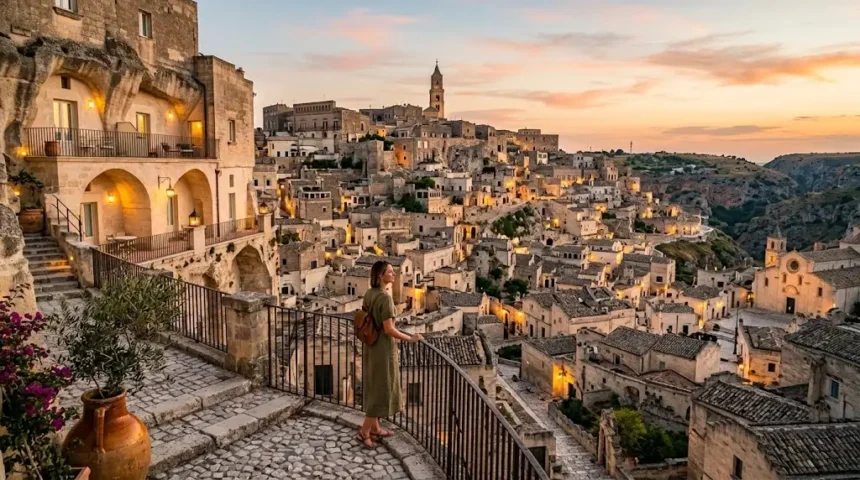
Matera is worth visiting because the city offers a rare combination of architecture, archaeology, religious history, dramatic scenery, and everyday urban life within a relatively concentrated area. The Sassi districts are carved into slopes above the Gravina ravine, creating a dense arrangement of caves, stone houses, staircases, terraces, churches, and narrow pathways. From above, the city can look almost sculpted directly from the landscape. Walking inside it reveals how interconnected the structures really are, with rooftops sometimes functioning as streets or terraces for buildings below. This layered construction makes Matera far more visually complex than a conventional historic town. Every viewpoint seems to reveal a different arrangement of the same stone world.
The history of the Sassi is equally compelling. Cave spaces and settlements around Matera have extremely deep roots, while later communities developed increasingly sophisticated homes, churches, cisterns, and communal spaces within the rock. For centuries, residents adapted to limited resources through careful use of water collection, ventilation, storage areas, and shared courtyards. In the twentieth century, difficult living conditions brought national attention and major social change, leading to relocation programs and eventual restoration. Understanding this history prevents visitors from seeing the caves only as romantic hotel rooms. The beauty of modern Matera is closely connected with a complicated story of poverty, resilience, neglect, preservation, and renewal.
Matera also offers a travel experience that feels more intimate than many larger Italian destinations. There are major attractions, but you do not need to spend every hour entering ticketed monuments. Much of the city’s value comes from walking, observing architecture, sitting at viewpoints, and noticing how light changes across pale stone surfaces. This makes Matera especially appealing to photographers and travelers who prefer atmospheric exploration over museum-heavy itineraries. Even a simple route between a church and restaurant can become memorable because of hidden stairways and unexpected perspectives. The destination encourages curiosity rather than rigid scheduling.
The city changes dramatically after day visitors leave. During peak daytime periods, major viewpoints and central lanes can become busy, but early morning and evening feel noticeably calmer. Staying overnight allows you to experience the Sassi illuminated after dark, when pathways glow softly and the city takes on an almost theatrical appearance. Dawn offers another excellent atmosphere, particularly for photographers who want quieter streets and gentle light. This difference is one of the strongest arguments for sleeping in Matera rather than visiting only as a rushed day trip. Even one night adds a completely different dimension.
Matera is also well positioned for travelers exploring southern Italy. It can be combined with destinations in Puglia such as Bari, Alberobello, Ostuni, Polignano a Mare, and Lecce, or included within a broader Basilicata route. Travelers with a rental car gain greater flexibility for countryside exploration, although reaching Matera by public transportation is also possible with careful planning. The city provides an excellent contrast to coastal destinations because its appeal is rooted in stone landscapes and ancient urban architecture. Adding Matera can make a southern Italy itinerary feel significantly more varied. It is one of those places that often becomes more memorable than travelers expected before arriving.
Explore the Sassi di Matera
The Sassi di Matera are divided primarily into Sasso Caveoso and Sasso Barisano, two historic districts that together form the visual and cultural heart of the city. Both contain cave dwellings, stone buildings, churches, narrow lanes, and stairways, but their character feels slightly different. Sasso Caveoso often appears more rugged and directly connected to the underlying rock, while Sasso Barisano contains many restored buildings, hotels, shops, and businesses. Exploring both is essential because limiting yourself to one side gives only a partial understanding of Matera. The best approach is to walk gradually between them rather than treating them as separate attractions.
Sasso Caveoso offers some of the strongest impressions of Matera’s ancient cave architecture. Here, travelers can see structures that appear to merge directly with cliffs and terraces. Several preserved interiors and museum spaces help explain how families once used rooms for sleeping, cooking, storage, animals, and domestic work. The contrast between these historic living conditions and the luxury cave hotels nearby is striking. Walking slowly through the district helps you notice entrances, drainage channels, courtyards, and architectural details that can easily be missed when focusing only on panoramic views. This area feels particularly atmospheric in the early morning.
Sasso Barisano has undergone extensive restoration and contains a broader concentration of accommodation, restaurants, artisan workshops, and cultural spaces. The district demonstrates how historic structures can be reused without entirely losing their original character. Stone stairways lead between terraces where modern businesses occupy spaces that once served very different purposes. Visitors interested in design may appreciate how contemporary architecture has been integrated into ancient settings. At night, warm lighting creates an especially attractive atmosphere. Staying here can also provide convenient access to both the historic center above and deeper parts of the Sassi.
Navigation can initially feel confusing because Matera does not follow the straightforward street pattern many travelers expect. Paths climb, descend, disappear beneath archways, and occasionally seem to lead toward a destination only to place you on a completely different level. Instead of becoming frustrated, treat this complexity as part of the experience. Offline maps can help, but they are not always perfect at showing stairs or vertical differences. Ask hotel staff for recommended walking routes and allow extra time. In Matera, getting slightly lost often leads to viewpoints and lanes you would never have planned to visit.
Avoid trying to cover every path in a single afternoon. The Sassi become more meaningful when you return to the same area at different times of day. Morning offers quiet streets, midday highlights stone textures, sunset brings warmer colors, and evening lighting emphasizes the layered architecture. Choose a few important stops but leave enough time for aimless exploration. A guided walking tour can provide valuable historical context, particularly on the first day. Afterward, independent wandering becomes easier because you understand what you are looking at rather than simply seeing a beautiful maze of stone.
Stay in a Matera Cave Hotel
Sleeping in a cave hotel in Matera can transform a sightseeing trip into a more immersive experience. Many properties have restored former cave dwellings while preserving rough stone walls, carved ceilings, niches, and irregular floor plans. Modern amenities are often introduced carefully so the rooms remain comfortable without looking like standard hotels built inside artificial caves. Depending on the property, you may find elegant bathtubs, atmospheric lighting, handmade furniture, terraces, and views across the Sassi. The sensation of waking inside a centuries-old stone environment is unlike staying in a conventional city hotel. For many visitors, this becomes one of the most memorable parts of Matera.
However, cave accommodation should be selected carefully. Original rock interiors can mean fewer windows, unusual ventilation, cooler temperatures, and naturally higher humidity than modern rooms. Some travelers love this atmosphere, while others may find dark cave interiors uncomfortable after several nights. If natural light matters to you, look for rooms with large entrances, external windows, or private terraces. Do not assume photos of one spectacular suite represent every room category within the property. Read individual room descriptions and confirm features before booking if something is particularly important.
Accessibility is another major consideration. Many cave hotels are located deep within the Sassi, where cars cannot reach the entrance directly. Reaching the property may involve stairs, slopes, cobbled paths, and carrying luggage for part of the journey. Some hotels arrange porter services or provide detailed arrival instructions, which can be extremely helpful. Travelers with mobility limitations should ask about step-free access before booking rather than relying on general location descriptions. A beautiful room becomes less enjoyable if reaching it creates constant physical difficulty. Matera’s historic architecture naturally limits what can be changed.
Location should match the type of experience you want. Staying deep in Sasso Caveoso can provide extraordinary atmosphere and quiet mornings, while a hotel closer to the upper historic center may make restaurants and transportation easier to access. Sasso Barisano offers a useful balance between historic character and visitor services. Some travelers prefer staying above the Sassi in a conventional hotel while visiting cave properties for meals or spa experiences. There is no requirement to sleep underground simply because you are visiting Matera. Comfort should remain more important than completing a travel trend.
Booking early can be useful during popular periods because distinctive cave rooms have limited availability. Couples often prioritize romantic suites, while solo travelers may find smaller cave rooms more affordable. Families should verify room layouts because historical spaces do not always follow standard hotel configurations. Breakfast can be another memorable feature when served in vaulted stone rooms or on terraces overlooking the Sassi. Whether you choose luxury or simplicity, look for a property that preserves a sense of place. The best Matera accommodation makes you feel connected to the city rather than merely sleeping near it.
Visit Matera Cathedral and Rock Churches
Matera Cathedral, dedicated to the Madonna della Bruna and Saint Eustace, stands prominently above the Sassi and provides one of the city’s most recognizable skyline landmarks. Its elevated position makes it visible from numerous viewpoints, especially around Sasso Barisano and Sasso Caveoso. Reaching the cathedral requires climbing through historic streets, but the surrounding views reward the effort. The exterior reflects medieval architectural traditions, while the interior contains decorative elements from later periods. This mixture of styles reflects Matera’s long religious history. Even travelers who normally limit church visits should consider including the cathedral because of its setting and connection to the city.
The area around Piazza Duomo is equally worthwhile. From nearby terraces and lanes, visitors can look across dense layers of stone houses and toward the ravine. Early morning is especially attractive because the square is quieter and light often reveals architectural details clearly. The upper location also provides useful orientation before descending into the Sassi. Travelers can see how the districts spread below and understand why moving through Matera involves so many changes in elevation. Spending a few minutes simply studying the landscape can make later navigation much easier. The cathedral district works well as the starting point for a walking day.
Matera’s rock churches, or chiese rupestri, offer a completely different religious experience. Rather than monumental buildings constructed above ground, these spaces were carved directly into rock and often contain surviving frescoes. Their interiors reveal how religious communities adapted natural caves into sacred environments. Some churches are small and intimate, while others contain more complex architectural features. Conditions and access can vary, so it is useful to identify a few priority sites rather than assuming every church will be open at the same time. A combination of one or two rock churches usually provides enough context for first-time visitors.
The Church of Santa Maria de Idris is among the most visually distinctive because it is built into a rocky outcrop overlooking Sasso Caveoso. Approaching the site demonstrates how closely Matera’s religious architecture is connected to the landscape. Nearby cave churches provide additional opportunities to see frescoes and carved interiors. The terrain can be steep and irregular, making comfortable footwear particularly important. Interior photography rules should always be respected because these spaces contain fragile historic art. Visiting quietly also helps preserve the atmosphere of places that once served as active spiritual environments.
Rock churches are best understood with some historical context. A guide can explain iconography, architectural changes, preservation challenges, and the role of religious communities over different periods. Without that background, visitors may admire faded frescoes without understanding their significance. If you prefer independent travel, reading basic information before entering can improve the experience dramatically. Avoid trying to visit every religious site in one day, as interiors can begin blending together. Combining churches with outdoor viewpoints and neighborhood walks creates a more balanced and memorable itinerary.
Discover Casa Grotta and Matera’s Underground History
A Casa Grotta, or preserved cave dwelling, is one of the most useful attractions for understanding how people actually lived in the Sassi. These reconstructed interiors typically show sleeping areas, household objects, tools, storage spaces, kitchens, and sections once shared with animals. The rooms may appear surprisingly small compared with the number of functions they needed to serve. Seeing these spaces transforms Matera from an architectural curiosity into a human story. Visitors begin to understand why cave living could offer advantages such as temperature stability while also creating serious challenges related to sanitation, overcrowding, and ventilation.
Several preserved cave-house experiences exist, and visiting one or two is usually enough for most travelers. Displays often recreate domestic conditions from the period before large-scale relocation programs changed life in the Sassi. Furniture, religious objects, agricultural tools, and food-storage equipment provide details that panoramic viewpoints cannot communicate. Listening to an audio explanation or joining a guided visit can make these objects easier to interpret. The attraction may be relatively small, but the context it provides affects how you see everything else afterward. It is therefore worth visiting early in your stay rather than saving it for the final hour.
Matera’s underground history extends beyond cave homes. Cisterns, drainage channels, carved rooms, and water-management systems reveal extraordinary adaptation to a dry landscape. Rainwater was collected, redirected, filtered, and stored through interconnected systems designed to support dense settlement. Understanding this infrastructure adds another layer to the city’s architectural significance. What initially appears chaotic was actually shaped by practical needs and environmental knowledge. Tours that focus on underground spaces can be particularly interesting for travelers who enjoy engineering, architecture, or urban history. They demonstrate that Matera’s survival depended on far more than simply carving rooms into rock.
One of the city’s best-known underground features is the Palombaro Lungo, a vast historic cistern located beneath Piazza Vittorio Veneto. Exploring the space reveals enormous rock-cut chambers that once formed part of Matera’s water-storage network. The contrast between the busy square above and the cavernous infrastructure below is striking. Short visits can provide a memorable break from outdoor walking, especially during hot weather. However, underground spaces can feel cool, damp, or enclosed, so travelers sensitive to confined environments should consider their comfort level. The engineering achievement remains impressive regardless of visit length.
After exploring cave homes and water systems, walk through the Sassi again with fresh perspective. Openings in walls begin to look less decorative when you understand how caves were ventilated and used. Sloped roofs and channels make more sense once you recognize the importance of collecting rainwater. Courtyards become easier to imagine as shared social and working spaces. This is one reason Matera rewards travelers who combine sightseeing with interpretation. The city’s beauty is immediate, but its deeper significance emerges gradually as you learn how people adapted to an unusually demanding environment.
Find the Best Views in Matera
Matera is filled with viewpoints, and finding the best views in Matera is one of the easiest ways to structure your exploration. Belvedere terraces around the upper city provide sweeping perspectives over the Sassi, allowing visitors to see stone roofs, church towers, staircases, and the ravine together. These elevated points are useful early in the trip because they help you understand the overall layout. They are equally rewarding at sunset when pale stone surfaces begin taking on warmer tones. Photographers should revisit favorite viewpoints because cloud cover and light can transform the same scene dramatically within a few hours.
Belvedere Luigi Guerricchio and other overlooks near central squares provide convenient views without requiring strenuous hiking. They are easy to reach while moving between restaurants, shops, and historic streets. Because of their accessibility, these terraces can become crowded during sunset periods. Arriving slightly earlier allows you to choose a comfortable position and observe changing light rather than appearing only for the final few minutes. Morning can be even more peaceful. If photography is a priority, early hours often provide both softer light and fewer people.
Another famous perspective comes from across the Gravina ravine in the Murgia Materana landscape. From the opposite side, the entire Sassi complex appears spread across the cliff, making its relationship with the natural environment much easier to appreciate. The view is particularly dramatic around sunrise and sunset. Reaching some lookout areas may involve driving, organized transportation, or hiking depending on the route and current access arrangements. Travelers should check conditions before setting out. The exposed landscape can become hot, windy, or slippery depending on season and weather.
Walking toward Murgia viewpoints can be rewarding for travelers who enjoy hiking, but the route should not be treated like an ordinary city stroll. Trails can involve steep descents, exposed sections, uneven terrain, and a climb back toward the urban area. Carry water, use appropriate footwear, and avoid starting during the hottest part of the day. Weather conditions can also change quickly around the ravine. A guided hike may be valuable if you want geological, archaeological, and cultural interpretation. Travelers with limited time can still enjoy excellent views without completing the full crossing.
Nighttime provides yet another perspective. Once the Sassi are illuminated, thousands of warm lights appear across walls, stairs, terraces, and cave entrances. The city can resemble an elaborate stone stage set, particularly from elevated terraces. Take an evening walk after dinner rather than returning directly to your hotel. Streets become quieter, and cooler temperatures can make walking more comfortable during warmer months. Even if you have photographed the same scene during daylight, the nighttime version feels entirely different. Matera’s constant transformation through light is one reason photographers often wish they had booked an additional night.
Discover Hidden Gems in Matera
The best hidden gems in Matera are often not secret places at all but corners that visitors miss because they hurry between famous attractions. Small staircases, dead-end terraces, courtyard entrances, artisan workshops, neighborhood churches, and quiet lanes can be more atmospheric than heavily photographed viewpoints. Give yourself at least one period without a fixed route. Put away the attraction checklist and follow streets that look interesting. Because the Sassi are layered vertically, a seemingly insignificant staircase can lead to an entirely new perspective. Wandering works especially well early in the morning when the city is quieter.
Artisan shops provide another rewarding side of Matera. Local crafts can include ceramics, carved objects, textiles, decorative items, and products inspired by the city’s stone architecture. Small workshops often offer a more personal experience than large souvenir stores. Ask about how items are made rather than focusing only on price. Buying directly from local makers can give you a more meaningful souvenir and support independent businesses. Even when you do not purchase anything, browsing these spaces provides a glimpse into contemporary creative life. Matera is not frozen in history; it remains a living city adapting old spaces to modern uses.
Traditional bakeries and food shops are also worth seeking out. Matera is strongly associated with regional bread, and local bakeries can provide an inexpensive way to experience everyday food culture. The distinctive loaves often have thick crusts and substantial texture, making them different from softer commercial bread. Pairing bread with cheese, cured products, vegetables, or simple local dishes can create an excellent lunch. Food experiences do not always require formal restaurants. Some of the most memorable flavors come from small shops encountered while walking.
Quiet churches outside the major tourist circuit can provide unexpected highlights. Rome may be more famous for overwhelming church interiors, but Matera contains intimate religious spaces where architecture feels closely connected with surrounding neighborhoods. Opening hours can be unpredictable, so treat access as a bonus rather than building an entire itinerary around one small church. When doors are open, enter respectfully and spend a few minutes observing details. These unscheduled moments often become meaningful precisely because they were not part of a checklist. Travel becomes richer when there is room for discovery.
Another hidden pleasure is simply experiencing the Sassi during poor or unusual weather. Light rain can darken stone surfaces and create dramatic reflections, while mist may soften the ravine and make the city feel even more ancient. Instead of treating every cloudy period as ruined sightseeing, adjust the activity. Visit underground attractions, cafés, small museums, or workshops and return outside when conditions improve. Matera’s stone architecture can look extraordinary under changing skies. Some of the best photographs may come from moments when the weather was not originally considered ideal.
What to Eat in Matera
Food is an important part of a Matera travel experience, especially because Basilicata has a strong culinary identity that differs from more familiar Italian regions. Meals often emphasize simple ingredients such as bread, legumes, vegetables, pasta, cheese, olive oil, peppers, and locally raised meats. The cuisine can feel rustic, hearty, and deeply connected with agricultural traditions. Travelers accustomed to pizza and pasta as universal symbols of Italian food may discover dishes that feel much more regional. This makes Matera an excellent place to order specialties you do not recognize rather than relying only on familiar favorites.
Pane di Matera is one of the city’s signature foods. The bread is traditionally associated with durum wheat and has a distinctive shape, substantial crust, and dense interior. Historically, bread held enormous practical and cultural importance because families needed food that could remain useful over time. Today, bakeries continue to produce large loaves that pair beautifully with local cheeses, vegetables, soups, and olive oil. Buying a small portion or sharing a loaf can be more practical for travelers than carrying an entire large bread. Visiting a bakery also provides a simple glimpse into everyday local routines.
Pasta dishes frequently reflect Basilicata’s agricultural traditions. Handmade shapes may be combined with breadcrumbs, vegetables, legumes, peppers, cheese, or simple sauces rather than extremely heavy preparations. Peperoni cruschi, thin dried peppers that become crisp when prepared, are particularly associated with the region and may appear as toppings or accompaniments. Their texture and concentrated flavor add something distinctive to otherwise simple dishes. Ask restaurant staff about regional specialties rather than assuming the most familiar menu option will provide the best experience. Matera is a place where local recommendations can significantly improve a meal.
Cheese, cured meats, and vegetable dishes also deserve attention. Southern Italian meals can be particularly satisfying when several smaller plates are shared, although solo diners can still order combinations suited to one person. Restaurants inside the Sassi range from casual trattorias to sophisticated dining rooms built into caves. Atmospheric interiors can add to the experience, but do not choose solely according to appearance. Some of the best meals may come from less dramatic restaurants that focus more heavily on regional cooking. Reserving popular establishments can be useful during busy weekends and high-season evenings.
Wine from Basilicata can complement regional food, with Aglianico-based wines among the best-known local styles. Travelers interested in wine can ask for recommendations by the glass rather than ordering an entire bottle when dining alone. Dessert options may feature almonds, chocolate, ricotta, fruit, or traditional baked sweets depending on the restaurant. Coffee after meals remains common, and an evening espresso can feel particularly satisfying after walking through the Sassi. Food should be paced as slowly as the sightseeing. Matera becomes more enjoyable when meals are treated as part of the destination rather than simply interruptions between attractions.
Best Time to Visit Matera
The best time to visit Matera for many travelers is spring or early autumn, when daytime temperatures can be more comfortable for long walks through steep streets. April, May, September, and October often provide a useful balance between weather and visitor activity, although exact conditions vary from year to year. Because sightseeing involves considerable outdoor walking, moderate temperatures make a noticeable difference. Spring can bring greenery and pleasant light around the ravine. Autumn may provide warm days with cooler evenings. Both seasons suit photography and active exploration particularly well.
Summer attracts many visitors but can be hot, especially during the middle of the day. Stone surfaces absorb heat, shade is limited on some routes, and climbing stairways can become physically demanding. If visiting during hotter months, begin sightseeing early, take a long lunch or indoor break, and return outside later in the afternoon. Carry water and use sun protection. Staying in a cave hotel can provide naturally cooler interiors, although modern climate control varies. Evening becomes especially enjoyable in summer when temperatures drop and outdoor terraces fill with activity.
Winter provides a quieter side of Matera. Visitor numbers can decrease, accommodation may offer better value, and misty weather can create dramatic scenery. However, shorter daylight and colder conditions change the rhythm of the trip. Stone pathways can become slippery when wet, so footwear with good grip matters. Some attractions, restaurants, or tours may operate reduced schedules compared with peak months. Travelers who enjoy atmospheric photography and slower city breaks may find winter particularly appealing despite the limitations.
Rain can occur in any season, and Matera remains worth exploring when weather is imperfect. Underground attractions, churches, cave museums, cafés, and restaurants provide alternatives during heavy showers. A compact umbrella can be useful, although a waterproof jacket may be easier on narrow stairways. Watch footing carefully because smooth stone can become slippery. If a major viewpoint is hidden by cloud, try returning later rather than abandoning it entirely. Weather often changes enough to create different conditions within the same day.
Major holidays and event periods can increase demand significantly. Accommodation in distinctive cave properties may sell out earlier than conventional rooms, while restaurants can become busier during weekends. If you have fixed dates, book your preferred hotel before constructing every detail of the itinerary. Matera is enjoyable year-round when expectations match the season. The ideal month is less important than planning around heat, daylight, crowds, and your preferred travel pace. Comfortable walking conditions should remain one of the main considerations because exploring on foot is central to the experience.
How Many Days Do You Need in Matera?
For most first-time visitors, two full days in Matera creates a comfortable introduction. This allows time to explore both Sassi districts, visit a cave dwelling, see the cathedral and rock churches, enjoy several viewpoints, and experience the city after dark. Travelers arriving late on the first day should consider staying at least three nights if they want two complete sightseeing days. Matera is physically demanding enough that rushing from morning until night can reduce enjoyment. Two days provides enough flexibility for slow meals and unplanned wandering without forcing you to choose only the most famous attractions.
One night can work if Matera is part of a tightly scheduled southern Italy road trip. Arrive early enough to explore the Sassi during daylight, stay through sunset and evening, then use the following morning for major interiors before continuing onward. This approach captures more atmosphere than a day trip because nighttime Matera is one of the highlights. However, it leaves little margin for poor weather or unexpected closures. Travelers who are especially interested in photography, architecture, or history may find one night frustratingly short. The city becomes more rewarding once you stop watching the clock.
Three days allows a deeper experience. You can dedicate one day to the Sassi and cave history, another to churches, viewpoints, museums, and food, then spend the third exploring Murgia Materana or taking a slower countryside excursion. Extra time also makes it easier to revisit favorite viewpoints at sunrise or sunset. Photographers particularly benefit from this flexibility because light can change dramatically. Three days is also helpful during summer when you may want to avoid strenuous walking in the hottest afternoon hours. Slower sightseeing becomes a practical response to weather rather than a luxury.
Travelers combining Matera with Puglia should avoid squeezing too many towns into consecutive days. It may be tempting to visit Alberobello, Ostuni, Polignano a Mare, Bari, and Matera within a short period, but constant packing and driving can make the trip exhausting. Choose fewer bases and explore them properly. Matera deserves at least enough time to experience both daylight and evening. If you are traveling by public transportation, additional buffer may be useful because connections can require more planning than journeys between major northern Italian cities. Efficient routing matters more than accumulating destinations.
A long weekend in Matera can feel surprisingly complete. Arrive without an aggressive checklist, stay somewhere atmospheric, book one guided experience, and allow the rest of the trip to unfold around walking and meals. The city does not require five major attractions every day to feel worthwhile. Much of its value comes from noticing details, returning to viewpoints, and experiencing how neighborhoods change after tour groups leave. This makes Matera especially suitable for travelers who enjoy slower cultural trips. Two to three days is often the sweet spot for a first visit.
Getting to Matera and Getting Around
Reaching Matera requires slightly more planning than visiting major Italian cities connected directly by high-speed rail. Travelers often arrive through Bari because it provides a major airport and useful transportation connections. From Bari, regional rail or bus options can connect toward Matera, though services and departure points should be checked carefully when planning. Private transfers and rental cars provide additional flexibility. Travelers arriving from other parts of southern Italy may use combinations of trains, buses, or driving. The best option depends on luggage, budget, schedule, and whether Matera is part of a larger road trip.
Driving can be convenient for travelers exploring Basilicata and Puglia, but having a car inside Matera’s historic center is usually unnecessary. Large portions of the Sassi are pedestrianized or difficult to access by ordinary vehicles. Parking outside restricted areas and walking to accommodation is therefore common. Hotels often provide detailed instructions about recommended parking areas and luggage assistance. Contact the property before arrival rather than improvising after reaching narrow central streets. Italian restricted-traffic zones can lead to fines when entered without authorization. Following accommodation guidance can save significant frustration.
Once settled, walking is the primary way to experience the city. Matera is not particularly large geographically, but elevation makes distances deceptive. Stairs, slopes, stone pathways, and uneven surfaces mean a short route can require more physical effort than expected. Comfortable shoes with reliable grip are far more important than fashionable footwear. Travelers with mobility concerns should carefully choose accommodation and sightseeing routes because accessibility varies dramatically. Taxis can help between certain upper areas, but they cannot eliminate all walking within the historic Sassi.
Public transportation can assist with movement around the broader modern city, but most first-time sightseeing remains concentrated within walkable historic areas. Organized tours may provide transportation to Murgia Materana or surrounding countryside. If you want to visit remote viewpoints, farms, or other Basilicata destinations, a rental car becomes more valuable. Avoid renting one solely for exploring the Sassi because it will spend much of the visit parked. Transportation planning should reflect what you intend to do beyond central Matera. For a two-day city-focused visit, arriving without a car can be completely practical.
Luggage deserves special planning because dragging a large suitcase across uneven steps can quickly become unpleasant. Pack lighter if you are staying deep inside the Sassi, or ask whether your hotel offers porter assistance. A small wheeled case works better on smoother sections, while backpacks can be easier on stair-heavy routes if physically comfortable for you. Keep important directions available offline in case mobile reception becomes inconsistent among thick stone walls. Arriving during daylight can also make finding cave accommodation much easier. A smooth arrival sets the tone for the rest of the trip.
Hidden Day Trips and Experiences Around Matera
The landscape around Matera provides several opportunities for travelers who have more than two days. Murgia Materana is the most obvious extension because it lies directly across the ravine and contains archaeological sites, cave churches, trails, and panoramic views toward the Sassi. Walking through this environment shows how closely the historic city is connected with surrounding countryside. The perspective back toward Matera is especially memorable near sunrise and sunset. Travelers can explore independently where appropriate or join guided experiences for additional context. The exposed terrain requires water, sturdy shoes, and weather awareness.
Cycling and e-bike tours can provide another way to explore beyond the central streets. These activities may combine countryside, viewpoints, rural roads, or regional food experiences depending on the route. E-bikes can make elevation more manageable, although basic cycling confidence remains important. Guided options reduce navigation concerns and can introduce places that would be difficult to find independently. Always choose routes appropriate for your fitness and experience. Matera’s surrounding terrain can appear gentle from a distance but may involve rough surfaces and significant climbs.
Food-focused excursions are particularly worthwhile in a region with strong agricultural traditions. Farm visits, olive oil experiences, cheese tastings, bread-making, or cooking classes can connect regional cuisine with the landscape that produces it. These activities provide a welcome change after several days focused on architecture and churches. They can also be social experiences for solo travelers who want structured interaction. Ask what is genuinely included before booking, especially transportation and meals. Smaller experiences often feel more personal than large commercial tours.
Travelers with a car can also use Matera as a base for exploring nearby towns and countryside in Basilicata. The region receives fewer international visitors than some neighboring parts of Italy, which can make day trips feel quieter and more local. Avoid trying to drive to several distant towns in one day simply because the roads appear short on a map. Mountain and rural routes can take longer than expected. Choose one meaningful destination and allow time for lunch and wandering. Slow regional exploration fits Matera better than aggressive road-trip scheduling.
If your broader itinerary includes Puglia, Matera can also connect naturally with towns such as Alberobello or Bari, although these are often better treated as separate overnight destinations rather than rushed return trips. Consider where you are traveling next before booking an unnecessary day excursion. A one-way route through southern Italy can reduce backtracking and provide more relaxed travel days. Matera works best as part of a carefully designed regional journey. The city itself deserves priority before surrounding attractions begin competing for your time.
Practical Matera Travel Tips
Start exploring early. The Sassi are particularly beautiful in the morning, and lower visitor numbers make narrow streets easier to navigate. Early hours also provide cooler conditions during warmer months. Use the morning for steep walks, viewpoints, and major outdoor exploration, then move indoors for museums, churches, lunch, or a rest during midday. Return outside later when light becomes warmer. This daily rhythm works especially well in Matera because the city’s appearance changes dramatically across the day. You gain more variety without needing additional attractions.
Wear shoes designed for walking rather than appearance alone. Smooth stone, steep stairways, uneven paving, and long descents can become uncomfortable quickly. A shoe with secure grip is particularly valuable after rain. Carry water because you may spend more time climbing than expected. During summer, sun protection is equally important because many viewpoints have limited shade. Matera is physically manageable for most reasonably mobile travelers, but treating it like a flat city can lead to unnecessary fatigue. Take breaks before exhaustion makes sightseeing less enjoyable.
Book only the experiences that genuinely require reservations. Cave hotels, popular restaurants, guided tours, and certain limited-capacity activities may benefit from advance planning. However, avoid filling every hour before arrival. Matera is one of those destinations where spontaneous wandering adds significant value. Leave at least one morning or afternoon without a strict schedule. You may discover an artisan workshop, viewpoint, church, or café you want to explore longer. Flexibility allows the city to surprise you rather than forcing it to fit a predetermined timetable.
Ask before photographing people, particularly artisans at work, residents, or individuals involved in religious activities. The Sassi are highly photogenic, but they remain neighborhoods and workplaces rather than open-air film sets. Avoid standing in private doorways or blocking narrow passages for extended photo sessions. Drones may be subject to restrictions and should never be flown casually around historic areas without understanding applicable rules. Respectful photography creates better interactions. The city provides endless architectural subjects without requiring intrusive behavior.
Finally, spend at least one evening walking through the Sassi after dinner. The illuminated city is completely different from its daytime appearance, and temperatures are often more comfortable. Keep navigation simple and remain aware that some routes involve dark stairs or uneven surfaces. A small phone light can be useful without needing to illuminate every street dramatically. Return to a viewpoint you liked earlier and compare the scene. Matera is at its best when experienced repeatedly rather than only once from each attraction.
Conclusion
Matera is one of southern Italy’s most distinctive destinations because its beauty comes from the relationship between architecture, landscape, history, and human adaptation. The Sassi districts are not simply picturesque stone neighborhoods; they represent centuries of living within and around rock-cut spaces. Cave dwellings, churches, cisterns, courtyards, and stairways reveal how communities responded creatively to environmental conditions. Understanding that history makes the city significantly more meaningful. A first visit should therefore combine scenic viewpoints with at least a few interpretive attractions.
Staying in a Matera cave hotel can deepen the experience, but comfort and accessibility should guide your choice. Some travelers will love sleeping surrounded by stone walls and atmospheric lighting, while others may prefer brighter conventional rooms. Location matters because accommodation deep within the Sassi can involve substantial stairs. Ask about luggage assistance and access before arrival. The right hotel should improve your trip rather than create a daily obstacle. Whether you stay inside a cave or above the historic districts, choose somewhere that encourages you to experience Matera after day visitors leave.
Two to three days is ideal for most first-time travelers. This gives enough time for Sasso Caveoso, Sasso Barisano, Matera Cathedral, rock churches, a Casa Grotta, underground cisterns, viewpoints, local food, and slower exploration. Additional time can be used for Murgia Materana, cultural tours, or countryside experiences. Avoid treating Matera as a quick photo stop between other Italian destinations. Its strongest qualities become apparent only after you spend enough time walking and observing. Morning and evening are particularly rewarding.
Food should also be part of the itinerary rather than an afterthought. Try Pane di Matera, regional pasta, peperoni cruschi, local cheeses, vegetables, and Basilicata wines. Small bakeries and trattorias can provide experiences that feel just as memorable as formal restaurants inside spectacular caves. Ask about regional specialties and allow meals to slow down the day. Matera’s culinary identity is closely connected with the same rural landscape that shaped its architecture. Understanding both provides a fuller sense of place.
Ultimately, the best Matera travel experience comes from resisting the urge to hurry. Walk without a destination sometimes, revisit viewpoints, enter small churches when doors happen to be open, and experience the city under different light. Prepare for stairs, choose accommodation carefully, and leave enough flexibility for unexpected discoveries. Matera’s famous cave hotels and major sights provide compelling reasons to visit, but its quieter lanes and hidden corners often create the strongest memories. Give the city time, and it becomes far more than one beautiful photograph of the Sassi.
Frequently Asked Questions About Matera
How many days do you need in Matera?
Two full days is ideal for most first-time visitors because it allows enough time to explore both Sassi districts, major churches, cave dwellings, viewpoints, and local restaurants without rushing. Three days is even better if you want to visit Murgia Materana or add a countryside experience.
Is staying in a cave hotel in Matera worth it?
A cave hotel can be one of the most memorable parts of visiting Matera because it places you directly inside the city’s historic architecture. However, check natural light, ventilation, stairs, accessibility, and room layout carefully because cave accommodation varies significantly.
What is the best time to visit Matera?
Spring and early autumn are particularly comfortable because temperatures are generally better suited to long days of walking. Summer can be hot, while winter offers quieter streets and atmospheric scenery but shorter daylight and cooler conditions.
Can you visit Matera without a car?
Yes, Matera can be explored without a car because most major attractions in the historic center are reached on foot. A car becomes more useful if you want to explore the surrounding countryside or include Matera within a broader Basilicata and Puglia road trip.
Is Matera difficult to walk around?
Matera involves many stairs, slopes, uneven stone paths, and changes in elevation, so it can feel physically demanding despite its compact size. Comfortable shoes, light luggage, regular breaks, and carefully chosen accommodation can make exploring much easier.