

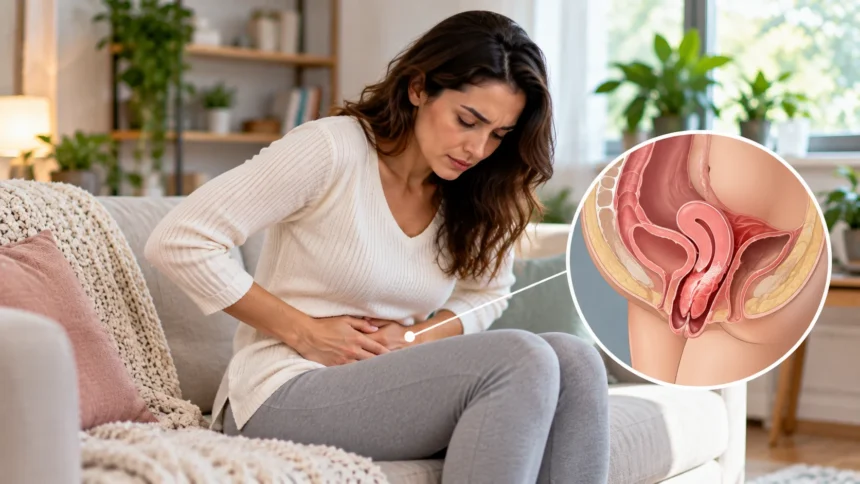
A prolapse happens when an organ or structure shifts downward from its usual position because the tissues supporting it have weakened or stretched. In discussions about pelvic health, the term usually refers to pelvic organ prolapse, where the bladder, uterus, vaginal walls, or rectum move toward or into the vaginal canal. Symptoms can range from barely noticeable pressure to a more obvious bulge.
Pelvic organ prolapse is relatively common, particularly after pregnancy and childbirth or as supporting tissues change with age. However, symptoms and severity vary significantly from one person to another. Understanding what prolapse is, what may contribute to it, and which management options are available can make the condition feel less confusing and help you decide when professional assessment is appropriate.
What Is a Prolapse?
Pelvic organ prolapse occurs when the muscles, ligaments, and connective tissues supporting the pelvic organs are no longer providing enough support. One or more organs can then descend toward the vagina. The amount of movement can range from mild internal changes to a noticeable bulge that reaches or extends beyond the vaginal opening.
The pelvic floor normally works like a supportive base underneath the bladder, uterus, bowel, and other pelvic structures. Pregnancy, childbirth, aging, repeated pressure, and other factors can affect these tissues over time. When support decreases, gravity and pressure from everyday activities may contribute to the downward movement of pelvic structures.
Having a prolapse does not necessarily mean symptoms will continually worsen or that surgery will be required. Some people have mild prolapse with few symptoms, while others experience pressure, urinary difficulties, bowel changes, or discomfort that affects daily activities. A healthcare professional can assess the type and degree of prolapse and discuss appropriate management options.
What Are the Different Types of Pelvic Organ Prolapse?
An anterior vaginal wall prolapse occurs when the bladder pushes against the front wall of the vagina. This is sometimes referred to as a cystocele. People may notice pelvic pressure, a vaginal bulge, difficulty completely emptying the bladder, frequent urination, or changes in urinary control, although symptoms vary considerably between individuals.
A posterior vaginal wall prolapse occurs when the rectum presses toward the back wall of the vagina and may be called a rectocele. Some people experience difficulty with bowel movements, a feeling of incomplete emptying, or vaginal pressure. Symptoms can become more noticeable when constipation or repeated straining increases pressure inside the abdomen and pelvis.
Uterine prolapse occurs when the uterus descends into the vaginal canal, while vaginal vault prolapse can occur after removal of the uterus. More than one type of prolapse can happen at the same time. Because different pelvic organs and tissues may be involved, an examination is often needed to identify the specific type and determine suitable treatment.
What Does a Prolapse Feel Like?
A feeling of heaviness, pressure, or dragging in the pelvis is one of the commonly reported prolapse symptoms. Some people describe the sensation as though something is dropping downward inside the vagina. Symptoms may become more noticeable later in the day, after prolonged standing, or following activities that increase abdominal pressure.
A vaginal bulge can also occur. It may feel like a small lump or soft tissue near the vaginal opening and can sometimes become more noticeable during coughing, lifting, straining, or physical activity. The bulge may reduce when lying down because the downward pressure on the pelvic organs changes with body position.
Not everyone experiences pain with prolapse. Some people mainly notice pressure, urinary changes, bowel difficulties, or discomfort during certain activities. Symptoms can also fluctuate from day to day, so the size of the prolapse alone does not always reflect how much it affects someone’s quality of life or everyday function.
What Causes Pelvic Organ Prolapse?
Pregnancy and vaginal childbirth are important factors associated with pelvic organ prolapse because they can stretch or strain the muscles and connective tissues supporting the pelvis. The likelihood may increase after multiple births, although prolapse can also occur in people who have never given birth. Individual tissue strength and other factors also influence risk.
Aging and menopause may contribute because pelvic tissues naturally change over time. Reduced estrogen levels after menopause can influence vaginal and connective tissues, while muscle strength may also decline with age. These changes do not mean prolapse is inevitable, but they can reduce the amount of support available to pelvic organs.
Repeated increases in abdominal pressure can contribute as well. Chronic constipation, frequent straining, persistent coughing, heavy lifting, and higher body weight may place additional stress on pelvic support structures. Genetics and connective tissue characteristics can also play a role, meaning some people may be more susceptible even without obvious lifestyle-related causes.
Can Exercise Cause or Worsen a Prolapse?
Exercise itself is not automatically harmful for someone with pelvic organ prolapse. Physical activity provides important health benefits, and many people with prolapse can continue exercising after making appropriate adjustments. The important factor is how a particular activity affects symptoms, pressure management, breathing, and pelvic floor control.
Some movements involving heavy loads, repeated jumping, or strong straining may make symptoms more noticeable for certain individuals. Holding your breath during lifting can also increase pressure inside the abdomen. Using manageable resistance, exhaling during effort, and paying attention to symptoms can help you understand which activities feel comfortable and which may need modification.
Gentle mobility may also be incorporated into a balanced routine when appropriate. For example, comfortable static stretching can support general flexibility, although stretching itself does not correct a prolapse. If exercise repeatedly increases bulging, pressure, urinary symptoms, or discomfort, a pelvic health professional can help adapt your routine more specifically.
How Can Pelvic Floor Exercises Help?
Pelvic floor muscle training may help improve symptoms for some people with pelvic organ prolapse, particularly when the muscles can be contracted and relaxed effectively. These muscles contribute to support around the bladder, bowel, vagina, and pelvic organs. Training usually focuses on coordinated contractions rather than simply squeezing as strongly as possible.
Correct technique matters because many people are unsure whether they are actually engaging the intended muscles. A pelvic floor contraction generally involves a gentle lifting sensation around the vaginal and anal openings without strongly tightening the buttocks, thighs, or abdomen. Breathing should remain comfortable instead of being held throughout the contraction.
Pelvic floor exercises are not appropriate in exactly the same way for everyone. Some people may already have excessive pelvic muscle tension or difficulty relaxing, so repeatedly performing strong contractions may not address their main problem. Assessment from a pelvic health physiotherapist can clarify whether strengthening, relaxation, coordination, or another approach is most appropriate.
What Can Help Relieve Prolapse Symptoms at Home?
Managing constipation can reduce repeated straining and unnecessary downward pressure on the pelvic floor. Drinking enough fluids, eating appropriate sources of dietary fiber, staying physically active, and responding to natural bowel urges may support easier bowel movements. Persistent constipation deserves medical attention because addressing the underlying cause can be an important part of prolapse management.
Reducing unnecessary heavy lifting may also help when particular tasks trigger pressure or bulging. When lifting cannot be avoided, using good technique and breathing out during the effort may reduce excessive straining. Breaking heavy loads into smaller amounts can sometimes make everyday activities more manageable while you develop a longer-term treatment plan.
Some people notice that symptoms improve when they take short periods of rest or lie down after prolonged standing. This does not mean complete inactivity is necessary. Instead, alternating demanding activities with comfortable movement and rest can help manage symptoms while allowing you to remain active within a level that feels appropriate.
What Is a Pessary and How Can It Help?
A pessary is a removable device placed inside the vagina to help support pelvic organs. Pessaries are available in different shapes and sizes, and they can be useful for people who want non-surgical symptom management. Some people use them continuously, while others wear them mainly during exercise, work, or other activities that make symptoms more noticeable.
Proper fitting is important because a pessary that is uncomfortable, repeatedly falls out, or causes irritation may not be the right size or shape. A healthcare professional can fit the device and explain how it should be used and cared for. Some people are able to remove and clean their pessary themselves, while others attend scheduled clinical appointments.
A pessary does not permanently repair weakened support tissues, but it can provide mechanical support and reduce symptoms such as heaviness or bulging. It may be used alongside pelvic floor therapy and other conservative strategies. Pessaries can also be useful for people who wish to avoid or delay surgery for personal or medical reasons.
When Is Surgery Considered for Prolapse?
Surgery may be considered when prolapse symptoms significantly affect daily life and conservative approaches have not provided enough relief. The decision depends on the type of prolapse, symptom severity, overall health, previous procedures, future pregnancy plans, and individual preferences. Having prolapse does not automatically mean surgery is necessary.
Different surgical procedures are available depending on which structures require support. Some operations repair the vaginal walls, while others support the uterus or top of the vagina. A specialist can explain the expected benefits, recovery requirements, possible complications, and the likelihood that symptoms could return in the future.
It is reasonable to discuss both surgical and non-surgical options before making a decision. Some people achieve satisfactory symptom control with pelvic floor therapy, pessary use, lifestyle changes, or a combination of approaches. Others prefer surgery when symptoms remain disruptive despite appropriate conservative management and they understand the potential benefits and limitations.
When Should You See a Healthcare Professional?
Arrange an assessment if you notice a persistent vaginal bulge, pelvic pressure, difficulty emptying your bladder or bowel, or symptoms that interfere with exercise, work, intimacy, or normal daily activities. These symptoms can have several possible explanations, so an examination can help determine whether prolapse is actually present.
You should also seek care if urinary or bowel symptoms are becoming progressively worse. Difficulty passing urine, repeated urinary infections, significant constipation, bleeding, or unexplained pelvic pain may require additional evaluation. Do not assume every pelvic symptom is caused by prolapse, especially when new or unusual symptoms develop.
Urgent medical care may be needed if you suddenly cannot urinate, experience severe pelvic or abdominal pain, develop heavy unexplained bleeding, or have other rapidly worsening symptoms. These situations are not typical of uncomplicated prolapse and should not be managed only with home exercises or lifestyle adjustments.
Can Prolapse Be Prevented From Getting Worse?
There is no guaranteed way to prevent prolapse progression because many contributing factors, including age, childbirth history, genetics, and tissue characteristics, cannot be completely controlled. However, reducing unnecessary strain on the pelvic floor may be helpful. Managing constipation, treating chronic coughing, and using sensible lifting techniques can reduce repeated pressure.
Maintaining general strength and staying physically active can also support overall health. Exercise does not need to be avoided simply because prolapse exists, but activities may need modification according to symptoms. Building strength gradually, breathing through effort, and reducing movements that repeatedly create uncomfortable pressure can make physical activity more manageable.
Regular follow-up can be valuable when symptoms change. A pelvic health physiotherapist, gynecologist, urogynecologist, or other appropriate clinician can review pelvic floor function and discuss management options. Early guidance may help you understand which activities are suitable instead of unnecessarily restricting movement because of fear that all exercise will worsen the condition.
Conclusion
Pelvic organ prolapse occurs when the tissues supporting structures such as the bladder, uterus, vagina, or rectum become weakened or stretched, allowing an organ to move downward. Symptoms may include heaviness, pressure, a vaginal bulge, urinary changes, bowel difficulties, or discomfort during certain activities. The experience varies considerably between individuals.
Relief can involve several approaches, including pelvic floor rehabilitation, constipation management, activity adjustments, pessary support, and in some cases surgery. There is no single treatment that is best for everyone. The most appropriate strategy depends on the type of prolapse, symptom severity, pelvic floor function, general health, and personal preferences.
If you suspect a prolapse, professional assessment can provide clarity and help you understand your options. Many people can manage symptoms effectively while remaining active and continuing normal daily activities. Paying attention to symptoms, reducing avoidable strain, and getting individualized guidance can support comfortable and informed long-term management.
FAQs
Can a prolapse go away on its own?
A prolapse may not completely disappear on its own, although symptoms can improve with pelvic floor rehabilitation, lifestyle changes, or pessary support. The outlook depends on the type and severity of the prolapse.
What does a prolapse look like?
A prolapse may appear as soft tissue or a rounded bulge near or outside the vaginal opening. Appearance alone cannot reliably identify which organ is involved, so clinical assessment is useful.
Is walking good for pelvic organ prolapse?
Walking is generally a comfortable form of activity for many people with prolapse. If walking noticeably increases pressure or bulging, reducing duration temporarily and discussing symptoms with a pelvic health professional may help.
Can prolapse cause bladder problems?
Yes. Depending on the type and severity, prolapse may contribute to urinary frequency, leakage, difficulty emptying the bladder, or a feeling that urination is incomplete. Other conditions can cause similar symptoms.
Does every prolapse need surgery?
No. Many people manage prolapse with pelvic floor therapy, pessaries, lifestyle adjustments, and symptom monitoring. Surgery is generally considered when symptoms remain troublesome and conservative options do not provide sufficient relief.