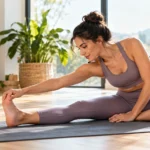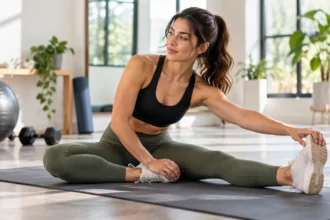

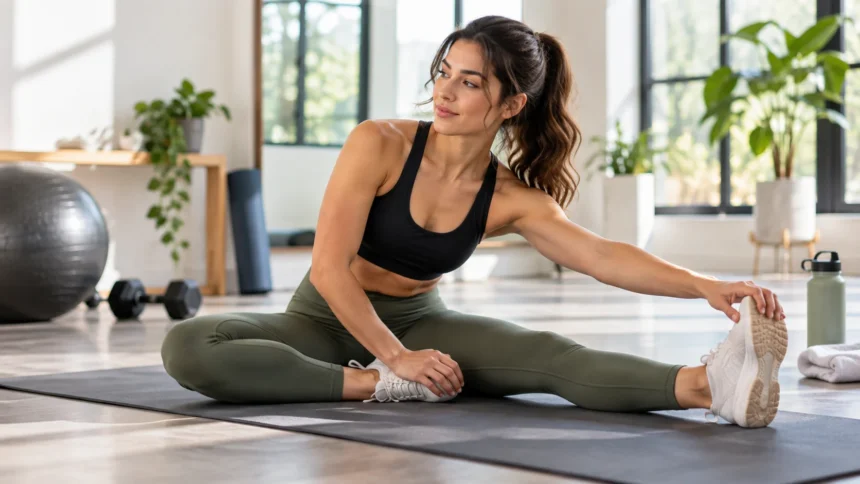
Static stretching is one of the simplest ways to work on flexibility and joint mobility. It involves moving a muscle into a comfortable lengthened position and holding that position for a set amount of time. Common examples include hamstring stretches, calf stretches, hip flexor stretches, and shoulder stretches held for several slow breaths.
Although static stretching looks straightforward, technique matters. Stretching too aggressively, bouncing, holding your breath, or forcing painful positions can make the experience uncomfortable and may reduce the benefit. When performed consistently and with control, static stretching can help improve range of motion, reduce feelings of stiffness, and support easier movement during everyday activities.
What Is Static Stretching?
Static stretching involves gradually moving a joint until you feel mild to moderate tension in the target muscle, then holding that position without bouncing. The muscle remains lengthened for a short period, commonly around 20 to 60 seconds. You then relax and either repeat the stretch or move to another area.
This type of stretching differs from dynamic stretching, where your body moves repeatedly through a range of motion. A walking lunge, arm circle, or controlled leg swing is dynamic because movement continues throughout the exercise. Static stretching instead emphasizes maintaining a relatively still position while allowing the targeted tissues to relax gradually.
Static stretches can be performed almost anywhere and usually require little or no equipment. They are commonly included after workouts, during mobility sessions, or as part of a general flexibility routine. The most important principle is that the stretch should feel controlled rather than painful or forced.
What Are the Benefits of Static Stretching?
One of the clearest benefits of regular static stretching is improved flexibility. Repeatedly spending time in a comfortable end range can increase how far a joint moves before strong tension develops. Over time, activities such as reaching, bending, squatting, or extending the arms overhead may begin to feel easier.
Static stretching may also reduce the sensation of muscle stiffness temporarily. After prolonged sitting, traveling, or completing a demanding workout, a gentle stretch can make tight-feeling muscles more comfortable. This does not necessarily mean the muscle was physically shortened, but changing position and moving through a larger range can provide noticeable relief.
Flexibility work can also support activities that require greater ranges of motion, including yoga, dance, martial arts, strength training, and certain sports. If your larger goal is to improve flexibility, static stretching can be one useful part of a broader routine that includes mobility, strength, and regular movement.
How to Perform Static Stretching Correctly
Begin by moving slowly into the stretching position rather than immediately pushing toward your maximum range. Stop when you feel clear tension in the target muscle but can still breathe comfortably. The sensation should feel like a controlled pull rather than sharp pain, burning, or pressure directly inside a joint.
Hold the position without bouncing. Relax your shoulders, jaw, and hands while taking slow breaths, because unnecessary tension in other parts of the body can make stretching more difficult. After approximately 20 to 60 seconds, gradually release the position instead of suddenly snapping back to your starting posture.
You can repeat a stretch two or three times depending on your goals and comfort. Avoid comparing your range with someone else’s because flexibility varies considerably between people. Consistent technique and gradual progress matter more than how far you can reach during one particular session.
How Long Should You Hold a Static Stretch?
For general flexibility, holding a stretch for approximately 20 to 30 seconds can be a practical starting point. This gives you enough time to settle into the position without making the session unnecessarily long. Beginners may find shorter holds easier while they learn how much tension feels appropriate.
Longer holds of around 30 to 60 seconds can also be used, particularly during dedicated mobility sessions. You may notice the initial feeling of tension decrease slightly as you continue breathing and relaxing. If this happens, you can move a little deeper only if the position remains comfortable and controlled.
Holding a stretch for several minutes is not automatically better. Longer durations may be useful in specialized flexibility programs, but most people can make progress with moderate holds performed regularly. Frequency and consistency often matter more than trying to complete extremely long stretches in a single session.
Static Stretching Before vs. After Exercise
Static stretching is commonly performed after exercise when the muscles are already warm. This can be a convenient time to work on flexibility because your body has been moving and you can transition gradually into a slower cool-down. It may also feel relaxing after a demanding strength or cardio session.
Before exercise, dynamic mobility is often more practical when your workout involves sprinting, jumping, heavy lifting, or explosive movement. Long static stretches immediately before high-power activity may temporarily reduce peak force or explosiveness in some situations. A dynamic warm-up generally prepares the body more specifically for movement.
This does not mean static stretching before exercise is always wrong. Short, gentle holds can sometimes be appropriate when a particular limitation affects technique, especially when followed by active movement. The best timing depends on your activity, goals, and how your body responds.
Best Static Stretches for the Lower Body
A hamstring stretch is one of the most familiar static stretches. You can perform it seated, standing, or lying on your back with a strap around the foot. Keep your spine comfortable and stop when you feel tension through the back of the thigh rather than forcing yourself to touch your toes.
For the hip flexors, begin in a half-kneeling position with one knee on the floor. Gently tuck the pelvis and shift forward slightly until you feel a stretch across the front of the rear hip. Avoid excessively arching your lower back, because that can reduce the focus on the intended area.
Calf stretches are also useful, especially for people who run, walk extensively, or feel limited at the ankle. Place one foot behind you with the heel down and gently lean forward. Keeping the back knee straight emphasizes one calf muscle, while slightly bending it can shift the stretch toward deeper tissues.
Best Static Stretches for the Upper Body
A doorway chest stretch can help after long periods of sitting or working at a computer. Place your forearm against the side of a doorway and gently rotate your body away until you feel a stretch across the chest or front of the shoulder. Avoid forcing the shoulder joint forward.
For the upper back and shoulders, you can use a cross-body shoulder stretch. Bring one arm across the chest and use the opposite arm to support it gently. Keep your shoulder relaxed rather than pulling forcefully, and stop if the position creates pinching inside the joint.
A triceps stretch can be performed by raising one arm overhead and bending the elbow so your hand moves toward the upper back. Use the opposite hand to guide the elbow gently. Keep your ribcage controlled and avoid arching your lower back to create artificial range.
Common Static Stretching Mistakes
One of the biggest mistakes is stretching into pain. People sometimes assume a stronger sensation means faster progress, but excessive discomfort can make muscles tense defensively and may irritate sensitive tissues. Aim for a moderate stretch that you can hold while breathing normally and remaining relaxed.
Bouncing is another common problem. Rapidly moving in and out of a stretch can make it difficult to control the range and may place unnecessary stress on the muscle or joint. Static stretching should remain relatively still once you reach the position you want to hold.
Poor alignment can also shift the stretch away from the intended area. For example, arching the lower back during a hip flexor stretch may make the movement look deeper without actually improving hip extension. Use a smaller range with better positioning rather than chasing maximum distance.
How Often Should You Do Static Stretching?
Stretching two to five times per week can work well for many people who want to improve general flexibility. Areas that feel particularly limited may benefit from more frequent practice as long as the stretching remains comfortable. Short, regular sessions are often easier to maintain than occasional long routines.
You do not need to stretch every muscle every day. Focus on the areas that affect your movement or activities most. For someone who sits for long hours, hips, hamstrings, chest, and shoulders may deserve more attention, while runners may spend additional time on calves and hip mobility.
Consistency should remain the main goal. Ten minutes several times per week can produce more meaningful progress than one intense session followed by long periods without mobility work. Build stretching into an existing routine so it becomes easier to maintain over the long term.
Combine Static Stretching With Strength Training
Flexibility becomes more useful when you can control the range you gain. Strength exercises performed through a comfortable full range help your muscles support positions that might otherwise feel unstable. Squats, lunges, Romanian deadlifts, rows, and overhead movements can all contribute to functional mobility.
For example, improving hamstring flexibility may allow you to bend farther forward, but strengthening the hamstrings through that longer range can help you use it more confidently. This combination of flexibility and strength creates mobility that transfers better to exercise and everyday movement.
Avoid thinking of stretching and strengthening as opposites. They can complement each other when programmed appropriately. A person may stretch a tight-feeling area while also strengthening nearby muscles so the body feels more stable and capable throughout the newly available range.
Use Breathing to Make Stretching Easier
Breathing can make static stretching feel more comfortable and controlled. Take a slow breath before entering the position, then continue breathing normally while you hold it. Long, relaxed exhales can help reduce unnecessary tension throughout the body.
Do not hold your breath while trying to move deeper. Breath-holding often creates more stiffness through the torso, shoulders, and jaw. If you cannot breathe comfortably, reduce the intensity until you can maintain the position without feeling as though you are fighting against it.
Breathing is especially helpful during stretches for the hips, chest, and lower back, where people often tense several muscle groups at once. Give yourself several breaths before deciding whether to increase the range. A calmer stretch is usually easier to repeat consistently.
Know When Stretching Is Not the Answer
Not every tight feeling means a muscle needs more stretching. Weakness, fatigue, joint irritation, nerve sensitivity, or poor movement control can sometimes create sensations that people interpret as tightness. Repeatedly stretching the same area may provide little benefit if the underlying issue is something else.
Sharp pain, numbness, tingling, burning, or electric sensations are not typical stretching sensations. Stop the exercise if these symptoms appear. Pain directly inside a joint or significant swelling also deserves more caution than ordinary muscle tension.
If flexibility remains severely restricted despite consistent stretching, consider seeking professional evaluation. A physical therapist can assess joint mobility, muscle strength, nerve sensitivity, and movement patterns. This can help determine whether stretching, strengthening, manual therapy, or another approach is more appropriate.
Build a Simple Static Stretching Routine
A simple full-body routine can include five or six stretches rather than dozens of movements. You might choose hamstrings, hip flexors, calves, chest, shoulders, and one additional area that feels particularly limited. Hold each position for around 20 to 45 seconds and repeat once or twice.
Perform the routine after workouts or during a separate mobility session when you have enough time to move slowly. Spend several minutes warming up if you have been sitting or inactive beforehand. Stretching cold muscles is not automatically dangerous, but many people find mobility work more comfortable after gentle movement.
Review your routine every few weeks. As one area improves, you may spend less time on it and focus on another limitation. Flexibility training should respond to your changing needs instead of becoming a rigid list of stretches performed forever without considering whether they are still useful.
Conclusion
Static stretching is a simple method for improving flexibility and exploring greater ranges of motion. It involves moving slowly into a stretch, holding the position without bouncing, and maintaining relaxed breathing. When practiced regularly, it can help reduce feelings of stiffness and support easier movement.
Good technique matters more than forcing a dramatic range. Hold stretches for approximately 20 to 60 seconds, avoid pain, and use controlled positioning throughout each exercise. Dynamic mobility may be preferable before explosive workouts, while static stretching often fits naturally after training or during dedicated mobility sessions.
For the best results, combine stretching with strength training, regular movement, and gradual progression. Flexibility becomes more valuable when your body can control the ranges you develop. If stretching produces pain, numbness, or persistent worsening symptoms, seek professional guidance rather than continuing to push harder.
FAQs
What is static stretching in simple terms?
Static stretching means moving into a comfortable stretch and holding that position without bouncing. The goal is to maintain gentle tension in the target muscle for several seconds before gradually releasing it.
How long should you hold a static stretch?
Most people can hold static stretches for approximately 20 to 60 seconds. Beginners can start with shorter holds and gradually increase the duration while keeping the stretch comfortable.
Is static stretching better before or after exercise?
Static stretching often works well after exercise or during separate flexibility sessions. Before intense or explosive workouts, dynamic movements may be more appropriate for preparing the body to move.
Can static stretching improve flexibility?
Yes. Regular static stretching can increase range of motion over time when performed consistently. Combining it with strength training through full ranges can help make those flexibility gains more functional.
Should static stretching hurt?
No. You should feel mild to moderate tension, not sharp pain, burning, numbness, or tingling. Reduce the range or stop if the stretch produces uncomfortable or unusual symptoms.