
Becoming more flexible takes consistent practice rather than forcing your body into extreme stretches. Flexibility describes how comfortably your joints and surrounding muscles can move through a useful range of motion. Genetics, age, activity level, previous injuries, daily habits, and training history can all influence how flexible you currently feel.
The good news is that flexibility can often improve when you stretch regularly, strengthen muscles through full ranges of motion, and gradually expose your body to positions that currently feel limited. The goal should be comfortable, controlled movement rather than achieving dramatic poses as quickly as possible. A practical routine can produce noticeable improvements without turning stretching into a painful daily challenge.
Start by Understanding Your Current Flexibility
Before trying to become more flexible, identify which movements actually feel restricted. You may notice tight hamstrings when bending forward, limited hip mobility during squats, stiff shoulders when reaching overhead, or reduced ankle movement during lunges. Understanding your specific limitations helps you choose exercises with a clear purpose instead of stretching every muscle randomly.
Compare both sides of your body without expecting perfect symmetry. One hip, shoulder, or ankle may naturally move differently because of your dominant side, previous activity, or old injuries. Small differences are common, but major limitations accompanied by pain or weakness may benefit from professional assessment before you begin aggressive mobility work.
Track simple movements over time to measure progress. You might note how comfortably you can touch your toes, how deep you can squat, or how far your arms reach overhead without arching your back. Functional improvements are often more meaningful than trying to achieve one specific flexibility milestone.
Warm Up Before Stretching
Stretching generally feels more comfortable when your muscles are warm. Begin with five to ten minutes of light movement such as walking, cycling, marching in place, or easy bodyweight exercises. This gradually raises tissue temperature and prepares your joints for larger ranges of motion without requiring intense effort.
Dynamic movements can also be useful before a workout. Leg swings, arm circles, walking lunges, and controlled hip rotations move the joints repeatedly without holding one position for a long time. These exercises can prepare your body for training while helping you explore your available range of motion.
Avoid forcing long, intense stretches when your body feels cold and stiff. You may feel tighter at the beginning of the day or after sitting for several hours, which is normal. A few minutes of gentle movement can make flexibility training feel smoother and reduce the temptation to push abruptly into uncomfortable positions.
Use Static Stretching to Improve Range of Motion
Static stretching involves moving into a comfortable stretch and holding the position for a period of time. It can be useful for muscles that regularly feel tight, including the hamstrings, calves, hip flexors, chest, and shoulders. The stretch should create mild tension rather than sharp pain or intense pulling.
Hold most stretches for approximately twenty to sixty seconds and breathe normally throughout the position. You can repeat each stretch two or three times if it feels comfortable. Longer holds are not automatically better, so focus on relaxing into the position rather than fighting your body to reach farther.
Static stretching often fits well after workouts or during a separate flexibility session. If your main goal before exercise is speed, power, or heavy lifting, prolonged stretching immediately beforehand may not always be ideal. Dynamic mobility can be used before training, while longer static holds can be saved for later.
Improve Hip and Hamstring Flexibility
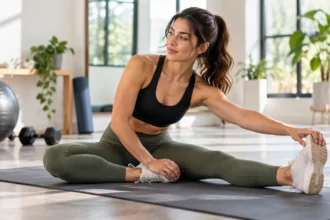
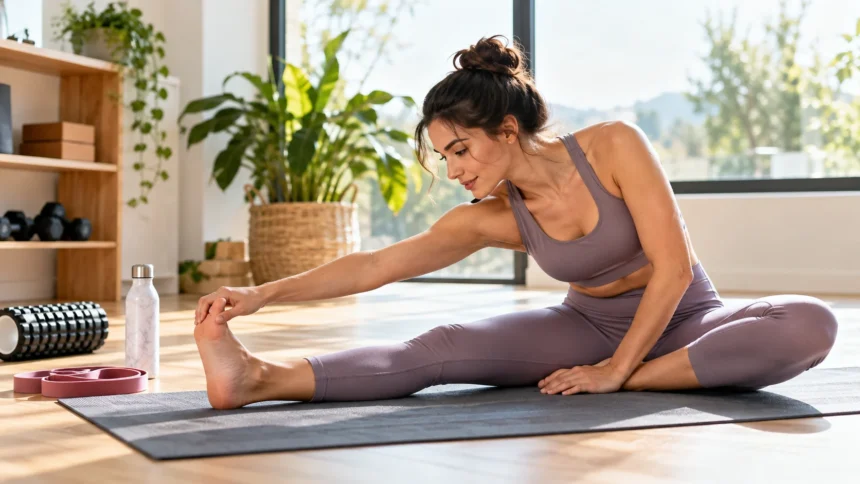
Tight-feeling hips and hamstrings are common, particularly among people who sit for long periods. A gentle hamstring stretch can be performed while seated, standing, or lying down with a strap around the foot. Keep your spine comfortable and stop before the stretch turns into pain or tingling.
Hip flexor stretches can be useful if the front of your hips feels stiff. Begin in a half-kneeling position, gently tuck the pelvis, and shift forward slightly until you feel a stretch in the front of the rear hip. Avoid excessively arching your lower back to create the appearance of a deeper stretch.
Hip rotation also deserves attention. Controlled 90/90 stretches, seated rotations, and gentle figure-four positions can improve comfort in movements such as squats and lunges. Progress gradually because forcing hip rotation can irritate sensitive joints rather than improving usable mobility.
Work on Shoulder and Upper-Body Flexibility
Shoulder mobility affects reaching, pressing, throwing, and many everyday activities. Wall slides, arm circles, doorway chest stretches, and controlled overhead reaches can help improve movement around the shoulders and upper back. Keep the ribs controlled rather than compensating by excessively arching your lower back.
Chest and shoulder muscles can feel especially tight after long periods at a desk. A doorway stretch can gently open the front of the chest by placing the forearm against the frame and rotating away slightly. Hold the position comfortably and avoid forcing the shoulder joint forward.
Upper-back mobility also influences how freely the arms can move overhead. Gentle thoracic rotations and extension movements can complement shoulder stretches. Improving several connected areas often works better than repeatedly stretching one muscle while ignoring the joints and muscles that contribute to the same movement.
Strengthen Through a Full Range of Motion
Flexibility is more useful when you can control the new range rather than simply reaching it passively. Strength exercises performed through a comfortable full range can improve both mobility and stability. Examples include deep bodyweight squats, controlled split squats, Romanian deadlifts, and overhead pressing when appropriate.
Move slowly enough to maintain control near the end of your range. If you can reach a deep position only by collapsing, bouncing, or losing alignment, reduce the depth slightly. Strengthening where you currently feel weak can make new ranges feel safer and more usable during everyday movement.
This approach also helps explain why stretching alone is not always the complete answer. Some people feel tight because their body lacks strength or confidence in a position. Gradually loading that range may improve flexibility while also making the movement feel more stable and natural.
Stretch Consistently Instead of Aggressively
Flexibility usually improves through repeated exposure rather than occasional extreme stretching. Ten to twenty minutes several times per week can be more effective than one long session followed by days of inactivity. Regular practice gives muscles and connective tissues time to adapt without overwhelming them.
You do not need to feel severe discomfort for a stretch to work. Aim for mild to moderate tension that allows you to breathe normally and remain relaxed. If you are holding your breath, shaking intensely, or trying to escape the position, you are probably pushing harder than necessary.
Consistency also helps you notice patterns. Some areas may improve quickly, while others take several months. Avoid comparing your progress with naturally flexible people, because body structure and training history can influence how much range each person develops.
Avoid Bouncing and Forcing Stretches
Ballistic bouncing can push a joint rapidly beyond the range you can comfortably control. While certain athletes may use specialized dynamic techniques under appropriate guidance, beginners generally benefit more from slow and deliberate movement. Sudden force can trigger protective muscle tension and make stretching feel less comfortable.
Pain is another signal to respect. A stretch should not produce sharp pain, numbness, burning, or electric sensations. These symptoms can suggest irritation involving a joint, nerve, or other structure rather than ordinary muscle tension, so pushing harder is unlikely to help.
Muscles can also tighten temporarily when they are fatigued or irritated. If you are experiencing repeated cramping or wondering what a muscle spasm feels like, avoid forcing the affected muscle into aggressive stretches while it is actively spasming. Gentle movement and recovery may be more appropriate initially.
Use Breathing to Relax Into a Stretch
Breathing can influence how relaxed your body feels during flexibility work. Take slow, comfortable breaths while holding a stretch rather than holding your breath and creating unnecessary tension. A longer exhale can sometimes help you relax into the position without needing to push harder.
Avoid aggressively sucking in your stomach or tensing every muscle while stretching. Your body should feel supported but not rigid. Relaxing the jaw, shoulders, and hands can make it easier to recognize whether the targeted area is genuinely stretching or whether unrelated tension is limiting you.
Breathing is especially useful during hip, hamstring, and chest stretches that people often rush. Give yourself several slow breaths before deciding whether to move slightly deeper. This approach encourages gradual progress and makes flexibility sessions feel calmer and easier to repeat consistently.
Build a Simple Weekly Flexibility Routine
A practical routine does not need dozens of exercises. Choose four to six stretches that target your main limitations and perform them three to five times per week. For example, you might include a calf stretch, hamstring stretch, hip flexor stretch, hip rotation, chest stretch, and overhead shoulder movement.
Spend roughly twenty to sixty seconds in each position and repeat when needed. You can combine this with light mobility movements before workouts and longer holds afterward. Keeping the routine simple makes it easier to stay consistent instead of abandoning flexibility training because it takes too much time.
Reassess every few weeks. If one area now moves comfortably, spend less time there and focus on another limitation. Your flexibility routine should evolve with your body rather than remaining identical forever, especially as your activities and training goals change.
Know When to Get Professional Help
Consider seeing a physical therapist or healthcare professional if a joint feels severely restricted, unstable, or painful. Flexibility problems caused by previous injuries, arthritis, nerve irritation, or structural limitations may require a different approach than ordinary muscle tightness. Professional assessment can help identify what is actually limiting the movement.
Seek guidance if stretching consistently makes symptoms worse rather than better. Pain that travels into an arm or leg, numbness, significant weakness, swelling, or repeated joint locking should not be treated simply by stretching harder. These symptoms may require evaluation before continuing a flexibility program.
A professional can also help if you have a specific athletic goal that requires unusually large ranges of motion. Gymnastics, dance, martial arts, and certain sports may demand more specialized flexibility training. Individual programming can improve mobility while also developing the strength necessary to control those ranges safely.
Conclusion
Learning how to become more flexible starts with consistent, comfortable practice rather than forcing your body into extreme positions. Gentle static stretching, dynamic mobility, full-range strength training, and regular movement can all contribute. The best program targets the movements that are actually limited instead of trying to stretch every muscle equally.
Warm up before deeper stretching, breathe normally, and progress gradually. Aim for mild to moderate tension and stop if you experience sharp pain, numbness, or worsening symptoms. Flexibility gains often develop over weeks or months, so consistency is more valuable than trying to make dramatic progress in one session.
Remember that flexibility is only one part of healthy movement. Strength, balance, coordination, and joint control matter too. Combining mobility work with appropriate strengthening creates ranges of motion that are not only larger but also more useful during exercise, sports, and everyday life.
FAQs
How long does it take to become more flexible?
Some people notice small improvements within a few weeks, while larger changes may take several months. Your starting mobility, consistency, age, genetics, activity level, and training methods all influence the timeline.
How often should I stretch to improve flexibility?
Stretching three to five times per week works well for many people. Short, regular sessions are usually more effective than occasional aggressive stretching, especially when combined with mobility and strength exercises.
Should stretching hurt to improve flexibility?
No. A stretch should create mild to moderate tension rather than sharp pain. Severe discomfort, numbness, burning, or electric sensations are signs to stop and reassess the movement.
Can you become flexible at any age?
Flexibility can often improve at many ages with consistent training. Progress may vary between individuals, but gradual stretching, strength work, and regular movement can help adults become more mobile over time.
Is strength training good for flexibility?
Yes. Strength training through a controlled full range of motion can improve mobility while building control at the same time. Exercises such as squats, lunges, and Romanian deadlifts can support useful flexibility.