
What Does It Mean to Stretch the Groin?
Stretching the groin means gently lengthening the muscles along the inner thigh and around the front of the hip. These muscles help move the legs inward, stabilize the pelvis, and control movements such as walking, running, squatting, and changing direction. Groin stretches are commonly used to improve flexibility, reduce feelings of tightness, and prepare the lower body for activity.
The main muscles involved are the adductors, including the adductor longus, adductor brevis, adductor magnus, gracilis, and pectineus. These muscles connect the pelvis to different parts of the thigh bone and work together during many lower-body movements. When they feel stiff, activities that require a wide stance or lateral movement may become uncomfortable.
Stretching should create a mild pulling sensation rather than pain. Forcing the legs farther apart does not necessarily improve flexibility faster and can irritate sensitive muscles or tendons. The safest approach is to move gradually, breathe normally, and stop before the stretch becomes sharp, intense, or difficult to control.
When Should You Stretch Your Groin?
Groin stretching can be useful after prolonged sitting, lower-body workouts, running, cycling, or sports involving frequent changes of direction. It may also help when the inner thighs simply feel stiff from inactivity. The best time depends on your goal, because warm-up stretching and flexibility training are not always performed in the same way.
Before exercise, gentle dynamic movements are usually more appropriate than long, intense static holds. Controlled side lunges, leg swings, and gradual hip movements can prepare the adductors for activity while increasing circulation. The goal before training is to move comfortably through useful ranges rather than trying to reach your deepest possible stretch.
Longer static stretches can be saved for after exercise or separate mobility sessions when the muscles are already warm. Holding a comfortable position for 20 to 30 seconds may help improve tolerance to lengthened positions over time. Avoid aggressive stretching immediately after a suspected groin strain because injured tissue may need protection rather than additional tension.
How to Warm Up Before Stretching the Groin
A short warm-up can make groin stretching feel more comfortable and controlled. Spend five to ten minutes walking, cycling gently, or performing other light movement before deeper mobility work. Increased circulation helps muscles become warmer and allows you to judge your available range without forcing cold, stiff tissues into demanding positions.
You can also use simple dynamic hip movements. Slow marching, shallow squats, controlled leg swings, or easy lateral steps can gradually introduce the directions used during groin stretches. Keep these movements smooth and stay well within a comfortable range, especially if you have not exercised recently or normally spend much of the day sitting.
The warm-up should leave you feeling more mobile rather than tired. You do not need heavy exercise or intense cardiovascular work before stretching. Once your hips and legs feel warmer, begin with your easiest groin stretch and gradually progress instead of starting immediately with the deepest position you can achieve.
How to Do a Butterfly Groin Stretch
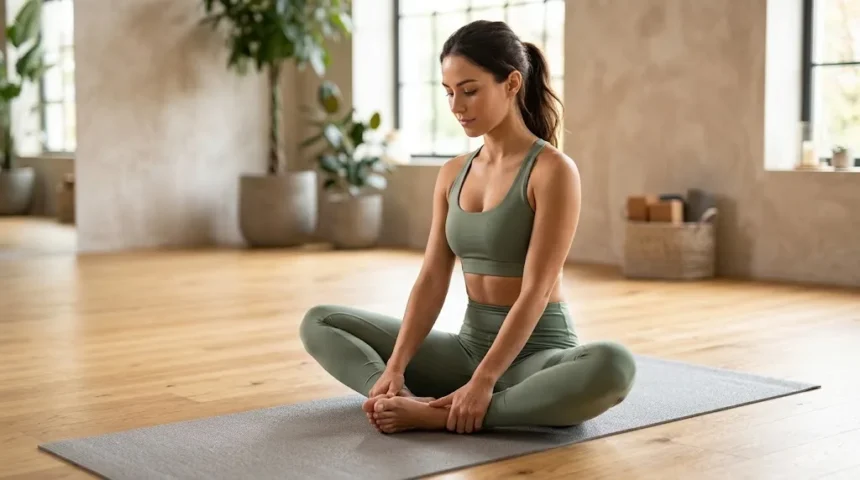
Sit on the floor with your knees bent and bring the soles of your feet together. Allow your knees to move outward naturally while keeping your spine comfortably upright. Hold your feet or ankles lightly and avoid using your hands to force the knees toward the floor, since this can place unnecessary pressure on the inner thighs.
Move your feet closer to your body if the position feels comfortable, or farther away if you need less intensity. You should feel a gentle stretch through the inner thighs and groin without sharp pulling. Keep breathing slowly and allow the muscles to relax instead of bouncing repeatedly to increase the range.
Hold the position for around 20 to 30 seconds and repeat two or three times if desired. Beginners may sit on a folded towel or cushion if keeping the torso upright is difficult. Over time, improved hip mobility may allow the knees to lower naturally without needing to push on them.
How to Do a Standing Groin Stretch
Stand with your feet wider than shoulder-width apart and keep both feet facing mostly forward. Shift your weight slowly toward one side by bending that knee while keeping the opposite leg relatively straight. The stretch should develop along the inner thigh of the straighter leg as your hips move sideways.
Keep your chest lifted and avoid allowing the bent knee to collapse inward. You do not need to descend into a deep side lunge for the stretch to be effective. Move only until you feel a comfortable pulling sensation, then maintain that position while breathing steadily and keeping the opposite foot in contact with the floor.
Hold for about 20 seconds before returning to the center and repeating on the other side. This stretch is easy to perform without equipment and can be adjusted by changing how far apart you place your feet. A wider stance usually increases the demand, so begin conservatively and increase range gradually.
How to Do a Half-Kneeling Adductor Stretch
Begin on your hands and knees, then extend one leg directly out to the side with the foot resting on the floor. Keep the opposite knee underneath your hip for support. Maintain a neutral spine and gently move your hips backward until you feel a stretch through the inner thigh of the extended leg.
Avoid twisting your pelvis or allowing the extended foot to rotate awkwardly. The movement should come mainly from shifting your hips backward while maintaining control through your trunk. If the stretch becomes too intense, reduce how far you move back or bring the extended leg slightly closer to your body.
Pause in the comfortable position for 20 to 30 seconds before returning forward. Repeat several times on each side if the movement feels helpful. This stretch can be particularly useful because you control the intensity easily and can gradually increase the range as your groin becomes more comfortable.
How to Use a Side Lunge for Groin Mobility
A side lunge can combine groin mobility with lower-body control. Start with your feet wide apart and shift your hips toward one side while bending that knee. Keep the opposite leg longer and let the inner thigh of the straight leg lengthen as you lower yourself into a comfortable lateral position.
Unlike a static stretch, you can move gently from side to side for a dynamic warm-up. Keep each repetition controlled and avoid dropping rapidly into the lowest position. This teaches the groin muscles to lengthen while the hips, knees, and ankles work together, making the movement useful before many sports and lower-body workouts.
Strengthening the same muscles you stretch can also improve overall control. Well-planned adductor exercises can complement groin mobility by improving strength through useful ranges. Flexibility and strength work together, so stretching alone may not solve every feeling of tightness around the inner thigh.
How Long Should You Hold a Groin Stretch?
For general flexibility, holding a comfortable static groin stretch for approximately 20 to 30 seconds is enough for many people. You can repeat each position two or three times depending on your available time and how your body feels. Longer holds are not automatically better if they cause discomfort or make you tense.
The stretch should become slightly easier as you breathe and remain in the position. If the sensation steadily becomes sharper or more uncomfortable, reduce the range rather than trying to tolerate it. Flexibility improves through consistent exposure over time, not through one extremely intense stretching session.
Dynamic stretches before exercise use a different approach. Instead of holding one position, perform several slow repetitions through a comfortable range. Five to ten controlled movements per side can be enough to prepare the hips and groin before running, lifting, or participating in sports that require lateral movement.
How Often Should You Stretch Your Groin?
Groin mobility can usually be practiced several times per week when the muscles are healthy and stretching is comfortable. Short, consistent sessions often work better than infrequent sessions where you attempt to make dramatic flexibility gains. You can include gentle mobility after workouts or during separate sessions depending on your schedule.
If you are particularly stiff, brief daily stretching may be appropriate as long as it does not create pain or lingering soreness. The intensity should remain low enough that you feel normal afterward. Constantly pushing into strong discomfort can irritate the muscles and make flexibility work harder rather than easier.
Remember that stretching is only one part of healthy hip function. Walking, strength training, regular position changes, and movement through different directions all contribute to mobility. A balanced routine usually produces better results than repeatedly stretching the same muscles while ignoring strength and overall lower-body conditioning.
Common Mistakes When Stretching the Groin
Bouncing aggressively is one of the most common stretching mistakes. Rapidly forcing the legs farther apart can create sudden tension through the adductors and make it harder to stay relaxed. Controlled movement is generally safer and allows you to better recognize when you are reaching your current comfortable limit.
Another mistake is believing that a stretch must hurt to be effective. Strong pain does not mean the muscle is becoming more flexible faster. A moderate pulling sensation is enough, and you should stop if you feel sharp pain, burning, numbness, or a sensation that resembles an injury rather than ordinary muscle tension.
Poor body position can also shift stress away from the intended muscles. Rounding the back excessively, twisting the pelvis, or allowing the knees to collapse may make the stretch less controlled. Focus on comfortable alignment and reduce the depth whenever maintaining good posture becomes difficult.
How to Stretch the Groin After Exercise
After a workout, begin by allowing your breathing and heart rate to settle. Light walking for several minutes can help transition out of intense activity before you start stretching. Once the muscles remain warm but you are no longer heavily fatigued, choose one or two comfortable groin stretches rather than performing every possible variation.
The butterfly stretch and half-kneeling adductor stretch work well for many people after training. Hold each position gently while keeping your breathing relaxed. Avoid treating post-workout stretching as another intense training challenge, because fatigued muscles may be more sensitive to excessive force.
If the groin feels unusually sore after exercise, reduce the intensity and consider whether your training load increased too quickly. Gentle movement may feel better than deep stretching during the first day after a demanding session. Persistent or worsening pain should be evaluated rather than repeatedly stretched in an attempt to make it disappear.
When Should You Avoid Stretching the Groin?
Avoid aggressive groin stretching if you recently felt a sudden pull, pop, or sharp pain during activity. These symptoms can indicate a muscle strain, particularly if they are followed by bruising, swelling, weakness, or difficulty walking. Stretching damaged tissue too strongly during the early stage may worsen irritation instead of helping recovery.
You should also be cautious if groin pain occurs with hip clicking, significant weakness, a visible bulge, abdominal discomfort, or pain that does not behave like ordinary muscle tightness. Groin discomfort can come from muscles, tendons, the hip joint, nerves, or other structures, so stretching is not the correct solution for every symptom.
Seek professional assessment when pain is severe, persists despite reducing activity, or repeatedly returns when you exercise. A physiotherapist or other qualified healthcare professional can determine whether mobility work is appropriate. The safest stretching routine is one matched to the actual reason your groin feels tight or uncomfortable.
Conclusion
Learning how to stretch the groin safely starts with understanding that flexibility should be developed gradually. Warm the body first, use controlled movements, and aim for a gentle pulling sensation rather than pain. Butterfly stretches, standing stretches, half-kneeling adductor stretches, and controlled side lunges can all be useful when performed with proper form.
Consistency matters more than forcing a dramatic range in one session. Short mobility sessions several times per week can help the hips become more comfortable while reducing unnecessary strain. Combining stretching with appropriate strength work can also improve control, because healthy groin muscles need both mobility and strength.
If stretching causes sharp pain, numbness, significant weakness, or worsening symptoms, stop and avoid pushing deeper. Acute injuries and persistent groin pain may require professional evaluation instead of additional stretching. When the muscles are healthy, patient and controlled practice is the safest way to improve groin flexibility over time.
FAQs
What is the best stretch for a tight groin?
The butterfly stretch and half-kneeling adductor stretch are good options for many people. Choose the position that creates a gentle inner-thigh stretch without sharp pain, excessive pressure, or difficulty maintaining control.
How long should I hold a groin stretch?
A comfortable static groin stretch can usually be held for about 20 to 30 seconds. Repeat it two or three times if desired, while reducing the range immediately if the sensation becomes painful.
Is it okay to stretch the groin every day?
Gentle daily stretching can be suitable for healthy muscles if it does not create pain or lingering soreness. Keep the intensity moderate and combine flexibility work with regular movement and strengthening.
Should I stretch a pulled groin?
Avoid aggressive stretching immediately after a suspected groin strain. Rest from aggravating activity and seek medical or physiotherapy guidance if you have significant pain, bruising, weakness, swelling, or difficulty walking.
Why does my groin feel tight even after stretching?
Persistent tightness may be related to training load, muscle weakness, movement habits, nerve sensitivity, or other hip problems rather than simple lack of flexibility. Repeated stretching alone may not address the underlying cause.