
Strong glutes support far more than appearance. The gluteal muscles help extend and stabilize the hips, control the pelvis, support walking and running, and contribute to movements such as squatting, climbing stairs, and standing from a chair. Bodyweight glute exercises offer a simple way to train these muscles without relying on gym machines or heavy weights.
Because these exercises use your own body as resistance, they can be performed at home, while traveling, or as part of a warm-up before strength training. They are also easy to modify for different fitness levels. Beginners can start with basic bridges and controlled squats, while more experienced exercisers can progress toward single-leg and higher-repetition variations.
Good technique matters if you want the glutes to do most of the work. Rushing repetitions, arching the lower back, or allowing the knees to collapse inward can shift tension elsewhere. The following bodyweight glute exercises explain proper form, major benefits, common mistakes, progression tips, and ways to build an effective routine.
Why Strong Glutes Matter
The glutes are made up primarily of the gluteus maximus, gluteus medius, and gluteus minimus. Together, these muscles help move the hip backward, rotate the thigh, and stabilize the pelvis. They contribute to both powerful athletic movements and ordinary activities such as walking, bending, and getting up from a seated position.
Strong glutes can also help control the position of the hips and knees during lower-body movement. When the hips are stable, force can travel through the legs more efficiently during squats, lunges, running, and jumping. Glute strength does not prevent every injury, but it plays an important role in balanced lower-body function.
Weak or poorly coordinated glutes may cause other muscles to work harder during movement. The hamstrings, lower back, or hip flexors may compensate during exercises that should involve stronger hip extension. Bodyweight training can help you learn to activate and control the glutes before progressing to heavier resistance.
Glute Bridges
Glute bridges are one of the most accessible bodyweight glute exercises. Lie on your back with your knees bent, feet flat on the floor, and arms resting comfortably beside you. Place your feet about hip-width apart and close enough that you can press through them without feeling excessive tension in your knees.
Brace your abdominal muscles gently, squeeze your glutes, and lift your hips until your body forms a relatively straight line from your shoulders to your knees. Avoid pushing so high that your lower back arches excessively. Pause briefly at the top, then lower your hips slowly while maintaining control.
Start with 10 to 15 repetitions for two or three sets. If you mostly feel the hamstrings, experiment with moving your feet slightly closer to your hips and focus on squeezing the glutes before lifting. As the exercise becomes easier, longer pauses or single-leg variations can increase the challenge without adding external weight.
Bodyweight Squats
Squats strengthen the glutes along with the quadriceps, hamstrings, and other lower-body muscles. Stand with your feet approximately shoulder-width apart and your toes pointing slightly outward if that feels natural. Keep your chest comfortable and your weight distributed through the whole foot rather than shifting excessively onto your toes.
Push your hips slightly backward while bending your knees and lowering your body. Allow your knees to track in roughly the same direction as your toes without collapsing inward. Descend only as far as you can maintain comfortable control, then press through your feet to return to standing.
To emphasize the glutes, focus on controlled depth and strong hip extension as you stand. Avoid aggressively thrusting the hips forward or arching your lower back at the top. Beginners can practice squatting toward a chair, while more advanced exercisers can add slower tempos, pauses, or higher repetition ranges.
Reverse Lunges
Reverse lunges train the glutes one side at a time while also challenging balance and coordination. Begin standing tall with your feet about hip-width apart. Step one foot backward and lower your body by bending both knees while keeping your front foot planted securely on the floor.
Your front knee should stay controlled as your hips lower toward the ground. Push primarily through the front foot to return to the starting position, bringing the back leg forward again. Keep your torso steady and avoid using momentum to pull yourself out of the bottom position.
Reverse lunges are often easier to control than forward lunges because you step away from the working leg rather than landing onto it. Start with 6 to 10 repetitions on each side. Holding onto a wall or chair can provide additional balance while you learn the movement.
Donkey Kicks
Donkey kicks are a simple quadruped exercise that focuses on hip extension. Begin on your hands and knees with your hands beneath your shoulders and knees below your hips. Keep your abdominal muscles gently engaged so the lower back stays relatively stable throughout the movement.
Keeping one knee bent, lift that leg upward by driving the sole of the foot toward the ceiling. Stop before your pelvis rotates or your lower back begins arching significantly. Squeeze the glute briefly at the top, then return the knee toward the floor without completely relaxing between repetitions.
Perform around 10 to 15 repetitions per side. The movement does not need to be large to be effective because the goal is controlled glute contraction rather than maximum leg height. If you feel the exercise mostly in your lower back, reduce the range and focus more on keeping the pelvis still.
Fire Hydrants
Fire hydrants primarily challenge the muscles along the outer hip, particularly the gluteus medius. Begin on all fours with your spine comfortable and your core gently braced. Keep both knees bent while maintaining even pressure through your hands and supporting knee.
Lift one knee outward to the side without rotating your entire torso. Raise the leg only as high as you can while keeping the pelvis reasonably level. Pause briefly, then lower the knee slowly and repeat before switching to the opposite side.
This exercise can help improve hip control that supports walking, running, and single-leg movements. Begin with 10 to 15 repetitions per side and focus on quality rather than speed. If your supporting wrist or knee becomes uncomfortable, use additional padding or modify your position.
Single-Leg Glute Bridges
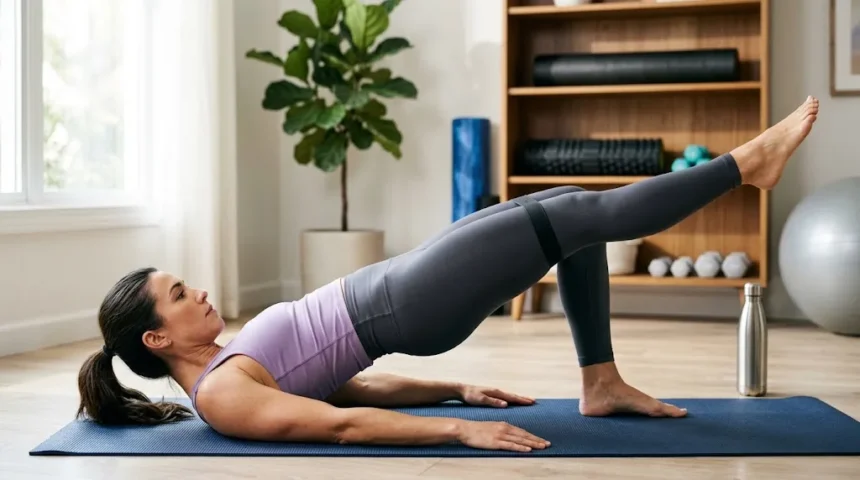
Single-leg glute bridges make the standard bridge considerably more challenging by placing more demand on one side. Lie on your back with one knee bent and foot flat while the other leg remains lifted. Keep your hips level before beginning the movement.
Press through the planted foot and squeeze the glute on that side as you raise your hips. Avoid letting one side of the pelvis drop or rotate. Lower yourself slowly and stop if you feel the movement primarily in the lower back or experience hamstring cramping.
Start with 6 to 10 repetitions per side because the exercise can fatigue the glutes quickly. If full single-leg bridges are difficult, keep both feet down and shift slightly more weight toward one side. Progressing gradually allows you to build unilateral strength without sacrificing form.
Frog Pumps
Frog pumps provide a higher-repetition option for targeting the glutes. Lie on your back, bring the soles of your feet together, and allow your knees to fall outward comfortably. Position your heels reasonably close to your hips while keeping your upper body relaxed against the floor.
Squeeze your glutes and lift your hips upward, then lower them under control. The range may feel shorter than a standard bridge because of the position of the hips. Avoid forcing your knees toward the floor or trying to create more range than your hip mobility comfortably allows.
Frog pumps are often used toward the end of a glute workout because they can create noticeable muscular fatigue with relatively little setup. Try 15 to 25 repetitions at a controlled pace. Stop if the position causes pinching or discomfort in the hips, groin, or lower back.
Side-Lying Leg Raises
Side-lying leg raises target the muscles on the outside of the hip and can complement exercises that emphasize the gluteus maximus. Lie on one side with your lower leg bent slightly for stability and your top leg straight. Keep your hips stacked instead of rolling backward.
Lift your top leg several inches while keeping the toes facing forward or slightly downward. Raising the leg excessively high can cause the pelvis to tilt and shift effort away from the targeted muscles. Pause briefly at the top, then lower the leg slowly without dropping it.
Perform 10 to 15 repetitions on each side for two or three sets. You should feel the outer hip working rather than the front of the thigh or lower back. Smaller, more controlled repetitions are usually more effective than large movements performed with poor alignment.
Mobility and Warm-Up Tips Before Glute Training
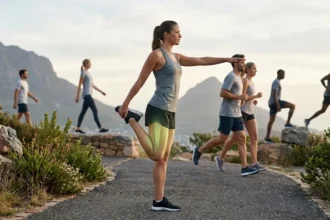
A short warm-up can help you move more comfortably before bodyweight glute exercises. Begin with several minutes of walking, marching, or another easy activity that raises your body temperature slightly. You can then add controlled hip circles, leg swings, or gentle bodyweight squats.
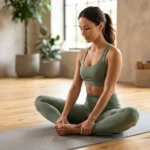
Hip mobility can be useful when stiffness limits comfortable movement. Gentle hip flexor work, adductor mobility, or a controlled groin stretch may help when tightness around the inner thighs affects squat or lunge positions. Stretch only within a comfortable range instead of forcing flexibility before exercise.
Warm-ups should prepare you for training without tiring the muscles before the main session begins. A few controlled repetitions of bridges, squats, or fire hydrants can also help you feel the glutes working. Once movement feels smooth, progress into your normal working sets.
How to Build a Bodyweight Glute Workout
A balanced bodyweight glute workout can combine several movement patterns rather than repeating one exercise. You might include glute bridges for hip extension, squats or lunges for functional lower-body strength, and fire hydrants or side-lying raises for lateral hip stability. This gives the gluteal muscles several different types of training stimulus.
For a simple session, choose four to six exercises and perform two or three sets of each. Beginners can start with around 8 to 12 controlled repetitions, while higher-repetition exercises such as frog pumps may work well for 15 to 25 repetitions. Rest long enough between sets to maintain good technique.
Two or three dedicated lower-body sessions per week can work well for many people, depending on overall training volume. Your glutes also work during running, sports, and other leg exercises, so recovery matters. Increase difficulty gradually rather than adding more exercises every time a workout starts feeling easier.
Common Form Mistakes and Progression Tips
One common mistake is moving too quickly through glute exercises. Fast repetitions often create momentum that reduces muscular control and makes it harder to notice whether the hips, knees, and lower back are staying in good positions. Slowing down can make a basic bodyweight movement significantly more challenging.
Another mistake is assuming that more range is always better. Lifting the hips excessively during bridges or raising the leg too high during donkey kicks can cause the lower back or pelvis to compensate. Work within the range where you can maintain control and feel the intended muscles doing the majority of the work.
When exercises become easy, progression does not always require weights. Add pauses, slow the lowering phase, increase repetitions, shorten rest periods, or move toward single-leg variations. Eventually, external resistance may become useful for continued strength development, but mastering bodyweight form creates a strong foundation first.
Conclusion
Bodyweight glute exercises provide an accessible way to strengthen the hips without requiring gym equipment. Bridges, squats, reverse lunges, donkey kicks, fire hydrants, frog pumps, and side-lying leg raises can target different parts of the gluteal muscles while supporting overall lower-body strength and control.
Good form matters more than completing large numbers of repetitions. Keep movements controlled, maintain stable hip and knee positions, and avoid using excessive lower-back motion to create a larger range. Gradually progressing the challenge helps your muscles continue adapting while keeping technique consistent.
A regular glute routine can support everyday movement, athletic activity, posture control, and lower-body training. Combine strengthening with appropriate mobility, recovery, and a balanced exercise program. If an exercise causes sharp or persistent pain rather than normal muscular effort, stop and consider getting appropriate professional guidance.
Frequently Asked Questions
Can bodyweight exercises really build your glutes?
Yes. Bodyweight exercises can build glute strength, particularly for beginners or people returning to training. Progressively increasing repetitions, control, range, pauses, and single-leg difficulty helps keep the exercises challenging.
How often should I train my glutes with bodyweight exercises?
Two to three sessions per week can work well for many people. Allow enough recovery between challenging workouts, especially if your glutes are also trained through running, sports, squats, or other lower-body activities.
What is the best bodyweight exercise for glutes?
There is no single best exercise for everyone. Glute bridges, squats, lunges, and single-leg variations train different movement patterns, so combining several exercises usually provides more balanced glute development.
Why do I feel glute exercises in my lower back?
Excessive lower-back arching, poor core control, or using too much range can shift tension away from the glutes. Reduce the movement, brace gently, and focus on controlled hip motion.
How long does it take to strengthen your glutes?
Strength changes can develop over several weeks with consistent training, but the timeline varies by experience, exercise difficulty, recovery, and progression. Long-term results depend on gradually increasing the challenge rather than repeating the same easy routine.