

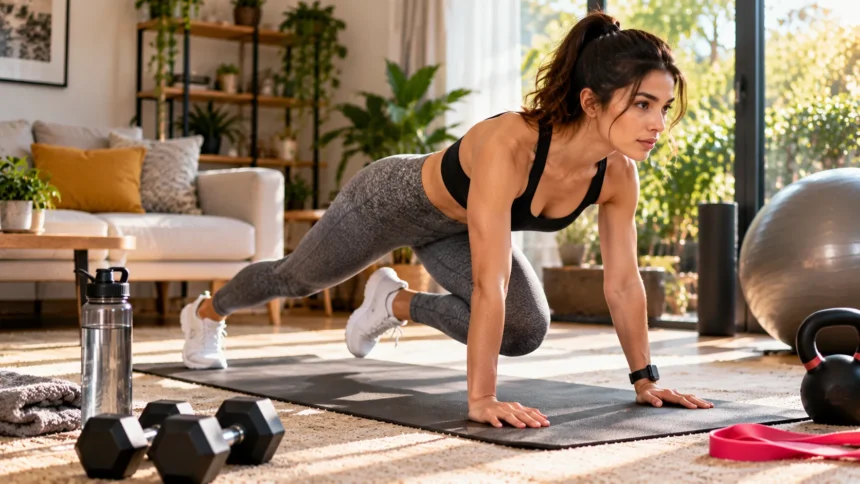
Exercise is an important part of maintaining physical health, improving mobility, and supporting overall well-being. Regular physical activity helps the body perform everyday movements more comfortably while contributing to cardiovascular fitness, muscular strength, and flexibility. Whether you prefer walking, stretching, strength training, or home workouts, choosing suitable exercises can make an active lifestyle easier to maintain.
Understanding proper exercise form is just as important as selecting the activities you want to perform. Controlled movements, appropriate intensity, and good technique help reduce unnecessary strain while making workouts more comfortable. Beginners can benefit from learning basic movement patterns before progressing toward more challenging routines or unfamiliar equipment.
This guide explores different types of exercises, their benefits, proper techniques, and practical fitness tips. It also explains common workout mistakes, recovery strategies, and ways to establish a consistent routine. Whether you are beginning your fitness journey or looking to improve your exercise knowledge, these fundamentals can help you approach physical activity safely.
What Are Exercises and Why Are They Important?
Exercises are planned physical activities performed to improve or maintain different aspects of physical fitness. They may involve repetitive movements, sustained activity, resistance training, or controlled stretching. Common examples include walking, swimming, cycling, squats, push-ups, and mobility exercises that support the body’s ability to move comfortably.
Regular exercise contributes to heart health, muscular function, bone strength, and overall physical capacity. It can also support emotional well-being, improve sleep quality, and provide opportunities for relaxation. The specific benefits depend on exercise type, frequency, intensity, and individual health circumstances rather than one particular workout.
Physical activity does not always require structured gym sessions or specialized fitness equipment. Everyday activities such as walking, gardening, dancing, and recreational sports can also contribute to an active lifestyle. The most useful approach involves finding enjoyable activities that suit your abilities, schedule, and personal health needs.
Different Types of Exercises for Overall Fitness
Exercise can be divided into several categories based on the physical abilities each activity develops. Aerobic exercises primarily challenge the cardiovascular system, while strength training supports muscles and bones. Flexibility and mobility activities improve comfortable movement, and balance exercises help develop stability during everyday tasks.
A balanced fitness routine often combines multiple exercise categories rather than concentrating exclusively on one type. Someone who enjoys walking may benefit from adding manageable resistance exercises and gentle mobility activities. This combination supports different physical functions and creates opportunities to develop a broader range of movement skills.
The ideal exercise mix varies according to age, health, experience, interests, and personal goals. Beginners may start with familiar movements before gradually introducing additional activities. Choosing exercises that feel manageable and enjoyable can make it easier to maintain consistency without treating every workout as a demanding physical challenge.
Cardiovascular Exercises and Their Benefits
Cardiovascular exercises involve sustained movement that increases breathing and heart rate. Examples include brisk walking, cycling, swimming, dancing, and jogging. These activities challenge the heart, lungs, and circulatory system while supporting endurance for everyday activities that require continued physical effort.
Regular aerobic activity can contribute to cardiovascular health, improved stamina, and better overall fitness. It may also support mood, sleep, and general well-being when incorporated into a sustainable routine. The appropriate intensity depends on personal fitness and health considerations, so beginners should choose comfortable starting levels.
Walking is often an accessible introduction because it requires little specialized equipment and can be adapted to different abilities. Swimming and cycling may provide alternative options for people who prefer different movement experiences. Gradually increasing activity according to comfort and recovery helps individuals develop endurance without rushing into demanding workouts.
Strength Training Exercises for Beginners
Strength training involves movements that challenge muscles against resistance, such as body weight, resistance bands, or suitable weights. Common examples include squats, wall push-ups, rows, and controlled lifting movements. These exercises help develop muscular strength and support everyday activities such as carrying objects, climbing stairs, and maintaining stability.
Beginners can start with simple movements that are comfortable and easy to control. Learning how to position the body and move through an appropriate range of motion is important before increasing resistance. A manageable routine allows individuals to practice technique while gradually becoming familiar with the physical demands of strength training.
Strength exercises can be adapted to different abilities by adjusting resistance, movement range, or available support. For example, a wall push-up may be more accessible than a traditional floor push-up. Allowing appropriate recovery between challenging sessions supports muscular adaptation and makes continued participation more comfortable.
Squats: Proper Form and Key Benefits
Squats are a lower-body exercise that primarily engages the thighs, hips, and surrounding muscles. The movement resembles sitting down and standing up from a chair, making it relevant to everyday activities. Squats can be performed using body weight or adapted with additional support depending on individual ability.
Begin by standing with your feet approximately shoulder-width apart and your weight balanced comfortably. Bend your hips and knees as though lowering toward a chair, allowing your knees to follow the direction of your toes. Lower only as far as you can maintain comfortable control before returning to standing.
Keep your movements steady and avoid forcing an unusually deep squat if your mobility does not allow it. Holding a stable chair or performing a sit-to-stand movement can provide additional support. Squats may help improve lower-body strength and functional movement when performed with suitable technique and appropriate progression.
Push-Ups: Form, Muscles Worked, and Tips
Push-ups are a bodyweight exercise that primarily challenges the chest, shoulders, triceps, and supporting trunk muscles. The movement involves lowering and raising the body while maintaining controlled alignment. Push-ups can be modified to suit different strength levels, making them useful in many exercise routines.
For a standard push-up, position your hands slightly wider than shoulder-width apart and extend your legs behind you. Keep your body relatively aligned while bending your elbows and lowering toward the floor. Press through your hands to return to the starting position without allowing excessive strain through the shoulders or lower back.
Beginners may prefer wall push-ups or elevated push-ups using a stable surface. These variations reduce the resistance while allowing practice with similar upper-body movements. Focus on smooth technique and comfortable control rather than attempting a particular number of repetitions before developing sufficient strength.
Lunges: Improving Lower-Body Strength and Balance
Lunges are lower-body exercises that challenge the quadriceps, glutes, and supporting muscles involved in balance. Because the legs work in a staggered position, lunges can help develop control during movements resembling walking or climbing stairs. They can be performed without additional weights when learning the technique.
Begin standing upright and take a comfortable step backward into a staggered stance. Bend both knees gradually while maintaining balance and allowing the front knee to follow the direction of the foot. Lower only within a comfortable range before pressing through the front foot to return to standing.
Using a wall or stable chair for balance can make lunges more accessible to beginners. Avoid taking extremely long steps or forcing the knees into uncomfortable positions. Reverse lunges and supported split squats offer alternative ways to practice similar movements according to individual mobility and coordination.
Plank Exercises for Core Stability
Planks are exercises that challenge the abdominal muscles, back muscles, shoulders, and other structures supporting the trunk. Rather than involving repeated bending movements, a plank requires maintaining a controlled position against gravity. This makes it a useful option for practicing core stability during appropriately selected workouts.
For a forearm plank, place your forearms on the floor with your elbows positioned beneath your shoulders. Extend your legs behind you and maintain a comfortable alignment between your shoulders, hips, and lower body. Breathe normally while holding the position without allowing excessive tension or discomfort.
Beginners can modify planks by placing their knees on the floor or performing the movement against an elevated surface. Short, controlled holds can provide an opportunity to practice technique. Stop or adjust when the position causes pain, excessive strain, or difficulty maintaining comfortable breathing.
Stretching Exercises for Flexibility
Stretching exercises involve moving muscles and joints through comfortable ranges to maintain or improve flexibility. Common examples include calf stretches, gentle hamstring stretches, shoulder stretches, and hip mobility movements. These activities may help reduce feelings of tightness and support comfortable movement during everyday tasks.
Static stretching involves holding a comfortable position briefly, while dynamic stretching uses controlled movement through an available range. Dynamic movements are often useful during warm-ups because they introduce the motions involved in upcoming activities. Gentle static stretches may be included after exercise or during separate flexibility sessions.
Stretching should create a manageable sensation rather than sharp pain or intense discomfort. Avoid bouncing forcefully or pushing joints beyond their natural limits. Flexibility varies between individuals, and gradual, consistent practice is generally more appropriate than attempting to achieve extreme movement ranges.
Balance Exercises for Better Stability
Balance exercises challenge the body’s ability to maintain control during stationary positions and movement. Examples include standing on one leg, heel-to-toe walking, and controlled weight shifts. These activities involve coordination between muscles, joints, vision, and the nervous system.
Practicing balance can support everyday movements such as stepping over obstacles, changing direction, and walking on uneven surfaces. Balance training may be especially useful when incorporated into broader strength and mobility activities. However, suitable exercises depend on individual stability, physical condition, and the risk of falling.
Beginners should practice near a stable support such as a countertop or sturdy chair. Start with manageable positions and use assistance whenever necessary rather than attempting difficult unsupported movements. Progressing gradually allows individuals to develop confidence while maintaining a safe and comfortable exercise environment.
Low-Impact Exercises for Joint Comfort
Low-impact exercises generally involve movements that reduce repeated landing forces compared with activities such as running or jumping. Common examples include walking, swimming, cycling, and certain controlled strength exercises. These activities can provide meaningful physical benefits while offering alternatives to higher-impact workouts.
People who experience discomfort during high-impact activities may find certain low-impact options more manageable. Swimming provides buoyancy, while stationary cycling allows controlled movement without repeated jumping. However, low-impact exercise is not automatically pain-free, and the most suitable activity depends on personal health circumstances.
Choose movements that feel comfortable and allow natural breathing without unnecessary strain. Adjust exercise duration, resistance, and intensity based on your current capacity. Persistent joint pain, swelling, or symptoms that worsen during activity should be evaluated rather than ignored in an effort to complete a workout.
Best Exercises You Can Do at Home
Home exercises provide opportunities to stay active without traveling to a gym or purchasing extensive equipment. Bodyweight squats, wall push-ups, gentle lunges, marching in place, and mobility exercises are common options. These movements can be adapted for different experience levels and performed in a reasonably clear space.
A home exercise routine can combine cardiovascular movement, muscular strengthening, and flexibility activities. For example, someone might begin with comfortable walking, practice a few basic strength movements, and finish with gentle stretching. The exact combination should reflect personal preferences, mobility, and the amount of activity that feels manageable.
Creating a practical exercise space improves convenience and reduces distractions. Move unnecessary objects away, use stable surfaces for support, and choose footwear appropriate for the activity. Consistency usually becomes easier when exercise fits naturally into a routine rather than requiring complicated preparation or unrealistic expectations.
How to Maintain Proper Exercise Form
Proper exercise form involves performing movements with sufficient control, suitable alignment, and an appropriate range of motion. Good technique helps distribute physical demands across the intended muscles and joints. Although movement patterns differ between individuals, avoiding unnecessary strain and maintaining stability are useful general principles.
Begin by learning the basic steps of an unfamiliar exercise before adding resistance or complexity. Practice slowly enough to understand how the movement feels and where your body needs support. When necessary, a qualified exercise professional can help adapt techniques to individual anatomy, mobility, and physical capabilities.
Avoid assuming that every exercise must look identical for every person. Differences in limb length, joint mobility, and movement experience can influence comfortable technique. Focus on controlled movement, normal breathing, and manageable effort while adjusting exercises that repeatedly cause discomfort or difficulty.
Importance of Warming Up Before Exercise
Warming up prepares the body for more demanding physical activity by gradually increasing movement and effort. A warm-up may include easy walking, gentle marching, controlled arm movements, or simplified versions of planned exercises. These activities introduce the movements that will appear during the main workout.
A suitable warm-up can help improve movement readiness and provide an opportunity to notice unusual stiffness or discomfort. It also allows the heart rate and breathing to increase progressively rather than abruptly. The appropriate duration and activities depend on the exercise session and individual circumstances.
For strength training, practicing a movement with lighter resistance can help prepare for more challenging repetitions. Before cardiovascular activity, begin at a comfortable pace and increase intensity gradually. Warm-ups should not become exhausting workouts themselves, especially when the upcoming activity already requires considerable effort.
Exercise Recovery and Rest Days
Recovery allows the body to adapt to physical activity and prepare for future exercise sessions. Challenging workouts can create temporary muscle fatigue and soreness, particularly when introducing unfamiliar movements. Appropriate recovery practices support comfort, continued participation, and the gradual development of physical fitness.
Sleep, balanced nutrition, hydration, and manageable activity levels all contribute to recovery. Gentle movement may feel comfortable between more demanding sessions, although the best approach depends on the activity performed. There is no need to remain completely inactive whenever muscles feel mildly tired after exercise.
Rest requirements vary according to exercise intensity, experience, and individual health needs. Alternating activities or allowing additional time between challenging sessions can help manage fatigue. Persistent pain, unusual weakness, or symptoms that interfere with daily activities should not be dismissed as ordinary workout soreness.
Common Exercise Mistakes to Avoid
One common exercise mistake is attempting movements that are too challenging before learning suitable technique. Using excessive resistance or rushing through unfamiliar exercises may increase unnecessary strain. Starting with manageable variations provides time to develop coordination and understand how the movement should feel.
Another mistake involves overlooking rest, recovery, and individual physical limitations. Repeatedly exercising through pain or ignoring unusual fatigue can make physical activity less comfortable and sustainable. Adjusting the workout or seeking professional guidance when needed is more useful than forcing yourself to complete a predetermined routine.
People also sometimes believe that every workout must be intense to provide meaningful benefits. In reality, moderate activities, gentle movement, and consistent participation can contribute to physical health. Choosing enjoyable exercises and varying activities according to energy and recovery can help establish a balanced relationship with fitness.
How to Create a Balanced Exercise Routine
A balanced exercise routine combines activities that develop cardiovascular fitness, muscular strength, flexibility, and balance. The exact structure should reflect individual preferences, abilities, and health considerations. Including several movement categories can help support everyday physical function rather than focusing exclusively on a single fitness skill.
Start by selecting activities you enjoy and can perform comfortably with available time and resources. You might combine walking with basic resistance movements and occasional flexibility exercises. Gradually adjusting the routine based on your experience can make participation more practical without imposing unnecessary pressure or strict performance expectations.
Review your routine according to comfort, recovery, motivation, and changes in daily activities. Some weeks may allow more structured exercise, while others require shorter or gentler sessions. Maintaining flexibility within your approach helps physical activity remain a supportive habit instead of becoming another source of stress.
Conclusion
Exercises play an important role in supporting cardiovascular health, muscular strength, mobility, balance, and overall well-being. Different activities provide different benefits, making a varied approach useful for maintaining physical fitness. Understanding basic movement techniques helps individuals choose exercises that align with their abilities and everyday needs.
Proper form, manageable intensity, and appropriate recovery contribute to a more comfortable exercise experience. Beginners can benefit from familiar activities such as walking, supported squats, wall push-ups, and gentle mobility movements. Gradually developing confidence and technique is generally more useful than attempting advanced exercises before mastering the basics.
The most effective exercise routine is one that supports your health and fits realistically into daily life. Enjoyable activities, movement variety, and attention to physical comfort can help make exercise sustainable. By focusing on safe technique and individual progress, you can develop healthy movement habits that remain valuable over time.
Frequently Asked Questions (FAQs)
What are the best exercises for beginners?
Walking, supported squats, wall push-ups, gentle stretching, and basic balance movements are accessible options for many beginners. Choose exercises that match your current abilities and gradually increase their difficulty when appropriate.
Why is proper form important during exercise?
Proper form helps maintain movement control, distribute physical demands appropriately, and reduce unnecessary strain. Learning suitable technique also makes exercises easier to adapt according to individual mobility, experience, and strength.
Can I exercise every day?
Many people can enjoy some form of physical activity daily, depending on intensity and personal health. However, challenging workouts may require additional recovery, and rest should be adjusted according to individual needs.
What exercises can I do without equipment?
Walking, bodyweight squats, wall push-ups, lunges, gentle planks, and stretching can be performed without specialized fitness equipment. Many movements can also be modified using a stable chair or wall for support.
How do I know if an exercise is suitable for me?
A suitable exercise should match your abilities and allow controlled movement without significant pain. Consider your health circumstances and seek guidance from a qualified professional when symptoms or physical limitations create uncertainty.