

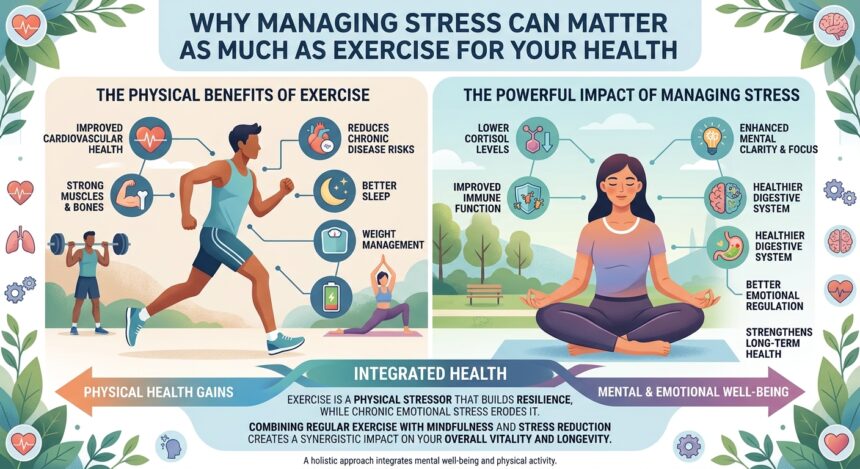
Most people who take their health seriously think about what they eat, how much they move, and how well they sleep. Stress tends to get lumped in as a lifestyle factor, something to manage on the side rather than a direct driver of physical health. The research suggests otherwise. Chronic stress does measurable damage to the body, and for people who are carrying significant amounts of it, addressing stress directly can matter as much as any training program or nutrition plan.
This is not to say that exercise is less important than it is. It is to say that stress deserves the same level of serious attention. Working with a stress therapist is one way people address chronic stress at a deeper level than lifestyle habits alone can reach. But understanding what stress is actually doing to the body is a useful starting point.
What Chronic Stress Actually Does to the Body
When the brain perceives a threat, it triggers the release of stress hormones, primarily cortisol and adrenaline. These hormones prepare the body for action: heart rate increases, muscles tense, digestion slows, and energy is redirected toward the systems needed for immediate survival. This response is useful in short bursts. The problem is when it stays switched on.
Chronically elevated cortisol disrupts nearly every major system in the body. It suppresses immune function, making the body more vulnerable to infection and slower to recover from illness or injury. It increases inflammation, which is a contributing factor in cardiovascular disease, metabolic disorders, and chronic pain conditions. It impairs sleep quality, affects hormonal balance, and interferes with the brain’s ability to regulate mood and concentrate. Over time, the cumulative effect of sustained stress activation is significant and measurable.
The Exercise Paradox
Exercise is one of the most effective tools for managing stress in the short term. Physical activity reduces cortisol, releases endorphins, and improves sleep, all of which help buffer the effects of stress. For many people, regular exercise is genuinely protective.
The paradox is that exercise cannot fully compensate for chronic stress, and in some cases, high-intensity training on top of an already-stressed nervous system can add to the load rather than reduce it. The body does not distinguish well between physical stress and psychological stress. Both draw on the same hormonal and recovery systems. Someone who is chronically sleep-deprived, emotionally overwhelmed, and running on cortisol may find that intense training leaves them more depleted rather than better.
Where Stress and Physical Health Intersect
The connection between stress and physical health shows up in ways people do not always recognize as stress-related. Persistent muscle tension and headaches. Digestive problems that do not have a clear physiological cause. Increased susceptibility to illness. Difficulty recovering from workouts that would previously have felt manageable. Disrupted sleep despite physical fatigue. These symptoms are often treated in isolation when the common thread running through them is an overloaded stress response.
Cardiovascular health is particularly relevant. Chronic stress raises blood pressure, increases heart rate over time, and contributes to arterial inflammation. Research consistently links high chronic stress to increased risk of heart disease, independent of other lifestyle factors. For people who are exercising and eating well but still carrying significant chronic stress, that remaining risk does not disappear.
The Habits That Help
Managing chronic stress is not primarily about doing more. It is often about doing less in a more intentional way. Several practices consistently show positive effects on the stress response:
· Sleep prioritized as a non-negotiable rather than a variable, cortisol regulation depends heavily on sleep quality and consistency
· Deliberate recovery built into training schedules, not as an afterthought but as part of the program
· Breathwork and mindfulness practices that activate the parasympathetic nervous system and interrupt chronic activation
· Reducing stimulant and alcohol use, both of which dysregulate cortisol and disrupt sleep architecture
· Time spent in low-demand, genuinely restorative activity rather than passive consumption
When Stress Needs More Than Lifestyle Changes
For some people, stress is not primarily a lifestyle problem. It is rooted in patterns of thinking, unresolved experiences, or circumstances that lifestyle habits cannot adequately address. Someone dealing with chronic work pressure, relationship difficulties, unprocessed anxiety, or a history of trauma may find that no amount of exercise, sleep hygiene, or mindfulness practice fully moves the needle.
In those cases, addressing stress at a deeper level, through therapy focused specifically on what is driving it, tends to produce more lasting change than behavioral interventions alone. The physical benefits follow. When the nervous system genuinely settles, sleep improves, inflammation decreases, recovery improves, and the body functions the way it was designed to. Stress management is not a soft supplement to physical health. For many people, it is the missing piece.