

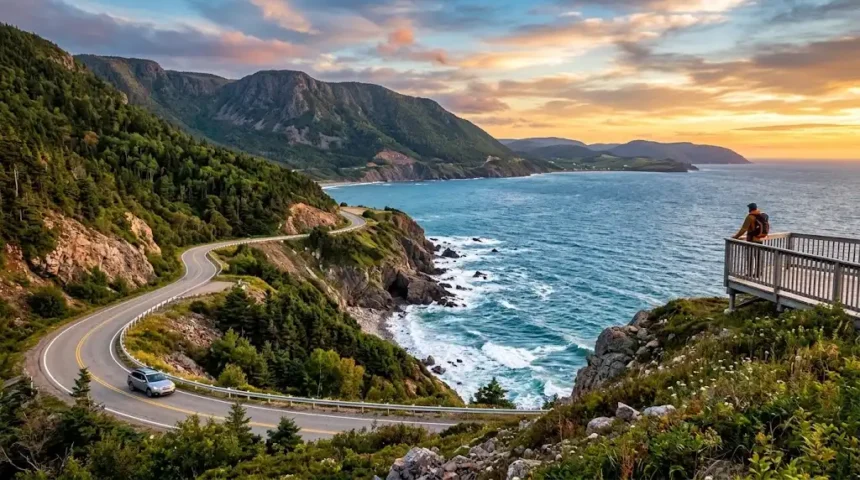
Cabot Trail Guide: Best Stops, Hikes & Scenic Views
The Cabot Trail is one of Canada’s most spectacular road trips, curving around northern Cape Breton Island through mountains, forests, coastal cliffs, fishing communities, and the dramatic landscapes of Cape Breton Highlands National Park. The route is famous for constantly changing scenery, where ocean viewpoints appear between wooded mountain roads and small villages sit beneath steep green slopes. Travelers come for scenic driving, hiking, photography, beaches, local seafood, and the feeling of exploring a road that rarely becomes visually repetitive. Although the Cabot Trail can technically be driven in a single day, rushing through it misses much of the experience. The route becomes far more memorable when you stop frequently, walk trails, explore communities, and leave time for unexpected viewpoints.
A successful Cabot Trail road trip depends more on pacing than mileage. Distances between major stops are not enormous, but winding roads, steep sections, hiking trails, viewpoints, meals, and spontaneous photo stops can make travel times longer than expected. Weather can also influence the journey because fog, rain, wind, and rapidly changing coastal conditions may affect visibility. A viewpoint that is completely hidden in the morning can become spectacular two hours later. Building flexibility into the itinerary therefore matters. Instead of treating the Cabot Trail like a highway to complete, think of it as a collection of landscapes and communities connected by one exceptionally scenic road.
Cape Breton Highlands National Park is the centerpiece of the northern part of the route. The park contains some of the most famous hiking trails and overlooks, including Skyline Trail, which provides sweeping views toward the Gulf of St. Lawrence. Other trails lead through forests, valleys, waterfalls, headlands, and coastal terrain. You do not need to be an experienced hiker to enjoy the park because several routes are relatively short and approachable. More demanding trails are available for travelers seeking a challenge. Combining scenic driving with one or two carefully chosen hikes usually creates a stronger experience than trying to walk every famous trail.
The communities around the trail are just as important as the scenery. Chéticamp reflects strong Acadian culture and provides an excellent base on the western side, while Ingonish is popular for beaches, hiking, golf, and access to the eastern park area. Smaller communities such as Pleasant Bay, Neil’s Harbour, Margaree Harbour, and Cape North add fishing traditions, local food, galleries, and quieter coastal atmosphere. Cape Breton is also deeply connected with Mi’kmaq culture and Gaelic heritage. Travelers who slow down enough to explore these cultural layers gain a more complete understanding of the region. The Cabot Trail is not simply a scenic loop carved through empty wilderness.
This Cabot Trail guide covers the best stops, hiking trails, scenic viewpoints, beaches, communities, food, driving direction, road-trip timing, seasonal planning, and practical tips for first-time visitors. It also explains how many days to spend and how to create an itinerary that balances driving with outdoor activities. Whether you have one ambitious day or an entire week, the key is choosing priorities rather than trying to stop everywhere. Travelers interested mainly in hiking will plan differently from photographers or families. With realistic pacing and a flexible schedule, the Cabot Trail can become one of the highlights of any Nova Scotia trip.
Why the Cabot Trail Is Worth Driving
The Cabot Trail is worth driving because very few road trips combine mountains and ocean so consistently. One moment you may be traveling through dense forest, and minutes later the road opens onto a cliffside view stretching across the Gulf of St. Lawrence. The route climbs into the Cape Breton Highlands before descending toward fishing villages and beaches, creating constant changes in elevation and scenery. These transitions make even ordinary driving feel like part of the attraction. You rarely need to wait long for another viewpoint, trailhead, or coastal stop. For travelers who enjoy road trips where the journey matters as much as the destination, the Cabot Trail fits almost perfectly.
Cape Breton Highlands National Park significantly strengthens the experience. The road passes through or alongside protected landscapes containing forests, wildlife habitat, rivers, waterfalls, plateaus, and dramatic coastal cliffs. Scenic overlooks allow travelers to appreciate the scale of the highlands without completing difficult hikes. Those who want deeper exploration can choose trails ranging from short forest walks to longer climbs. The national park also creates a sense of continuity along the northern route. Instead of moving between isolated attractions, you experience one larger landscape that changes gradually as you drive.
Another advantage is the combination of outdoor scenery with small-community culture. Chéticamp offers Acadian traditions, music, crafts, and seafood, while communities on the eastern side reveal different fishing and coastal influences. Gaelic culture is also important across Cape Breton, especially in music and storytelling. Local restaurants, bakeries, craft shops, and community events can add personality to the road trip. Stopping for lunch in a village often becomes more memorable than eating quickly at a generic roadside stop. Travelers who interact with the communities discover that Cape Breton’s character extends far beyond mountain viewpoints.
The Cabot Trail also works for different travel styles. Couples may enjoy scenic lodges and sunset viewpoints, while families can combine shorter hikes with beaches and picnic stops. Photographers can spend hours waiting for changing light along the coast. Active travelers may prioritize longer hikes, cycling, or kayaking, while slower travelers can focus on cafés, viewpoints, galleries, and short walks. This flexibility makes the route appealing to people with very different fitness levels and interests. You do not need to be an outdoor expert to enjoy the region.
Finally, the drive changes considerably by season. Summer brings long daylight and easy access to most outdoor activities, while autumn transforms the highlands with striking foliage. Spring can feel quieter and greener, though conditions may be cooler and some services more limited. Each period creates a different atmosphere, which is one reason people return. The route does not depend on one single landmark. Its appeal comes from the cumulative experience of roads, mountains, ocean, villages, forests, and changing weather. That variety gives the Cabot Trail unusually strong repeat-trip potential.
Best Stops Along the Cabot Trail
Chéticamp is one of the most important stops on the western side of the Cabot Trail and a practical place to stay overnight. The community is strongly associated with Acadian heritage and provides restaurants, accommodations, shops, fuel, and easy access to Cape Breton Highlands National Park. Travelers can explore the waterfront, try local seafood, visit cultural attractions, or simply use the town as a base for hiking nearby. The surrounding scenery is already impressive before the road enters the national park. Spending at least one evening here allows you to experience the area after day-trip traffic becomes lighter.
Pleasant Bay is another excellent stop, particularly for travelers interested in coastal scenery and whale-watching excursions. The village sits between dramatic sections of the highlands and offers a quieter atmosphere than larger tourism centers. Even if you are not taking a boat tour, the surrounding road views make Pleasant Bay worth a pause. Nearby lookouts can provide expansive ocean views when weather is clear. Because services are more limited than in Chéticamp or Ingonish, plan fuel and meals rather than assuming everything will be available at any hour. This small-community feel is part of its charm.
Cape North and the northern plateau area provide access to several less crowded attractions. Travelers willing to leave the main flow of popular stops may find quiet beaches, coastal viewpoints, local craft shops, and hiking opportunities. The northern section also helps break up the drive between Pleasant Bay and the eastern coast. Instead of treating it merely as a transit zone, allow time for small detours. Some of the most rewarding Cabot Trail memories come from places that do not appear on every social media itinerary. A quiet lookout can sometimes feel more special than the most famous crowded viewpoint.
On the eastern side, Ingonish is one of the strongest bases for outdoor activities. The area provides beaches, trail access, golf, restaurants, accommodations, and some of the most recognizable scenery in Cape Breton Highlands National Park. Freshwater Lake and Ingonish Beach create an unusual combination of lake and ocean recreation in a relatively compact area. Travelers can hike in the morning, relax by the water in the afternoon, and enjoy dinner nearby. Ingonish works particularly well for families and travelers who want a comfortable base with multiple activity options.
Neil’s Harbour and nearby coastal communities offer another attractive pause. The lighthouse, harbor atmosphere, ocean scenery, and nearby food options make this stretch enjoyable without requiring a long visit. The eastern Cabot Trail feels different from the dramatic western cliff sections, but its quieter coastal landscapes are equally appealing. Stop for photographs, coffee, or seafood rather than simply driving through. A strong Cabot Trail itinerary includes both famous national park viewpoints and smaller community experiences. The contrast prevents the trip from becoming a repetitive sequence of roadside overlooks.
Best Cabot Trail Hikes
The Skyline Trail is the most famous hike on the Cabot Trail and the one many first-time visitors prioritize. The trail crosses highland terrain before reaching a dramatic headland overlooking the Gulf of St. Lawrence and the winding road below. The final viewpoint is particularly impressive in clear weather, especially later in the day when light softens across the coast. Parts of the route are relatively moderate, making it accessible to many reasonably active travelers. However, exposed sections can feel windy, and weather may change quickly. Allow enough time to complete the walk without rushing back toward your car near darkness.
Middle Head Trail near Ingonish provides a different coastal experience. The route follows a narrow peninsula between ocean waters, offering viewpoints, forest sections, and opportunities to observe coastal scenery from multiple angles. It is a useful option for travelers staying on the eastern side of the park. The trail is long enough to feel rewarding without becoming an all-day expedition for many visitors. Wind can be strong near exposed headlands, so layered clothing is useful even on sunny days. The combination of forest and open coast makes this one of the most varied moderate hikes in the region.
Franey Trail is a stronger choice for travelers looking for elevation and panoramic views. The climb can feel demanding, especially during warm weather, but the viewpoint reveals a broad sweep of mountains, valleys, and water. From above, the landscape looks much larger and more rugged than it appears from roadside lookouts. Bring water and allow enough time for the climb and descent. The route can become slippery after rain, making proper footwear important. If you enjoy earning a viewpoint through physical effort, Franey is one of the most satisfying hikes around the Cabot Trail.
Aspy Trail offers another perspective on the northern highlands. Rather than focusing entirely on open coastline, the trail provides elevated views over a dramatic valley and surrounding mountains. The landscape can be particularly beautiful during autumn when forest colors spread across the slopes. Conditions may vary with season and recent weather, so checking trail information before departure is sensible. The route works well for travelers who want a meaningful hike without using most of the day. It also provides variety if you have already completed a coastal trail.
Shorter walks should not be overlooked. Trails leading toward waterfalls, rivers, forests, beaches, and smaller viewpoints can provide memorable experiences without requiring extensive time or physical effort. Families and travelers with limited hiking experience may prefer combining two shorter trails rather than completing one demanding route. Short hikes also fit better on days when you are covering a larger section of the Cabot Trail. Choose trails according to weather and energy rather than reputation alone. The best hike is the one you can enjoy comfortably while still having energy for the rest of the road trip.
Best Scenic Views on the Cabot Trail
The western side of the Cabot Trail contains some of the route’s most dramatic scenic views. As the road climbs north from Chéticamp into Cape Breton Highlands National Park, mountains rise sharply beside the Gulf of St. Lawrence. Several roadside lookouts reveal the road curving along cliffs with open water stretching toward the horizon. These views are especially powerful during clear mornings and late afternoons. Pull over only at designated areas rather than stopping suddenly on narrow sections. Taking time at official lookouts allows you to enjoy the scenery safely and without disrupting traffic.
The Skyline Trail viewpoint provides one of the most recognizable perspectives because it combines highland vegetation, ocean, cliffs, and the winding road below. Many photographs of the Cabot Trail are taken from this general area. Sunset can be beautiful, but hikers should plan carefully so they are not returning through fading light without preparation. Fog can also appear quickly and completely change visibility. If conditions are poor when you arrive, the view may still open later. Patience is useful in Cape Breton because coastal weather rarely follows a perfect schedule.
Lookoffs around French Mountain and surrounding highland sections provide another series of memorable scenes. Here, elevation makes the ocean feel far below while the road appears carved into the mountain landscape. These are excellent places to understand how dramatically the route climbs and descends. Strong wind is common in exposed areas, even when lower elevations feel calm. Secure hats, phones, and loose items before stepping out for photographs. A quick stop can easily become twenty minutes when the scenery is particularly clear.
The eastern side offers softer but equally attractive perspectives around Ingonish and nearby coastal roads. Beaches, bays, headlands, forest-covered slopes, and offshore water create more varied foregrounds for photography. Instead of one enormous cliff view, you often get layered compositions involving shoreline and mountains. Morning light can work especially well on this side, depending on season and cloud cover. Travelers staying in Ingonish should consider getting outside early at least once. Quiet roads and gentle light can create some of the most peaceful moments of the entire trip.
Do not overlook scenic views outside formal national park lookouts. Small harbors, roadside fields, fishing boats, rivers, beaches, and village streets can be just as photogenic. Some of the best Cabot Trail images come from stopping for lunch or turning down a short local road rather than standing at a famous viewing platform. Always respect private property and local traffic rules when photographing smaller communities. Scenic travel becomes more meaningful when landscapes include signs of everyday life. Cape Breton’s character comes from the relationship between people, mountains, roads, and sea.
Best Beaches and Coastal Stops
Ingonish Beach is one of the most popular coastal stops along the Cabot Trail and provides a refreshing break from driving or hiking. The beach sits in a dramatic setting with mountains and forest nearby, creating scenery that feels distinctly Cape Breton. Depending on season and weather, visitors may walk the shore, swim, relax, or simply enjoy the views. Water temperatures can remain cool, so swimming comfort varies considerably. Even if you do not enter the water, the beach works well for a picnic or afternoon pause. It is especially convenient when combined with nearby hiking trails.
Freshwater Lake sits close to Ingonish Beach and provides a different water experience. The lake is separated from the ocean by a narrow landform, creating an unusual opportunity to experience both freshwater and saltwater scenery within a small area. Walking routes and picnic spaces make this useful for families or travelers seeking a less demanding activity. The contrast is particularly interesting from elevated viewpoints. After a strenuous hike, spending time near the lake can help create a more balanced day. Not every Cabot Trail stop needs to involve another mountain climb.
North Bay and other beaches around the Ingonish area provide quieter alternatives depending on conditions and visitor levels. These coastal stretches may have fewer facilities but can feel more peaceful during busy summer periods. Always pay attention to water conditions because Atlantic beaches can experience currents, waves, and changing weather. If lifeguards or warning systems are present, follow their guidance. Beach time in Cape Breton should be approached differently from a tropical vacation. The scenery may be the main attraction even when the water is too cold or rough for comfortable swimming.
On the western side, coastal stops near Chéticamp and Margaree provide opportunities for sunset watching. The Gulf of St. Lawrence can produce beautiful evening light, especially when skies remain partly clear. A simple shoreline stop can become one of the most relaxing parts of the road trip after a day of driving and hiking. Bring an extra layer because temperatures often drop once the sun gets lower. Travelers staying in Chéticamp should consider planning at least one evening around sunset rather than immediately returning indoors after dinner.
Smaller beaches and coves around northern Cape Breton also reward travelers who enjoy detours. Some require leaving the main Cabot Trail briefly, which means they receive fewer casual visitors. Road conditions and facilities can vary, so approach remote coastal stops with realistic expectations. Carry water, snacks, and basic supplies rather than assuming every beach has services. These quieter locations can be excellent for photography, picnics, and simply listening to the ocean. If your schedule allows, one unplanned coastal stop can often feel more memorable than another carefully researched attraction.
Best Time to Drive the Cabot Trail
The best time to drive the Cabot Trail depends on whether you prioritize warm weather, hiking conditions, fall foliage, smaller crowds, or seasonal activities. Summer, particularly from late June through August, offers long daylight hours and broad access to trails, restaurants, accommodations, and outdoor experiences. Temperatures are generally comfortable, although rain and fog remain possible. This is also one of the busiest periods, especially around national park attractions. Booking accommodation earlier can provide better options. Long daylight makes summer especially useful if you want to combine hiking with scenic driving on the same day.
Early autumn is famous for dramatic fall color. Forested mountains can turn red, orange, yellow, and gold, creating some of the most spectacular scenery in Atlantic Canada. The exact timing of peak foliage varies with yearly weather conditions, so travelers should avoid expecting a single guaranteed week. Autumn also brings cooler mornings and shorter daylight compared with midsummer. Popular foliage periods can become busy, particularly during major events. If photography is the priority, staying several days improves your chances of seeing changing light and weather across different sections of the trail.
Late spring and early summer can provide a quieter experience. Forests become increasingly green, waterfalls may be strong from seasonal moisture, and roads can feel less crowded before the highest summer demand. However, weather may remain cool and certain tourism businesses can operate limited schedules early in the season. Travelers should verify accommodation, restaurant, and activity availability before assuming summer-level services. Layered clothing is especially useful. This period can suit travelers who value peaceful hiking more than swimming or extended beach time.
Winter creates an entirely different environment and is not the typical period for a first Cabot Trail road trip. Snow, ice, storms, limited services, reduced daylight, and seasonal closures can significantly affect travel. Some roads may still be accessible under suitable conditions, but winter driving requires greater experience and preparation. Many classic tourism activities are designed around the warmer months. Travelers seeking winter scenery should build the trip specifically around current conditions rather than simply applying a summer itinerary. Flexibility becomes essential.
Regardless of season, weather forecasts should be treated as guidance rather than certainty. Cape Breton can shift quickly between sunshine, cloud, rain, wind, and fog. Bring layers and waterproof protection even when the morning looks clear. If a major viewpoint is hidden, continue the trip rather than letting one cloudy stop define the day. Conditions may improve elsewhere on the route. The most successful Cabot Trail travelers plan around seasons but remain flexible hour by hour.
Clockwise or Counterclockwise on the Cabot Trail?
One of the most common planning questions is whether to drive the Cabot Trail clockwise or counterclockwise. Both directions provide the same landscapes, but the experience can feel slightly different depending on where you start, where you stay, and which side of the road offers the easiest access to particular lookouts. Travelers beginning around Baddeck often choose either direction according to accommodation plans. There is no universally correct answer. The stronger route is the one that aligns hiking times, sunset plans, weather, and overnight stops logically.
Driving clockwise may place some dramatic western coastal scenery later in the route depending on your starting point. This can work well if you want to reach Chéticamp or the national park during afternoon light. However, it can also mean arriving at popular viewpoints when they are busier. Counterclockwise travel may bring you toward eastern attractions and Ingonish earlier. Again, the exact advantage depends on your starting location. Instead of choosing solely because somebody online declared one direction superior, consider what you want to do that day.
Photographers should think about light rather than only road orientation. Sunrise and sunset affect different sides of the island differently, and cloud cover may matter more than direction. If a specific viewpoint is your priority, schedule that area for the time of day that best matches your goals. Staying overnight along the route gives much more flexibility than attempting a full loop from one distant base. You can also revisit a section the next morning if conditions were disappointing. Direction becomes less important once you stop trying to finish the entire drive in one uninterrupted day.
Traffic and roadside stops can influence convenience, particularly during busy periods. Some lookouts may be easier to enter or exit depending on your direction, but safe designated pullouts remain more important than trying to optimize every photograph. Never stop on narrow shoulders just because the view appears suddenly. Continue until you reach an appropriate area. The Cabot Trail contains enough viewpoints that missing one dangerous stop does not matter. Safety should always outrank the desire for a specific roadside image.
For most travelers, itinerary structure matters far more than clockwise versus counterclockwise debate. Decide where you want to sleep, which hikes are priorities, and what time you want to reach major scenic sections. Then choose the direction that creates the smoothest schedule. If you are spending two or three days on the trail, either direction can work beautifully. The road is scenic enough that there is no wrong orientation when you allow sufficient time. Flexibility matters more than following a rigid rule.
How Many Days Do You Need for the Cabot Trail?
A single day is technically enough to drive the entire Cabot Trail, but it is not the ideal way to experience it. Completing the loop quickly leaves limited time for hiking, meals, community stops, beaches, photography, and unexpected delays. Travelers who have only one day should choose a few priorities and accept that many places will be seen only from the road. Starting early becomes essential. Avoid attempting several long hikes in addition to the full drive. A one-day trip should focus on scenic overlooks and perhaps one moderate activity rather than trying to experience everything.
Two days creates a much better introduction. One night can be spent around Chéticamp, Ingonish, or another point along the trail, breaking the route into manageable sections. This allows you to complete at least one major hike, stop for local meals, and enjoy sunset without worrying about finishing the entire loop afterward. The second day can include another trail or beach before continuing. Two days also provides some weather flexibility. If fog hides the mountains during one afternoon, conditions may be clearer the following morning.
Three days is ideal for many first-time visitors. With this amount of time, you can explore both sides of Cape Breton Highlands National Park, spend time in communities, hike more than once, and take scenic stops without constantly calculating driving time. One day might focus on Chéticamp and western park scenery, another on northern highlands and Pleasant Bay, and the third on Ingonish and the eastern coast. This pace creates room for proper meals and spontaneous detours. Three days feels like a road trip rather than a transportation challenge.
Four or five days works especially well for photographers, hikers, families, and travelers who enjoy slow coastal exploration. Extra time can be used for whale watching, longer trails, beaches, golf, cultural experiences, or exploring routes beyond the main trail. You can also remain in one base for two nights, reducing packing and hotel changes. This becomes particularly valuable when traveling with children or substantial luggage. Longer stays allow you to react to weather instead of forcing activities into unsuitable conditions. A cloudy hiking day can become a community day without damaging the itinerary.
If the Cabot Trail is part of a larger Nova Scotia trip, balance time according to your interests. Travelers also visiting Halifax, the South Shore, Annapolis Valley, or other parts of Cape Breton should avoid sacrificing every destination just to add another night on the trail. However, rushing northern Cape Breton into a few hours often creates regret. For most travelers, two to three days provides the strongest balance. The route is short enough to feel manageable but rich enough to reward slow travel.
Food and Cultural Experiences Along the Cabot Trail
Seafood is one of the highlights of a Cabot Trail road trip. Lobster, mussels, scallops, haddock, crab, and other Atlantic seafood appear throughout coastal communities, with menus varying by season and availability. Eating near fishing harbors can add atmosphere to the experience, although not every waterfront restaurant is automatically the best choice. Ask local accommodation staff where they enjoy eating and pay attention to seasonal specials. A simple seafood meal after a day of hiking can be one of the most satisfying experiences on the route. Travelers who do not eat seafood will still find cafés, bakeries, pubs, and casual alternatives.
Chéticamp is particularly valuable for experiencing Acadian culture. French language, music, food traditions, crafts, and community history contribute to the area’s distinctive identity. Local hook rug traditions are also associated with the region and can be explored through galleries or cultural spaces. Rather than treating cultural attractions as quick shopping stops, take time to understand the stories behind the work. Speaking with local artists or visiting interpretive sites can make the community feel much more meaningful. The Cabot Trail becomes richer when travelers connect scenery with the people who have lived there for generations.
Gaelic heritage is another important part of Cape Breton’s cultural landscape. Music, dance, storytelling, and language traditions remain visible across parts of the island. Depending on travel dates, visitors may encounter live music sessions, concerts, community gatherings, or cultural demonstrations. These experiences can provide a wonderful evening after a day outdoors. Check local schedules when planning because performances may be seasonal or occur only on certain nights. Even travelers unfamiliar with Gaelic culture often find Cape Breton music immediately engaging.
Mi’kmaq culture is fundamental to understanding Cape Breton, known traditionally as Unama’ki. Travelers should recognize that Indigenous history in the region extends far beyond the creation of modern tourist routes and communities. Cultural centers, events, interpretive experiences, and Indigenous-led activities can provide opportunities to learn respectfully. Approach these experiences with curiosity rather than treating culture as entertainment. Learning even a small amount about the land’s deeper history changes how you understand Cape Breton. Scenic travel becomes more meaningful when the landscape is connected with the people whose histories are rooted there.
Food and culture also provide valuable alternatives during poor weather. If fog hides major viewpoints or heavy rain makes hiking unpleasant, spend more time in galleries, cafés, museums, craft shops, and community spaces. A successful Cabot Trail itinerary should not depend entirely on perfect skies. Some rainy days produce unexpectedly memorable cultural experiences because travelers slow down and talk with people instead of moving continuously. Weather flexibility therefore benefits more than logistics. It can reveal a side of Cape Breton that a purely scenic drive might miss.
Practical Cabot Trail Driving Tips
Fuel planning is simple but important. Larger communities provide gas stations, but long rural stretches may offer fewer services than travelers are accustomed to in urban areas. Do not wait until the fuel gauge is nearly empty before deciding to stop. Filling up when convenient removes unnecessary anxiety. The same principle applies to food and water. Carry snacks and a reusable water bottle because restaurants may have limited hours outside busy periods. Basic preparation makes the road trip more relaxed.
Drive more slowly than you might on an ordinary highway trip. The Cabot Trail includes curves, elevation changes, wildlife, cyclists, scenic pullouts, and vehicles entering or leaving viewpoints. Weather can also reduce visibility suddenly. Speed limits should be treated as maximums rather than targets when conditions are poor. Avoid becoming distracted by scenery while driving. If something looks spectacular, continue until you reach a safe designated stopping area rather than trying to photograph it from the road.
Wildlife awareness matters, particularly around dawn, dusk, and forested sections. Moose are present in Cape Breton Highlands National Park, and collisions can be extremely serious. Deer and other wildlife may also appear near roads. Reduce speed when visibility is limited and stay alert around warning signs. Never approach wildlife closely for photographs. Animals that appear calm can behave unpredictably, especially when people block their movement or approach young.
Phone service may be inconsistent in parts of the highlands and remote coastal areas. Download offline maps before leaving larger communities and save accommodation addresses, trail information, and important reservation details. A portable charger is useful because navigation and photography can drain batteries throughout the day. Do not rely on constant mobile connectivity for every decision. Having a basic paper map or screenshot of the route can provide additional reassurance. This is especially helpful if you take side roads away from the main loop.
Finally, avoid overplanning driving times. Navigation apps can estimate road travel, but they do not account for how often you will stop once you see the scenery. A two-hour segment can easily become four hours after a hike, lunch, beach visit, and several overlooks. Build generous margins around hotel check-ins, dinner reservations, and sunset plans. The Cabot Trail is most enjoyable when you are not constantly racing a clock. Let the road take longer than expected.
A Relaxed Cabot Trail Itinerary
A two-day itinerary can begin on the western side with Chéticamp and Cape Breton Highlands National Park. Spend the first morning exploring Chéticamp before entering the park and stopping at major coastal lookoffs. Complete Skyline Trail if conditions are suitable, then continue north toward Pleasant Bay or return to Chéticamp depending on accommodation. Keep the evening flexible for sunset, dinner, and a waterfront walk. This schedule provides enough time to appreciate the dramatic western scenery without covering the entire loop in one exhausting day.
On the second day, continue through the northern highlands toward Cape North and the eastern side. Choose one moderate hike or several shorter stops depending on energy. Pause in Neil’s Harbour or another coastal community for lunch before reaching Ingonish. Spend the afternoon around the beach, Freshwater Lake, or a nearby trail. If your route continues south afterward, avoid leaving too late. Two days works best when each day has one major hiking or outdoor priority rather than several demanding activities.
A three-day itinerary provides more breathing room. Day one can focus on Chéticamp, Acadian culture, and western coastal views. Day two can include Skyline Trail, Pleasant Bay, northern viewpoints, and an overnight stay closer to Cape North or Ingonish. Day three can be dedicated to eastern trails such as Middle Head or Franey and time around beaches. This division reduces long daily drives and creates more opportunities for morning and evening photography. It also provides flexibility if one activity is affected by weather.
Travelers with four days can slow the route further and add experiences such as whale watching, longer hikes, cultural stops, or additional beaches. Spend two nights in one area rather than changing accommodation constantly. For example, Chéticamp can serve as a base for western hikes, while Ingonish works well for eastern activities. This reduces luggage handling and allows you to repeat favorite locations. If weather changes, you can swap hiking and cultural days more easily. Longer itineraries usually feel more relaxed rather than simply containing more attractions.
Whatever itinerary you choose, leave at least one open block of time. You may discover a trail that looks appealing, encounter perfect light at a viewpoint, or decide that a beach deserves an extra hour. Road trips become frustrating when every stop is attached to a deadline. The Cabot Trail is particularly suited to spontaneous travel because scenery changes continuously. Plan enough to avoid logistical problems, then allow the rest of the experience to develop naturally. That balance usually produces the best memories.
Conclusion
The Cabot Trail deserves its reputation as one of Canada’s great scenic drives because it combines mountains, ocean, forests, fishing communities, beaches, and national park landscapes within one unforgettable route. The most famous sections around Cape Breton Highlands National Park are spectacular, but the experience becomes richer when you also stop in places such as Chéticamp, Pleasant Bay, Ingonish, Neil’s Harbour, and smaller communities. Each area contributes something different. Treating the journey as a collection of landscapes rather than one continuous drive helps prevent rushing. The route rewards travelers who give it time.
Hiking is one of the best ways to move beyond roadside views. Skyline Trail offers an iconic coastal perspective, while Franey, Middle Head, Aspy, and shorter forest or waterfall trails provide different experiences. You do not need to complete every popular hike to feel that you have seen the region properly. Choose trails according to weather, fitness, and available daylight. One excellent hike enjoyed slowly is more valuable than three rushed trails completed only for photographs. Leave enough energy to appreciate the rest of the route.
Two to three days is ideal for many first-time visitors, although four or five days provides greater flexibility. A single day can work only when time is limited and expectations are realistic. Staying overnight along the route lets you experience sunrise, sunset, quieter communities, and changing weather without driving continuously. It also makes cultural experiences and proper meals easier to include. Cape Breton feels very different once you stop treating accommodation simply as a place to sleep between driving hours. Slower travel allows the region to develop a stronger sense of place.
Season also shapes the experience. Summer provides long daylight and broad activity availability, while autumn delivers some of the most famous foliage scenery in eastern Canada. Spring can feel peaceful and green, and winter requires a completely different style of planning. Whatever month you visit, prepare for rapidly changing weather. Pack layers, waterproof protection, sturdy footwear, water, snacks, and offline navigation. The right preparation allows you to enjoy sudden changes rather than treating them as disruptions.
Ultimately, the best Cabot Trail road trip is not the one with the greatest number of stops. It is the one that gives you enough time to watch the ocean from a highland overlook, hike through Cape Breton scenery, eat in a small community, walk along a beach, and change plans when something unexpected catches your attention. Drive carefully, stop often, and leave space for weather and spontaneity. When experienced at the right pace, the Cabot Trail becomes far more than a famous scenic road. It becomes a complete Cape Breton journey.
Frequently Asked Questions About the Cabot Trail
How long does it take to drive the Cabot Trail?
The full route can be driven in a day if you make limited stops, but that approach leaves little time for hiking, beaches, meals, and viewpoints. Two to three days is a much better choice for first-time visitors who want to experience the trail without constantly rushing.
What is the best hike on the Cabot Trail?
Skyline Trail is the most famous because of its dramatic views over the Gulf of St. Lawrence and the winding coastal road below. Franey, Middle Head, and Aspy are also excellent options for travelers seeking different scenery or more demanding hiking.
Is it better to drive the Cabot Trail clockwise or counterclockwise?
Both directions provide excellent scenery, and neither is universally better. Choose based on your accommodation, hiking plans, weather, and whether you want to reach the western or eastern coastal sections at a particular time of day.
What is the best time of year to drive the Cabot Trail?
Summer is excellent for long daylight, hiking, and broad tourism services, while early autumn is especially popular for colorful foliage. Spring can provide quieter travel, but weather and seasonal business schedules require more planning.
Can you drive the Cabot Trail in one day?
Yes, driving the Cabot Trail in one day is possible, but you will need to limit hikes and longer stops. If your schedule allows, staying at least one or two nights along the route creates a much more relaxed and memorable experience.