

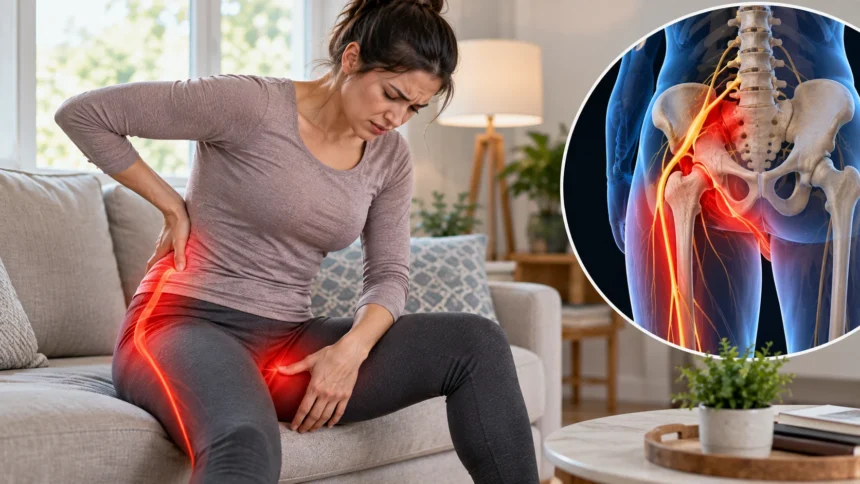
Sciatica usually causes pain that travels from the lower back or buttock into the back or side of the leg, but some people also notice discomfort around the groin. That can be confusing because groin pain is not considered the most typical sciatica symptom. Several nerves, joints, muscles, and organs can create pain in this area.
Groin pain alongside back or leg symptoms should therefore be interpreted carefully rather than automatically blamed on the sciatic nerve. Hip problems, upper lumbar nerve irritation, muscle strains, hernias, and pelvic conditions can produce overlapping symptoms. Understanding the pain pattern and associated signs can help you recognize when simple self-care may be reasonable and when medical evaluation is important.
Can Sciatica Really Cause Groin Pain?
Classic sciatica usually involves irritation of nerve roots that contribute to the sciatic nerve, often causing pain through the buttock and down the leg. Groin pain is less typical because sensation in the groin is supplied mainly by other nerves and nerve roots. For this reason, isolated groin pain should not automatically be labeled sciatica.
However, some lower-back conditions can irritate nerves higher in the lumbar spine and produce pain closer to the front of the hip, upper thigh, or groin. A person may describe this generally as “sciatica” even though the specific nerve distribution differs from classic sciatic nerve pain. This distinction matters because diagnosis and treatment may be different.
Pain can also be referred from the spine without following one perfectly defined nerve pathway. That means back problems can occasionally be felt in unexpected areas. Still, persistent groin pain deserves a broader assessment because the hip, pelvis, abdominal wall, and other structures can create similar symptoms.
What Does Sciatica Usually Feel Like?
Sciatica often causes pain that begins in the lower back or buttock and travels down one leg. The discomfort may feel sharp, burning, electric, aching, or shooting. Some people also experience tingling, numbness, or weakness depending on which nerve root is irritated and how severe the problem is.
Symptoms may become worse while sitting, bending, coughing, sneezing, or remaining in certain positions. Others notice more discomfort while walking or standing. The pain can extend into the thigh, calf, or foot and may affect only one side, although the exact pattern varies considerably between individuals.
Groin discomfort is therefore unusual enough that another cause should remain on the list of possibilities. If pain mainly affects the groin without typical leg symptoms, a hip or pelvic source may be more likely. A healthcare professional can evaluate the pattern rather than relying entirely on one symptom or self-diagnosis.
Upper Lumbar Nerves and Groin Pain
The upper lumbar nerve roots supply areas closer to the front of the thigh and groin than the lower nerve roots associated with typical sciatica. Irritation around these upper levels can therefore create pain in a different distribution. This may sometimes be described broadly as lumbar radiculopathy rather than classic sciatica.
Symptoms can include groin pain, front-thigh discomfort, numbness, or weakness depending on the affected nerve. Some people also have lower-back pain at the same time. Because these symptoms can resemble hip problems, the location alone is not always enough to identify where the pain actually begins.
A neurological examination may check strength, reflexes, sensation, and movements that reproduce symptoms. Imaging is not necessary in every case, but it may be considered when significant weakness, trauma, persistent symptoms, or other concerning features are present. The evaluation should focus on both spinal and non-spinal causes.
Hip Problems That Can Mimic Sciatica
Hip joint conditions commonly cause pain in the groin, making them an important alternative explanation. Arthritis, labral problems, impingement, and other hip disorders may produce discomfort during walking, climbing stairs, getting in and out of a car, or rotating the leg. Some people also feel pain around the buttock or upper thigh.
Hip pain can overlap with lower-back pain because the two regions work together during movement. Limited hip mobility may also make the back feel more uncomfortable, which can create the impression that every symptom comes from one source. In reality, both areas may contribute at the same time.
Pain that worsens mainly when the hip rotates or when weight is placed through the leg may deserve a hip-focused evaluation. Groin clicking, catching, stiffness, or reduced range of motion can provide additional clues. Persistent symptoms should be assessed rather than repeatedly treated as nerve pain without confirmation.
Muscle Strains and Other Causes of Groin Pain
A groin strain involving the adductor muscles can develop after running, kicking, changing direction, slipping, or performing unfamiliar exercise. Pain is often felt along the inner thigh or near the groin and may worsen when squeezing the legs together. Local tenderness is also common after a muscle-related injury.
Abdominal wall problems and hernias can also cause groin discomfort. A hernia may create aching, pressure, or a noticeable bulge that becomes more obvious with coughing, lifting, or straining. These symptoms are different from typical sciatica and should be evaluated appropriately if a hernia is suspected.
Pelvic and reproductive conditions can also produce groin or lower abdominal pain. Symptoms such as pelvic discomfort or cramps after sex may have causes unrelated to sciatica and deserve separate consideration. The location of pain alone cannot reliably identify whether the spine, muscles, joints, or pelvic organs are responsible.
How Doctors Tell Sciatica From Other Causes
Diagnosis usually begins with a detailed history of where the pain started, where it travels, and which movements make it better or worse. A clinician may ask about numbness, weakness, urinary symptoms, injuries, sports, work activities, and hip stiffness. These details help narrow the list of possible causes.
The physical examination may include lower-back movement, hip rotation, muscle strength, reflexes, sensation, and specific nerve-tension tests. The groin and surrounding muscles may also be examined when appropriate. Comparing several findings is more useful than relying on one movement or one painful location.
Imaging may be recommended when the examination suggests a particular hip, spine, or pelvic problem, but it is not always required immediately. Many people have imaging changes that are unrelated to their pain. Test results should therefore be interpreted alongside symptoms and the physical examination rather than treated as the diagnosis by themselves.
What You Can Do for Mild Symptoms
If the pain is mild and there are no serious warning signs, staying gently active is often reasonable. Short walks, comfortable position changes, and avoiding movements that clearly worsen symptoms may help prevent excessive stiffness. Complete bed rest is usually unnecessary for ordinary back-related pain and can sometimes make movement feel harder.
Heat or cold may provide temporary comfort depending on personal preference. Gentle mobility can also be useful, but aggressive stretching is not recommended when symptoms feel electric, burning, or strongly radiating. Nerve-related pain may worsen when irritated tissues are repeatedly stretched beyond their comfortable range.
Over-the-counter pain medicine may help some people, but these medications are not suitable for everyone. Other medical conditions, pregnancy, allergies, kidney problems, stomach issues, and drug interactions can affect safety. A pharmacist or healthcare professional can advise whether a particular medication is appropriate for your situation.
Exercises and Movement for Sciatica-Like Pain
Exercise should match the likely cause rather than follow a one-size-fits-all routine. Some people feel better with walking and gentle spinal movement, while others respond better to hip strengthening or carefully selected mobility exercises. The key is choosing movements that do not progressively worsen radiating symptoms.
Strengthening the hips, glutes, trunk, and legs may help improve overall movement capacity over time. Bridges, bird dogs, controlled squats, and other low-load exercises may be appropriate for some people. Start gradually and pay attention to how symptoms behave during the exercise and later that day.
Stop an exercise if it causes increasing numbness, weakness, sharp groin pain, or symptoms spreading farther down the leg. Mild muscular effort is different from worsening nerve pain. A physical therapist can help identify movements that are more appropriate when symptoms are persistent or difficult to interpret.
When Groin Pain With Sciatica Is an Emergency
Seek urgent medical attention if back or leg pain occurs with new bladder or bowel control problems, numbness around the groin or saddle area, or significant weakness in the legs. These symptoms can indicate serious nerve compression and require prompt evaluation rather than home treatment.
A sudden painful groin bulge, especially with nausea, vomiting, or severe abdominal pain, can also require urgent medical care because some hernias can become trapped. Severe pain following major trauma or inability to bear weight on the leg should likewise be assessed promptly.
Fever, unexplained weight loss, rapidly worsening pain, or symptoms associated with serious illness are additional reasons to seek medical evaluation. Most cases of sciatica are not emergencies, but groin symptoms broaden the range of possible causes, so unusual or severe symptoms should not be ignored.
When to See a Healthcare Professional
Arrange a non-emergency medical evaluation if groin pain continues for several days to weeks, repeatedly returns, or interferes with walking, sleep, exercise, or work. Persistent symptoms may require assessment of the spine, hip, abdominal wall, muscles, or pelvic structures depending on the pattern.
Professional evaluation is particularly useful when you cannot tell whether the pain comes from the back or hip. A clinician can test hip motion, nerve function, strength, and tenderness to determine which findings fit together. This can prevent months of stretching or treating the wrong area.
You should also seek care if numbness or weakness is becoming more noticeable, even when pain itself is manageable. Neurological changes can provide important information about nerve involvement. Early assessment may help clarify whether conservative treatment is appropriate or whether additional investigation is needed.
Conclusion
Sciatica can occasionally be associated with discomfort near the groin, but groin pain is not one of its most typical symptoms. Classic sciatic pain usually travels through the buttock and leg, while upper lumbar nerves, the hip, muscles, hernias, and pelvic conditions are more common alternative explanations for groin symptoms.
The overall pattern matters more than the location alone. Pain traveling down the leg with numbness or tingling may suggest nerve involvement, while groin pain during hip rotation may point more strongly toward the hip. A careful examination can distinguish between conditions that may feel very similar at first.
Seek urgent help for saddle numbness, bladder or bowel changes, major weakness, severe trauma, or other serious warning signs. For persistent but less urgent symptoms, professional assessment can help identify the true source. Treating the correct cause is far more useful than assuming every groin symptom accompanying back pain is sciatica.
FAQs
Can sciatica pain travel into the groin?
Classic sciatica usually travels through the buttock and leg rather than the groin. Groin pain can sometimes occur with upper lumbar nerve irritation or referred spinal pain, but other causes should also be considered.
What nerve can cause groin pain?
Several upper lumbar and pelvic nerves provide sensation around the groin. Irritation involving these nerves can create groin discomfort, but hip, muscle, hernia, and pelvic conditions may produce similar symptoms.
How can I tell if groin pain is from my hip or back?
Hip-related pain often worsens with hip rotation or weight-bearing, while spinal nerve pain may include radiating symptoms, tingling, or numbness. A physical examination is often needed to distinguish them accurately.
Is groin numbness with sciatica serious?
Yes, especially if numbness affects the saddle area or occurs with bladder, bowel, or major leg weakness. These symptoms require urgent medical evaluation because they may indicate significant nerve compression.
Should I stretch if sciatica causes groin pain?
Gentle movement may be appropriate, but aggressive stretching can worsen some nerve-related symptoms. If groin pain is persistent, radiating, numb, or difficult to explain, get the cause assessed before forcing stretches.