
Backyard Landscaping Ideas for Outdoor Living
A well-designed backyard can become much more than an attractive view from inside your home. With thoughtful landscaping, it can function as an outdoor living room, dining space, entertainment area, quiet retreat, and place for family activities. The best backyard landscaping ideas for outdoor living combine attractive plants with practical features such as comfortable seating, walkways, shade, lighting, and gathering spaces. Instead of filling the yard with isolated decorative elements, successful landscaping creates areas that naturally support how you want to spend time outside.
Outdoor living has become increasingly focused on creating purposeful zones rather than treating the entire yard as one undivided space. Houzz’s 2026 outdoor trends research found seating areas, dining areas, quiet retreats, gardening spaces, and outdoor cooking zones among the most common features homeowners are incorporating into outdoor renovations. This approach makes a backyard feel more like an extension of the home because different parts of the landscape support different everyday activities.
A beautiful outdoor space should also fit your lifestyle, climate, property size, and maintenance preferences. Someone who enjoys entertaining may prioritize a large patio and outdoor kitchen, while another homeowner might prefer a peaceful garden with shade trees and a small reading area. Families may need flexible lawn space, durable materials, and safe paths. The most successful backyard designs begin with how the area will actually be used rather than adding features simply because they are currently fashionable.
You do not need an enormous budget or a large property to improve outdoor living. Small changes such as rearranging seating, adding layered plants, creating a pathway, installing warm outdoor lighting, or defining one comfortable gathering area can completely change how a backyard feels. Larger projects can then be completed gradually as your needs and budget develop. This guide explores practical landscaping ideas for patios, privacy, outdoor kitchens, shade, plants, lighting, low-maintenance yards, small spaces, and relaxing backyard retreats.
Create Separate Outdoor Living Zones
One of the most effective ways to improve backyard functionality is to divide the landscape into zones designed for specific activities. You might create one area for outdoor dining, another for lounging, a small garden corner for reading, and an open section for children or pets. These spaces do not need physical walls between them. Changes in paving, planting, furniture placement, lighting, or elevation can define each zone while allowing the entire backyard to remain visually connected and easy to move through.
Zoning has become particularly important as homeowners use outdoor areas for more activities. Houzz’s 2026 outdoor research found that lounge or seating areas appeared in 83% of the outdoor living spaces covered by its survey, while dining, quiet retreat, gardening, and outdoor cooking areas were also common. The trend reflects a shift toward backyards that function more like complete living environments rather than simple lawns with furniture placed near the house.
Start by identifying the activities that matter most to your household. If you frequently host friends, a dining table near the kitchen and a separate conversation area around a fire feature may make sense. If relaxation matters more, you might prioritize a shaded lounge surrounded by plants. Gardeners could dedicate sunny areas to raised beds while keeping seating closer to the home. Ranking activities by importance prevents the yard from becoming overloaded with features that look appealing but are rarely used.
The zones should also connect naturally through pathways and visual cues. A narrow gravel path can lead from the patio to a garden bench, while repeated plants can visually link different parts of the yard. Avoid arranging areas so randomly that walking between them feels awkward. Think of the landscape as an outdoor floor plan. When movement, furniture, planting, and hardscape work together, even a relatively small backyard can support several functions without feeling crowded or disorganized.
Build a Comfortable Patio or Deck
A patio or deck often becomes the foundation of an outdoor living area because it provides a stable surface for furniture, dining, grilling, and entertaining. The right size depends on how you intend to use the space. A small patio may be enough for two lounge chairs and a side table, while larger families may need room for a dining table, sectional seating, and circulation. Designing the surface around actual furniture dimensions helps prevent creating a patio that feels either cramped or unnecessarily oversized.
Material selection should balance appearance, durability, climate, maintenance, and budget. Concrete can provide a simple and versatile foundation, while pavers, brick, natural stone, gravel, and wood can create different styles. The material does not need to be the most expensive option to look attractive. Repeating colors or textures already present on the house can make the patio feel visually connected to the architecture instead of appearing like a separate feature placed randomly in the yard.
Plants can soften the hard edges of a patio and make the space feel more integrated with the landscape. Instead of surrounding the area entirely with pavement, leave planting beds around selected edges for ornamental grasses, shrubs, flowers, or small trees. Layered planting also creates depth and can provide privacy from neighboring properties. Contemporary landscape advice increasingly emphasizes balancing hardscape with greenery rather than allowing large paved areas to dominate the outdoor environment.
Furniture placement should leave enough room for people to move comfortably through the space. Avoid pushing every chair against the outer edge simply to maximize capacity. Create conversational groupings and keep major walking routes clear. Outdoor rugs, side tables, cushions, planters, and weather-resistant accessories can make the area feel more like an indoor room. The objective is to create a space comfortable enough that people naturally want to sit outside rather than returning indoors after only a few minutes.
Add Shade for Comfortable Outdoor Living
Shade can dramatically increase how often you use a backyard, especially during warm weather. A beautiful patio may remain empty during the hottest part of the day if it receives intense direct sunlight. Pergolas, covered patios, umbrellas, shade sails, trees, and retractable awnings can all make outdoor areas more comfortable. The best solution depends on the size of the space, architecture of the house, direction of the sun, climate, and whether you want permanent or adjustable shade.
Pergolas are popular because they create architectural definition without completely enclosing the outdoor space. They can sit above dining tables, lounges, or outdoor kitchens and may be combined with climbing plants, curtains, lighting, or adjustable shade systems. Covered patios provide stronger protection from sun and rain but normally require greater investment and planning. Freestanding umbrellas remain one of the easiest solutions for homeowners who want flexible shade without committing to a permanent structure.
Trees provide a more natural form of shade while adding height, movement, habitat, and seasonal interest to the landscape. Climate-resilient garden guidance also highlights shade trees as useful components of landscapes designed to cope with hotter conditions. However, tree selection should account for mature height, root systems, local climate, available space, and distance from buildings or utilities. A small tree placed correctly can eventually transform a sunny corner into one of the most inviting areas of the yard.
Think about when you actually use the backyard before positioning shade. Morning coffee may require protection from a different direction than late-afternoon dining because the sun moves across the property throughout the day. Observe the yard at several times before building a permanent structure. Combining fixed shade with adjustable options can provide the greatest flexibility. For example, a pergola might cover the main seating area while an umbrella provides additional protection over a smaller table when needed.
Design an Outdoor Dining Area
An outdoor dining area can turn ordinary meals into part of the backyard experience and encourage family members to spend more time outside. Place the dining zone close enough to the kitchen that carrying dishes, drinks, and food does not become inconvenient. At the same time, avoid positioning the table directly in a narrow doorway or major traffic route. A dedicated surface, overhead shade, comfortable chairs, and nearby lighting can make the area practical for everything from breakfast to evening entertaining.
Dining furniture should be sized according to the available space rather than the maximum number of guests you might occasionally host. An oversized table can dominate a small patio and make circulation uncomfortable. Extendable tables or additional folding chairs can provide flexibility for larger gatherings without consuming space every day. Choose materials designed for outdoor exposure, and consider how easily cushions, furniture covers, or accessories can be stored when weather conditions become harsh.
Lighting is particularly important because outdoor dining often continues after sunset. Pendant fixtures beneath a covered structure, wall-mounted lights, string lights, and subtle landscape lighting can provide enough visibility without creating the harsh effect of bright floodlights. Houzz’s 2026 study found outdoor lighting in 66% of lounge areas included in its research, reflecting the importance of extending backyard usability beyond daylight hours.
Surround the dining area with enough greenery to make the setting feel pleasant while avoiding plants that constantly interfere with chairs or walking routes. Fragrant herbs, container plants, ornamental grasses, or compact shrubs can add texture and atmosphere. If you enjoy gardening, placing herbs close to the cooking and dining zones can also make them convenient to use. The goal is to create an eating area that feels connected to the garden without requiring guests to navigate branches, mud, or tightly packed planting beds.
Create an Outdoor Kitchen or Cooking Zone
An outdoor kitchen can become a natural gathering point for homeowners who regularly entertain or enjoy cooking outside. It can be as simple as a quality grill with preparation space or as elaborate as a built-in kitchen with cabinets, refrigeration, sink, cooktop, and storage. Houzz’s 2026 outdoor trends research shows outdoor kitchens increasingly functioning as complete entertaining hubs, with grills remaining common alongside refrigerators, sinks, cooktops, cabinetry, and other built-in features.
Before building a large kitchen, consider how frequently you will realistically use each feature. A dedicated pizza oven might sound appealing, but it may not justify the space or expense if used only once or twice each year. Start with the functions you already use regularly, such as grilling and food preparation. Counter space is often more valuable than homeowners initially realize because it provides room for ingredients, serving dishes, drinks, and utensils while reducing repeated trips indoors.
Location is also critical. The outdoor cooking zone should be reasonably close to the indoor kitchen while keeping smoke and heat away from doors, windows, and primary seating areas. Consider wind direction and ventilation when positioning grills or cooking appliances. Permanent kitchens involving plumbing, electricity, gas, or substantial structures may require professional design and local permits. Houzz’s research indicates infrastructure work is common in more elaborate outdoor kitchen projects, reinforcing the importance of planning utilities early rather than adding them afterward.
Use landscaping to integrate the cooking area rather than allowing it to feel like an isolated collection of appliances. A pergola can provide definition, while nearby planters, herb beds, and layered greenery soften cabinets and hard surfaces. Keep plants far enough away from heat and cooking equipment to remain practical and safe. Comfortable nearby seating also allows the cook to remain part of the conversation instead of being separated from everyone while preparing meals.
Use Native and Low-Maintenance Plants
Plants are essential to backyard landscaping because they provide color, texture, privacy, shade, seasonal interest, and a softer contrast to patios and structures. However, the right plants should match your local climate and growing conditions. Native and regionally appropriate species can be useful because they are adapted to local environmental conditions. EPA WaterSense guidance specifically recommends native, regionally appropriate, and lower-water plants as part of water-smart landscape design.
Low-maintenance landscaping has also become a strong priority for homeowners who want attractive outdoor living areas without spending every weekend trimming, watering, and replacing plants. Houzz’s 2026 research found 73% of surveyed renovating homeowners choosing low-maintenance plants, while native, pollinator-friendly, and drought-resistant selections were also popular. These choices can create landscapes that feel fuller and more natural while aligning maintenance requirements more closely with the homeowner’s available time.
Layer plants by height instead of arranging everything in one flat row. Groundcovers and flowers can occupy the lowest level, followed by grasses or medium shrubs, with taller shrubs and small trees providing the background. Repeating several key plants throughout the landscape creates consistency and helps different areas feel connected. Naturalistic layered planting is also increasingly used in climate-resilient gardens because it can provide visual richness while helping landscapes respond more effectively to local conditions.
Avoid choosing plants entirely because they looked attractive in a photograph. Sun exposure, soil, drainage, rainfall, winter temperatures, mature plant size, and maintenance requirements all influence whether a plant will succeed in your yard. A species that thrives in one region may struggle in another. Visiting a reputable local nursery or consulting regional horticultural guidance can help narrow the choices. Healthy plants suited to the site generally create a more attractive landscape than struggling plants selected solely for a particular aesthetic.
Add Privacy With Plants and Structures
Privacy can make an outdoor living area feel much more comfortable, particularly in neighborhoods where homes are positioned close together. Instead of relying only on one tall fence, combine several techniques such as evergreen shrubs, small trees, decorative screens, trellises, pergolas, and layered planting. The combination can feel softer and more intentional than creating one solid visual barrier around the entire yard. It can also allow you to screen specific problem views without making the property feel enclosed.
Start by identifying exactly where privacy is needed. You may only need to screen a neighboring window overlooking your seating area rather than blocking every boundary. Strategic placement can reduce both cost and maintenance. A group of narrow upright shrubs or a small ornamental tree may solve a specific sightline more effectively than planting a continuous hedge. This targeted approach also preserves useful views, airflow, and sunlight in other parts of the garden.
Layered planting is especially useful around pools, patios, hot tubs, or reading areas because it creates both screening and atmosphere. Recent landscape design advice emphasizes multi-layered plantings around outdoor retreats and pools as a way to blend built features into the landscape while increasing privacy. Combining plants with different heights and textures usually feels more natural than depending on a single species arranged in a rigid line.
Screens and trellises can provide immediate privacy while plants mature. Wood slats, metal panels, lattice, or climbing structures can also become design features rather than purely functional barriers. If using vines, choose species appropriate for your climate and the strength of the support structure. Outdoor curtains may work beneath covered patios or pergolas when adjustable privacy is preferred. The strongest solutions make the seating area feel protected without turning the entire backyard into a closed box.
Use Outdoor Lighting to Extend the Evening
Landscape lighting allows you to continue using the backyard after sunset while adding atmosphere and improving visibility along important paths. Instead of installing one extremely bright light over the entire yard, use several softer sources for different purposes. Path lights can guide movement, wall fixtures can illuminate entrances, and accent lights can highlight trees or architectural features. String lights and pendants may create a warmer feeling around dining or lounge areas, making the landscape more inviting during evening gatherings.
Lighting should follow the way people move through the backyard. Prioritize stairs, changes in elevation, pathways, cooking areas, doors, and other locations where visibility matters. Decorative lighting can then be layered on top. Houzz’s current outdoor-living research shows lighting is widely used in lounge areas, reflecting its practical role in making outdoor spaces usable beyond daytime hours.
Avoid excessive brightness because too much illumination can remove the relaxing character of an outdoor setting and create unnecessary glare. Downlighting from trees or structures can create gentle pools of light, while small accent fixtures can reveal plant textures without making the garden resemble a stadium. Use warmer light where possible around seating and dining areas. Motion-activated lighting may be useful near entrances or less frequently used sections where continuous illumination is unnecessary.
Solar-powered fixtures can be convenient for decorative locations where wiring would be difficult, although performance depends on sunlight exposure and product quality. Hardwired low-voltage systems may provide greater consistency for permanent landscape lighting. Whichever system you choose, think about maintenance and future plant growth before installation. A fixture positioned perfectly today can become completely hidden when nearby shrubs mature. Designing lighting alongside the landscape plan makes adjustments easier and creates a more cohesive result.
Add a Fire Pit or Outdoor Fireplace
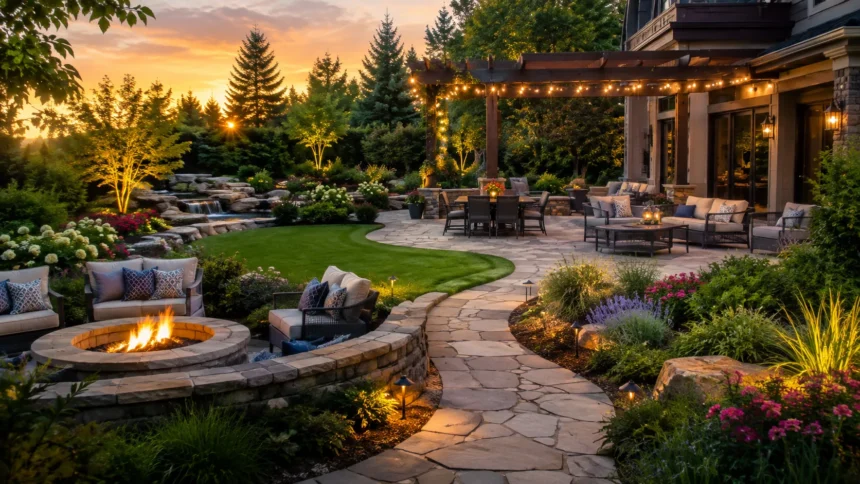
A fire feature can create a natural focal point for conversation and extend outdoor living into cooler evenings. Fire pits tend to feel informal and encourage people to gather in a circle, while outdoor fireplaces can create a more architectural focal point and direct heat toward a specific seating area. Houzz’s 2026 research found fireplaces or fire pits in 48% of the lounge areas included in its study, showing their continued popularity within multifunctional backyard living spaces.
Before choosing a fire feature, consider the amount of space available and local safety requirements. Seating should not be crowded directly against flames, and combustible structures or plants need appropriate separation. Wood-burning, gas, and other systems provide different experiences and maintenance requirements. Permanent fireplaces can become expensive construction projects, while portable fire pits provide greater flexibility. Check local regulations before installation because restrictions may apply depending on location, fuel type, drought conditions, or community rules.
Design the surrounding seating for conversation rather than simply placing several unrelated chairs around the feature. A curved bench, outdoor sectional, or matching lounge chairs can establish a strong gathering zone. Leave enough space behind the seats so people can walk around comfortably. Gravel, stone, concrete, or pavers often work well beneath and around the area because they visually define the zone and provide a durable surface for furniture.
Even without a real flame, you can create a similar gathering effect through a central coffee table, lantern grouping, or outdoor heater where appropriate. The important principle is providing a reason for people to gather and remain in the space. A successful outdoor living area encourages lingering rather than functioning only as a place people pass through. Contemporary garden designers increasingly emphasize creating comfortable destination areas where seating, shade, and atmosphere encourage people to spend longer periods outdoors.
Create a Peaceful Backyard Retreat
Not every backyard needs to focus entirely on parties and large gatherings. A quiet corner can become one of the most valuable parts of the landscape because it provides a place for reading, morning coffee, meditation, conversation, or simply spending a few minutes outdoors. Choose an area slightly removed from the busiest part of the patio and provide comfortable seating. Surrounding the space with plants can create a stronger sense of separation without requiring walls.
Comfort should guide the design. A deep chair may be more useful than a decorative bench if you intend to sit for an hour, while a small side table gives you somewhere to place a drink, book, or phone. Shade is particularly important if the retreat will be used during the day. A small tree, pergola, umbrella, or covered corner can make the difference between a space that looks attractive and one that is actually comfortable enough to use regularly.
Planting can create a calmer sensory experience through movement, fragrance, color, and texture. Ornamental grasses may move in the breeze, while flowering plants can provide seasonal interest. Repeating a limited number of plants can feel more peaceful than filling the area with dozens of unrelated colors and forms. Current garden design commentary also emphasizes relaxed, comfortable “destination” spaces and softer planting schemes that encourage people to linger rather than rushing through the landscape.
Sound can influence the atmosphere as well. A small water feature may help soften neighborhood noise, while rustling grasses and leaves create a natural background. Avoid adding too many decorative elements just because the space feels empty. A peaceful garden often benefits from restraint. One comfortable seat, thoughtful planting, subtle lighting, and shade may create a more relaxing experience than a crowded collection of ornaments, furniture, and competing landscape features.
Reduce Lawn for a Lower-Maintenance Backyard
A large lawn can provide useful space for children, pets, sports, and gatherings, but not every backyard needs grass covering nearly the entire property. Replacing selected lawn areas with planting beds, patios, pathways, mulch, gravel, or other appropriate landscape features can create more usable outdoor zones while changing maintenance requirements. The objective does not need to be eliminating grass completely. Instead, consider keeping lawn where it serves a clear purpose and redesigning areas that are rarely used.
Current outdoor renovation data suggest more homeowners are looking for lower-maintenance landscapes and alternatives to traditional lawn-heavy designs. Houzz’s 2026 survey reported declining selection of natural grass replacement compared with 2024 while low-maintenance, native, pollinator-friendly, and drought-resistant planting choices gained attention. The trend reflects interest in landscapes that support outdoor living without requiring as much ongoing yard work.
Water use can be another consideration, especially in hot or dry climates. EPA WaterSense recommends regionally appropriate landscaping and efficient irrigation as part of outdoor water management, noting that outdoor water use can represent a substantial share of household demand in some areas. Designing planting around local conditions can reduce the need to maintain thirsty plants in environments where they naturally struggle.
If you reduce lawn, replace it with something useful rather than simply covering the area with one material. A mixture of native planting, permeable paths, seating, shade, garden beds, and smaller lawn sections can make a backyard feel richer and more functional. Large areas of bare gravel or hardscape can become visually harsh and may create heat problems in some climates. Balance softer planting with practical surfaces so the landscape remains comfortable, attractive, and connected to nature.
Make a Small Backyard Feel Bigger
Small backyard landscaping works best when every feature has a clear purpose. Instead of trying to fit a full-size patio, outdoor kitchen, lawn, garden, and lounge into limited space, choose the two or three functions that matter most. A compact dining table might double as a work surface, while a built-in bench can provide seating and hidden storage. Multifunctional design reduces clutter and gives the yard more breathing room, making the space feel larger even though its physical dimensions have not changed.
Use vertical surfaces when ground space is limited. Trellises, wall planters, climbing plants, narrow upright shrubs, and small trees can add greenery without consuming large planting areas. A fence can support decorative planting or lighting rather than remaining an unused boundary. Containers can also provide flexibility because they can be moved when furniture arrangements change. However, avoid lining every available edge with different pots because too many small objects can make a compact yard feel visually crowded.
Long sightlines can create a stronger sense of depth. Position a focal feature such as a beautiful plant, small sculpture, bench, or water element near the far end of the yard to draw the eye outward. Paths placed on a slight diagonal or partially hidden destinations can also encourage visual movement. Using the same paving and plant palette throughout the space keeps the design cohesive. Too many abrupt material and color changes can visually divide a small yard into even smaller pieces.
Scale matters most in compact landscapes. Large furniture can overwhelm the available floor area, while tiny furniture may make the setting feel temporary or uncomfortable. Measure before purchasing and leave clear circulation routes. Folding, stackable, or lightweight pieces can provide flexibility when larger gatherings occur. Good small-backyard design is less about making everything miniature and more about choosing the correct number of well-proportioned elements. A simple, organized garden usually feels more spacious than one filled with every possible feature.
Use Water-Smart Landscaping Ideas
Water-smart landscaping can help create an attractive backyard while responding more appropriately to local rainfall, soil, and climate. Start by grouping plants according to similar water needs so you are not forced to overwater drought-tolerant species simply because they share a bed with thirsty plants. Native and regionally adapted plants can be particularly useful because they are suited to local environmental conditions. EPA WaterSense specifically encourages these choices as part of landscapes designed to use water more efficiently.
Efficient irrigation can improve the landscape further. Instead of watering every area for the same amount of time, irrigation should reflect plant type, sun exposure, soil, and weather. WaterSense guidance emphasizes efficient irrigation systems alongside appropriate landscape design. Smart or weather-responsive controllers can help adjust schedules when conditions change, although good system design and maintenance remain important.
Mulch can help planting beds retain moisture while reducing bare-soil exposure and creating a finished appearance. Choose materials that fit the landscape style and local conditions rather than using highly artificial colors purely for visual contrast. Natural bark, gravel, leaf mulch, or other regionally appropriate materials can complement planting more effectively. Current landscape design advice increasingly favors natural-looking materials and lower-maintenance planting over highly artificial, overly manicured yards.
Water conservation does not require turning every backyard into a dry-looking landscape. A water-smart garden can contain abundant color, shade, texture, and seasonal interest when plants are selected intelligently. The objective is matching plants and irrigation to the site rather than forcing inappropriate species to survive through constant watering. A landscape designed around local conditions is often easier to maintain because the plants are not continually fighting the environment in which they have been placed.
Backyard Landscaping Ideas on a Budget
A limited budget does not prevent you from creating a backyard that feels intentional and comfortable. Begin with one area rather than attempting to renovate the entire property at once. A small seating zone with gravel, several large planters, comfortable chairs, and string lights can create immediate outdoor living value while larger landscaping projects remain unfinished. Completing one functional zone usually provides more satisfaction than spreading the same money across several half-finished improvements.
Plants can also be added gradually. Buy smaller shrubs or young trees when appropriate and allow them to mature rather than paying for the largest specimens available. Divide existing perennials where suitable, grow selected plants from seed, and focus on species likely to thrive in your conditions so replacement costs remain low. A thoughtful limited plant palette often looks more designed than purchasing many unrelated plants simply because they happen to be discounted.
Repurposing existing materials can reduce expenses significantly. An old patio may only need cleaning, repaired joints, updated furniture, and surrounding planting rather than complete demolition. Existing concrete can sometimes become part of a new design when softened with planters and outdoor rugs. Furniture can be refreshed with new cushions or paint when the structure remains sound. Before removing anything, consider whether it can be incorporated into the new landscape in a more attractive way.
Spend the largest portion of the budget on elements that are difficult or expensive to change later. Drainage, major grading, permanent patios, electrical work, structural shade, and large trees deserve more planning than decorative accessories. Cushions, planters, and small furniture can easily be replaced as your taste changes. Prioritizing infrastructure first helps prevent situations where attractive finishing touches need to be removed because the underlying landscape was never properly planned.
Final Answer: How to Create a Better Backyard for Outdoor Living
The best backyard landscaping ideas for outdoor living begin with understanding how you want to use the space. Rather than designing around isolated features, create purposeful areas for the activities that matter most, whether those include dining, cooking, relaxing, gardening, entertaining, or family play. Current outdoor design research shows homeowners increasingly treating backyards as multifunctional extensions of the home, with seating, dining, retreat, gardening, and cooking spaces commonly included in renovation plans.
Comfort should come next. Provide enough shade for warm days, seating that people genuinely want to use, clear pathways, and lighting that extends the usefulness of the yard into the evening. A patio or deck can become the foundation, while plants soften the hard surfaces and create privacy. Fire features, outdoor kitchens, pergolas, and water elements can add additional functionality when they match your lifestyle rather than simply being included because they are popular.
Plant selection has a major influence on both appearance and maintenance. Choose species suited to local conditions and consider native, low-maintenance, pollinator-friendly, or drought-resistant plants where appropriate. EPA guidance supports regionally appropriate planting and efficient irrigation as key elements of water-smart landscaping, while recent homeowner research shows strong interest in low-maintenance and native plant choices.
Finally, remember that outdoor living does not require completing every project at once. A backyard can develop gradually as you learn how you actually use it. Start with the most valuable zone, improve comfort and circulation, then add planting, lighting, privacy, or cooking features over time. A successful landscape is not simply the one with the most expensive materials. It is the one that encourages you, your family, and your guests to step outside and genuinely enjoy the space more often.
Frequently Asked Questions
What are the best backyard landscaping ideas for outdoor living?
Popular ideas include comfortable seating zones, patios, shade structures, outdoor dining areas, kitchens, fire pits, privacy planting, landscape lighting, and low-maintenance gardens. Choose features according to how you actually use your backyard.
How can I make my backyard feel like an outdoor living room?
Use comfortable sofas or lounge chairs, side tables, outdoor rugs, lighting, shade, and surrounding greenery. Arrange furniture in conversation groups rather than simply placing chairs around the edge of the patio.
What is the best low-maintenance landscaping for a backyard?
Use plants suited to your local climate, reduce unnecessary lawn, add mulch, group plants by water needs, and create durable patios or paths. Native and drought-resistant plants may reduce maintenance in suitable regions.
How can I landscape a small backyard?
Prioritize only the most important functions, use compact or multifunctional furniture, plant vertically, keep pathways clear, and use a consistent material and plant palette to make the space feel more open.
How can I improve my backyard on a small budget?
Start with one seating area, reuse existing hardscape, add affordable lighting and planters, buy younger plants, and complete improvements in phases. Focus major spending on permanent infrastructure rather than decorative accessories.