

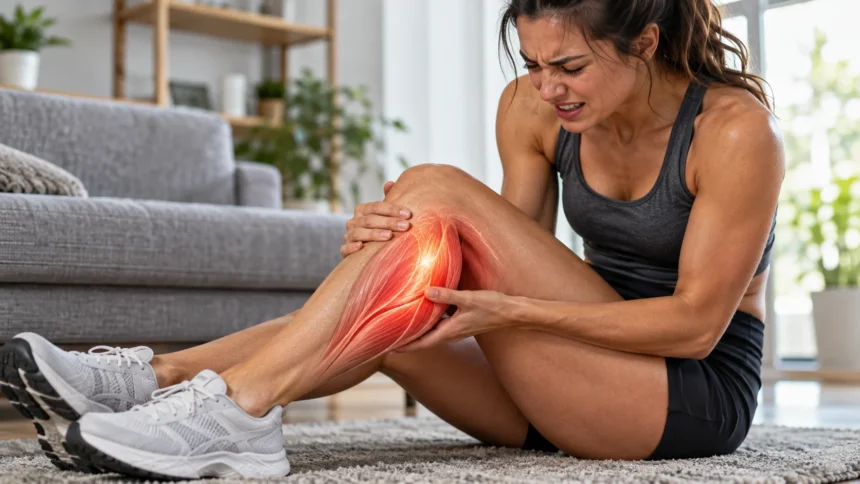
A muscle spasm is a sudden, involuntary tightening of a muscle that can feel uncomfortable, surprising, or painful. Some spasms last only a few seconds, while others continue for several minutes or repeatedly return. They can affect almost any muscle, including the calves, thighs, back, neck, feet, hands, and abdominal muscles.
The sensation can vary depending on which muscle is involved and what triggered it. You might feel a hard knot, twitching, cramping, pulling, or an intense tightening that makes movement temporarily difficult. Understanding what muscle spasms feel like can help you recognize common patterns and know when persistent or unusual symptoms deserve medical attention.
What Does a Muscle Spasm Feel Like?
A muscle spasm often feels like the muscle suddenly tightens without you intentionally contracting it. The area may become firm or hard to the touch, and you may feel as though the muscle is pulling inward. Mild spasms can feel like small twitches, while stronger ones may create sharp or cramping pain.
Some spasms produce visible movement beneath the skin. You might notice the muscle jumping, fluttering, or repeatedly contracting for several seconds. This can feel strange even when it is not particularly painful, especially when the twitching happens unexpectedly while you are sitting, resting, or trying to sleep.
More intense spasms can temporarily stop you from moving normally. A calf cramp, for example, may make it difficult to place your foot flat or walk comfortably until the muscle relaxes. Afterward, the area can remain tender, tired, or slightly sore for several hours.
What Is a Muscle Spasm?
A muscle spasm is an involuntary contraction that happens when a muscle tightens without conscious control. Your nervous system normally coordinates when muscles contract and relax, but sometimes a muscle contracts suddenly and remains tense temporarily. The result may be a brief twitch or a more painful cramping sensation.
Muscle spasms can happen during exercise, after exercise, while resting, or even during sleep. They are especially common in muscles that have been working hard or held in one position for a long time. In many cases, an occasional spasm is temporary and does not indicate a serious medical problem.
The terms muscle spasm and muscle cramp are often used interchangeably. A cramp usually describes a stronger, painful contraction that lasts longer, while a spasm can include both painful cramps and smaller involuntary contractions. Everyday conversations, however, do not always make a strict distinction between the two terms.
What Causes Muscle Spasms?
Muscle fatigue is one of the most common triggers. Exercise, repetitive movement, prolonged standing, or heavy physical work can temporarily reduce a muscle’s ability to contract and relax smoothly. Spasms may therefore occur during demanding activity or later when the body is recovering.
Dehydration and changes in electrolytes may also contribute in some situations, particularly after heavy sweating or prolonged exercise. Minerals such as sodium, potassium, calcium, and magnesium are involved in normal muscle and nerve function. However, not every muscle spasm means you automatically have an electrolyte deficiency.
Other possible triggers include prolonged sitting, poor movement habits, nerve irritation, certain medications, pregnancy, or underlying medical conditions. Sometimes no obvious cause can be identified. Looking at when spasms happen, which muscles are involved, and whether other symptoms occur can provide useful clues.
What Does a Leg Muscle Spasm Feel Like?
Leg spasms often feel like a sudden knot or intense tightening in the calf, thigh, or foot. The muscle may become visibly firm, and you may need to stop walking or exercising until it relaxes. Nighttime calf cramps are a common example and can wake people unexpectedly from sleep.
A calf spasm can pull the foot downward and make the back of the lower leg feel extremely tight. Some people describe the sensation as though the muscle is being squeezed from the inside. Even after the contraction ends, the calf may remain sensitive when walking or pressing on it.
Thigh spasms can affect the quadriceps at the front of the leg or the hamstrings at the back. Because these are larger muscles, a strong contraction may feel particularly powerful. Gentle movement and stretching may help some cramps, but forceful stretching during severe pain can be uncomfortable.
What Does a Back Muscle Spasm Feel Like?
A back muscle spasm may feel like a sudden tightening, grabbing, or locking sensation in one area of the back. Some people describe it as though the muscle has formed a hard knot that prevents comfortable bending or turning. The pain can range from mildly annoying to intense enough to restrict movement temporarily.
Lower back spasms may appear after lifting, twisting, exercising, or spending too long in one position. The surrounding muscles can tighten protectively when tissues are irritated, which may make the entire area feel stiff. Pain may become more noticeable when standing up, changing position, or attempting to straighten the back.
Back pain is not always caused by a muscle spasm, however. Nerve irritation, joint problems, disc-related conditions, and other issues can create similar discomfort. If back symptoms include significant weakness, numbness, loss of bladder or bowel control, or severe worsening pain, medical assessment is important.
What Does a Neck Muscle Spasm Feel Like?
A neck spasm usually feels like sudden tightness or stiffness on one side or at the back of the neck. Turning your head may become uncomfortable, and the muscle can feel hard or tender when touched. Some people notice the problem immediately after an awkward movement, while others wake with neck stiffness.
Muscles around the neck and shoulders can spasm after prolonged screen use, stress, unusual sleeping positions, or demanding physical activity. The discomfort may spread into the upper shoulder or between the shoulder blades. Gentle movement is often more comfortable than forcing the neck through a large range.
Neck spasms can sometimes occur alongside headaches because muscles around the base of the skull and upper shoulders become tense. However, severe headache, significant dizziness, weakness, numbness, fever, or symptoms after a major injury deserve medical evaluation rather than being assumed to come from ordinary muscle tightness.
How Long Do Muscle Spasms Usually Last?
Many simple muscle spasms last only a few seconds or minutes. A brief twitch may disappear almost immediately, while a painful cramp can take longer before the muscle completely relaxes. Mild tenderness afterward can continue even after the actual involuntary contraction has stopped.
Some people experience repeated spasms over several hours or days, especially when a muscle remains fatigued or irritated. The individual contractions may be brief, but the recurring pattern can become frustrating. Restoring normal activity gradually and addressing obvious triggers may help reduce repeated episodes.
Spasms that occur frequently for weeks, progressively worsen, or involve several areas without an obvious explanation deserve more attention. A healthcare professional can review medications, activity levels, hydration, nerve function, and other possible contributors. Duration alone does not determine seriousness, but persistent patterns should not be ignored.
What Can Trigger Muscle Spasms During Exercise?
Muscles can spasm during exercise when they become fatigued from repeated contractions. Long-distance running, cycling, heavy lifting, or intense sports can push a muscle beyond what it is currently conditioned to handle. Cramping is therefore more common when exercise volume or intensity increases suddenly.
Heat and heavy sweating may increase the likelihood of spasms in some people. Losing fluid and electrolytes during prolonged activity can affect normal muscle function, especially when replacement is inadequate. Drinking according to thirst and preparing appropriately for long exercise sessions can support normal hydration.
Poor pacing can also contribute. Starting too hard, exercising longer than usual, or training a muscle that has not recovered from a previous workout can increase fatigue. Gradually building fitness and allowing recovery between demanding sessions may reduce the likelihood of repeated exercise-related cramps.
What Can You Do When a Muscle Spasm Happens?
When a muscle suddenly spasms, stop the activity that triggered it and allow the area to relax. Gentle movement or a mild stretch may help if it feels comfortable. Avoid aggressively forcing the muscle into a stretched position because intense pulling can make an already painful contraction feel worse.
Light massage can sometimes help the muscle relax. Applying gentle pressure around the tight area rather than pressing as hard as possible may feel soothing. Warmth from a shower or heating pad can also provide temporary comfort after the strongest part of the spasm has passed.
If the spasm occurred during prolonged exercise or heat exposure, normal fluid replacement may be useful. Do not assume you need large amounts of supplements or electrolytes after every cramp. Most occasional spasms can be managed with simple measures unless they continue happening or occur with concerning symptoms.
How Can You Help Prevent Muscle Spasms?
Gradually increasing exercise intensity gives muscles time to adapt to new demands. Sudden increases in running distance, heavy lifting, or repetitive work can create fatigue that makes spasms more likely. A balanced training plan with adequate recovery is often more helpful than trying to solve every cramp after it occurs.
Regular movement may also help if spasms are related to long periods of sitting or standing. Change positions, take short walking breaks, and avoid keeping the same muscle shortened or contracted for hours. Strength and mobility exercises can support better tolerance for everyday activities.
Good hydration, adequate nutrition, and appropriate sleep also support normal muscle function. However, there is no single food, supplement, or stretch that prevents every muscle spasm. Prevention works best when you address the specific pattern behind your symptoms rather than relying on one universal solution.
When Can Muscle Spasms Be a Sign of Something Else?
Occasional spasms are common, but repeated involuntary muscle contractions can sometimes be associated with nerve irritation or medical conditions. The context matters, especially when twitching occurs with progressive weakness, loss of coordination, or changes in sensation. These additional symptoms deserve more attention than isolated cramping alone.
Certain medications can also contribute to muscle cramps or twitching in some people. If spasms began after starting or changing a medication, discuss the pattern with the healthcare professional who prescribed it. Do not stop prescribed medication suddenly unless you have been advised to do so.
Persistent spasms may also occur alongside circulation problems, metabolic conditions, or significant electrolyte disturbances. These causes are less likely than ordinary fatigue in many healthy people, but they are important when symptoms are frequent or unexplained. Proper evaluation can help identify whether additional testing is needed.
When Should You See a Doctor for Muscle Spasms?
Consider speaking with a healthcare professional if muscle spasms happen very frequently, interfere with sleep, or continue despite reasonable changes in activity and hydration. Evaluation is also useful if cramps repeatedly affect the same area or become progressively more painful over time.
Seek medical attention when spasms occur with significant weakness, numbness, swelling, redness, fever, or difficulty using the affected limb normally. These symptoms may suggest that something more than an ordinary muscle cramp is involved. Sudden severe symptoms following an injury also deserve appropriate assessment.
Emergency care may be necessary when muscle symptoms occur with severe breathing difficulty, chest pain, loss of consciousness, or other serious systemic symptoms. Most ordinary spasms are not emergencies, but accompanying warning signs change the situation. When uncertain, focus on your overall symptoms rather than the spasm alone.
Conclusion
A muscle spasm usually feels like sudden tightening, twitching, cramping, or a hard knot inside the muscle. The sensation may last only seconds or continue for several minutes, and the area can remain sore afterward. Legs, feet, back, neck, and shoulders are among the areas where people commonly notice spasms.
Muscle fatigue, prolonged activity, dehydration, repetitive movement, and temporary irritation can all contribute. Gentle movement, light stretching, warmth, massage, and appropriate recovery may help uncomplicated episodes. Building strength gradually and avoiding sudden increases in physical activity may reduce repeated cramping.
Most occasional muscle spasms are temporary, but persistent or unusual symptoms deserve attention. Repeated cramps accompanied by weakness, numbness, swelling, fever, or significant functional changes should be evaluated professionally. Understanding how a typical spasm feels can help you distinguish an ordinary temporary contraction from symptoms that need further investigation.
FAQs
What does a muscle spasm feel like in simple terms?
A muscle spasm often feels like a sudden tightening, cramp, twitch, or hard knot in a muscle. It can be mildly uncomfortable or sharply painful and may temporarily make movement difficult.
Are muscle spasms and muscle cramps the same thing?
The terms are often used interchangeably. A cramp usually describes a painful, sustained muscle contraction, while a spasm can include painful cramps as well as smaller involuntary twitches or contractions.
Why do muscle spasms happen at night?
Nighttime spasms may be related to muscle fatigue, prolonged positioning, exercise, or other factors. Calf and foot cramps are especially common during sleep, although the exact trigger is not always identifiable.
How long should a muscle spasm last?
Many spasms last a few seconds to several minutes. Mild soreness may remain afterward, but frequent spasms that continue recurring for days or weeks may deserve medical evaluation.
When should I worry about muscle spasms?
Seek medical advice when spasms are frequent, severe, or occur with significant weakness, numbness, swelling, fever, or difficulty moving normally. Persistent unexplained spasms should also be professionally assessed.