

Is Jasmine Rice Healthy? What Its Nutrition Really Means for Your Diet
Jasmine rice can absolutely be part of a healthy diet, but whether it is a good choice for you depends on the type you eat, your portion size, and what else is on your plate. This fragrant long-grain rice is especially popular in Southeast Asian cooking because of its soft texture and floral aroma. White jasmine rice provides quick-digesting carbohydrates and energy, while brown jasmine rice offers more fiber and nutrients. Neither version needs to be labeled simply “good” or “bad.” Context matters far more than one food eaten in isolation.
Most of the calories in jasmine rice come from carbohydrates, which the body uses as a primary source of energy. A typical cup of cooked white jasmine rice contains roughly 200 calories and about 45 grams of carbohydrates, with a small amount of protein and very little fat. It is naturally gluten-free, making it useful for people who must avoid gluten. However, white jasmine rice contains relatively little fiber because the bran and germ have been removed during processing. That difference influences digestion, fullness, and blood sugar response.
Brown jasmine rice keeps the bran and germ layers and therefore provides more fiber, magnesium, B vitamins, antioxidants, and other plant compounds than the white variety. It also tends to digest more slowly and may produce a more gradual rise in blood glucose. The tradeoff is that brown rice has a firmer texture and nuttier flavor, which some people prefer while others do not. Both varieties can fit into balanced eating patterns when portions and overall meal composition are appropriate.
One of the biggest concerns surrounding jasmine rice is its effect on blood sugar. White jasmine rice generally has a relatively high glycemic effect, especially when eaten in a large serving by itself. That does not mean everyone needs to avoid it. Pairing rice with vegetables, protein, healthy fats, and fiber-rich foods can slow digestion and create a more balanced meal. People with diabetes or insulin resistance may simply need to pay closer attention to serving size and blood glucose responses.
There are also questions about weight gain, heart health, digestion, and arsenic exposure. These concerns are worth understanding without exaggerating them. Rice itself does not automatically cause weight gain, and an occasional serving is unlikely to create a health problem. What matters is how often you eat it, how much you serve, which type you choose, and what foods accompany it. A balanced approach allows you to enjoy jasmine rice while still meeting your nutrition goals.
Jasmine Rice Nutrition: Calories, Carbs, Protein and Fiber
White jasmine rice is primarily a carbohydrate food. One cup of cooked rice generally provides around 200 calories, although the exact amount varies with cooking method and portion size. Most of those calories come from starch, which the body breaks down into glucose for energy. The same serving usually contains roughly 4 grams of protein and very little fat. This nutritional profile makes jasmine rice particularly useful when you need an easy source of energy alongside more nutrient-dense foods.
Fiber is one of the main nutritional differences between white and brown jasmine rice. White rice loses much of its natural fiber during milling because the bran layer is removed. As a result, it digests relatively quickly and does not provide the same level of fullness as intact whole grains. Brown jasmine rice retains more fiber and may therefore support better satiety and bowel regularity. People trying to increase fiber intake may find the brown variety a more useful everyday choice.
Jasmine rice also contains several micronutrients, although amounts depend on how it has been processed and whether it is enriched. Enriched white rice may contain added iron and B vitamins such as folic acid, niacin, and thiamine. Brown rice naturally retains more nutrients from the original grain because fewer parts are removed. This does not make white rice nutritionally empty, but it does mean brown rice generally provides more naturally occurring nutrients per serving.
Rice is naturally low in sodium unless salt or seasoning is added during cooking. It is also naturally cholesterol-free and contains very little saturated fat. These characteristics make it easy to incorporate into many dietary patterns, including lower-sodium or heart-conscious meals. Problems tend to arise more from preparation than from the rice itself. Large amounts of butter, coconut cream, salty sauces, or fried toppings can significantly change the nutritional profile of the finished dish.
Portion size is essential when evaluating jasmine rice nutrition. A restaurant serving may contain two or three cups of cooked rice, which can easily double or triple the carbohydrate and calorie content. At home, measuring a portion occasionally can help you learn what one cup actually looks like. You do not need to weigh every meal permanently, but understanding portions can help you decide how much rice fits comfortably alongside vegetables, protein, and other foods.
Health Benefits of Jasmine Rice
One clear benefit of jasmine rice is that it provides readily available energy. Carbohydrates are the body’s preferred fuel for many activities, particularly higher-intensity exercise and physically demanding work. Athletes and active people often include rice in meals because it is easy to digest and pairs well with many protein sources. White jasmine rice can be particularly convenient before or after exercise when a lower-fiber carbohydrate is easier on the stomach. In this context, fast digestion can actually be an advantage.
Jasmine rice is also naturally gluten-free. People with celiac disease, non-celiac gluten sensitivity, or medically diagnosed wheat allergy can generally eat plain rice safely as long as it has not been contaminated with gluten-containing ingredients. This makes jasmine rice a useful alternative to wheat-based pasta, couscous, or bread. Packaged rice mixes should still be checked carefully because sauces, seasonings, or processing may introduce gluten.
Brown jasmine rice provides additional benefits through its higher fiber content. Fiber supports normal bowel movements, helps feed beneficial gut bacteria, and contributes to a longer-lasting feeling of fullness after meals. Diets rich in whole grains and other fiber-containing foods are also associated with better long-term metabolic and cardiovascular health. Choosing brown jasmine rice some of the time can therefore increase the nutritional value of meals without requiring you to stop eating rice completely.
Rice is also versatile enough to support nutrient-dense meals. A bowl of jasmine rice can serve as the base for vegetables, beans, tofu, fish, chicken, eggs, or lean meat. This makes it easier to combine carbohydrates with protein, fiber, vitamins, minerals, and healthy fats. The rice itself may not contain large amounts of every nutrient, but it can make vegetables and protein foods more enjoyable and satisfying. A food’s value often depends partly on what it helps you eat alongside it.
Another benefit is accessibility. Healthy eating needs to be practical, affordable, culturally appropriate, and enjoyable if it is going to last. Jasmine rice stores well, cooks relatively quickly, and can be used across countless cuisines. For families who regularly eat rice as a staple, there is rarely a need to eliminate it simply because low-carbohydrate trends portray grains negatively. Improving portions and meal balance is usually more sustainable than removing a familiar staple entirely.
White Jasmine Rice vs Brown Jasmine Rice: Which Is Healthier?
White and brown jasmine rice come from the same basic grain, but processing changes their nutritional profile. Brown jasmine rice retains the bran and germ, while white jasmine rice has these outer layers removed. This makes white rice softer, faster to cook, and more shelf-stable. It also reduces fiber and removes some naturally occurring micronutrients. Brown rice therefore has the nutritional advantage when fiber and whole-grain intake are the main priorities.
Brown jasmine rice generally keeps you full for longer because its fiber slows digestion and adds volume. This may be useful for people working on appetite control or weight management. Its slower digestion can also contribute to a gentler blood sugar response compared with white jasmine rice. For someone with prediabetes or type 2 diabetes, replacing some refined grains with whole grains may be a worthwhile strategy when it fits their individual nutrition plan.
White jasmine rice still has situations where it may be the more practical choice. People with certain digestive problems or those following temporary low-fiber diets may tolerate white rice better than brown rice. Athletes may prefer it around training because it provides carbohydrate without a large amount of fiber. It can also be easier to eat during periods of nausea or digestive upset. Nutritional choices should reflect individual needs rather than assuming that the less processed option is always best for every situation.
Taste and texture also matter. Brown jasmine rice has a firmer bite and nuttier flavor, while white jasmine rice is softer and more aromatic. If someone strongly dislikes brown rice, forcing it into every meal may not create a sustainable diet. Another approach is alternating between white and brown rice or mixing the two. You can also increase fiber through vegetables, beans, lentils, seeds, and fruit while continuing to enjoy white jasmine rice.
For most healthy adults, brown jasmine rice has a slight nutritional edge because it is a whole grain, but white jasmine rice can still fit comfortably into a healthy dietary pattern. The difference between the two becomes less important when white rice is eaten in sensible portions alongside vegetables and protein. Looking at the entire meal provides a more accurate picture of diet quality than focusing exclusively on rice color.
Is Jasmine Rice Good or Bad for Blood Sugar?
Blood sugar is one of the main concerns surrounding white jasmine rice. Because it contains a large amount of starch and relatively little fiber, it can be digested quickly and produce a noticeable increase in blood glucose after eating. White jasmine rice is generally considered a higher-glycemic rice variety. The exact blood sugar response depends on the specific rice, cooking method, portion, meal composition, and individual metabolism.
Eating a large bowl of plain white jasmine rice is likely to affect blood sugar differently from eating a smaller amount with chicken, tofu, vegetables, and healthy fat. Protein, fiber, and fat slow gastric emptying and carbohydrate absorption, which can reduce the speed of the glucose rise. This is why balanced meal composition matters so much. People do not usually eat rice in isolation, and evaluating it that way can make its glycemic impact look more concerning than it is in a complete meal.
Brown jasmine rice may produce a steadier response because it contains more fiber and retains the grain’s outer layers. Replacing part or all of a white-rice serving with brown rice is one practical way to increase whole-grain intake. Another option is simply reducing the rice portion while increasing non-starchy vegetables. Both strategies can lower the total carbohydrate load of a meal without requiring rice to disappear entirely.
People with diabetes should personalize their rice intake rather than relying solely on general glycemic-index information. Blood glucose monitors can reveal how specific meals affect an individual person. Someone may tolerate a modest portion well while another person experiences a larger spike. Medication, activity level, sleep, and meal timing can also influence glucose. A registered dietitian or diabetes professional can help determine an appropriate carbohydrate pattern.
If you do not have diabetes, there is usually no need to fear occasional blood sugar increases after eating carbohydrates. The body is designed to process glucose after meals. Long-term health concerns relate more to overall dietary patterns, insulin resistance, excessive calorie intake, low activity, and repeated large portions of refined carbohydrates. Jasmine rice can be part of a healthy diet when balanced with nutrient-dense foods and reasonable portions.
Is Jasmine Rice Good for Weight Loss?
Jasmine rice can fit into a weight-loss diet because fat loss depends largely on maintaining an appropriate calorie deficit over time. Rice itself does not automatically cause weight gain. The issue is that cooked rice is easy to eat in large portions, and several cups can add a substantial amount of calories before sauces, oils, or protein are included. Portion awareness therefore becomes especially useful when calorie intake is one of your goals.
White jasmine rice may be less filling than brown rice because it provides less fiber. This does not mean white rice makes weight loss impossible, but some people may feel hungry again sooner after a meal that contains mostly refined carbohydrates. Pairing rice with protein and vegetables can significantly improve satiety. A plate containing a smaller amount of rice, a generous serving of vegetables, and a protein source may be far more satisfying than a large bowl of rice alone.
Brown jasmine rice can be useful during weight loss because its fiber makes meals more substantial and may help with appetite control. However, calorie differences between white and brown rice are relatively small. Switching to brown rice without changing portion size or overall eating habits will not automatically lead to weight loss. The advantage comes mainly from greater fiber and nutritional density rather than dramatically fewer calories.
Cooking method also matters. Plain steamed jasmine rice contains little fat, while fried rice can contain much more oil and additional calorie-dense ingredients. Coconut rice, buttered rice, and rich biryani-style preparations can also provide considerably more calories than plain rice. These dishes can still be enjoyed, but they should not be nutritionally treated as equivalent to steamed rice simply because both contain jasmine rice.
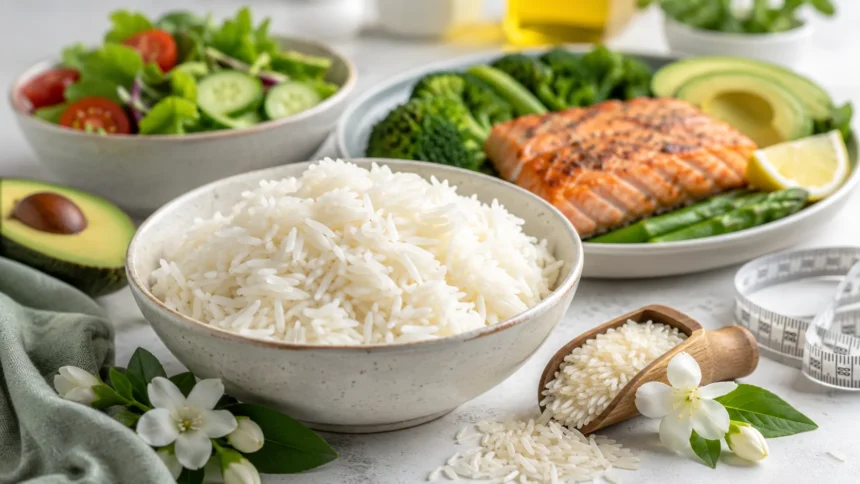
A practical weight-loss portion might involve filling about half the plate with non-starchy vegetables, one quarter with lean protein, and one quarter with rice or another carbohydrate source. This does not need to be followed rigidly at every meal, but it creates a useful visual framework. Jasmine rice can remain part of your diet while vegetables and protein provide additional volume and satiety.
Is Jasmine Rice Healthy for Your Heart?
Plain jasmine rice is naturally low in saturated fat, cholesterol, and sodium, which means it can fit into a heart-healthy eating pattern. However, rice does not provide the same amount of fiber as foods such as oats, beans, lentils, or many whole grains. White jasmine rice in particular contributes relatively little fiber. Whether it supports cardiovascular health therefore depends heavily on the rest of the diet.
Brown jasmine rice has an advantage because whole grains provide fiber, magnesium, and other compounds associated with cardiovascular health. Replacing some refined grains with whole grains is generally considered a positive dietary change. The fiber in brown rice can contribute to overall cholesterol management when combined with a diet rich in vegetables, fruit, legumes, nuts, and other fiber-containing foods.
What you add to jasmine rice may matter more than the rice itself. A bowl topped with grilled fish, vegetables, beans, and a modest amount of sauce has a very different nutritional profile from rice served with processed meat and a large amount of salty sauce. High sodium intake can contribute to elevated blood pressure in susceptible people, while excessive saturated fat can negatively affect blood lipids. The accompanying foods deserve as much attention as the grain.
Portion size can also indirectly affect heart health through body weight and metabolic health. Large, calorie-dense meals eaten regularly can contribute to weight gain, which may increase cardiovascular risk over time. This does not mean carbohydrates need to be eliminated. Balanced portions and overall energy intake are more important than blaming rice specifically.
For most people, the healthiest approach is variety. Include jasmine rice when you enjoy it, but also rotate in other whole grains and carbohydrate sources such as oats, barley, quinoa, potatoes, beans, and whole-grain breads when appropriate. Dietary diversity increases the range of fiber, vitamins, minerals, and plant compounds you consume. Jasmine rice can be one component of that broader pattern rather than the only staple.
Is Jasmine Rice Good for Digestion?
White jasmine rice is relatively easy to digest because most of the bran and fiber have been removed. This can make it useful for people who temporarily struggle with high-fiber foods because of digestive illness, recovery from certain procedures, or specific medical diets. Its mild flavor and soft texture also make it a common comfort food when appetite is low. However, the same low-fiber quality means it does not provide as much support for regular bowel movements as whole grains.
Brown jasmine rice contains more fiber, which generally makes it better for routine digestive health. Fiber adds bulk to stool and supports regularity while also providing material that certain gut bacteria can ferment. People increasing fiber should do so gradually because a sudden large increase can cause gas or bloating. Drinking enough fluid also helps fiber work effectively.
Rice does not naturally contain gluten, which is useful for people with celiac disease or other conditions requiring strict gluten avoidance. Plain jasmine rice is therefore generally compatible with a gluten-free diet. Cross-contact can still occur during processing or preparation, particularly in restaurants where rice is cooked alongside sauces or ingredients containing wheat. People with celiac disease should check preparation methods when eating outside the home.
Some people find cooled and reheated rice easier for blood sugar management because cooling can increase the amount of resistant starch. Resistant starch is a form of carbohydrate that behaves somewhat more like fiber than ordinary digestible starch. The effect is modest and does not transform jasmine rice into a low-carbohydrate food, but it may slightly change digestion. Food safety remains important whenever cooked rice is cooled and stored.
Cooked rice should be refrigerated promptly rather than left at room temperature for long periods. Rice can contain spores of Bacillus cereus, a bacterium capable of surviving cooking and multiplying when cooked rice is stored improperly. Refrigerating leftovers quickly and reheating them thoroughly reduces risk. The digestive health benefits of rice matter little if basic food-storage practices are ignored.
Does Jasmine Rice Contain Arsenic?
Rice can absorb more arsenic from soil and water than many other staple grains because of the flooded conditions in which it is commonly grown. Arsenic occurs naturally in the environment and can also result from historical agricultural and industrial contamination. Long-term exposure to high levels of inorganic arsenic is associated with health concerns, which has led to understandable questions about whether rice is safe to eat.
The presence of arsenic does not mean everyone needs to stop eating jasmine rice. Exposure depends on the type of rice, where it was grown, how frequently it is eaten, portion size, and overall dietary variety. For people who eat rice occasionally or several times per week alongside many other grains, individual exposure is generally different from someone who consumes rice at nearly every meal.
Brown rice may contain more arsenic than white rice because arsenic can concentrate in the outer layers of the grain. Removing the bran during white-rice processing can reduce some of that exposure, even though it also removes fiber and nutrients. This creates a nutritional tradeoff rather than a simple conclusion that one form is always healthier. Dietary variety is one of the easiest ways to reduce repeated exposure from any single food source.
Rinsing rice before cooking can remove some surface material, although it does not eliminate arsenic completely. Cooking rice in a larger amount of water and draining the excess afterward can reduce arsenic levels further, but this method may also remove some water-soluble nutrients from enriched rice. Different cooking goals therefore involve tradeoffs. Following package directions is still perfectly reasonable for most people who eat a varied diet.
Parents of infants and young children may want to provide a variety of grains rather than relying heavily on rice-based cereals and snacks. Adults can follow the same basic principle. Rotate rice with oats, quinoa, barley, corn, potatoes, and other carbohydrate sources depending on dietary needs. Food variety reduces the chance that one naturally occurring contaminant becomes a disproportionately large part of your diet.
How to Make Jasmine Rice Healthier
The easiest way to make jasmine rice healthier is to think about the entire plate rather than changing the rice itself. Start with a moderate serving and add plenty of vegetables. Stir-fries, curries, rice bowls, and grilled dishes can all include colorful vegetables that increase fiber, volume, vitamins, and minerals. This makes the meal more filling while reducing the percentage of calories coming from rice.
Add a quality protein source as well. Chicken, fish, eggs, tofu, tempeh, beans, lentils, shrimp, or lean meat can slow digestion and improve satiety. Protein also supports muscle maintenance and repair, making the meal more nutritionally complete. Rice and beans are an especially practical combination because legumes contribute both protein and fiber.
Healthy fats can add flavor and satisfaction when used in reasonable quantities. Nuts, seeds, avocado, olive oil, or sesame can complement jasmine rice dishes without relying entirely on butter or heavy sauces. Fat slows digestion, but it is calorie-dense, so portion still matters. A small amount can provide flavor and fullness without turning a modest meal into an extremely high-calorie one.
Watch sodium-heavy sauces. Soy sauce, fish sauce, bottled stir-fry sauces, and seasoning blends can contain significant amounts of sodium. You do not necessarily need to avoid them, but using smaller quantities or lower-sodium versions can help. Fresh herbs, lime, garlic, ginger, chili, and spices can add substantial flavor without relying only on salt.
Finally, consider mixing white jasmine rice with brown jasmine rice, quinoa, lentils, or vegetables if you want more fiber without completely changing the texture you enjoy. Even a half-and-half mixture can increase nutritional variety. Healthy eating does not require transforming every favorite food into its most austere version. Small improvements that you can maintain are usually more valuable than temporary perfection.
Who May Need to Limit Jasmine Rice?
People with diabetes or significant insulin resistance may need to be more mindful of white jasmine rice portions because its carbohydrate content can raise blood glucose quickly. This does not automatically mean complete avoidance. Smaller portions, brown jasmine rice, balanced meal composition, and blood glucose monitoring can help determine what works. Individual responses vary considerably.
People following a medically prescribed lower-carbohydrate diet may also need to limit rice. A typical serving provides a substantial amount of carbohydrate, so it can consume much of the carbohydrate allowance in a restricted plan. In these situations, smaller servings or alternatives such as cauliflower rice may be useful. The correct approach depends on why carbohydrate restriction was recommended.
Someone trying to lose weight may need to reduce portions if rice is contributing significant calories without enough fullness. This is particularly relevant when meals contain several carbohydrate sources at once, such as rice alongside bread, sugary drinks, or fried appetizers. Reducing one portion may be more practical than eliminating entire food categories. Hunger and satisfaction should still be considered so the diet remains sustainable.
People who eat rice multiple times per day may benefit from increasing grain variety because of both nutrition and arsenic considerations. This is particularly relevant for people whose diets rely heavily on rice-based foods with limited vegetables, legumes, and whole grains. The issue is not jasmine rice alone but dietary repetition. More variety usually improves both nutrient intake and food enjoyment.
For most healthy adults, there is no reason to avoid jasmine rice entirely. If you digest it well, enjoy it, and eat it within a balanced diet, it can remain a regular staple. The people who benefit most from limiting it are those with specific metabolic goals, medical restrictions, or very high habitual intake. Personal context matters more than blanket rules.
Conclusion: So, Is Jasmine Rice Healthy?
Jasmine rice can be healthy when it is eaten in sensible portions and combined with nutrient-dense foods. White jasmine rice provides energy, is naturally gluten-free, and is easy to digest. Brown jasmine rice adds more fiber and retains more of the grain’s natural nutrients. Neither version needs to be excluded from a balanced diet simply because rice is high in carbohydrates.
The main nutritional limitation of white jasmine rice is that it is a refined grain with relatively little fiber. It can also produce a quicker rise in blood glucose than many whole grains. People concerned about blood sugar may benefit from choosing brown jasmine rice more often, reducing the portion, and pairing rice with vegetables, protein, and healthy fat.
Jasmine rice does not automatically cause weight gain. Weight change depends on overall calorie intake, activity, and long-term eating patterns. A moderate serving of steamed jasmine rice can fit easily into a weight-management plan, while oversized servings combined with calorie-dense sauces and fried foods can make maintaining a calorie deficit more difficult.
Arsenic exposure is another legitimate consideration, but it does not require avoiding rice altogether. Eating a variety of grains, rinsing rice, and avoiding excessive dependence on rice-based foods can reduce repeated exposure. A varied diet also provides a wider range of nutrients and fiber.
Ultimately, the answer to “Is jasmine rice healthy?” is yes, it can be. Brown jasmine rice has an advantage when fiber and whole-grain nutrition are priorities, while white jasmine rice can still be part of a balanced meal. Focus on portion size, meal composition, dietary variety, and your individual health needs rather than treating one food as either perfectly healthy or inherently harmful.
Frequently Asked Questions
Is jasmine rice healthier than regular white rice?
Jasmine rice and other white rice varieties have fairly similar nutritional profiles. The bigger nutritional difference is usually between white and brown rice rather than between jasmine and ordinary white rice.
Is jasmine rice good for weight loss?
Yes, jasmine rice can fit into a weight-loss diet when portions are controlled. Pair it with vegetables and protein to improve fullness and keep the overall meal balanced.
Is jasmine rice high in sugar?
Jasmine rice contains very little actual sugar, but it is high in starch that the body converts into glucose. White jasmine rice can therefore raise blood sugar relatively quickly.
Is brown jasmine rice healthier than white jasmine rice?
Brown jasmine rice generally provides more fiber and naturally occurring nutrients because the bran and germ remain intact. White jasmine rice can still be healthy when eaten in balanced portions.
Can diabetics eat jasmine rice?
People with diabetes can often eat jasmine rice, but portion size and meal composition matter. Brown rice or smaller servings paired with protein, vegetables, and fiber may help reduce blood sugar spikes.