
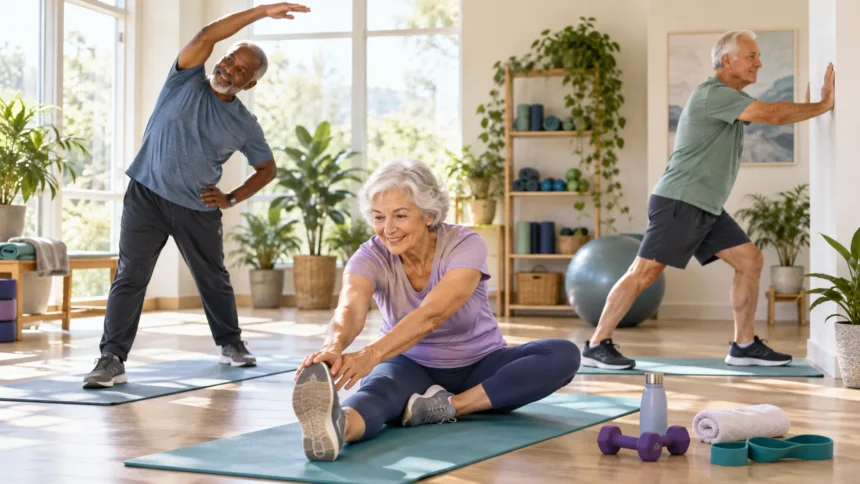
Stretching can help older adults maintain comfortable movement, joint mobility, and confidence during everyday activities. As people age, muscles and connective tissues may feel stiffer, especially after long periods of sitting or reduced physical activity. Gentle stretching exercises for seniors can support flexibility without requiring complicated equipment, intense workouts, or large amounts of space.
A good stretching routine should feel controlled and comfortable rather than painful. The goal is not to reach extreme positions or match someone else’s flexibility. Seniors can benefit from working gradually through the neck, shoulders, chest, hips, hamstrings, calves, and other areas that commonly become stiff with daily routines.
Stretching works best when combined with regular walking, strength training, balance exercises, and other appropriate physical activity. The exercises below are simple options that many older adults can adapt according to mobility and comfort. Anyone with recent surgery, significant joint pain, dizziness, or a medical condition affecting exercise should follow individual healthcare guidance before starting a new routine.
Benefits of Stretching Exercises for Seniors
Regular stretching can help maintain or improve range of motion around joints. This may make everyday movements such as reaching overhead, putting on shoes, turning to look behind you, and getting out of a chair feel easier. Flexibility naturally varies between individuals, so progress should be measured by improved comfort and function rather than extreme mobility.
Stretching can also reduce the feeling of stiffness that sometimes develops after sitting or remaining in one position for a long time. Gentle movement increases awareness of how different parts of the body feel and can encourage more frequent activity. Many seniors find that a short mobility routine is especially helpful after waking or before walking.
Another benefit is relaxation. Slow stretching combined with steady breathing can create a calm transition into or out of exercise. However, stretching should not replace strength or balance training, because flexibility alone does not provide all the physical abilities needed for healthy aging and everyday independence.
Neck Stretch for Gentle Mobility
Sit or stand tall with your shoulders relaxed and your eyes facing forward. Slowly tilt your head so one ear moves toward the same-side shoulder without lifting the shoulder upward. Stop when you feel a mild stretch along the opposite side of the neck and hold the position comfortably.
Hold for about 15 to 30 seconds while breathing normally, then return your head to the center. Repeat on the opposite side without forcing the head farther than feels natural. You can place one hand gently on your thigh or chair for support if standing balance is a concern.
Avoid pulling strongly on your head with your hand, especially if you already have neck discomfort. The stretch should feel mild rather than sharp or intense. If you experience dizziness, numbness, tingling, or pain that travels into the arm, stop and seek appropriate medical advice.
Shoulder and Upper-Back Stretch
Sit or stand comfortably and bring one arm across the front of your chest. Use the opposite hand to support the upper arm and draw it slightly closer to your body. Keep the shoulder relaxed rather than shrugging upward as you hold the position.
You should feel a gentle stretch around the back of the shoulder and upper arm. Hold for 15 to 30 seconds, then repeat on the other side. This movement can be useful for seniors who spend a lot of time reading, driving, or working with their arms positioned in front of the body.
Move slowly when entering and leaving the stretch. Avoid twisting the torso simply to create more range through the shoulder. If you have a history of shoulder injury or surgery, use a smaller range and follow the specific movement restrictions provided by your healthcare professional.
Chest Stretch for Better Upper-Body Mobility
Stand near an open doorway and place your forearm against the frame with your elbow bent comfortably. Step forward slightly until you feel a gentle stretch across the chest and front of the shoulder. Keep the movement small and avoid leaning aggressively through the doorway.
This stretch can be helpful when the chest feels tight after prolonged sitting or rounded upper-body posture. Opening the front of the shoulders may make reaching and arm movement feel more comfortable. However, posture cannot be permanently changed by one stretch, so regular movement and strength training are also important.
Hold the position for 15 to 30 seconds and repeat on both sides if needed. Keep your breathing steady and your shoulders down away from your ears. Stop if the stretch causes pinching inside the shoulder joint or discomfort that continues after you release the position.
Seated Hamstring Stretch
Sit near the front edge of a sturdy chair with one foot flat on the floor. Extend the other leg forward with the heel resting on the floor and the knee comfortably straight. Keep your back long and gently hinge forward from the hips until you feel a stretch behind the thigh.
You do not need to reach for your toes. A small forward lean is often enough to create gentle hamstring tension, especially if flexibility is limited. Keep the extended foot relaxed or pull the toes upward slightly if doing so remains comfortable.
Hold the stretch for about 20 to 30 seconds and then switch legs. Avoid rounding your lower back aggressively or bouncing forward. Seniors with significant sciatic pain or nerve symptoms should be cautious because stretching the back of the leg may sometimes increase irritation.
Standing Calf Stretch
Stand facing a wall and place both hands against it for support. Step one foot backward while keeping that heel on the floor and the back knee relatively straight. Bend the front knee slightly until you feel a mild stretch through the calf of the rear leg.
Keep both feet pointing comfortably forward and avoid rolling onto the outside edges. The back heel should remain connected to the floor as much as possible. This stretch can be useful before or after walking because the calf muscles contribute to balance, ankle movement, and pushing the body forward.
Hold for 20 to 30 seconds, then change sides. Use a sturdy wall, counter, or railing rather than an unstable object for balance. If standing feels unsafe, calf mobility can also be practiced in a seated position with a towel around the foot.
Hip Flexor Stretch
Stand with one foot in front of the other in a short split stance while holding a stable chair or counter. Keep your torso upright and gently shift your pelvis forward until you feel a stretch across the front of the hip on the back-leg side. The movement should be small and controlled.
Hip flexors can feel stiff after prolonged sitting because the hips remain in a bent position. Improving comfort in this area may support walking and standing mobility. Avoid arching the lower back excessively just to create a stronger stretch, because this can shift the movement away from the intended area.
Hold for about 15 to 30 seconds, then change sides. If balance is limited, use both hands for support and keep the stance shorter. Seniors who have recently had hip surgery should follow their rehabilitation instructions instead of experimenting with deeper hip stretches independently.
Seated Figure-Four Stretch
Sit on a stable chair with both feet on the floor. Place one ankle across the opposite thigh if your hip and knee mobility allow it. Keep your back comfortably upright and lean forward slightly until you feel a gentle stretch around the outer hip or buttock.
If crossing the ankle over the thigh feels too difficult, use a smaller position by resting the ankle closer to the opposite shin. The goal is not to force the knee downward. Hip structure and joint mobility differ significantly between individuals, especially after arthritis or previous injuries.
Hold for about 20 seconds and switch sides. Stop if you feel sharp pain in the hip or knee. People with hip replacement precautions or significant joint disease should ask a healthcare professional whether this position is appropriate for them.
Seated Side-Bend Stretch
Sit upright near the middle of a sturdy chair with both feet supported. Raise one arm overhead and gently lean toward the opposite side while keeping both sitting bones in contact with the chair. You should feel a stretch along the side of the torso rather than pressure in the lower back.
This movement can help maintain mobility through the trunk and rib area. Comfortable side bending may make reaching, dressing, and turning easier during everyday activities. Keep the range modest and avoid collapsing forward while trying to move farther sideways.
Hold for 15 to 20 seconds and repeat on the other side. If raising an arm overhead is uncomfortable, place the hand on your hip instead. Move slowly back to the center to reduce the chance of dizziness when changing positions.
Ankle Mobility Stretch
Sit in a chair with both feet flat on the floor. Lift one foot slightly and slowly point the toes away from you, then bring them back toward the shin. You can also make gentle ankle circles in both directions while keeping the rest of the leg relaxed.
Ankle mobility is important for walking, balance, and stair climbing. Stiff ankles can make it harder to move the body forward smoothly and may affect how comfortably you squat or rise from a chair. Regular ankle movement is simple enough to perform while sitting and requires no special equipment.
Complete 8 to 12 controlled movements in each direction before changing sides. Avoid moving so quickly that the ankle feels unstable. If swelling, severe pain, or recent injury is present, follow medical advice before performing repeated ankle mobility exercises.
How Stretching Fits With Strength Training
Stretching helps maintain mobility, but seniors also benefit from strengthening the muscles that support joints and everyday movements. Exercises such as sit-to-stands, supported rows, heel raises, and light resistance training can improve function in ways stretching alone cannot. Strength and mobility work often complement each other well.
Squatting patterns are particularly useful because they resemble getting up from chairs and lowering toward seated positions. Seniors who want to understand this movement can read about how squats work and then adapt the exercise with support when necessary. A chair or countertop can make the movement more accessible.
The most effective exercise routine usually includes flexibility, strength, balance, and aerobic activity rather than focusing on just one category. Each component supports different aspects of mobility and independence. Start at an appropriate level and increase difficulty gradually instead of trying to improve everything at once.
How Often Should Seniors Stretch?
Many seniors can benefit from gentle stretching several times per week, and some comfortable mobility exercises can be performed daily. Frequency depends on activity level, stiffness, and individual health considerations. Short, regular sessions are often easier to maintain than occasional long routines.
A simple routine may take 10 to 15 minutes and cover major areas such as the neck, shoulders, chest, hips, hamstrings, and calves. Hold each stretch long enough to relax into it without forcing the position. One or two rounds may be plenty when you are beginning.
Consistency matters more than intensity. Flexibility usually changes gradually, so there is little benefit in pushing aggressively during one session. Keeping the routine manageable increases the likelihood that stretching becomes a sustainable part of everyday movement.
Stretching Safety Tips for Older Adults
Warm muscles usually respond more comfortably to stretching than completely cold muscles. Consider walking around the room or performing a few minutes of light movement before beginning longer static stretches. The warm-up does not need to be difficult; its purpose is simply to prepare the body for movement.
Use stable support whenever balance is uncertain. A solid chair, wall, counter, or railing can reduce the risk of falling during standing stretches. Avoid using lightweight furniture that might slide or tip when you place weight against it.
Never force a stretch through sharp pain. Mild tension is expected, but burning, numbness, significant joint pain, or sudden weakness are reasons to stop. Seniors with osteoporosis, recent surgery, neurological conditions, or major joint problems may need individually modified exercises from a qualified professional.
Conclusion
Stretching exercises for seniors can support flexibility, joint mobility, comfort, and confidence during everyday movement. Gentle stretches for the neck, shoulders, chest, hips, hamstrings, calves, and trunk can help reduce the feeling of stiffness that often develops after prolonged sitting or reduced activity.
Good stretching technique means moving slowly, using a comfortable range, and avoiding pain. You do not need extreme flexibility to benefit from mobility work. A short routine performed consistently is generally more useful than occasional aggressive stretching that leaves the body sore.
For a more complete approach to healthy aging, combine stretching with strength, balance, walking, and other appropriate physical activity. Modify exercises according to your current ability and use support whenever necessary. If you have significant medical conditions, recent surgery, or unexplained pain, get individualized guidance before beginning a new exercise routine.
FAQs
What are the best stretches for seniors?
Useful options include gentle neck, shoulder, chest, hamstring, calf, hip flexor, and seated hip stretches. Choose movements that feel comfortable and match your current mobility rather than forcing deeper positions.
How long should seniors hold a stretch?
Many gentle stretches can be held for around 15 to 30 seconds. The position should create mild tension without pain, bouncing, numbness, or difficulty maintaining balance.
Should seniors stretch every day?
Gentle mobility can often be performed daily if it feels comfortable. More important than daily stretching is maintaining a consistent routine that fits your health, activity level, and recovery needs.
Is stretching enough exercise for older adults?
No. Stretching supports flexibility but should ideally be combined with strength, balance, and aerobic activity. These different forms of exercise help support mobility, independence, and everyday function.
When should a senior avoid stretching?
Avoid forcing stretches during acute injury, severe pain, dizziness, or immediately after certain surgeries. Seniors with significant medical or joint conditions should follow individualized advice from their healthcare or rehabilitation professional.