
Outdoor Privacy Screen Ideas for Backyards
Creating a comfortable backyard often means finding ways to enjoy the outdoors without feeling constantly visible to neighbors, nearby streets, or surrounding properties. The right outdoor privacy screen ideas for backyards can transform an exposed patio, deck, pool area, or garden into a more relaxing and personal space. Privacy screens do not need to feel heavy or unattractive. With the right materials, plants, and layout, they can become an important part of the landscape while improving comfort and visual appeal.
Backyard privacy can be created in many ways, including fences, decorative panels, trellises, pergolas, climbing plants, evergreen shrubs, curtains, bamboo screens, and strategically placed trees. The best solution depends on how much privacy you need, where the unwanted view comes from, how large the yard is, and how permanent you want the barrier to be. Some homeowners need complete screening along a property line, while others only need to block one neighboring window overlooking a seating area.
A successful privacy design should also consider sunlight, airflow, maintenance, cost, and local regulations. A tall solid wall may provide excellent screening but could make a small backyard feel dark or enclosed. Plants can create a softer and more natural look, but they usually need time to grow. Combining several methods can often provide the best balance. For example, a decorative screen can offer immediate privacy while climbing vines gradually create additional greenery and coverage.
You also do not need to renovate your entire backyard to make it feel more private. Focusing on the areas where you spend the most time can produce a noticeable improvement with less expense. A screen around a patio, hot tub, outdoor dining table, or lounge area may be enough to create a comfortable retreat. This guide explores practical backyard privacy ideas for different budgets, property sizes, and design styles so you can create an outdoor space that feels protected without sacrificing beauty or openness.
Install a Classic Backyard Privacy Fence
A traditional privacy fence remains one of the most effective ways to create a clear boundary around a backyard. Wood, vinyl, composite, metal, and other fencing materials can provide different levels of screening depending on the design. Solid boards offer maximum visual separation, while slatted or semi-private fences allow more light and airflow. A fence can also provide security for children and pets while establishing a defined edge between neighboring properties, making it both a functional and decorative landscaping feature.
Wood fencing is popular because it offers a warm and natural appearance that works with many backyard styles. Cedar, pressure-treated lumber, and other suitable outdoor woods can be arranged vertically, horizontally, or in decorative patterns. Horizontal boards have become especially popular in contemporary landscapes because they create a clean, modern appearance. Wood does require maintenance such as staining or sealing, so homeowners should consider whether they are comfortable with periodic care before choosing it as their main privacy solution.
Vinyl and composite fences require less routine maintenance and can provide a clean appearance for many years. They are available in numerous colors, textures, and styles, including designs that imitate painted or natural wood. These materials may have a higher upfront cost than basic timber, but reduced maintenance can make them attractive for homeowners who prefer a simpler long-term solution. Quality varies, so it is worth examining actual samples rather than choosing based only on online photographs.
Before installing a permanent fence, check property boundaries and local regulations regarding permitted heights, setbacks, materials, and permits. Homeowner associations may also have specific design requirements. A fence positioned incorrectly can create costly disputes, so confirming the legal boundary before construction is important. Once these details are handled, a well-designed fence can provide immediate privacy while becoming a strong structural background for plants, furniture, lighting, and other backyard features.
Use Decorative Privacy Panels for a Stylish Look
Decorative privacy panels provide an attractive alternative to plain solid fencing, particularly around patios, decks, seating areas, or small gardens. Panels can be made from wood, metal, composite materials, or weather-resistant synthetics and may feature geometric patterns, botanical designs, or simple slats. Because they provide partial screening rather than forming one completely solid surface, they can create privacy without making the backyard feel overly enclosed. They can also function as visual focal points within the landscape.
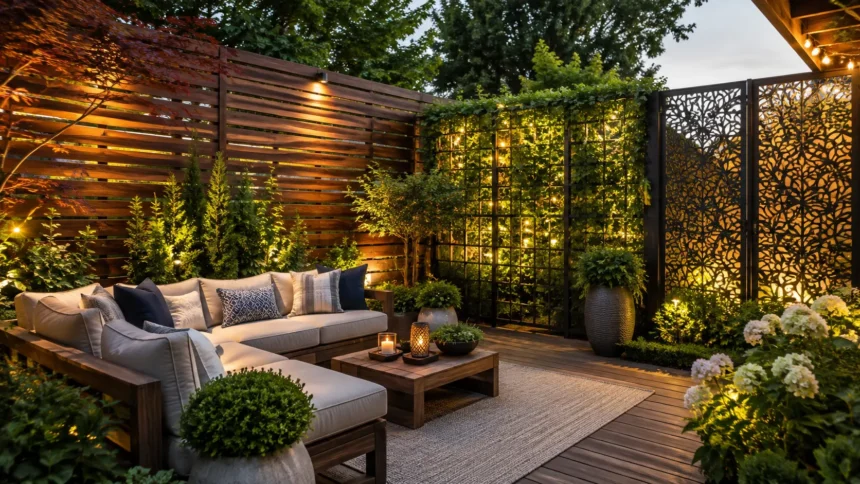
Laser-cut metal panels are especially effective in contemporary outdoor spaces because they provide structure while allowing light to pass through the openings. Powder-coated finishes can help protect metal from outdoor exposure, although the correct material should always be selected for local weather conditions. Dark panels often create a dramatic backdrop for green plants, while lighter colors can make small patios feel brighter. Using only one or two panels can sometimes provide enough screening without building an entire privacy wall.
Wood or composite panels can create a softer appearance and pair naturally with garden plants. Slatted designs are particularly useful because they partially block sightlines while allowing air to circulate. The spacing between slats can be adjusted according to how much privacy is needed. Narrower spacing creates stronger screening, while wider gaps maintain a greater connection to the surrounding garden. These panels can also support hanging planters or lightweight decorative features when the structure is designed to carry them safely.
Decorative screens work best when positioned according to the specific view you want to block. Instead of surrounding the entire patio with panels, identify where neighbors can see into the space and place screening strategically. This preserves open views in other directions and can make the backyard feel larger. Combining a panel with tall planters, grasses, or small trees can soften the structure further while creating a layered privacy solution that looks intentional rather than purely functional.
Create Privacy With Evergreen Shrubs
Evergreen shrubs are one of the best natural privacy screen ideas because they maintain foliage throughout much or all of the year. Depending on your climate, suitable varieties can create a green wall around property boundaries, patios, pools, or outdoor seating areas. Unlike a solid fence, plants provide texture, movement, wildlife value, and seasonal character. They also help soften hard landscaping and can make neighboring structures feel farther away, creating a more peaceful backyard environment.
Before planting an evergreen hedge, research the mature height and width of each species rather than judging the young plants at the garden center. A shrub that looks small in its container may eventually grow several feet wide and require significant pruning if planted too close together. Proper spacing allows plants to develop naturally while reducing competition for light, water, and nutrients. Choosing the right mature size also prevents shrubs from overwhelming pathways, windows, fences, or neighboring properties later.
Fast-growing plants may sound appealing when immediate privacy is a priority, but growth speed should not be the only factor guiding your decision. Extremely vigorous species can eventually require frequent trimming or become difficult to manage. A moderately growing shrub that naturally reaches the correct size may be easier to maintain over many years. Climate, soil conditions, sun exposure, drainage, and local pests should also influence plant selection so the privacy hedge remains healthy rather than constantly struggling.
For a more natural appearance, consider mixing several compatible evergreen and deciduous plants instead of creating one perfectly uniform hedge. Layering small trees, shrubs, grasses, and flowering plants can provide screening at different heights while making the landscape feel less formal. A mixed planting can also provide seasonal flowers, berries, texture, and habitat. The design still needs repetition and consistency so it looks organized rather than becoming a random collection of plants placed only for privacy.
Plant Tall Ornamental Grasses for Soft Screening
Tall ornamental grasses can create an attractive privacy screen while adding movement and texture to a backyard. Many varieties grow several feet tall during the growing season and can partially block views around patios, decks, pools, or garden edges. Their narrow form makes them particularly useful in areas where large shrubs would consume too much space. As the wind moves through the foliage, grasses create a softer and more relaxed atmosphere than a completely rigid fence or wall.
Grasses work especially well in modern, naturalistic, and low-maintenance landscapes when they are planted in repeated groups rather than scattered individually. They can line a patio edge, frame an outdoor dining area, or soften an existing privacy fence. Combining several plants of the same species often creates a stronger screening effect. However, mature width still matters, so give each plant enough room to develop without crowding neighboring pathways or furniture.
Seasonality should be considered because many ornamental grasses lose their green color during colder months and may be cut back before spring growth begins. This means they may not provide complete year-round screening in every climate. If winter privacy matters, combine grasses with evergreen shrubs, screens, or fencing. The grasses can provide movement and seasonal beauty while the more permanent elements maintain basic coverage throughout the year.
Choose non-invasive species suited to your region because some grasses can spread aggressively through seeds or underground roots. Local nurseries and regional horticultural resources can help identify better-behaved options. Once established, many ornamental grasses require relatively simple maintenance, often involving a seasonal cutback and occasional division. Their combination of height, narrow footprint, and visual softness makes them particularly useful where homeowners want privacy without creating a heavy landscape boundary.
Build a Pergola With Privacy Screens
A pergola can define an outdoor living area while supporting several different privacy solutions. The basic structure creates height and architectural presence, while side screens, slatted panels, curtains, climbing plants, or retractable shades can be added according to your needs. Pergolas work especially well over patios, outdoor kitchens, dining areas, and lounges because they make the space feel more like an outdoor room rather than an exposed collection of furniture placed in the middle of the yard.
Adding one or two screened sides can block neighboring views without completely surrounding the area. For example, if a nearby second-story window overlooks your dining table, vertical slats or climbing plants can be positioned on that specific side. The remaining sides can stay open toward the garden. This targeted approach provides privacy while maintaining airflow and longer sightlines, which is particularly important in smaller backyards where fully enclosed structures can feel cramped.
Outdoor curtains can provide adjustable privacy beneath a pergola. They can remain open when you want a clear view and close during meals, parties, or quiet evenings. Choose fabrics specifically designed for outdoor conditions and install hardware capable of handling wind. Curtains also add softness and can make a patio feel more comfortable, but they need to be secured during storms and cleaned periodically. In humid climates, good airflow is important to prevent fabric from remaining constantly damp.
Climbing plants can gradually turn the pergola into a greener and more natural structure. Vines can grow across overhead beams or along side trellises, providing shade and screening as they mature. Plant selection should account for climate, growth habit, mature weight, and maintenance. Extremely vigorous vines may overwhelm a lightweight structure. When designed correctly, a pergola combining partial screens and plants can create one of the most attractive ways to achieve privacy while still feeling connected to the surrounding garden.
Use Trellises and Climbing Plants
Trellises are ideal when you want vertical privacy without sacrificing significant ground space. A narrow trellis can be installed along a fence, property line, deck, or seating area and then covered with climbing plants. This approach is especially useful for small backyards where a wide hedge would consume too much valuable space. The trellis provides structure immediately while the plants gradually fill the openings, creating a screen that feels softer and more integrated into the landscape than a plain wall.
Climbing plants can include flowering vines, evergreen climbers, edible plants, or foliage-focused species depending on climate and personal preference. Some varieties grow quickly and provide coverage within a season, while others take several years to mature. Decide whether you need year-round privacy or seasonal screening before choosing plants. A deciduous vine may look beautiful in summer but leave the trellis almost completely open during winter, while an evergreen climber can provide more consistent coverage.
Make sure the trellis is strong enough to support the mature plant. Vines can become surprisingly heavy once they develop woody stems and dense foliage. Some plants also attach themselves directly to surfaces, while others need wires or supports to climb. Understanding how the plant grows prevents damage to fences, walls, or delicate structures. A freestanding trellis can sometimes be safer than allowing vigorous vines to attach directly to the exterior of a house.
Trellises do not need plants to function effectively. Decorative lattice or slatted designs can provide partial screening immediately and can be painted or stained to complement the house. Tall pots placed along the base can add seasonal flowers or greenery without committing to permanent vines. This flexibility makes trellises useful for renters, small patios, and homeowners who want a privacy solution that can evolve as their landscaping style changes.
Try Bamboo Privacy Screens
Bamboo screens can create a warm, natural-looking privacy barrier and are especially popular in tropical, coastal, and relaxed backyard designs. Rolled bamboo screening can be attached to existing fences, railings, or frames to increase coverage without completely rebuilding the structure. Freestanding bamboo panels can also define seating areas or hide unattractive utility zones. Their texture adds visual interest and can make an ordinary patio feel more intimate with relatively little construction.
It is important to distinguish between bamboo screening material and actually planting bamboo. Manufactured or harvested bamboo screens are relatively straightforward decorative products, while living bamboo can grow aggressively depending on the species. Some running bamboos spread through underground rhizomes and can become difficult to control. If you want living bamboo for privacy, research clumping varieties and local recommendations carefully rather than choosing a plant simply because it grows quickly.
Bamboo panels weather naturally outdoors, so appearance can change with exposure to sun and rain. Some homeowners appreciate the faded natural look, while others prefer applying an appropriate exterior sealant to maintain color longer. Quality varies considerably between products, particularly in how the pieces are tied or framed. A well-supported bamboo screen will generally remain straighter and more durable than thin material attached loosely to a fence.
Bamboo works particularly well when combined with greenery rather than used alone across an entire property. A bamboo panel behind a small seating area, for example, can provide immediate screening while potted palms, grasses, or shrubs soften its edges. This layered approach creates a more finished look and prevents the material from feeling like a temporary barrier. It can also be a budget-friendly way to improve privacy before investing in permanent fencing or mature landscaping.
Add Outdoor Curtains for Flexible Privacy
Outdoor curtains are one of the easiest ways to create privacy around covered patios, pergolas, gazebos, or balconies. Unlike permanent walls, curtains can be opened and closed depending on the time of day and how the space is being used. They are particularly helpful when privacy is only necessary during meals, gatherings, or evening relaxation. When fully open, the backyard remains visually connected to the surroundings, while closed curtains can quickly create a more protected and intimate outdoor room.
Choose materials designed specifically for outdoor environments because standard indoor curtains can deteriorate quickly when exposed to sunlight, moisture, and temperature changes. Outdoor fabrics are generally more resistant to fading and mildew, although they still need routine cleaning and appropriate storage during severe weather. Light neutral colors can help a covered area feel open, while darker fabrics create stronger visual separation. The best choice depends on the surrounding materials and how much light you want to maintain.
Wind is an important consideration. Curtains that constantly blow into furniture or cooking areas can become frustrating and may damage the hardware. Tiebacks, weighted hems, or lower anchors can help control movement when needed. Tracks and rods should also be designed for exterior use. If your property experiences strong winds regularly, retractable panels or fixed screens may be more practical than large loose curtains.
Curtains also work well as part of a layered privacy strategy. A wooden slat screen might handle the primary sightline while curtains provide extra coverage when desired. Plants can then soften both elements and make the structure feel connected to the landscape. This combination allows homeowners to adjust privacy rather than permanently blocking every view, making it particularly useful when the backyard overlooks attractive scenery in some directions but neighboring properties in others.
Use Tall Planters for Patio Privacy
Tall planters provide privacy without requiring permanent construction, making them particularly useful on patios, decks, balconies, and rental properties. Large containers can hold upright grasses, compact shrubs, small trees, bamboo-like plants, or other vertical greenery. Arranged in a row, they create a movable screen that can block unwanted views while adding color and texture. Because the containers can be repositioned, you can adjust the layout when furniture changes or when different areas need screening.
Choose containers large enough to support the mature size of the plants. Small pots dry out quickly and can become unstable when they contain tall plants, particularly in windy locations. Larger containers hold more soil, provide better root space, and are generally less likely to tip. However, they can become extremely heavy once filled, so decide where they will remain before planting. Lightweight outdoor containers can provide a similar appearance when moving them periodically is important.
Container plants require more frequent watering than similar plants growing directly in the ground because their root systems have access to a limited amount of soil. Automated drip irrigation can make maintenance easier when several planters are grouped together. Drainage is equally important because waterlogged soil can damage roots. Make sure containers have suitable drainage holes and are positioned so excess water does not create slippery surfaces or damage decking.
For a clean contemporary look, repeat identical planters and one plant variety across the privacy zone. For a softer garden style, mix complementary containers and plants while maintaining a consistent color palette. You can also combine tall structural plants with trailing flowers or groundcovers around the base. This turns a practical screen into a decorative feature and provides seasonal interest even when the primary purpose is blocking nearby views.
Plant Small Trees for Overhead Privacy
Sometimes privacy problems come from above rather than directly across the property line. A neighbor’s second-story window or elevated deck may overlook your patio even when a standard fence blocks views at ground level. In these situations, small or medium ornamental trees can create vertical screening at a height that shrubs and fences cannot easily reach. Their canopies can partially block upper-level sightlines while also providing shade and adding structure to the backyard.
Choose trees according to mature size and shape rather than selecting the fastest-growing option available. Narrow upright trees can work well near property lines, while broader canopies may be better for shading seating areas. Consider root systems, overhead utilities, distance from foundations, leaf drop, and local climate. Planting a tree too close to the house or fence can create maintenance problems later when branches and roots reach their mature dimensions.
Evergreen trees provide more consistent year-round screening, while deciduous trees allow additional winter sunlight after their leaves fall. The correct choice depends on whether privacy is required throughout the year. In some backyards, combining a lower evergreen hedge with several taller deciduous trees creates a layered solution. The hedge screens ground-level views while the tree canopies address overlooking from higher windows and add seasonal color.
Trees need time to become effective screens, so they can be combined with temporary structures during the establishment period. A trellis, panel, or shade sail may provide immediate coverage while the tree grows. Planning for long-term privacy often produces a better landscape than depending entirely on fast temporary fixes. Mature trees can eventually become some of the most valuable elements in a backyard by providing privacy, shade, habitat, and visual scale simultaneously.
Build a Slatted Wood Privacy Wall
A slatted wood wall offers a contemporary alternative to a traditional solid privacy fence. Horizontal or vertical boards are installed with narrow spaces between them, allowing light and airflow to pass through while reducing direct visibility. The amount of privacy depends on the spacing and viewing angle. This design works particularly well around patios, decks, outdoor kitchens, and modern homes because it creates a clean architectural feature without feeling as heavy as an uninterrupted wall.
Horizontal slats can visually widen a narrow space, while vertical boards emphasize height. The choice should complement the architecture of the house and the proportions of the backyard. Dark stains can create a dramatic background for plants and light furniture, while natural wood tones feel warmer and more relaxed. Painting the screen to coordinate with trim or existing structures can also help it feel intentionally connected to the property.
Wood selection should reflect outdoor exposure and local weather. Exterior-rated lumber and appropriate finishes can improve durability, while regular maintenance may be needed to preserve color and protect against moisture. Composite slats can provide a similar appearance with reduced upkeep, although they may cost more initially. Whichever material is used, strong posts and proper installation are essential because tall screens experience significant wind pressure.
Consider integrating planting into the design rather than allowing the wall to stand alone. Narrow beds of ornamental grasses, climbing vines, or tall containers can soften the base and make the screen feel more like landscaping than construction. Small exterior lights can also highlight the texture in the evening. A well-designed slatted wall can therefore provide privacy, architectural character, and a backdrop for the entire outdoor living area.
Create Privacy Around a Pool or Hot Tub
Pools and hot tubs often require a higher level of privacy because people naturally want to feel comfortable while swimming or relaxing. The ideal solution should block key sightlines while maintaining ventilation, safety, and access. Fences, screens, shrubs, pergolas, curtains, and layered plants can all be combined around these areas. Rather than completely enclosing the entire backyard, focus on neighboring windows, streets, or elevated areas that directly overlook the water.
Evergreen plants can create a resort-like atmosphere around a pool while providing natural screening. Choose species that do not constantly drop large quantities of leaves, flowers, fruit, or seeds into the water, as excessive debris can increase maintenance. Plants with aggressive roots should also be kept away from pools and hardscape. A combination of carefully selected shrubs, ornamental grasses, and small trees can provide privacy without making the pool area feel surrounded by one continuous hedge.
Hot tubs can often be screened more easily because they occupy a smaller area. A pergola with slatted walls or curtains can create a highly private enclosure while leaving enough open space for ventilation. Decorative panels can also block specific views without requiring major construction. Make sure any electrical or structural work near water is completed safely and according to applicable local requirements.
Privacy should never interfere with pool safety. Gates, fencing, visibility requirements, and access rules may be regulated in your area, particularly where children could enter the pool unsupervised. Do not add plants or screens in ways that compromise required barriers or create climbing opportunities near safety fencing. A professional landscape or pool designer can help integrate privacy into the overall space while ensuring that design improvements remain compatible with safety requirements.
Use Privacy Screens in a Small Backyard
Small backyards require careful privacy planning because large barriers can quickly make the space feel narrower and darker. Instead of surrounding the entire property with tall solid walls, screen only the sightlines that cause discomfort. A narrow trellis, slatted panel, row of upright shrubs, or tall planters may be enough to make a seating area feel private. Preserving open views in other directions can maintain a stronger sense of space and keep the yard from feeling boxed in.
Vertical solutions are particularly valuable when ground space is limited. Wall-mounted trellises, narrow screens, climbing plants, and slim trees can create height without consuming large planting beds. Built-in benches can also be combined with screening so one structure provides both seating and privacy. Multifunctional features reduce clutter and allow a compact backyard to support more uses without feeling overloaded.
Color and material choices affect the sense of space as well. Very dark solid walls can create drama but may feel heavy in a narrow courtyard, while lighter screens can reflect more light. Plants soften boundaries and can make fences feel farther away, especially when leaves partially hide the edges of the property. Repeating the same few plants throughout the garden creates visual consistency and prevents the limited space from becoming overly busy.
Lighting can improve the feeling further after sunset. Instead of shining bright fixtures directly onto boundary fences, use gentle lights on plants, pathways, or selected wall textures. This draws attention toward attractive features rather than emphasizing the exact dimensions of the yard. A small backyard can feel surprisingly private and comfortable when sightlines, vertical planting, furniture, and lighting are coordinated around one clear outdoor living plan.
Budget-Friendly Outdoor Privacy Screen Ideas
Creating privacy does not always require installing an expensive permanent fence. One of the most affordable approaches is improving an existing boundary with bamboo rolls, lattice, fabric panels, or climbing plants. These materials can provide additional screening while allowing you to keep the structure already in place. Before attaching anything to a fence, make sure it is structurally strong enough to handle the added weight and wind resistance, particularly if the screen will extend above its existing height.
Tall container plants are another practical budget option because you can build the screen gradually. Start with several large pots in the area where privacy matters most and add more over time. Fast-growing annual vines can provide seasonal coverage on inexpensive trellises while slower permanent plants establish. This phased approach allows you to spread costs across several seasons rather than completing the entire backyard at once.
Simple wood slat screens can sometimes be built as smaller freestanding sections rather than full fences. A single screen behind an outdoor sofa may create enough separation to make the patio comfortable. Painting or staining economical lumber can give the project a more finished appearance, while nearby plants soften imperfections. Concentrating materials in the areas where they provide the greatest benefit keeps costs lower than trying to create identical screening along every property boundary.
Repurposed materials may also work when they are structurally suitable and visually consistent with the landscape. Old shutters, reclaimed timber, lattice panels, or sturdy garden structures can sometimes become decorative screens with cleaning and refinishing. Avoid using random materials simply because they are free, as mismatched pieces can make the yard feel temporary. Budget landscaping looks strongest when a small number of inexpensive materials are repeated intentionally rather than collecting unrelated items.
Combine Multiple Privacy Ideas for Better Results
The most attractive backyard privacy solutions often combine hardscape and planting rather than relying entirely on one element. A six-foot fence might provide basic screening, while small trees add height and shrubs soften the lower portion. A pergola could protect a seating area from upper-level views, while curtains provide adjustable coverage. Layering creates depth and makes privacy feel like part of the overall landscape design instead of simply constructing the tallest possible barrier.
Different solutions can also respond to different seasons. Evergreen shrubs provide year-round coverage, while deciduous trees add summer shade and seasonal color. Ornamental grasses create movement during the growing season, while a permanent panel maintains privacy after they are cut back. Combining these elements ensures that one plant losing leaves does not suddenly expose the entire outdoor area during winter.
Layered privacy also allows you to balance screening with light and airflow. Instead of one completely solid wall, you can use a slatted screen for partial coverage, planting for additional softness, and curtains only when maximum privacy is required. This approach gives the outdoor space flexibility. You can remain open to the garden during ordinary use and create stronger separation when entertaining or relaxing.
Start with the most difficult sightlines and solve those before adding more screening. Once the major problem areas are addressed, spend time using the backyard and decide whether additional privacy is actually necessary. Homeowners sometimes discover that blocking two specific views makes the entire yard feel comfortable. Strategic design can therefore produce a better result with fewer materials, lower costs, and a more open atmosphere than surrounding every edge with tall barriers.
Common Outdoor Privacy Screen Mistakes to Avoid
One common mistake is installing the tallest possible screen without considering how it changes the feeling of the yard. Maximum height may provide strong privacy, but it can also block sunlight, views, airflow, and the sense of openness. Before building anything permanent, determine exactly which sightlines need protection. A shorter screen or strategically placed plant may solve the problem without turning the backyard into an enclosed courtyard.
Another mistake is choosing fast-growing plants without researching mature size or growth behavior. Some plants advertised for quick privacy can become enormous or spread aggressively, creating years of pruning and maintenance. Homeowners may also plant shrubs too close together because they want immediate coverage, only to deal with crowded unhealthy plants later. Select species according to mature dimensions and use temporary screens if you need privacy while plants develop.
Ignoring local regulations can also create expensive problems. Fence heights, structures, property-line setbacks, and pool barriers may be regulated by local authorities or homeowner associations. Building first and checking later can result in fines or required removal. Confirming boundaries and rules before purchasing materials protects both your investment and your relationship with neighbors.
Finally, avoid designing privacy without considering the view from inside your own backyard. A screen may successfully block a neighbor but create an unattractive wall directly beside your seating area. Add plants, lighting, texture, or decorative details so the inside face becomes part of the landscape. Privacy features should improve the experience of the person using the yard rather than merely preventing other people from seeing into it.
Final Answer: Best Outdoor Privacy Screen Ideas for Backyards
The best outdoor privacy screen ideas for backyards depend on where you need screening, how much space is available, and whether you prefer structural or natural solutions. Traditional fences provide immediate coverage, while decorative panels and slatted walls offer a more modern appearance. Trellises, pergolas, curtains, tall planters, and bamboo screens can create targeted privacy around patios or decks without requiring a full property-line barrier.
Plants can make privacy feel softer and more connected to the landscape. Evergreen shrubs provide year-round coverage, ornamental grasses add movement, climbing vines create vertical greenery, and small trees can block views from neighboring upper floors. Plant-based screens usually take longer to mature, but they can provide shade, habitat, texture, and seasonal interest that solid walls cannot offer. Combining plants with structures often provides immediate screening and better long-term appearance.
Small backyards usually benefit from selective rather than complete enclosure. Identify the most uncomfortable views and use narrow vertical screens, trellises, planters, or slim trees only where needed. Larger properties can use layered planting and multiple privacy zones around pools, fire pits, dining areas, and lounges. In every case, preserving some open views can help the yard feel more spacious and connected to the outdoors.
Ultimately, privacy should make your backyard more enjoyable rather than simply hiding it behind walls. A thoughtful combination of screening, planting, shade, furniture, and lighting can create an outdoor living area where you feel comfortable spending more time. Start with the areas you use most, choose solutions that match your maintenance preferences and budget, and build the design gradually. The result can be a backyard that feels private, welcoming, and visually attractive throughout the year.
Frequently Asked Questions
What is the cheapest way to create privacy in a backyard?
Affordable options include lattice panels, bamboo rolls, fabric screens, tall container plants, and simple wood slat sections. Focus on screening only the most exposed area instead of enclosing the entire yard.
What plants are best for backyard privacy?
Evergreen shrubs, compact trees, ornamental grasses, and climbing plants can all provide privacy. The best choice depends on your climate, available space, sunlight, soil, and desired mature height.
How can I block my neighbor’s view without a fence?
Use tall shrubs, small trees, trellises with vines, decorative panels, pergolas, curtains, or large planters. Combining several elements can block specific views without building a full fence.
How do I make a patio more private?
Place a slatted screen, trellis, pergola curtain, tall planter, or evergreen planting along the exposed side of the patio. Targeting the main sightline usually provides enough privacy without enclosing the entire area.
What is the best privacy screen for a small backyard?
Slim trellises, vertical slat panels, climbing plants, and tall narrow planters work particularly well because they provide height without using much ground space.