
What Is the Kneeling Hip Flexor Stretch?
The kneeling hip flexor stretch is a simple mobility exercise designed to lengthen the muscles at the front of the hip. It is commonly performed from a half-kneeling position, with one knee on the floor and the opposite foot planted in front. The movement can be useful for people who spend long periods sitting or feel stiffness around their hips.
Your hip flexors are a group of muscles that help lift your thigh toward your torso and support movement at the hip joint. These muscles work during walking, running, climbing stairs, and many everyday activities. When they feel tight or restricted, movements involving hip extension may become uncomfortable or more difficult to perform smoothly.
One reason this stretch is popular is that it requires almost no equipment and can be modified easily. You only need enough floor space and, if desired, a folded towel or exercise mat beneath your knee. Learning the correct pelvic position is more important than pushing deeply into the stretch or trying to achieve an extreme range of motion.
Which Muscles Does the Kneeling Hip Flexor Stretch Target?
The kneeling hip flexor stretch primarily targets muscles located at the front of the hip, particularly the iliopsoas group. The iliopsoas includes the iliacus and psoas major, which help flex the hip and stabilize the area during movement. These muscles can feel shortened or stiff after prolonged sitting, especially when physical activity is limited during the day.
The stretch may also affect the rectus femoris, one of the quadriceps muscles that crosses both the hip and knee joints. Because this muscle assists with hip flexion and knee extension, its position changes depending on how your back leg is placed. Certain kneeling variations can therefore create a stronger stretch through the front of the thigh as well as the hip.
Your glutes, abdominal muscles, and deep core stabilizers also contribute to proper positioning during the exercise. Although these muscles are not necessarily being stretched, gently engaging them can help control pelvic movement. This allows you to direct the stretch toward the hip flexors rather than creating excessive movement through your lower back.
How to Do a Kneeling Hip Flexor Stretch Correctly
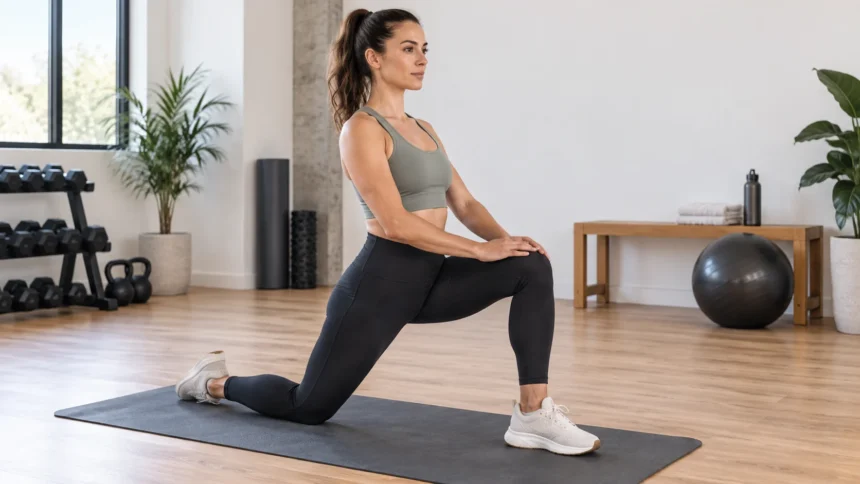
Begin by kneeling on a comfortable surface and step one foot forward so your front knee forms approximately a right angle. Your opposite knee should remain on the floor behind you, with your torso upright. Place your hands on your hips or front thigh for balance while keeping your shoulders relaxed and your gaze comfortably forward.
Gently tighten the glute on the kneeling side and slightly tuck your pelvis underneath you. Without arching your lower back, slowly shift your body forward until you notice a gentle stretch across the front of the hip on the kneeling side. The movement should come mainly from the hip rather than from aggressively leaning your upper body forward.
Hold the position while breathing slowly and comfortably, then return to your starting position before changing sides. Many people begin with holds of around 20 to 30 seconds and repeat the stretch two or three times per side. Focus on a mild to moderate stretching sensation rather than pushing until the movement becomes painful or difficult to control.
Proper Form Tips for a Better Hip Flexor Stretch
Pelvic position is one of the most important details when performing this stretch. If your pelvis tips excessively forward, your lower back may arch and reduce the amount of stretching occurring at the hip. Imagine gently bringing your belt buckle upward while lightly squeezing the glute on your kneeling side to maintain better alignment.
Keep your front knee generally positioned above or slightly behind your ankle rather than allowing it to travel unnecessarily far forward. Your torso should remain tall, and your ribs should stay stacked over your pelvis. Moving only a small distance forward is often enough to create an effective stretch when your body is properly aligned.
Avoid holding your breath or tensing your shoulders while maintaining the position. Slow breathing may help you relax and gradually become more comfortable within the stretch. If balancing is difficult, perform the movement beside a wall, chair, or stable surface so you can focus on hip positioning instead of worrying about losing your balance.
Key Benefits of the Kneeling Hip Flexor Stretch
One of the main benefits of the kneeling hip flexor stretch is improved flexibility through the front of the hips. Regular stretching may help maintain a comfortable range of motion, particularly for people whose daily routines involve many hours of sitting. Better hip mobility can make movements such as walking, lunging, climbing stairs, and standing upright feel smoother.
This stretch can also complement strength training by improving your ability to move the hip into extension. Exercises such as split squats, lunges, bridges, and running all require the hip to move behind the body to varying degrees. Limited mobility does not automatically mean your hip flexors are physically shortened, but gentle stretching can still be useful when the area feels stiff.
Another advantage is convenience because the stretch can be performed at home, at the gym, or during short movement breaks. It does not require special mobility equipment or advanced flexibility. When combined with strengthening and regular movement throughout the day, it can become a practical part of a balanced lower-body mobility routine.
Can the Stretch Help With Sitting-Related Hip Tightness?
Long periods of sitting keep your hips in a flexed position for extended amounts of time. After several hours at a desk, in a car, or on a sofa, the front of the hips may feel stiff when you stand up. A kneeling hip flexor stretch can provide gentle movement in the opposite direction by bringing the hip into extension.
Stretching alone does not completely address the effects of a sedentary routine, however. Frequently changing positions, walking, standing, and strengthening the hips and core are also important for comfortable movement. Rather than relying on one long stretching session, brief movement breaks throughout the day can help prevent your body from remaining in the same position for too long.
If you work at a desk, consider pairing this stretch with light walking, glute activation, or simple mobility exercises. These activities expose your hips to different positions and encourage your muscles to work through a broader range. Consistency usually matters more than trying to perform an intense stretch after sitting for several hours without moving.
How Hip Flexor Mobility Supports Posture and Back Movement
Your hips, pelvis, core, and lower back work together during standing and movement. When the front of the hips feels restricted, some people may compensate by changing their pelvic position or increasing movement through the lumbar spine. Improving comfortable hip mobility may therefore make it easier to maintain efficient movement patterns during daily activities and exercise.
However, posture is influenced by more than hip flexor flexibility alone. Strength, mobility, body proportions, habits, fatigue, and the positions you use throughout the day can all affect how you stand and sit. Stretching should therefore be viewed as one part of a broader approach rather than a single solution for correcting posture.
Combining hip mobility with appropriate strengthening can provide a more balanced routine. Exercises for the glutes, core, and back can help support your pelvis and spine as you move. If you are building a complete mobility and strength program, these back strengthening exercises can complement hip-focused work by improving muscular support around your trunk.
Kneeling Hip Flexor Stretch Variations to Try
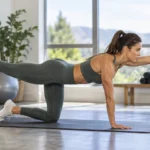
The basic half-kneeling variation is usually the best place to begin because it makes pelvic positioning easier to control. Once you can perform it comfortably, you can raise the arm on the same side as your kneeling leg overhead. This may create a slightly stronger stretch through the front of your hip and along the side of your torso.
Another option is the kneeling hip flexor stretch with a gentle side bend. After entering the basic position, lift the arm on your kneeling side and lean slightly toward the opposite side. Keep your hips facing forward rather than rotating your entire torso, and stop when you feel a comfortable stretch rather than forcing yourself farther.
For a more intense quadriceps-focused version, you can bend the back knee and carefully bring the heel toward your glutes. This variation requires more balance and knee flexibility, so it may not be suitable for everyone. A couch stretch uses a similar concept by placing the back foot against a wall or bench, but beginners should progress gradually.
Common Kneeling Hip Flexor Stretch Mistakes
One of the most common mistakes is lunging too far forward in an attempt to create a stronger stretch. This often causes the lower back to arch while the pelvis rotates forward, which can shift tension away from the intended muscles. A smaller movement combined with a gentle posterior pelvic tilt frequently produces a more focused hip flexor stretch.
Another mistake is allowing your body to rotate toward your front leg. Your hips should generally remain facing forward so the stretch stays controlled and symmetrical. Using a wall for balance can help if you notice yourself twisting, leaning sideways, or shifting your body simply to remain stable during the exercise.
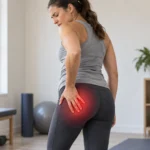
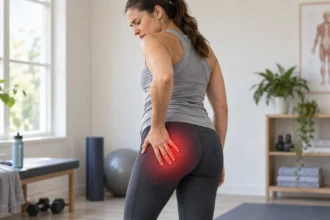
Some people also treat discomfort as evidence that the stretch is effective. Stretching should create manageable tension, not sharp pain, pinching, numbness, or tingling. If you repeatedly experience pain in the hip, groin, knee, or lower back during the movement, stop and consider seeking guidance from a qualified healthcare or rehabilitation professional.
How Often Should You Stretch Your Hip Flexors?
Your ideal stretching frequency depends on your activity level, comfort, mobility goals, and daily routine. Many people can include gentle hip flexor stretching several times per week, while desk workers may prefer brief sessions more frequently. Because the movement is relatively simple, it can also be performed after walking, exercise, or prolonged periods spent sitting.
Start with approximately 20 to 30 seconds per side and perform one to three rounds. You may gradually increase the duration if the stretch remains comfortable, but longer is not automatically better. Your goal should be developing a comfortable range of motion rather than trying to force your hip into positions your body is not ready to maintain.
For lasting mobility, combine stretching with exercises that strengthen your hips through their available range. Glute bridges, split squats, step-ups, core exercises, and controlled lunges can complement flexibility work. Strength and mobility often work best together because your body benefits not only from reaching a position but also from controlling movement within that position.
When to Use the Kneeling Hip Flexor Stretch
The stretch can work well as part of a general mobility routine when your hips feel stiff after sitting. It may also be included after a workout, when your muscles are warm and you want to spend several minutes on relaxed mobility work. Some people prefer using a shorter, more dynamic version before exercise rather than holding a deep static stretch.
Runners, cyclists, strength trainees, and people with desk-based jobs may find the movement particularly convenient. However, everyone responds differently to stretching, so the exercise does not need to be part of every person’s routine. Pay attention to whether it improves how your hips feel and move rather than performing it simply because hip flexor stretching is commonly recommended.
People with recent hip or knee injuries, significant pain, or difficulty kneeling should modify the exercise or choose another position. Placing a thick pad beneath the knee can improve comfort, while a standing hip flexor stretch may be easier for some individuals. Persistent pain or substantial movement limitations are better assessed individually by an appropriate healthcare professional.
Conclusion
The kneeling hip flexor stretch is a practical way to improve flexibility and mobility through the front of the hips. Proper technique involves maintaining an upright torso, gently controlling your pelvis, engaging the glute on the kneeling side, and shifting forward only as far as needed. A deeper stretch is not necessarily more effective than a controlled one.
Regular hip flexor stretching can be especially useful for people who spend long periods sitting or frequently perform activities involving repetitive hip flexion. It may support comfortable walking, lunging, running, and lower-body training when included within a balanced routine. Pairing mobility work with strengthening exercises can provide more complete support for your hips, pelvis, and trunk.
Most importantly, perform the stretch according to your current mobility rather than comparing your range with someone else’s. Gentle tension is enough, and you should never force yourself through sharp or unusual pain. With consistent practice and appropriate strengthening, the kneeling hip flexor stretch can become a simple and useful addition to your regular movement routine.
FAQs
How long should I hold a kneeling hip flexor stretch?
A comfortable starting point is around 20 to 30 seconds per side for one to three rounds. Maintain slow breathing and stop before the stretch becomes painful or difficult to control.
Should I squeeze my glutes during a hip flexor stretch?
Gently squeezing the glute on the kneeling side can help control your pelvis and focus the stretch across the front of your hip. Avoid squeezing so hard that your entire body becomes tense.
Can I do the kneeling hip flexor stretch every day?
Many people can perform gentle hip flexor stretching daily if it feels comfortable and does not cause pain. Your ideal frequency depends on your mobility, activity level, and individual response.
Why do I feel the stretch in my thigh instead of my hip?
The rectus femoris crosses both your hip and knee, so some tension through the front of your thigh can be normal. Adjusting your pelvic position may help focus the stretch closer to your hip.
What can I do if kneeling hurts my knee?
Place a folded towel, cushion, or exercise mat beneath your knee for additional padding. If kneeling remains uncomfortable, use a standing hip flexor stretch or another pain-free mobility variation instead.