
Oblique twists are rotational core movements that train the muscles along the sides of your abdomen. They appear in many workout styles, including strength training, Pilates, sports conditioning, and bodyweight routines. Although the movement looks simple, understanding which muscles are working and how your torso should rotate can make the exercise much more effective.
The oblique muscles play an important role in turning, bending, stabilizing, and transferring force through the trunk. They work during everyday movements such as reaching across your body, carrying bags, getting out of a chair, and changing direction while walking or running. Strong obliques can therefore support both athletic performance and normal daily movement.
Oblique twists can be performed in several ways, from seated bodyweight rotations to standing cable twists and controlled medicine-ball variations. The best version depends on your strength, mobility, and training goals. This guide explains oblique anatomy, function, proper twisting form, benefits, common mistakes, and useful ways to include rotational exercises in your routine.
What Are Oblique Twists?
Oblique twists are exercises that involve rotating the trunk from one side to the other while maintaining core control. Depending on the variation, you may perform them seated, standing, kneeling, or while holding resistance. The primary goal is controlled rotation rather than simply moving as quickly as possible from side to side.
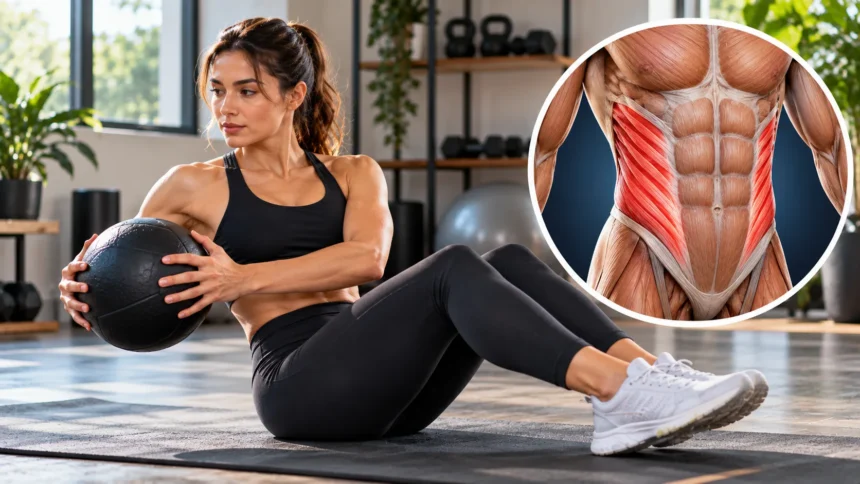
A common example is the seated Russian twist, where you sit with your knees bent and rotate your torso toward each side. Standing versions may use resistance bands, cables, or medicine balls to create additional challenge. Each variation changes the amount of stability, hip involvement, and resistance placed on the core.
The quality of the movement matters more than how far you rotate. Your ribs, shoulders, and torso should move as a coordinated unit while your pelvis remains controlled according to the exercise. Excessive momentum can shift work away from the obliques and place unnecessary stress on the lower back.
Oblique Muscle Anatomy Explained
The obliques are made up of the external obliques and internal obliques, which sit along the sides of your abdomen. The external obliques are closer to the surface and run diagonally downward from the ribs toward the center of the body. They are among the most visible muscles around the sides of the waist.
The internal obliques lie beneath the external obliques and run in roughly the opposite diagonal direction. This layered arrangement helps the trunk rotate, bend sideways, and stabilize against outside forces. The internal and external obliques frequently work together rather than functioning as completely separate muscle groups.
The obliques also work with deeper muscles such as the transverse abdominis and with the rectus abdominis at the front of the abdomen. Together, these muscles create a supportive core system around the trunk. Effective rotational movement depends on coordination between these muscles rather than isolated effort from one small area.
What Do the Oblique Muscles Do?
One of the main functions of the obliques is trunk rotation. When you turn your torso to look behind you, swing a racket, or reach across your body, the internal and external obliques coordinate to create and control rotation. Different sides of the abdominal wall become active depending on the direction you are turning.
The obliques also assist with lateral flexion, which means bending the trunk sideways. This happens when you reach one hand toward the outside of your knee or lean to pick something up beside you. Strong lateral control helps the body resist collapsing sideways when carrying uneven loads.
Another major role is stabilization. Your obliques help resist unwanted twisting when you walk, run, lift, or carry something heavy in one hand. This anti-rotation function is just as important as producing movement because the core frequently needs to prevent motion rather than create it.
How to Perform Oblique Twists Correctly
Begin in a stable position that matches the variation you are using. For a seated oblique twist, sit with your knees bent, feet supported, chest lifted, and spine long. Lean back slightly only as far as you can maintain control without rounding your lower back or collapsing through your shoulders.
Tighten your abdominal muscles gently before rotating. Turn your rib cage and shoulders toward one side while keeping the movement smooth and controlled. Return through the center, then rotate toward the opposite side without swinging your arms independently from your torso.
Breathe throughout the exercise instead of holding your breath. Exhale gently as you rotate and inhale as you return toward the middle if that rhythm feels natural. Keep the range of motion comfortable and avoid forcing your torso farther than your mobility allows.
Muscles Worked During Oblique Twists
The external and internal obliques are the main muscles targeted during twisting exercises. They work together to rotate the torso while helping control the speed and direction of movement. The deeper abdominal muscles also remain active to stabilize the spine and maintain pressure through the core.
Your rectus abdominis contributes by helping maintain trunk position, especially during seated twists where the torso is held at an angle. Hip flexors may also work to stabilize the pelvis and legs, particularly if your feet are lifted from the floor during more advanced variations.
Upper-body and lower-body muscles can become involved depending on the exercise. Standing twists recruit the hips and legs to maintain balance, while cable or medicine-ball variations require the shoulders and arms to control resistance. This makes many oblique twist variations full-body rotational exercises rather than isolated abdominal movements.
Benefits of Oblique Twists
Oblique twists can improve rotational core strength, which is useful for sports and everyday activities. Throwing, swinging, changing direction, and reaching across your body all require controlled rotation. Training these patterns can help your trunk manage rotational forces more efficiently.
They can also improve core endurance and stability. A stronger core helps the body maintain better positioning during lifting, walking, and carrying. Oblique exercises are especially useful when combined with anti-rotation movements that teach the torso to resist twisting under load.
Another benefit is exercise variety. Many core routines rely heavily on crunches and planks, which mostly emphasize flexion or static stability. Adding controlled twists introduces rotational training and creates a more balanced approach to strengthening the muscles around the entire trunk.
Common Mistakes During Oblique Twists
Using too much momentum is one of the most common mistakes. Quickly throwing your arms from side to side can make the movement look larger without requiring much controlled work from the core. Slow down and allow your torso to produce the rotation rather than letting the arms lead everything.
Rounding the lower back is another frequent issue, especially during seated twists. When fatigue increases, people may collapse their chest and lose spinal position. Reducing the lean angle, keeping the feet supported, or shortening the set can help maintain better form.
Rotating beyond your comfortable range can also create unnecessary stress. More movement does not automatically mean more muscle activation. Focus on a controlled range where you can keep the pelvis stable, breathe normally, and avoid sharp discomfort in the lower back or hips.
Oblique Twists and Hip Mobility
Your hips influence how easily the trunk rotates during many standing and seated exercises. Limited hip mobility may cause the lower back to compensate by moving more than it should. Improving mobility through the hips can therefore support smoother rotational mechanics and reduce unnecessary strain during twisting exercises.
Hip flexors deserve particular attention because they can become tight after long periods of sitting. Gentle mobility work, including a hip flexor stretch, can help improve movement around the front of the hips before rotational training. Better hip positioning can make it easier to maintain a stable pelvis during twists.
Mobility should complement strength rather than replace it. Flexible hips without adequate core control may still allow excessive movement through the spine. Combining hip mobility with oblique strengthening, glute exercises, and controlled anti-rotation work can create better overall movement quality.
Best Oblique Twist Variations
The basic seated twist is a good starting point for many beginners. Keep your feet on the floor and rotate without holding additional weight. This version allows you to learn trunk control and proper breathing before making the exercise harder.
Once your technique improves, you can add a light dumbbell, medicine ball, or weight plate. Keep the resistance close to your body rather than extending your arms fully, which can make the exercise significantly harder. Increase load gradually so you can maintain smooth rotation without using momentum.
Standing cable twists and resistance-band rotations offer another effective option. These variations allow you to train rotation while keeping your feet grounded and using resistance from the side. They can be particularly useful for athletes or anyone who wants rotational strength that transfers to standing movement.
How to Make Oblique Twists Easier or Harder
To make oblique twists easier, keep your feet firmly on the floor and sit more upright. Use a smaller range of motion and perform fewer repetitions. This reduces the demand on your abdominal muscles and hip flexors while still teaching controlled rotation.
To increase difficulty, lean back slightly farther while maintaining good posture or add a small amount of resistance. You can also slow the tempo by pausing briefly at each side. More time under tension often makes the exercise harder without needing heavier weight.
Advanced exercisers can explore cable rotations, half-kneeling twists, or controlled medicine-ball drills. However, difficulty should increase only after technique is consistent. A heavier load or faster movement is not an improvement if your lower back begins to twist excessively or your posture breaks down.
How Often Should You Train Your Obliques?
Most people do not need to train oblique twists every day. Two or three core sessions per week can be enough when exercises are performed with good technique and appropriate resistance. Your total training volume should also consider other movements that already challenge the core.
Compound exercises such as squats, deadlifts, rows, overhead presses, and carries require the obliques to stabilize the torso even though they are not direct abdominal exercises. This means your obliques may already receive significant work during a well-rounded strength program.
Recovery is still important. If your core feels unusually sore or your technique becomes difficult to maintain, allow additional recovery before repeating intense rotational exercises. Consistent moderate training generally produces better progress than performing large numbers of twists with poor form.
Safety Tips for Oblique Twist Exercises
Oblique twists should create muscular effort without producing sharp lower-back or hip pain. If rotation consistently causes discomfort, reduce the range of motion or choose an anti-rotation exercise such as a Pallof press. Pain should not be treated as proof that the exercise is working.
People with an existing spinal injury, disc problem, recent abdominal surgery, or significant back pain may need professional guidance before performing loaded rotation. Certain conditions can make repeated twisting inappropriate. A physical therapist or qualified healthcare professional can suggest alternatives based on your specific needs.
Warm up before using heavier resistance. Gentle trunk movement, hip mobility, walking, and light core activation can prepare your body for more demanding rotational work. Start with manageable resistance and prioritize control rather than trying to move the heaviest weight possible.
How to Add Oblique Twists to a Core Workout
Oblique twists work well when combined with exercises that train other core functions. A balanced session might include a plank for anti-extension, a side plank for lateral stability, a dead bug for control, and a twist variation for rotation. This creates a more complete approach than relying on one movement pattern.
You can perform twists near the end of a strength workout or include them in a dedicated core circuit. Beginners may start with two sets of eight to twelve controlled repetitions per side. More experienced exercisers can adjust resistance, tempo, and volume according to their training goals.
Avoid chasing extremely high repetition counts. Once fatigue makes your movement sloppy, the exercise becomes less effective and potentially more stressful on the spine. Stop the set while you can still control your rotation, breathing, and body position from one repetition to the next.
Conclusion
Oblique twists are useful exercises for strengthening the muscles along the sides of your abdomen and improving rotational core control. The internal and external obliques help create rotation, support side bending, and resist unwanted movement through the trunk. These functions are important for both everyday tasks and athletic activities.
Proper technique involves controlled rotation, steady breathing, good posture, and a comfortable range of motion. Avoid using momentum, rounding your lower back, or forcing yourself to rotate farther than your mobility allows. Beginning with simple variations makes it easier to develop good movement habits.
For the best results, combine oblique twists with anti-rotation exercises, planks, hip mobility work, and full-body strength training. A balanced core program should train several different movement patterns rather than focusing only on twisting. Progress gradually and prioritize control over speed or heavy resistance.
FAQs
What muscles do oblique twists work?
Oblique twists primarily work the internal and external obliques. They also engage the rectus abdominis, transverse abdominis, hip flexors, and other stabilizing muscles depending on the variation used.
Are oblique twists good for your core?
Yes. Oblique twists can improve rotational strength and core control when performed correctly. They work best as part of a balanced routine that also includes anti-rotation and stability exercises.
Can oblique twists reduce belly fat?
Oblique twists strengthen abdominal muscles but cannot selectively remove fat from the waist. Overall fat loss depends on factors such as nutrition, physical activity, energy balance, sleep, and genetics.
How many oblique twists should beginners do?
Beginners can start with about eight to twelve controlled repetitions per side for one or two sets. The focus should remain on smooth movement and good posture rather than high repetition numbers.
Are oblique twists bad for the lower back?
They are not automatically bad for the back, but poor technique or excessive range can create discomfort. People with back injuries or persistent pain should seek professional guidance before performing loaded rotational exercises.