
The standing hip flexor stretch is a simple mobility exercise that can help loosen the muscles at the front of the hips. These muscles work whenever you walk, climb stairs, run, or lift your knees. Long periods of sitting may leave them feeling tight or stiff, which is why hip flexor stretching is commonly included in warm-ups and mobility routines.
Unlike floor-based stretches, the standing version can be performed almost anywhere without needing a mat. It can work well at home, in the gym, or even during a short break from sitting. When performed with good posture and controlled movement, it allows you to target the front of the hip without placing unnecessary strain on the lower back.
Learning correct technique matters because simply stepping forward is not always enough to stretch the hip effectively. Pelvic position, stance length, balance, and body control all influence how the movement feels. This guide explains the benefits, form, common mistakes, mobility tips, and practical ways to include the standing hip flexor stretch in your routine.
What Is a Standing Hip Flexor Stretch?
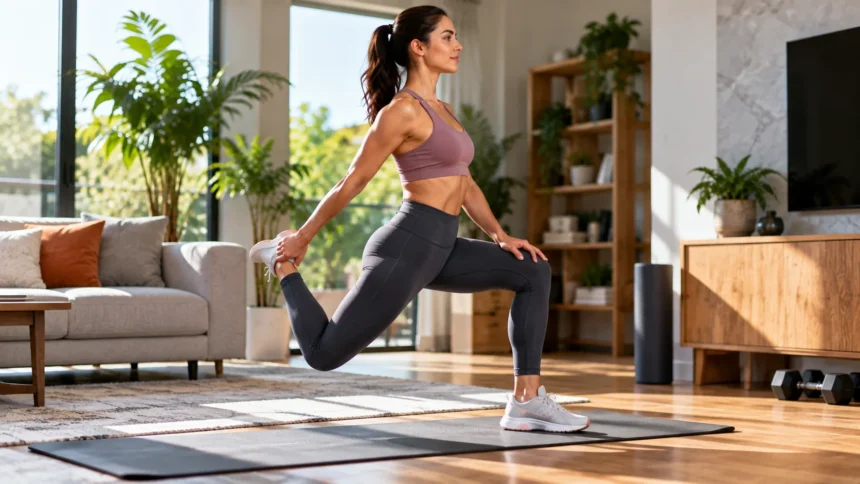
The standing hip flexor stretch is an exercise designed to lengthen the muscles at the front of the hip. To perform it, you usually take a staggered stance, bend the front knee slightly, keep the rear leg extended, and gently shift your pelvis forward. The stretch should generally be felt near the front of the hip on the back leg.
Several muscles contribute to hip flexion, including the iliopsoas, rectus femoris, sartorius, and other surrounding structures. These muscles help bring your thigh toward your torso during everyday movement. When they feel restricted, activities such as walking, lunging, running, and standing upright may sometimes feel less comfortable or less fluid.
The standing version differs from kneeling hip flexor stretches because both feet remain on the floor. This can make the exercise convenient for people who prefer not to kneel or who want a quick mobility option during the day. However, balance and positioning remain important because poor form can shift the movement away from the hips.
Benefits of the Standing Hip Flexor Stretch
One of the main benefits is improved flexibility around the front of the hip. Regular stretching can help maintain comfortable range of motion, particularly for people who spend many hours sitting at desks, driving, or working in seated positions. Maintaining hip mobility can make everyday activities such as walking, reaching, and climbing stairs feel more natural.
The stretch may also support better movement during exercise. Hip mobility contributes to movements such as squats, lunges, running strides, and many strength-training exercises. If the hips feel restricted, the body may compensate by changing movement elsewhere, so maintaining flexibility can help you perform exercises with more comfortable positioning.
Another advantage is convenience. The standing hip flexor stretch requires no special equipment and can be added easily to warm-ups, cooldowns, or short mobility breaks. Because it can be performed in a small space, it is useful for office workers, travelers, athletes, and anyone who wants to move more throughout the day.
How to Perform the Standing Hip Flexor Stretch Correctly
Begin by standing upright with your feet about hip-width apart. Step one foot forward into a comfortable staggered position while keeping both feet facing generally ahead. Slightly bend the front knee, keep your torso tall, and place your hands on your hips or use a nearby wall or chair for balance if needed.
Next, gently tuck your pelvis rather than allowing your lower back to arch excessively. Think about bringing your belt buckle slightly upward while keeping your ribs stacked over your pelvis. Slowly shift your body forward until you feel a mild stretch across the front of the hip on the rear leg.
Hold the position while breathing normally and keeping the movement controlled. You should feel tension, not sharp pain, pinching, or numbness. After holding for several comfortable breaths, return to the starting position and repeat on the opposite side so both hips receive similar mobility work.
Why Pelvic Position Matters During the Stretch
Pelvic position is one of the most important details in the standing hip flexor stretch. Many people simply lean forward while allowing the pelvis to tilt and the lower back to arch. This may create the appearance of a deeper stretch without actually increasing useful tension through the hip flexor muscles.
A gentle posterior pelvic tilt can make the stretch more effective. Imagine slightly tightening your abdominal muscles and bringing your tailbone downward rather than sticking it backward. This adjustment often helps you feel the stretch closer to the front of the hip while reducing unnecessary extension through the lumbar spine.
Avoid squeezing or forcing the pelvis aggressively. The goal is not to create the strongest possible sensation but to place the hip in a controlled position where the muscles can lengthen comfortably. Small changes in posture can make a surprisingly large difference, so focus on quality rather than moving as far forward as possible.
Common Mistakes to Avoid
One common mistake is taking an excessively long stance. A very wide step may make balancing difficult and encourage the body to compensate through the lower back. Instead, use a stance that allows you to stay upright, keep both feet stable, and gradually shift forward while maintaining control over the pelvis.
Another mistake is allowing the front knee to collapse inward or the rear foot to rotate excessively. Stable lower-body alignment helps distribute pressure more comfortably and prevents the stretch from becoming awkward. Your knee should generally track in the same direction as your toes while your feet remain firmly supported on the floor.
People may also hold their breath or bounce repeatedly into the stretch. Slow breathing and steady tension are usually more appropriate for general flexibility work. Avoid forcing the movement, especially if you notice sharp discomfort, hip pinching, tingling, or symptoms that travel down the leg rather than remaining as a mild muscular stretch.
How Long Should You Hold a Standing Hip Flexor Stretch?
The ideal duration can vary depending on your purpose, comfort level, and overall training routine. Many people use gentle holds of around 20 to 30 seconds when working on general flexibility. Longer or repeated holds may also be useful, provided the stretch remains comfortable and does not produce pain or excessive tension.
You can usually perform the stretch one to three times on each side during a mobility session. If one hip feels noticeably tighter, it may be tempting to stretch that side aggressively, but a gradual approach is often more useful. Consistency over time generally matters more than trying to create dramatic improvements in one session.
Before exercise, shorter and more dynamic mobility movements may be appropriate depending on the activity. Longer static stretches may fit better after training or during dedicated flexibility sessions. The most useful approach depends on how your body responds, so adjust the duration while maintaining comfortable breathing and controlled posture.
When to Use the Stretch in Your Routine
The standing hip flexor stretch works well during breaks from prolonged sitting. If you spend hours at a computer, standing up periodically and gently moving the hips can help break up long periods of inactivity. Pairing the stretch with a short walk can make the break more useful for overall mobility and circulation.
It can also be included after workouts involving running, cycling, squats, lunges, or other lower-body movements. These activities repeatedly use the hip flexors, so gentle stretching afterward may feel comfortable. Stretching should complement training rather than replace strength, balance, and movement exercises that support overall hip function.
You can also include the movement in a general mobility routine with exercises for the ankles, calves, hamstrings, and upper body. Mobility is interconnected throughout the body, and discomfort in one area may affect how you move elsewhere. For example, people dealing with lower-leg discomfort may also find this guide on foot arch pain useful for understanding common causes and relief approaches.
Mobility Tips for Better Hip Flexibility
Do not rely on one stretch alone to improve hip mobility. Your hips move in several directions, including flexion, extension, rotation, abduction, and adduction. A balanced routine can include hip flexor stretches, controlled hip rotations, glute exercises, squats, lunges, and other movements that challenge multiple ranges of motion.
Strength is also an important part of mobility. Having a large range of motion is more useful when you can control that range with your muscles. Exercises such as split squats, glute bridges, step-ups, and controlled leg lifts can complement stretching by helping improve strength and stability around the hips.
Progress gradually rather than forcing flexibility. Mobility usually improves through repeated, comfortable exposure instead of aggressive stretching that leaves the area sore. Practicing several times per week, maintaining good posture during the day, and changing positions regularly can be more effective than performing one intense stretching session occasionally.
Standing Hip Flexor Stretch for People Who Sit All Day
Long periods of sitting keep the hips in a flexed position for extended amounts of time. This does not automatically mean that your hip flexors are permanently shortened, but many people notice stiffness after staying seated without movement. Standing and changing position regularly can reduce the feeling of being locked into one posture.
Try performing the stretch after getting up from your desk, especially if your hips feel stiff when you first stand. Keep the movement gentle and combine it with walking, bodyweight squats, or simple hip circles. Even a few minutes of movement can help break up prolonged sitting and encourage the hips to move through a wider range.
Your workstation habits matter too. Avoid remaining in exactly the same posture throughout the entire day, even if you have an ergonomically designed chair. Alternate sitting with standing or walking when possible, and treat stretching as one part of a broader strategy that includes regular movement, strength training, and healthy activity levels.
How the Stretch Can Support Exercise and Sports
Hip extension plays an important role in many athletic movements. Running, sprinting, jumping, lunging, and walking all require the hip to move behind the body to some degree. Maintaining comfortable mobility around the front of the hip can support smoother movement when performing these activities.
However, stretching alone will not automatically improve athletic performance. Strength, coordination, balance, cardiovascular fitness, sport-specific technique, and recovery all contribute to how well you move. The standing hip flexor stretch is best viewed as one useful mobility tool rather than a complete training solution.
Athletes can experiment with including the stretch after warm-up movements or at the end of training, depending on personal preference and sport demands. If static stretching immediately before explosive activity makes you feel less powerful, save longer holds for later. Dynamic lunges and controlled leg swings may work better before high-intensity exercise.
When Hip Flexor Stretching May Not Be Appropriate
Stretching should not cause sharp or severe pain. If moving into the standing hip flexor stretch produces pinching deep in the hip, shooting pain, numbness, weakness, or symptoms traveling down the leg, stop the exercise. Those sensations may indicate that the problem involves more than ordinary muscle stiffness.
Be especially cautious following a recent hip, groin, back, knee, or leg injury. Stretching irritated tissues too aggressively may worsen discomfort or delay recovery. A healthcare or rehabilitation professional can help determine which movements are appropriate when an injury or medical condition affects your ability to exercise normally.
Persistent hip pain should not automatically be blamed on tight hip flexors. Joint problems, tendon irritation, muscle strains, nerve-related conditions, and other issues can sometimes create similar symptoms. If pain continues, becomes worse, disrupts sleep, or affects walking and daily activities, seeking a professional assessment is more appropriate than repeatedly stretching the area.
How to Make the Stretch More Comfortable
Use support if balance is distracting you from the stretch. Holding a wall, countertop, stable chair, or railing allows you to focus more on pelvic position and less on staying upright. Support is especially useful for beginners, older adults, or anyone who feels unstable in a staggered stance.
You can also reduce the range of motion. A smaller forward shift can still create an effective stretch when your pelvis is positioned correctly. There is no need to copy someone else’s stance depth because flexibility, limb length, injury history, and body structure vary considerably between individuals.
Breathing slowly can help you stay relaxed during the position. Instead of tightening your shoulders or jaw, maintain an upright but comfortable posture and allow your breathing to remain steady. If the stretch feels easier over time, increase the range gradually rather than suddenly pushing into a much deeper position.
Conclusion
The standing hip flexor stretch is a convenient exercise for improving flexibility and maintaining comfortable movement around the front of the hips. It requires no equipment, takes little space, and can fit easily into mobility sessions, workout routines, or breaks from prolonged sitting.
Good technique is more important than trying to stretch as deeply as possible. Keep your torso upright, control your pelvic position, use a comfortable staggered stance, and move forward gradually. The sensation should feel like gentle muscular tension rather than sharp pain, pinching, or nerve-related discomfort.
For broader mobility benefits, combine hip flexor stretching with regular walking, strength training, varied movement, and exercises for surrounding muscles. Consistent habits usually produce better results than occasional aggressive stretching. If persistent hip pain or unusual symptoms occur, seek professional evaluation instead of assuming tight muscles are the only cause.
FAQs
What does a standing hip flexor stretch target?
The stretch primarily targets muscles at the front of the hip, including the iliopsoas region. Depending on your stance and technique, you may also feel tension through the upper thigh.
How long should I hold a standing hip flexor stretch?
A gentle hold of around 20 to 30 seconds is commonly used for general flexibility. You can repeat the stretch one to three times per side while keeping the sensation comfortable.
Can I do a standing hip flexor stretch every day?
Many people can perform gentle hip flexor stretching regularly if it does not cause pain. Daily movement may be particularly useful for people who spend long periods sitting, but avoid forcing the range.
Why do I feel the stretch in my lower back?
You may be arching your lower back instead of extending through the hip. Gently tuck your pelvis, engage your core, shorten your stance if necessary, and keep your torso upright.
Is stretching enough to improve hip mobility?
Not usually. Stretching can support flexibility, but strength, balance, joint control, and regular movement also influence mobility. Combining stretching with exercises such as squats, lunges, bridges, and walking provides a more balanced approach.