
The single-leg glute bridge is a bodyweight exercise that strengthens the glutes, hamstrings, hips, and core while challenging one side at a time. Compared with a standard two-leg bridge, it requires greater pelvic control and places more demand on the working hip. This makes it useful for building unilateral strength and improving lower-body stability.
Because only one foot remains on the floor, the exercise can quickly reveal differences in strength or control between the left and right sides. It is commonly included in strength programs, home workouts, athletic training, and rehabilitation routines. However, correct positioning is important because poor form can shift the workload into the lower back or hamstrings.
Learning how to perform a single-leg glute bridge correctly can make the movement more effective and comfortable. The goal is not simply to lift the hips as high as possible. Instead, focus on controlled hip extension, a stable pelvis, and strong glute engagement throughout every repetition.
What Is a Single-Leg Glute Bridge?
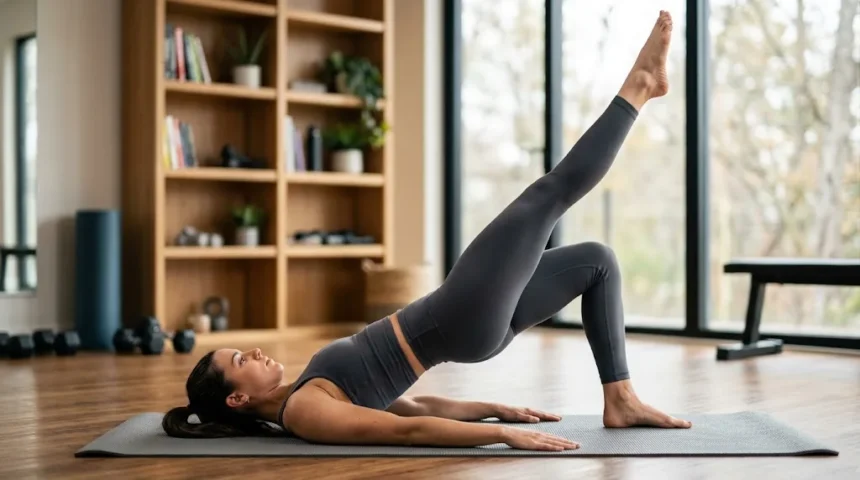
A single-leg glute bridge is a hip-extension exercise performed while lying on your back with one foot planted on the floor. The opposite leg stays lifted while the working leg pushes through the floor to raise the hips. This increases the challenge compared with a traditional bridge because one side supports most of the movement.
The exercise primarily trains the gluteus maximus, although the hamstrings, gluteus medius, core, and other stabilizing muscles also contribute. Keeping the pelvis level becomes especially important because the body naturally wants to rotate toward the unsupported side. This creates an additional stability challenge beyond simple hip extension.
Single-leg bridges can be performed without equipment, making them practical for home workouts or travel. They can also be progressed with resistance bands, weights, pauses, or elevated feet. Beginners should first become comfortable with a regular glute bridge before moving to a more demanding single-leg version.
Muscles Worked During a Single-Leg Glute Bridge
The gluteus maximus is the main muscle responsible for extending the hip as you raise your pelvis from the floor. It works hardest near the top of the bridge when you actively squeeze the working-side glute. Strong hip extension is important for activities such as walking, running, climbing stairs, and standing up.
The hamstrings also assist with hip extension and help stabilize the leg throughout the exercise. If your foot is positioned too far away from your hips, you may feel more hamstring involvement than glute activation. Adjusting foot placement can help create a more balanced effort between the back of the thigh and buttock.
The gluteus medius and core muscles help prevent the pelvis from rotating or dropping. These stabilizers become more important because only one leg is supporting the movement. Keeping your ribs, pelvis, and trunk controlled allows the working hip to produce force without unnecessary compensation through the lower back.
How to Set Up for the Exercise
Start by lying on your back with both knees bent and your feet flat on the floor. Place your feet approximately hip-width apart and close enough that you can comfortably press through the working foot. Keep your arms relaxed beside your body for additional stability.
Before lifting, gently brace your abdominal muscles and keep your ribs from flaring upward. Lift one foot from the floor while keeping the thighs roughly aligned. You can keep the non-working knee bent or extend the leg slightly, depending on which position allows you to maintain better pelvic control.
Your working foot should stay firmly planted through the heel and midfoot. Avoid shifting pressure entirely onto the toes or allowing the knee to fall inward. Taking a moment to establish a stable starting position makes it easier to perform each repetition without twisting or arching excessively.
How to Do a Single-Leg Glute Bridge Correctly
From the starting position, press through the working foot and squeeze the glute as you lift your hips from the floor. Raise the pelvis until your body forms a relatively straight line from the shoulders toward the working knee. Keep the unsupported side of the pelvis level with the working side.
Pause briefly near the top without pushing the hips so high that your lower back begins to arch. Think about finishing the movement by contracting the glute rather than forcing additional height. Your shoulders and upper back should remain in contact with the floor throughout the exercise.
Lower the hips slowly until they approach the floor, then repeat while maintaining control. Avoid dropping quickly or using momentum to bounce into the next repetition. A slower lowering phase keeps the muscles under tension and makes it easier to notice whether your pelvis is beginning to rotate.
Benefits of the Single-Leg Glute Bridge
One of the main benefits is unilateral glute strengthening. Training one leg at a time increases the challenge for the working side and can make differences in strength or control more noticeable. This can be useful when building more balanced lower-body strength across both sides.
The exercise also improves pelvic stability. Because the unsupported side wants to drop or rotate, your glutes and core must work together to keep the pelvis controlled. This type of stability can be valuable during walking, running, climbing stairs, and other movements that repeatedly place your weight on one leg.
Another advantage is convenience. Single-leg glute bridges require very little space and no equipment, yet they can still provide a meaningful strength challenge. They are easy to include in home workouts, warm-ups, lower-body sessions, or bodyweight circuits without needing access to machines or heavy weights.
Common Single-Leg Glute Bridge Mistakes
One common mistake is allowing the pelvis to rotate as the hips rise. The unsupported side may drop or twist because the working glute cannot maintain control. Reducing the height of the bridge and moving more slowly can help you keep both sides of the pelvis better aligned.
Another mistake is arching the lower back at the top. This often happens when people focus on lifting the hips as high as possible instead of finishing with the glutes. Stop the movement once the hip is fully extended and the body is aligned rather than forcing extra range through the lumbar spine.
Poor foot placement can also shift the exercise away from the intended muscles. If the foot is too far forward, the hamstrings may dominate, while positioning it too close can feel uncomfortable at the knee. Small adjustments can help you find a position where the glute works strongly without joint discomfort.
How Many Reps and Sets Should You Do?
Beginners can start with one to three sets of controlled repetitions on each side. A range of around eight to twelve repetitions may work well when technique remains consistent, although there is no single ideal number for everyone. The working glute should feel challenged without causing form to break down.
If one side feels noticeably weaker, avoid doubling the training volume immediately. Begin with the weaker side and use the same number of quality repetitions on both legs. Over time, consistent unilateral training may help reduce noticeable differences without creating excessive fatigue.
As the exercise becomes easier, progression can come from adding repetitions, sets, resistance, or longer pauses. You can also slow the lowering phase to increase time under tension. Choose one progression at a time so the movement remains controlled and the pelvis stays stable.
Single-Leg Glute Bridge Progressions
Adding a resistance band above the knees can increase the demand on the outer hip muscles. Keep gentle outward tension on the band while performing the bridge so the knees remain controlled. This variation can make the movement more challenging without requiring heavy equipment.
You can also place a dumbbell or other suitable weight across the working-side hip. Hold the load securely and increase resistance gradually. Weighted versions should only be added once you can perform the bodyweight exercise without rotating the pelvis or arching the lower back.
Another progression is elevating the working foot on a sturdy step or bench. This can increase the available range of motion and place a greater challenge on the glutes and hamstrings. Elevated variations are more demanding, so begin with a small height and maintain the same controlled technique.
When the Hamstrings or Lower Back Take Over
Some people feel single-leg glute bridges mostly in their hamstrings instead of their glutes. This may happen because of foot position, fatigue, or difficulty producing strong hip extension from the glute. Moving the working foot slightly closer to the hips can sometimes reduce excessive hamstring involvement.
Lower-back discomfort often appears when the pelvis is not controlled and the spine extends too much near the top. Keep your ribs down and stop lifting once the glute has completed the hip-extension movement. You should feel muscular effort rather than pinching or sharp pain through the lumbar area.
Muscle tightness can also make an exercise feel uncomfortable after hard training. General soreness or muscle knots may create localized tension, but persistent or worsening pain should not automatically be treated as ordinary tightness. Modify or stop the exercise if symptoms do not feel like normal muscular effort.
How to Add Single-Leg Bridges to Your Workout
Single-leg glute bridges can be used as part of a warm-up before squats, deadlifts, lunges, or running. A few controlled repetitions can help you focus on hip extension and pelvic control before more demanding lower-body movements. Keep warm-up sets light enough that they do not create unnecessary fatigue.
They can also be used as an accessory exercise after compound lifts. In this position, the goal may be to add extra glute training without using heavy external resistance. Pairing bridges with movements such as split squats, step-ups, or hip-abduction exercises can create a more complete hip-strengthening session.
For home workouts, single-leg bridges can be combined with bodyweight squats, lunges, calf raises, and core exercises. This creates a simple lower-body routine with minimal equipment. The exercise works best when it supports a broader training plan rather than being treated as the only movement needed for glute development.
When to Be Careful With Single-Leg Glute Bridges
People with ongoing hip, lower-back, hamstring, or knee pain should approach the exercise carefully. The movement may need to be modified depending on the cause of symptoms. Returning to a regular two-leg bridge can provide an easier alternative while maintaining some hip-strengthening work.
Sharp pain, pinching, numbness, or symptoms that worsen with each repetition are reasons to stop. Normal muscular fatigue should feel different from joint or nerve-related discomfort. Reducing range, changing foot position, or choosing an easier variation may improve comfort, but persistent symptoms deserve proper assessment.
Anyone recovering from surgery or a significant injury should follow individualized rehabilitation guidance. Single-leg exercises can place substantial demand on one side even when they appear simple. A qualified healthcare or rehabilitation professional can help determine when this progression is appropriate and how much resistance should be used.
Conclusion
The single-leg glute bridge is a useful bodyweight exercise for strengthening the glutes, hamstrings, and muscles that stabilize the pelvis. By training one side at a time, it creates a greater challenge than a standard bridge and can improve awareness of differences between the left and right hips.
Good technique depends on maintaining a level pelvis, controlling the lower back, and pressing through a stable working foot. Lift only as high as you can without rotating or arching, then lower slowly. Quality repetitions are more valuable than chasing higher numbers with poor form.
Progress gradually by adding resistance, pauses, slower repetitions, or elevated variations once the basic movement feels comfortable. Combine single-leg bridges with other hip, leg, and core exercises for more balanced development. Stop and seek appropriate guidance if the exercise causes persistent or unusual pain.
FAQs
What muscles does a single-leg glute bridge work?
The exercise mainly targets the gluteus maximus while also involving the hamstrings, gluteus medius, and core. These muscles work together to extend the hip and stabilize the pelvis.
Is the single-leg glute bridge better than a regular bridge?
It is more challenging because one leg supports most of the movement. Regular bridges are often better for beginners, while single-leg versions provide greater unilateral strength and stability demands.
Why do I feel single-leg bridges in my hamstrings?
Your hamstrings may work harder if the foot is positioned too far from the hips or the glute is fatigued. Moving the foot slightly closer may improve glute involvement.
How often should I do single-leg glute bridges?
Many people can include them two or three times per week depending on overall training volume and recovery. Allow enough rest if the glutes or hamstrings remain noticeably sore.
Are single-leg glute bridges good for runners?
They can be useful because running involves repeated single-leg support and hip extension. However, runners should combine them with other strength exercises rather than relying on one movement alone.